Andrea Barrett - The Air We Breathe
Здесь есть возможность читать онлайн «Andrea Barrett - The Air We Breathe» весь текст электронной книги совершенно бесплатно (целиком полную версию без сокращений). В некоторых случаях можно слушать аудио, скачать через торрент в формате fb2 и присутствует краткое содержание. Год выпуска: 2007, Издательство: W. W. Norton & Company, Жанр: Современная проза, на английском языке. Описание произведения, (предисловие) а так же отзывы посетителей доступны на портале библиотеки ЛибКат.
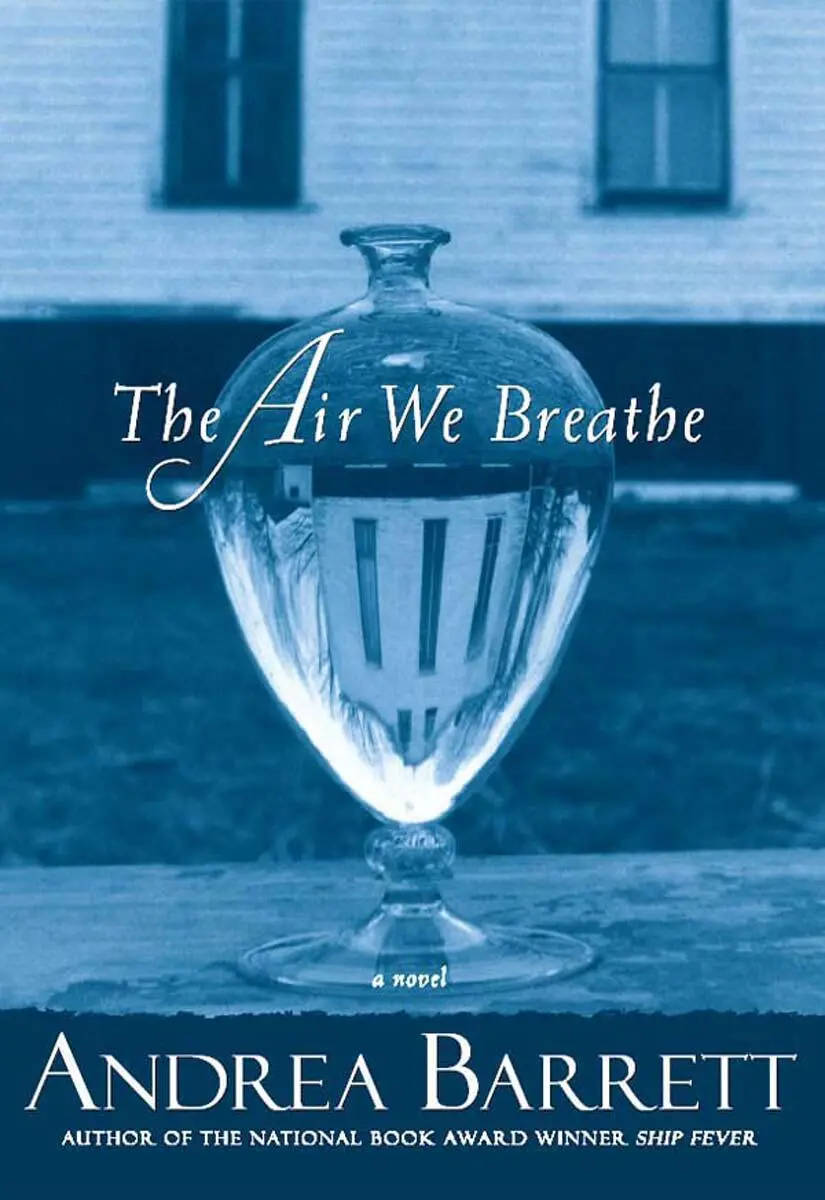
- Название:The Air We Breathe
- Автор:
- Издательство:W. W. Norton & Company
- Жанр:
- Год:2007
- ISBN:нет данных
- Рейтинг книги:3 / 5. Голосов: 1
-
Избранное:Добавить в избранное
- Отзывы:
-
Ваша оценка:
The Air We Breathe: краткое содержание, описание и аннотация
Предлагаем к чтению аннотацию, описание, краткое содержание или предисловие (зависит от того, что написал сам автор книги «The Air We Breathe»). Если вы не нашли необходимую информацию о книге — напишите в комментариях, мы постараемся отыскать её.
) by the National Book Award-winning author of
. In the fall of 1916, America prepares for war — but in the community of Tamarack Lake, the focus is on the sick. Wealthy tubercular patients live in private cure cottages; charity patients, mainly immigrants, fill the large public sanatorium. Prisoners of routine, they take solace in gossip, rumor, and — sometimes — secret attachments. But when the well-meaning efforts of one enterprising patient lead to a tragic accident and a terrible betrayal, the war comes home, bringing with it a surge of anti-immigrant prejudice and vigilante sentiment.
The Air We Breathe — читать онлайн бесплатно полную книгу (весь текст) целиком
Ниже представлен текст книги, разбитый по страницам. Система сохранения места последней прочитанной страницы, позволяет с удобством читать онлайн бесплатно книгу «The Air We Breathe», без необходимости каждый раз заново искать на чём Вы остановились. Поставьте закладку, и сможете в любой момент перейти на страницу, на которой закончили чтение.
Интервал:
Закладка:
“I can’t believe this is what he reads for pleasure,” he said, turning the first one over in his hand. “It’s no wonder he was the only one paying attention during some of Miles Fairchild’s early talks. The Principles of Chemistry —”
“Read some,” Arkady said, egging him on. One thing that made Otto bearable, even likable, was his ability to turn the driest material into something funny.
Otto flipped a couple of pages before clearing his throat and pursing his lips, assuming what he imagined was a professor’s demeanor. “Listen to this.” Reading swiftly, he began:
INTRODUCTION
The study of natural science, whose rapid development dates from the days of Galileo and Newton, and its closer application to the external universe led to the separation of Chemistry as a particular branch of natural philosophy, not only owing to the increasing store of observations and experiments relating to the mutual transformations of substances, but also, and more especially, because in addition to gravity, cohesion, height, light, and electricity it became necessary to recognize the existence of particular internal forces in the ultimate parts of all substances, forces which make themselves manifest in the transformations of substances into one another, but remain hidden (latent) under ordinary circumstances, and whose existence cannot therefore be directly apprehended, and so for a long time remained unrecognized.
He ran out of breath as Abe asked, “That wasn’t all one sentence?”
“It was,” Otto said, flipping the page. “You couldn’t make this stuff up if you tried.”
“More, more,” pled Arkady, who’d been laughing throughout Otto’s high-speed recitation.
Otto obliged.
The primary object of chemistry is the study of the homogeneous substances of which all the objects of the universe are made up, with the transformations of these substances into each other, and with the phenomena which accompany such transformations. Every chemical change or reaction, as it is called, can only take place under a condition of most intimate and close contact of the re-acting substances, and is determined by the forces proper to the smallest invisible particles (molecules) of matter.
He shook his head in disbelief. “It’s all like this. Except the footnotes, which are worse. The tiniest type, page after page…”
“Let me see,” Abe demanded. Otto handed over the book.
“Well,” Arkady said, wiping his eyes, “but if Leo likes it, it must be good for something. It’s not his fault he’s still trying to make himself into who he was in the old country. I felt like that too, the afternoon I was talking about the history of communes. Those Wednesdays made it easy to think we might have a chance.”
“Might have, then, ” Abe said, setting the volume back on the table. “Not now. We should leave his things alone, I suppose.”
Otto shrugged and set the other volume down. Elsewhere the rest of us had our own irritations with the new living arrangements, which we were trying to work through room by room. We tried not to hear what we couldn’t help overhearing, tried not to see what was better left hidden; everything we knew about inventing our own privacy had to be doubled after the fire. Belle said, later, that she tried to imagine a wall of glass bricks surrounding her bed, which let in light but blurred any sights and shut out sound entirely. When she imagined that most fully, she said, she could lie in her bed, with Pearl and Bea and Sophie just a few feet from her, and not hear Bea crying or see Pearl examining the ulcer on her thigh. Pietr said that when he wanted to feel separate from Ian, Frank, and Albert, he re-created the night sky in his mind, complete with all the constellations about which he’d once talked to us, and then imagined himself moving among them like a shooting star.
All of us took refuge in conversations about the outside world, which some days seemed like the best way to ignore the difficulties here. Once the delivery of our newspapers started up again we seized on them eagerly, gathering what news we could about the world and the war. When the draft lottery came around in July, we were settled enough in our new lives to read with interest the story of how a general, in Washington, stood above a glass bowl filled with black capsules, each of which concealed a numbered slip, which he tumbled with a wooden stick until a blindfolded man reached in and chose one. Another man opened the capsule and read the number, which was flashed by way of a telegraph operator to all the local draft boards, to be chalked on a wall or pasted in a post office window. Although it touched us only indirectly, we considered for days how in our village, in any village, the man who held that number might cheer, or he might turn pale and stare down at the street. How in Washington a group of men too old to fight stood watching another number rise from the capsules moving like fish in their huge glass bowl. Lying in our cure chairs, while nine million men in other places waited for their numbers to come up, we read letters in the newspapers complaining that we were fed and housed at the state’s expense. Some people, we were reminded, resented every penny spent on keeping us alive.
Inside our own fishbowl, we longed to talk with more than our roommates about what we’d seen and felt. We’re not sure who started the message moving down the crammed porches and passing from one chair to the next, skipping some and landing at others, crossing floors to reach those of us who’d been in the habit of meeting on Wednesdays — but someone did, the message moved. Not long after the lottery we began to meet outside, under the pavilion at the nearest pond, at our traditional time and also on Saturday afternoons.
Without a leader or a formal plan we stood knotted under the cedar roof, talking awkwardly, our old ease hard to muster. At first we talked about the fire itself and about those who’d been killed or hurt. Morris, Edith, and Denis, of course, although we had not yet made, then, our first visit to the clearing. George, whom we saw in the dining hall, eating with his left hand as his right was still in a cast, and Vivian, confined to a wheelchair while her broken legs healed. We talked about Janet and Kathleen, who’d finally been released from the infirmary; about Irene, who had also been released but who still, worryingly, couldn’t talk at all; and about Leo, recovering very slowly. Then about what Dr. Petrie and Eudora, who were busy working, had hurriedly passed along to us in the hallways. His reports, her worries about Naomi. We spent much of one cloudy afternoon discussing Naomi’s continued absence and the gossip concerning Mrs. Martin’s swift, apparently casual acceptance of it. While we struggled to piece together what we knew regarding Naomi — why had we noticed so little about her? — the mist blanketing the hill beyond the pavilion dropped down to the level of the field. Twenty minutes later we were drenched, but what was rain to us? Any weather seemed like a blessing and we were grateful to be there to get wet.
20
IT WAS RAINING on the day, toward the end of July, when the three investigators working for Miles crept through our crowded rooms at the sanatorium, asking questions and writing in their notebooks. Tell us what happened, they demanded. Tell us again, in your own words.
Once more, wearily, we told our stories. But this time, for the first time, several people mentioned that the door at the back of the dining hall had opened and closed a few times on the night of the fire. One of the agents noted that detail, and then another wondered if a patient could have slipped from the dining hall during the movies before sneaking back. The third, a tall man with lumpy skin, passed that suggestion on to Miles, who showed up two days later with his new driver and asked to speak with all the patients at once.
Читать дальшеИнтервал:
Закладка:
Похожие книги на «The Air We Breathe»
Представляем Вашему вниманию похожие книги на «The Air We Breathe» списком для выбора. Мы отобрали схожую по названию и смыслу литературу в надежде предоставить читателям больше вариантов отыскать новые, интересные, ещё непрочитанные произведения.






Обсуждение, отзывы о книге «The Air We Breathe» и просто собственные мнения читателей. Оставьте ваши комментарии, напишите, что Вы думаете о произведении, его смысле или главных героях. Укажите что конкретно понравилось, а что нет, и почему Вы так считаете.