Andrea Barrett - The Air We Breathe
Здесь есть возможность читать онлайн «Andrea Barrett - The Air We Breathe» весь текст электронной книги совершенно бесплатно (целиком полную версию без сокращений). В некоторых случаях можно слушать аудио, скачать через торрент в формате fb2 и присутствует краткое содержание. Год выпуска: 2007, Издательство: W. W. Norton & Company, Жанр: Современная проза, на английском языке. Описание произведения, (предисловие) а так же отзывы посетителей доступны на портале библиотеки ЛибКат.
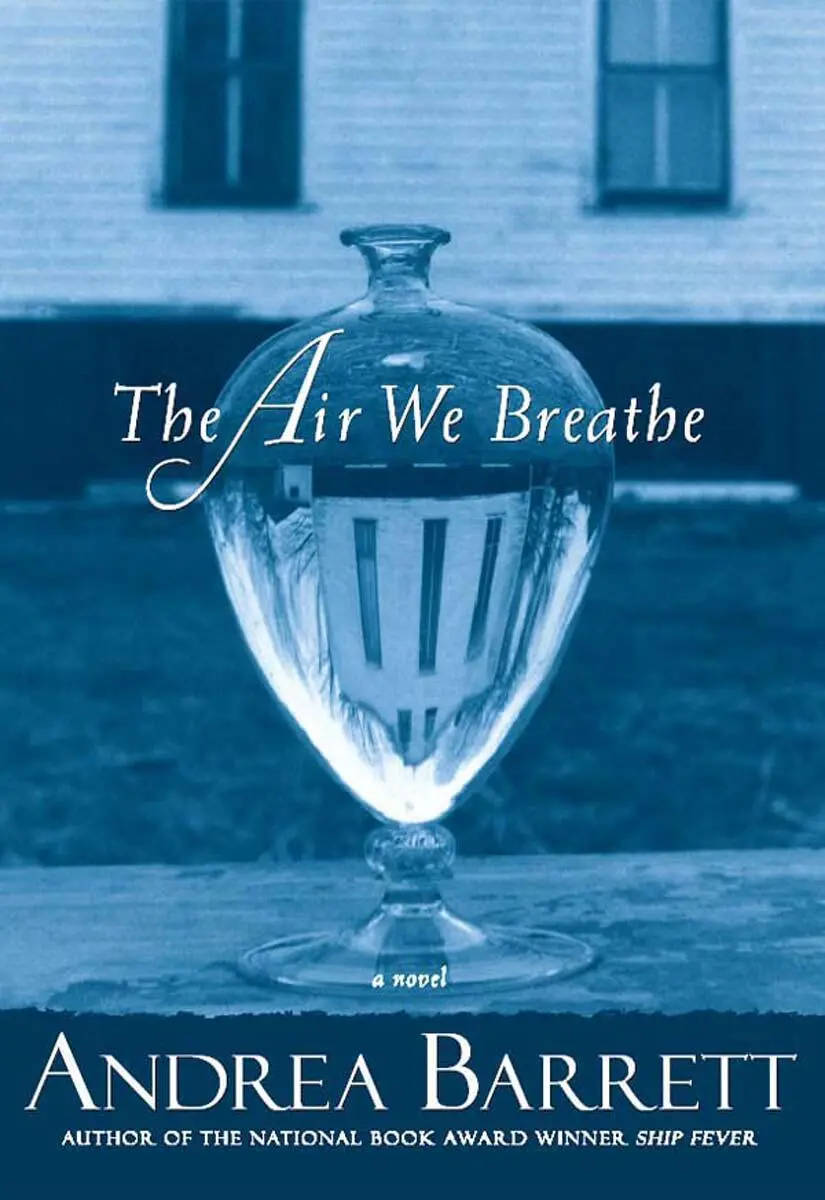
- Название:The Air We Breathe
- Автор:
- Издательство:W. W. Norton & Company
- Жанр:
- Год:2007
- ISBN:нет данных
- Рейтинг книги:3 / 5. Голосов: 1
-
Избранное:Добавить в избранное
- Отзывы:
-
Ваша оценка:
The Air We Breathe: краткое содержание, описание и аннотация
Предлагаем к чтению аннотацию, описание, краткое содержание или предисловие (зависит от того, что написал сам автор книги «The Air We Breathe»). Если вы не нашли необходимую информацию о книге — напишите в комментариях, мы постараемся отыскать её.
) by the National Book Award-winning author of
. In the fall of 1916, America prepares for war — but in the community of Tamarack Lake, the focus is on the sick. Wealthy tubercular patients live in private cure cottages; charity patients, mainly immigrants, fill the large public sanatorium. Prisoners of routine, they take solace in gossip, rumor, and — sometimes — secret attachments. But when the well-meaning efforts of one enterprising patient lead to a tragic accident and a terrible betrayal, the war comes home, bringing with it a surge of anti-immigrant prejudice and vigilante sentiment.
The Air We Breathe — читать онлайн бесплатно полную книгу (весь текст) целиком
Ниже представлен текст книги, разбитый по страницам. Система сохранения места последней прочитанной страницы, позволяет с удобством читать онлайн бесплатно книгу «The Air We Breathe», без необходимости каждый раз заново искать на чём Вы остановились. Поставьте закладку, и сможете в любой момент перейти на страницу, на которой закончили чтение.
Интервал:
Закладка:
Those of us involved in the Wednesday sessions gathered, along with everyone else, in the cramped new dining room. We sat, Miles stood, as if in mockery of the learning circle he’d started so optimistically. His slight figure was draped in a new suit, his hair freshly trimmed and his league badge glittering on his vest each time a gesture parted his jacket. He was only a few inches taller than Dr. Petrie and we’d never found him impressive. But the recent excitement seemed to have improved his health, and as he summarized what he’d heard about the opening and closing door in the back of the dining hall — those three men who’d talked to us, he said smoothly, worked for him — his voice took on a crisp authority. He read from notes, neatly organized; those sitting near the front could see the hand-drawn arrows marking his main points. From the interviews his agents had just conducted, along with data from the other, earlier reports, he’d assembled a single chronology, which he now reviewed with us.
At 8:15 the first reel had started and at 8:16 Mick had made a joking comment in answer to our groan of disappointment. At 8:30 the screen had gone blank while Mick switched from the short film about the fighting in France to the one about the ships attacked by submarines; we had talked a lot during that pause. At 8:34 the second reel had started. Myra started coughing at 8:36 and the overhead lights went on as Stephen and Gloria rushed her out. Charlie and Zoltan then righted the fallen chairs; the night nurse entered from the corridor and summoned Eudora to help; the lights went out again.
No later than 8:40 Mick resumed showing the second reel in the darkened room. Somewhere between 8:43 and 8:46 many of us saw, for the first time, the tall rectangle of light in the wall as the door to the corridor opened and then closed again. Some whispering followed, and also other noises; there were several reports of an argument. At about 8:55 the door to the corridor opened again, and swiftly closed — but within two minutes it reopened. At that point someone, annoyed at the interruptions, had called out, “Shut it!” Just after the door closed — at 8:58—Mick had switched reels again. By 9:02 the film showing aerial combat was running and by 9:04 the tall white rectangle appeared in the wall for the fourth and final time. At 9:16 Kathleen started coughing…
“The rest you know,” Miles said.
And indeed we did — but still, for the sake of completeness, he marched us through the moments when Kathleen had lifted her hands from the piano and risen, and when Jaroslav had thrown open the main entrance doors, and when Albert, Otto, Ian, and Frank had starting smashing the windows to free us. Every event he pinned to his timeline, asking us at each point to show, by raising our hands, how many agreed.
We gaped at the numbers, so strangely precise, but mostly we did agree: not because we were sure he was right but because already, ten weeks after the fire, the details were jumbled in our memories. Belle remembered the feel of her thigh sliding along the rim of the window, a sensation of cold rather than pain; then the surprise as she saw her own blood pouring out — but had that been before, or after, she’d seen someone crawling along the floor with a napkin tied over his nose? Sophie remembered watching the fumes slide toward her like dirty water and then, as they reached the chairs, gather and rise into clouds that engulfed her even as she saw that transformation. Agnew remembered the sound of his own ribs cracking as Dr. Richards, pulling him from the room, paused just long enough for Ian, who tripped on Frank, to fall on top of him. Each of us remembered a few brilliant images, and the fear, the smells, the sounds, the panic: but the mundane minutes before the fire, what had happened when and in what order — how could we be sure? We did our best.
“I’d like,” Miles said, “to try to amplify just a few points.” He looked down at his timeline, now heavily annotated. “Most of you seem to agree that the door at the rear opened four times once the room was darkened again after Myra’s departure: between 8:43 and 8:46; at 8:55 and again either one or two minutes later; the final time at 9:04. Do any of you remember who you saw near the door?”
Five minutes here, five minutes there — who knew? “Eudora was sitting there for a little while. And Leo,” said Nan, who’d been near them.
Engrossed in trying to fit her own memories within the boundaries of that obdurate timeline, she didn’t grasp the point of Miles’s questions. Polly and Pietr, similarly preoccupied, murmured their agreement before any of us had absorbed the implications.
“Leo Marburg?” Miles asked. As if we had more than one Leo.
“Leo, Leo, ” Albert responded impatiently. The long wound down his right arm had inflamed a nerve, and the pain made him testy. “The one your other chauffeur has such a crush on. She was there too, they were having some sort of fight.”
Miles drew his lips together. “Naomi was here that night?”
We could see from his face that this upset him, but we didn’t understand why. A different voice added, “She brought a package for Leo.”
“For Leo ?” Miles said. His gaze moved over Vivian, and then over the scars on Frank’s hands, but he didn’t seem to be seeing us. “When did she get here?”
No one knew; we’d noticed the argument, but nothing before it. But Leo, insisted someone — it might have been Belle — had been there the whole time. How else could he have been poisoned so badly? And much of the time, Arkady added, it was Eudora to whom Leo had been whispering. She’d left, Frank said, to help clean up after Myra had her hemorrhage.
“That’s one of the times the door opened?” Miles interrupted.
“I think so,” someone said.
“And you think Leo was there all the rest of the time? While the door kept opening and closing?”
“We were watching the movies,” someone else said. “But he must have been there. How else could he have gone to help Kathleen?”
IN THE OLD BUILDING, Dr. Petrie’s office had been on the second floor, not far from the library, while Dr. Richards’ suite of four rooms had been on the ground floor, opposite the reception desk and within easy reach of important visitors. In their new quarters in the women’s annex they were squeezed into adjacent rooms, separated only by the flimsy walls and doors deemed sufficient when these were our bedrooms. Miles walked into Dr. Petrie’s office again, this time without knocking and without even looking at the chair. What, he asked, without sitting down, did Dr. Petrie know about a connection between Naomi and Leo Marburg?
“I hardly know Naomi,” Dr. Petrie said cautiously. “She never confided in me. But once or twice I did see her talking with Leo. And they had some sort of argument the night of the fire. She was gone before the trouble started, though.”
“Did you see her leave?”
“Someone did. Eudora, I think.”
“Did Leo go with her?”
Dr. Petrie spread his hands. “How would I know? It was dark before the fire started, and once it did — all I know is that I found him by Kathleen, both of them unconscious.”
Miles nodded and moved on to Dr. Richards’ office. The walls were so thin that Dr. Petrie could hear their voices, Dr. Richards remaining calm despite Miles’s increasing intensity. He heard Miles saying, We must, we must, before they left the office together, still talking earnestly.
THAT WEEK, we had just begun to use the rough kitchen and the new dining room reconstructed in the women’s annex. Our old tables were gone — stripping and refinishing them had turned out to be too much work — and at each of the new rectangular tables a dozen of us now sat elbow to elbow, men and women separated only by a narrow surface: the sole good change. We could look into each other’s faces, sit side by side and talk; apparently, given our new housing arrangements, separating us at meals no longer had a point. On the last day of July, while we were eating our midday dinner in each other’s company, the men who worked for Miles returned. After dinner, Abe, Arkady, and Otto stepped through the doorway to their room and found the three agents looking in the night-stands and under the beds, lifting the sheets and the blankets and peering at the books.
Читать дальшеИнтервал:
Закладка:
Похожие книги на «The Air We Breathe»
Представляем Вашему вниманию похожие книги на «The Air We Breathe» списком для выбора. Мы отобрали схожую по названию и смыслу литературу в надежде предоставить читателям больше вариантов отыскать новые, интересные, ещё непрочитанные произведения.










Обсуждение, отзывы о книге «The Air We Breathe» и просто собственные мнения читателей. Оставьте ваши комментарии, напишите, что Вы думаете о произведении, его смысле или главных героях. Укажите что конкретно понравилось, а что нет, и почему Вы так считаете.