György Spiró - Captivity
Здесь есть возможность читать онлайн «György Spiró - Captivity» весь текст электронной книги совершенно бесплатно (целиком полную версию без сокращений). В некоторых случаях можно слушать аудио, скачать через торрент в формате fb2 и присутствует краткое содержание. Год выпуска: 2015, Издательство: Restless Books, Жанр: Современная проза, на английском языке. Описание произведения, (предисловие) а так же отзывы посетителей доступны на портале библиотеки ЛибКат.
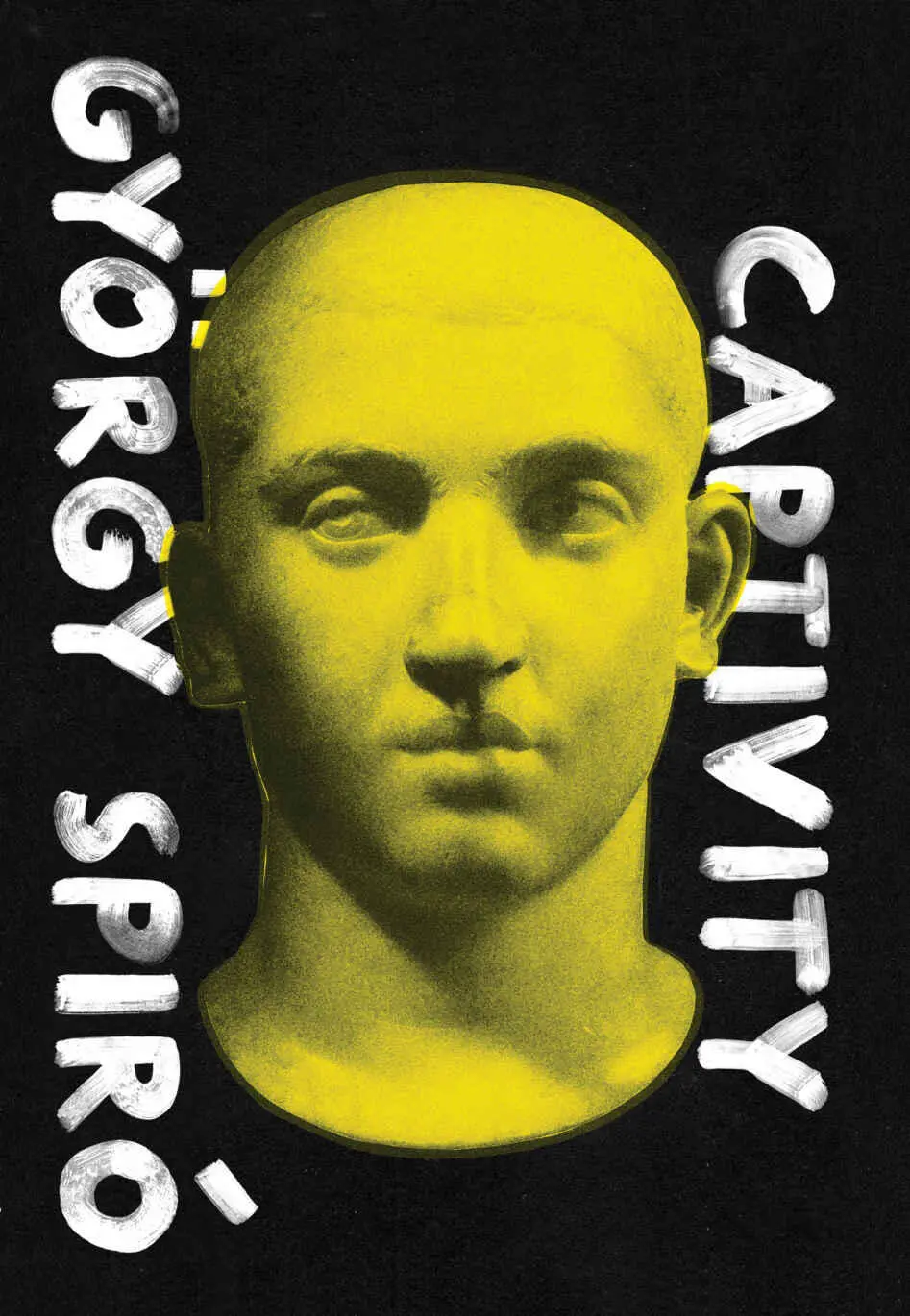
- Название:Captivity
- Автор:
- Издательство:Restless Books
- Жанр:
- Год:2015
- ISBN:нет данных
- Рейтинг книги:4 / 5. Голосов: 1
-
Избранное:Добавить в избранное
- Отзывы:
-
Ваша оценка:
Captivity: краткое содержание, описание и аннотация
Предлагаем к чтению аннотацию, описание, краткое содержание или предисловие (зависит от того, что написал сам автор книги «Captivity»). Если вы не нашли необходимую информацию о книге — напишите в комментариях, мы постараемся отыскать её.
A literary sensation in Hungary, György Spiró’s Captivity is both a highly sophisticated historical novel and a gripping page-turner. Set in the tumultuous first century A.D., between the year of Christ’s death and the outbreak of the Jewish War, Captivity recounts the adventures of the feeble-bodied, bookish Uri, a young Roman Jew.
Frustrated with his hapless son, Uri’s father sends the young man to the Holy Land to regain the family’s prestige. In Jerusalem, Uri is imprisoned by Herod and meets two thieves and (perhaps) Jesus before their crucifixion. Later, in cosmopolitan Alexandria, he undergoes a scholarly and sexual awakening — but must also escape a pogrom. Returning to Rome at last, he finds an entirely unexpected inheritance.
Equal parts Homeric epic, brilliantly researched Jewish history, and picaresque adventure, Captivity is a dramatic tale of family, fate, and fortitude. In its weak-yet-valiant hero, fans will be reminded of Robert Graves’ classics of Ancient Rome, I, Claudius and Claudius the God.
"With the novel Captivity, Spiró proved that he is well-versed in both historical and human knowledge. It appears that in our times, it is playfulness that is expected of literary works, rather than the portrayal of realistic questions and conflicts. As if the two, playfulness and seriousness were inconsistent with each other! On the contrary (at least for me) playfulness begins with seriousness. Literature is a serious game. So is Spiró’s novel.?"
— Imre Kertész, Nobel Prize — winning author of Fatelessness
"Like the authors of so many great novels, György Spiró sends his hero, Uri, out into the wide world. Uri is a Roman Jew born into a poor family, and the wide world is an overripe civilization — the Roman Empire. Captivity can be read as an adventure novel, a Bildungsroman, a richly detailed portrait of an era, and a historico-philosophical parable. The long series of adventures — in which it is only a tiny episode that Uri is imprisoned together with Jesus and the two thieves — at once suggest the vanity of human endeavors and a passion for life. A masterpiece."
— László Márton
“[Captivity is] an important work by yet another representative of Hungarian letters who has all the chances to become a household name among the readers of literature in translation, just like Nadas, Esterhazy and Krasznahorkai.… Meticulously researched.… The novel has been a tremendous success in Hungary, having gone through more than a dozen editions. The critics lauded its page-turning quality along with the wealth of ideas and the ambitious recreation of historical detail.”
— The Untranslated
“A novel of education and a novel of adventure that brings to life ancient Rome, Alexandria and Jerusalem with a vividness of detail that is stunning. Spiró’s prose is crisp and colloquial, the kind of prose that aims for precision rather than literary thrills. A serious and sophisticated novel that is also engrossing and highly readable is a rare thing. Captivity is such a novel.”
— Ivan Sanders, Columbia University
“György Spiró aspired at nothing less than (…) present a theory in novelistic form about the interweavedness of religion and politics, lay bare the inner workings of power and give an insight into the art of survival….This book is an incredible page turner, it reads easily and avidly like the greatest bestsellers while also going as deep as the greatest thinkers of European philosophy.”
— Aegon Literary Award 2006 jury recommendation
“What this sensational novel outlines is the demonic nature of History. Ethically as well as historically, this an especially grand-scale parable. Captivity gets its feet under any literary table you care to mention."
— István Margócsy, Élet és Irodalom
“This book is a major landmark for the year.”
— Pál Závada, Népszabadság
“It would not be surprising if literary historians were soon calling him the re-assessor and regenerator of the post-modern novel.”
— Gergely Mézes, Magyar Hírlap
“Impossibly engrossing from the very first page….Building on a huge volume of reference material, the novel rings true from both a historical and a literary point of view.”
— Magda Ferch, Magyar Nemzet
Captivity — читать онлайн бесплатно полную книгу (весь текст) целиком
Ниже представлен текст книги, разбитый по страницам. Система сохранения места последней прочитанной страницы, позволяет с удобством читать онлайн бесплатно книгу «Captivity», без необходимости каждый раз заново искать на чём Вы остановились. Поставьте закладку, и сможете в любой момент перейти на страницу, на которой закончили чтение.
Интервал:
Закладка:
“How come you speak Aramaic?” asked the other elderly man.
“That’s my mother’s native tongue. That’s what we speak at home.”
“Are you a Roman citizen?” the man asked.
“Yes, I am.”
Silence fell. The two elderly men shook their heads.
“If you’re a Roman citizen,” declared the strategos, “then we are unable to hear your case. In the national interest, we shall nevertheless have to check if you have been telling the truth. If not, and it proves that you truly are a Roman citizen, we shall hand you over to Rome to make its ruling.”
One of the elderly men quietly asked something, and the strategos faltered.
“When did you arrive in Jerusalem?” he asked Uri.
“Before Passover… Wednesday perhaps.”
The strategos nodded and turned toward the elderly man.
“A week has gone by; he can be regarded as pure.”
The elderly man also nodded.
“You will be led out now,” said the strategos. “Wait your turn.”
Uri had been about to say that he would confess to everything as long as they did not torture him, but by then they were already pushing him outside. They stopped in the corridor. The two guards stood next to him but did not take him by the arms. They waited. So did Uri.
From Uri’s right, a thin man was dragged along, held by the arms by two guards. They stopped at the door, opened it, led him in, then shut the door.
Uri closed his eyes and went over the hearing again, only opening his eyes when it had ended. At that point the man was brought out. Those two guards likewise stopped, with the man between them looking at his feet and panting.
Yet another man was brought in from the right by two guards. The procedure was the same. Uri closed his eyes and once more went over the hearing, and when that was done this man was also brought out.
If that’s a court hearing, thought Uri, they get through their cases fast.
There were eight other prisoners besides Uri and sixteen guards by the time the strategos came out of the room, the two elderly men behind him. The strategos went to the left down the corridor, with the guards and the accused setting off after him.
They reached the end of the palace; the light hit Uri’s eyes. Below him was a drop of several stories deep. He grew dizzy. He threw a glance backward. On the third floor of the citadel they had stepped out onto the top of the double colonnade, which surrounded the Temple. The columns of white marble were covered with cedar planks. He looked up at the fortress. He could see a tower at each of the four corners, the eastern and southern ones being taller than the other two.
He turned to the front, southward. On his right there was a parapet on the top of the colonnade, guarding the outer edge, but not one for the inner edge, and the parapet was not high anyway, reaching the hips, so one might easily fall off. He had a sudden empty feeling in his stomach, and even though the top of the colonnade was not particularly narrow, fifteen or twenty cubits perhaps, he still felt dizzy. They would have to go the length of the stone-flagged ledge. He peered to the front, narrowing his eyes; the colonnade led past the mass of the Temple and met at the end, at right angles, with an enormous, very long colonnade that was two stories high; the upper level, which must have been the royal stoa, was narrower than the lowers. Around the middle of the colonnade, down on the right, a bridge: that must be the viaduct there had been so much dispute about, which connected the Upper City with Temple Square.
They moved slowly; Uri looked to his left and gazed at the huge, scaffolded edifice of the Temple. It was an odd, T-shaped structure, the farther block to the east being taller than the western limb pointed toward them, which had lower wings on both sides. Smoke was rising above the Temple; meat was being burned, sacrifices being made even at this time. The altar stone could not be seen from the wall; it was concealed by the giant building. The parts of the T-shaped building that were not scaffolded dimly gleamed white and yellow. As they got closer Uri could see that the enormous stone blocks were faced in some places with marble plates, in others with gold sheets. Presumably similar trim was going to be applied to the whole, and that was the reason for the scaffolding. He noticed the same sort of parapet on the flat roof of the T-shaped building as on the top of their own colonnade: it was of crenellated stone, perhaps so that soldiers would be able to shoot arrows downward if need be.
The Temple was a fortress, and that was why it was so massive and tall — maybe as much as one hundred cubits from its foundations. Buildings as imposing as this were not erected in Rome; the buildings on Capitoline Hill were much lower.
An empty space lay to the north of the Temple, toward the Antonia, with no more than a few people wandering in it. What might that be?
He nudged in the side the prisoner next to him, and indicated the square with his head.
“It belongs to the Gentiles,” said the sullen man.
In other words, that was the part that non-Jews could enter if they wished to observe the central edifice of the Jewish faith; they were not allowed elsewhere.
Uri was walking in the middle of the row, as far as he could get from the two edges of the ledge. When he looked to the right, there, beyond the viaduct, at the end of a long fortified wall stood Herod’s palace, where he had eaten dinner yesterday evening. He could see the two wings of the building, and was surprised at how tall the three towers at the northern end were, the most westerly of them being the tallest. All three towers seemed to have house-like structures on their tops, with windows and roof gardens. He was screwing up his eyes because he was unable to make them out well, with the white marble towers glistening fiercely in the strong sunlight. Someone else should be here, someone who can see, he thought. He looked back to the left, then again to the right. He was able to see that the Temple was higher than even the tallest of the towers. It may well be a regulation, he thought.
From the top of the colonnade he could also vaguely discern that the Temple esplanade was itself divided into a number of sections, and between these ran bulky brick and stone walls, higher than a man and of varied design. Uri cupped both hands in front of his eyes; the guard let him. On the eastern half of the large, paved square that was not built on and situated toward the Antonia, north of the Temple, skinned animal carcasses hung on hooks from huge columns. That was therefore the slaughterhouse, and it was from there that the hunks of the sacrificial offerings were taken to put on the top of the altar. Uri peered; he could see nothing to the east beyond the far colonnade, only peacefully leafing hillocks with trees and gardens. That was presumably the Valley of Hinnom, running between the hills and Temple Mount; it was from there that sacrificial animals were taken to the slaughterer’s bench. Somewhere down there would have to be the hand-over place where the Levite slaughterers inspected the sacrificial animals and any that did not prove to be intact would be rejected. That must be unpleasant, Uri considered: what was the procedure to be followed in such a case? It had to be redeemed with money, for an extra fifth over its value? Or bring a replacement animal later if one did not have that much money? How did it go?
To the right, a glorious colonnade ran from Herod’s palace toward the next construction, the Hasmoneans’ palace. It was a dark, plain building; he could not see it very well because of the sun shining in his eyes, but that palace was not encased with white marble, that was for sure.
They clambered up onto a two-cubit high platform, proceeding over the top of the gate above the viaduct. Uri dared not look down; one of the prisoners quietly said, “The Sanhedrin!” Uri took a grip on himself and looked down; he could see a quadrangular building pasted onto the base of the viaduct. Could that really be where the Great Sanhedrin held its sessions? The Hall of Hewn Stones? This building, the Xystus? He did not dare ask. His previous fellow prisoners had said that the Sanhedrin was no longer holding its sessions there.
Читать дальшеИнтервал:
Закладка:
Похожие книги на «Captivity»
Представляем Вашему вниманию похожие книги на «Captivity» списком для выбора. Мы отобрали схожую по названию и смыслу литературу в надежде предоставить читателям больше вариантов отыскать новые, интересные, ещё непрочитанные произведения.







Обсуждение, отзывы о книге «Captivity» и просто собственные мнения читателей. Оставьте ваши комментарии, напишите, что Вы думаете о произведении, его смысле или главных героях. Укажите что конкретно понравилось, а что нет, и почему Вы так считаете.