Rupert Thomson - Divided Kingdom
Здесь есть возможность читать онлайн «Rupert Thomson - Divided Kingdom» весь текст электронной книги совершенно бесплатно (целиком полную версию без сокращений). В некоторых случаях можно слушать аудио, скачать через торрент в формате fb2 и присутствует краткое содержание. Год выпуска: 2012, Издательство: Bloomsbury UK, Жанр: Современная проза, Фантастика и фэнтези, на английском языке. Описание произведения, (предисловие) а так же отзывы посетителей доступны на портале библиотеки ЛибКат.
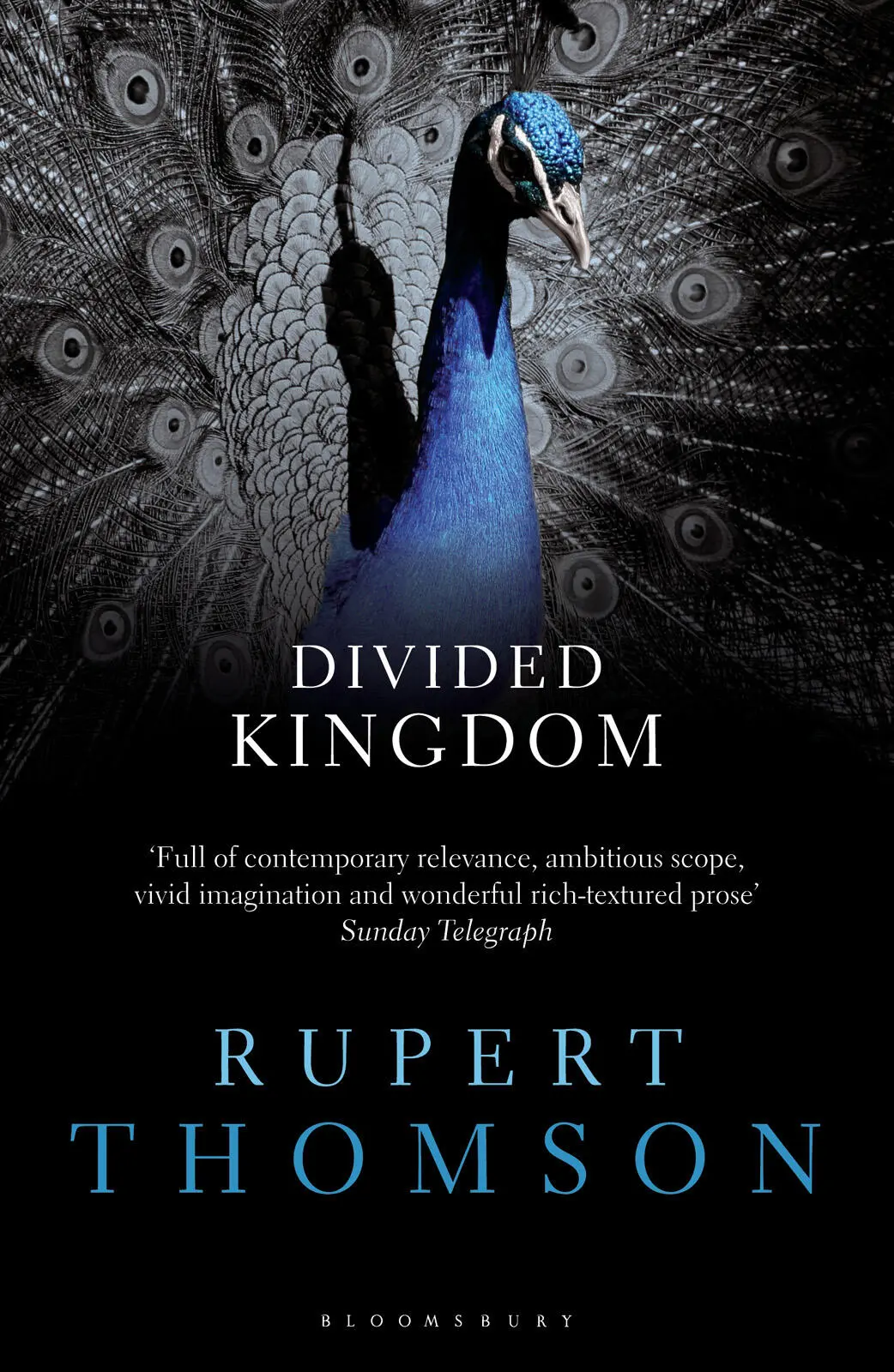
- Название:Divided Kingdom
- Автор:
- Издательство:Bloomsbury UK
- Жанр:
- Год:2012
- ISBN:нет данных
- Рейтинг книги:5 / 5. Голосов: 1
-
Избранное:Добавить в избранное
- Отзывы:
-
Ваша оценка:
Divided Kingdom: краткое содержание, описание и аннотация
Предлагаем к чтению аннотацию, описание, краткое содержание или предисловие (зависит от того, что написал сам автор книги «Divided Kingdom»). Если вы не нашли необходимую информацию о книге — напишите в комментариях, мы постараемся отыскать её.
Divided Kingdom — читать онлайн бесплатно полную книгу (весь текст) целиком
Ниже представлен текст книги, разбитый по страницам. Система сохранения места последней прочитанной страницы, позволяет с удобством читать онлайн бесплатно книгу «Divided Kingdom», без необходимости каждый раз заново искать на чём Вы остановились. Поставьте закладку, и сможете в любой момент перейти на страницу, на которой закончили чтение.
Интервал:
Закладка:
‘It’s never the things we do that we regret the most,’ I said. ‘It’s the things we didn’t do. Or haven’t done. Or can’t.’
I heard Aaron’s head turn on his pillow, but he didn’t say anything, and a curious, almost savage impatience took hold of me.
‘You know, there’s nothing particularly special about you,’ I said. ‘You’re just like all the rest of us. We’re all the same. Not because we’re melancholic — whatever that means — but because we’re haunted by the lives we could have had. The lives we never had a chance to live.’
I wasn’t talking to Aaron any more. I wasn’t even aware of him in the room — or even of the room itself. The air above my face vibrated like a cloud of midges. I remembered how I had tried to explain myself to Fernandez, and how, simply by talking, I’d made new discoveries about myself. Though Fernandez had listened, he had, in the end, become exasperated with me. You people who don’t know what you’re doing. Or perhaps it was because I had turned up on his doorstep. Because I’d seen through him, as he put it. But yes, I must have sounded delirious, frenetic. I had been suffering from shock, of course — I’d cut myself loose, left everything behind — and there had been exhaustion too. Now, though, I had more clarity. The authorities had deprived me of a life that was mine, and mine alone. They hadn’t asked my permission or given me a choice. They’d just taken it. By force. In a sense, then, I had been murdered. How I wished I’d shouted that at Dr Gilbert. You murderer!
A glass smashed one floor below.
I listened to the yelling and the helpless laughter, then I listened to people staggering to bed, doors slamming shut, the throaty flushing of the lavatory, and when all that eventually died down, I listened to the window creak with cold and the air sigh in and out of Aaron’s lungs. Thinking back to the night of the bomb, the moment I disappeared, it seemed to me that what I’d done was both defy those in power and take a kind of revenge on them. It had been my way of saying, No, I won’t accept what you offered me. And no, I’m not going to be grateful. Finally, after twenty-seven years, I had asserted myself. Twenty-seven years! That’s how long it takes sometimes. To make the connections, to determine what you feel. To realise.
Aaron fell asleep, and then, perhaps an hour later, so did I, and by the time I woke again, at nine in the morning, Aaron was already dressed and standing at the bedroom window, watching the snow.
A white Christmas, the first in many years.
And nobody had killed themselves.
In fact, nothing terrible happened, not unless you counted the bizarre events of Boxing Day night. Sometime towards dawn on the 27th I was woken by shrill screams coming from below. As I opened my door, Clarise thundered past in her quilted housecoat, a beige eye-mask pushed high up on her forehead. I followed her down the stairs and into the kitchen where we found Brendan Burroughs stretched out on the table, his naked torso slathered in flour, sugar and raw eggs. Starling and Horowicz were standing over him, beating him with wooden spoons.
When Clarise finally found her voice, she asked the two men what in the world they thought they were doing.
‘What’s it look like?’ Horowicz said.
‘I don’t know,’ Clarise said. ‘I’ve no idea. That’s why I’m asking.’
Horowicz came round the table and stood in front of her, his body swaying, and he spoke very slowly, as though he thought she was stupid.
‘Can’t you see?’ he said. ‘We’re making a cake.’
In the New Year I began to go for long walks after supper, partly because I wanted to escape the endless drinking sessions in the front room, which left me feeling irritable and jaded, but also because I was finally becoming curious about the town to which I had been sent. Iron Vale was famous for its trains. It was here, once upon a time, that locomotive engines for the entire country had been manufactured. During the last two decades, however, the foundries and rolling mills had closed, and all that remained of the glory days was the railway station, which stood high on a ridge with its own ornate red-brick clock tower. Certainly Victor would have known about the town, and during my first desultory walks I often felt his presence quite distinctly, Victor as a young man, his big head topped with unlikely corrugations of black hair, his eyes pale with enthusiasm.
I quickly settled on one or two favourite routes. I would often make my way out to a piece of flat land that lay at the edge of a housing estate. It was the strangest place. There were roads and pavements, there were street lights too, but there were no buildings. The roads turned corners, linking up with one another, forming orderly rectangles and squares, and yet the areas of scrub grass in between, where the houses should have been, were strewn with rubbish — umbrellas, condoms, microwaves. Crows sat on top of every street lamp like memorials to some dark event. I suppose the council had simply run out of money, but it always looked to me as if something sinister or supernatural had occurred. Other times I would wander out into the country, to a village a couple of miles south of where we lived. I would walk over an old stone bridge and down into a churchyard that stood right on the river. Though small, the church was exquisite, its walls built from a mixture of red and white sandstone, most of which had been quarried from the river bed itself, while the bridge, with its elaborate arches, seemed to hark back to a more dynamic era, when local people had been full of energy and aspiration. On my first visit I entered through a heavy iron gate that groaned loudly on its hinges. Moving among the tombs, I found the most beautiful surnames — Story, Eden, Raine. Towards the rear of the church, where the property had been allowed to go to seed, the dead became anonymous, their dim brown slabs illegible and tilting haphazardly among the weeds and tall grasses. Even here, though, there was a sense of release, a feeling of having been freed from time’s net. This wouldn’t be such a bad place to be buried, I thought. The river’s constant presence near by. Trees shifting in the breeze that lifted off the water. And, in the distance, a long low ridge — the moors — on which, that very afternoon, unearthly bright-orange sunlight fell. No, not a bad place at all.
One January night, standing in the middle of the bridge and looking down into the churchyard, I saw three scraps of white in the darkness. At first I couldn’t decide what they were, then one of the scraps shifted, developing a head and arms, and in that same moment I remembered someone telling me that White People were often to be found in cemeteries. Various theories had been put forward, the most obvious being that they instinctively identified with dead people. After all, one could argue that White People were dead too. Dead in the eyes of the authorities, at least. Bureaucratically dead. As I watched, the three figures moved behind a row of yew trees, then they appeared again, their white cloaks showing in stark relief against one of the grander tombs. Thinking it might be interesting to observe them at close range, I crossed the bridge, swung a leg over the churchyard wall — the gate would have made too much noise — and stepped down into coarse grass. I wasn’t sure why I was so curious, or what it was I hoped to learn. I felt compelled, though — guided even. It was as if my body comprehended something that my mind did not.
I crept slowly forwards, crouching among the gravestones. I imagined this would be, among other things, a test of their psychic powers. Would they detect my presence? And if they did, what then? My heart beat harder, as though there was the possibility of danger. As I reached the yew trees, the moon rolled out into a patch of clear sky, and I saw them ahead of me, passing through a gap in the fence at the back of the cemetery. Now, perhaps, I could close the distance between us. I ran to the fence, then knelt in the shadow of an overgrown holly bush to catch my breath. I could hear them on the other side. There weren’t any words, just odd little grunts and snuffles. No wonder some people thought of them as animals.
Читать дальшеИнтервал:
Закладка:
Похожие книги на «Divided Kingdom»
Представляем Вашему вниманию похожие книги на «Divided Kingdom» списком для выбора. Мы отобрали схожую по названию и смыслу литературу в надежде предоставить читателям больше вариантов отыскать новые, интересные, ещё непрочитанные произведения.

Обсуждение, отзывы о книге «Divided Kingdom» и просто собственные мнения читателей. Оставьте ваши комментарии, напишите, что Вы думаете о произведении, его смысле или главных героях. Укажите что конкретно понравилось, а что нет, и почему Вы так считаете.