Rupert Thomson - Divided Kingdom
Здесь есть возможность читать онлайн «Rupert Thomson - Divided Kingdom» весь текст электронной книги совершенно бесплатно (целиком полную версию без сокращений). В некоторых случаях можно слушать аудио, скачать через торрент в формате fb2 и присутствует краткое содержание. Год выпуска: 2012, Издательство: Bloomsbury UK, Жанр: Современная проза, Фантастика и фэнтези, на английском языке. Описание произведения, (предисловие) а так же отзывы посетителей доступны на портале библиотеки ЛибКат.
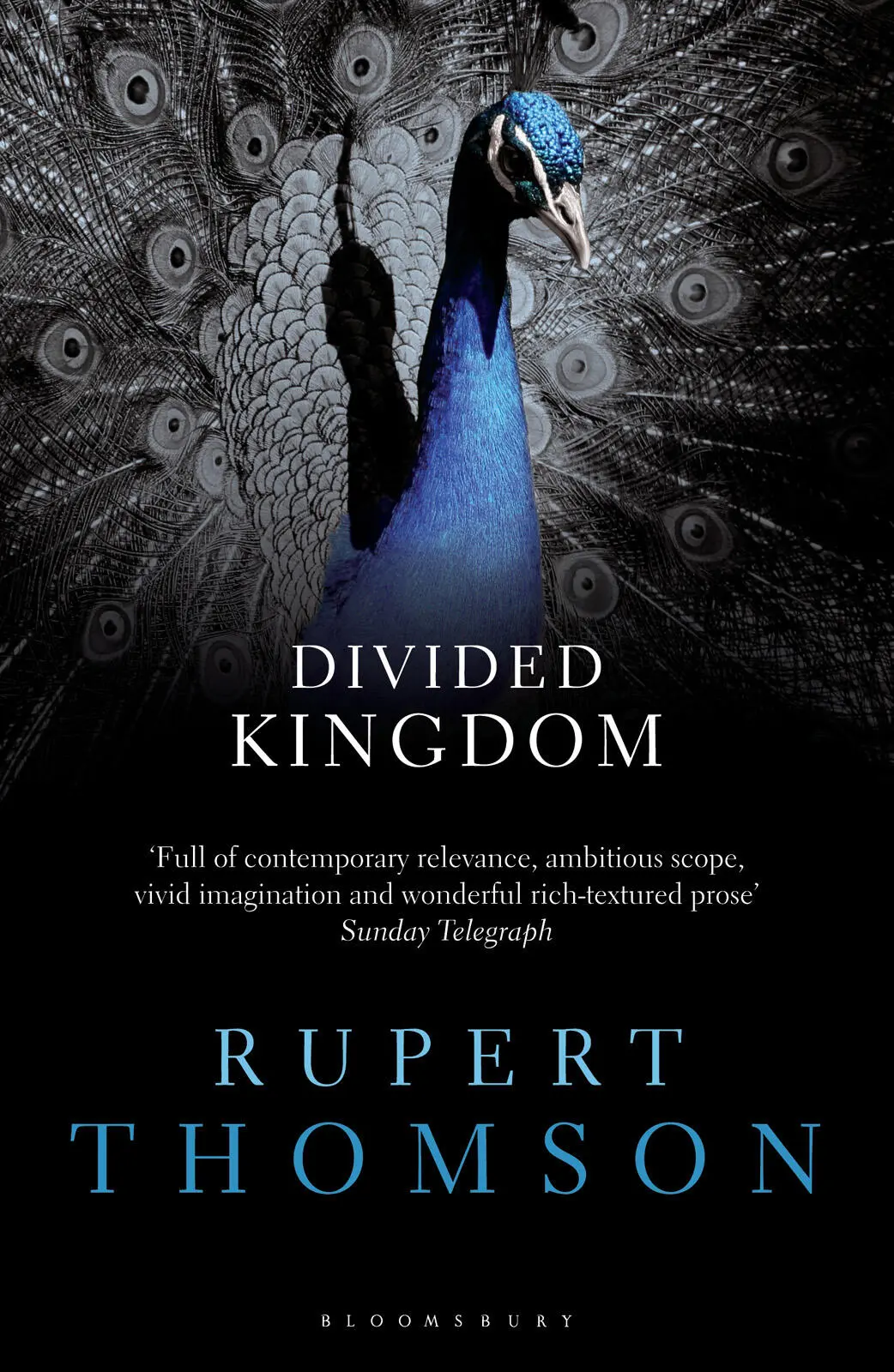
- Название:Divided Kingdom
- Автор:
- Издательство:Bloomsbury UK
- Жанр:
- Год:2012
- ISBN:нет данных
- Рейтинг книги:5 / 5. Голосов: 1
-
Избранное:Добавить в избранное
- Отзывы:
-
Ваша оценка:
Divided Kingdom: краткое содержание, описание и аннотация
Предлагаем к чтению аннотацию, описание, краткое содержание или предисловие (зависит от того, что написал сам автор книги «Divided Kingdom»). Если вы не нашли необходимую информацию о книге — напишите в комментариях, мы постараемся отыскать её.
Divided Kingdom — читать онлайн бесплатно полную книгу (весь текст) целиком
Ниже представлен текст книги, разбитый по страницам. Система сохранения места последней прочитанной страницы, позволяет с удобством читать онлайн бесплатно книгу «Divided Kingdom», без необходимости каждый раз заново искать на чём Вы остановились. Поставьте закладку, и сможете в любой момент перейти на страницу, на которой закончили чтение.
Интервал:
Закладка:
Five men were already installed in the house when I arrived. The room below mine was occupied by a man with an unlined, almost childish face whom everyone referred to, mysteriously, as Marge. A sour-looking ex-town-planner called Martin Horowicz lived across the landing from me. His room looked out over the street. He appeared to have a fixation on Clarise Tucker, the landlady, but she was at least twice his size and had no trouble fending him off. She kept two rooms at the back of the house, both of which were painted pastel colours and filled with soft toys. Sandwiched between my room and that of the town-planner was a young man by the name of Aaron Moghadassi. I rarely heard him speak. Every now and then, while sitting at the kitchen table or in the lounge, he would bring his right hand slowly up out of his lap. He would examine the palm, then the back of the hand, then the palm again, and he would frown, seemingly baffled by the fact that they looked different. An old pot-smoking carpenter by the name of Urban Smith had made his home in the attic. The fifth man, Jack Starling, had moved into the converted outhouse. With the three new arrivals — myself, Lars Friedriksson and Bill Snape — the house was full.
To begin with, I kept to myself, never leaving my room except at mealtimes, or when there were chores to be done, but gradually I ventured out into the common parts of the house. I encountered despondency and gloom, which was only to be expected, but I also encountered merriment, and some, like Clarise, veered wildly between the two. I had thought, on first meeting her, that she was large, but she was actually a woman of such vast proportions that she was as wide when viewed sideways-on as she was from the front or back. She tended to raise the subject herself, and usually with hilarious results. ‘Why, I’m practically square!’ she shrieked on one of the first evenings I spent downstairs. ‘Yes, you are square,’ Jack Starling agreed. ‘Like a plinth.’ He grasped his chin between finger and thumb in a parody of thoughtfulness, and then added, with a sly glance in Horowicz’s direction, ‘Now what are we going to put on top of you?’ They had all howled with laughter, Clarise included.
Most nights, after supper, she would switch on the imitation coal fire in the front room, draw the brown velour curtains and gather us around her — ‘my boys’, as she called us. We would fog the air with cigarette smoke and down Jack Starling’s lethal home-made beer, and Urban Smith, who had a fine baritone voice, would entertain us with his extensive repertoire of morbid songs, or Lars Friedriksson would read excerpts from the autobiography he was writing, a work that wasn’t remotely amusing in itself but was rendered so by his unbelievably earnest and lugubrious delivery. Later, one of the men would start complaining with great relish about something or other — we all enjoyed a good moan — or else somebody would embark on an anecdote, and what anecdotes they were, riddled with mythomania and self-delusion. Since we were living in the Green Quarter now, these stories often hinged on some misfortune or disaster, and long before she retired to bed, Clarise would have tears in her eyes. She would not be the only one. The combination of her infectious sentimentality and the potent home brew was enough to bring anyone’s emotions to the surface. I didn’t take up smoking, but I drank and wept with the rest of them, and I laughed the peculiar, giddy, almost hysterical laughter of the melancholic.
Of all the tales that were told, none was stranger than Marge’s, and I heard it not in the front room but privately, during a walk through the neighbourhood. One afternoon in the middle of December I was returning from the town centre, where I had just collected my weekly allowance, when I spotted him on the road ahead of me. Drawing closer, I saw that he was clutching at a tree-trunk with both hands and squinting upwards through the branches. He seemed apprehensive, if not actually frightened. I stopped a few feet away and asked if I could help.
‘Help?’ he said. ‘I don’t know. I’m not sure.’ His eyes wobbled a little as he brought them down from the sky. ‘What’s that sun feel like?’
‘It feels good.’
‘Is it warm?’
‘No, not very.’
‘Oh.’ If his face looked unnaturally youthful, his voice sounded like that of a much older man, the tone uncertain, tremulous.
I asked him whether he was going back to the house.
‘I’d like to, yes,’ he answered mysteriously. As he spoke, the sun slipped behind a cloud. The day darkened. ‘Quick,’ he said. ‘No time to lose.’ He started up the road, bending forwards from the waist, his badly darned elbows jabbing at the air.
I watched for a second or two, then followed.
‘You’re Marge, aren’t you,’ I said when I had caught up with him.
He gave me a doleful glance. ‘It’s supposed to be a joke.’
‘I don’t get it.’
‘They haven’t told you?’
‘No.’
He shook his head. ‘That Horowicz. He thinks he’s so clever.’
As we hurried back towards the Cliff, Marge told me something of his life, often stopping in mid-sentence to scrutinise the sky. Once, when the sun broke through unexpectedly, he looked wildly about and then flung himself beneath the bench in a bus shelter, where he lay quite motionless, eyes staring.
His real name was Brendan Burroughs, he said, and for as long as he could remember he had believed that he was made of butter. I thought I had misheard him, but I chose not to interrupt. Instead, I just watched him carefully, as before. That was why people called him Marge, he was saying. They thought it was funny. He had always known he was different, though, right from when he was a small boy, but he’d never found a way of telling anyone back then, not even his parents. Especially not his parents. If they had learned the truth about him, how could they have looked their neighbours in the eye? They would have been so embarrassed. He had been forced to live in a kind of solitary confinement, with no one to turn to for comfort or advice. He’d had to take great care at all times. In the summer, for instance. He shuddered. How he used to dread the summer! When it got hot, he would seek out the coolest places — the garden shed, the cupboard under the stairs, the cellar. Sometimes, when his parents were out, he would empty the fridge and climb inside. The presence of other butter on the shelves reassured him. His mother opened the door once when he was curled up in there. She screamed and dropped the bowl of trifle she was holding. He could still remember the look of all that sponge and jelly on the floor. As if something had been slaughtered. She asked him what he was doing. I don’t want to go bad , he said. It was as close as he ever came to revealing his secret.
Chunks of white sunlight had appeared on the street ahead of us, and Brendan had to be circumspect, avoiding the bright areas as a child avoids the cracks between paving-stones. Climbing down into a strip of scrubby parkland, we followed a shallow gully for a while, the stream at the bottom coated with a frothy brownish-yellow scum. Sometimes the stream would burrow under a road, and we would join up with it on the other side. Above our heads the clouds seemed to be merging into a single gloomy canopy. Relieved, perhaps, Brendan became talkative again. He spoke about the dangers of winter — open fires, hotwater bottles, central heating … Once, when he was a teenager, he had accidentally leaned against a radiator and he had felt the backs of his thighs start to melt.
‘You can’t begin to imagine,’ he said darkly, ‘what that feels like.’
I agreed that I could not.
‘Where were you before this?’ I asked him.
Читать дальшеИнтервал:
Закладка:
Похожие книги на «Divided Kingdom»
Представляем Вашему вниманию похожие книги на «Divided Kingdom» списком для выбора. Мы отобрали схожую по названию и смыслу литературу в надежде предоставить читателям больше вариантов отыскать новые, интересные, ещё непрочитанные произведения.



Обсуждение, отзывы о книге «Divided Kingdom» и просто собственные мнения читателей. Оставьте ваши комментарии, напишите, что Вы думаете о произведении, его смысле или главных героях. Укажите что конкретно понравилось, а что нет, и почему Вы так считаете.