Rupert Thomson - Divided Kingdom
Здесь есть возможность читать онлайн «Rupert Thomson - Divided Kingdom» весь текст электронной книги совершенно бесплатно (целиком полную версию без сокращений). В некоторых случаях можно слушать аудио, скачать через торрент в формате fb2 и присутствует краткое содержание. Год выпуска: 2012, Издательство: Bloomsbury UK, Жанр: Современная проза, Фантастика и фэнтези, на английском языке. Описание произведения, (предисловие) а так же отзывы посетителей доступны на портале библиотеки ЛибКат.
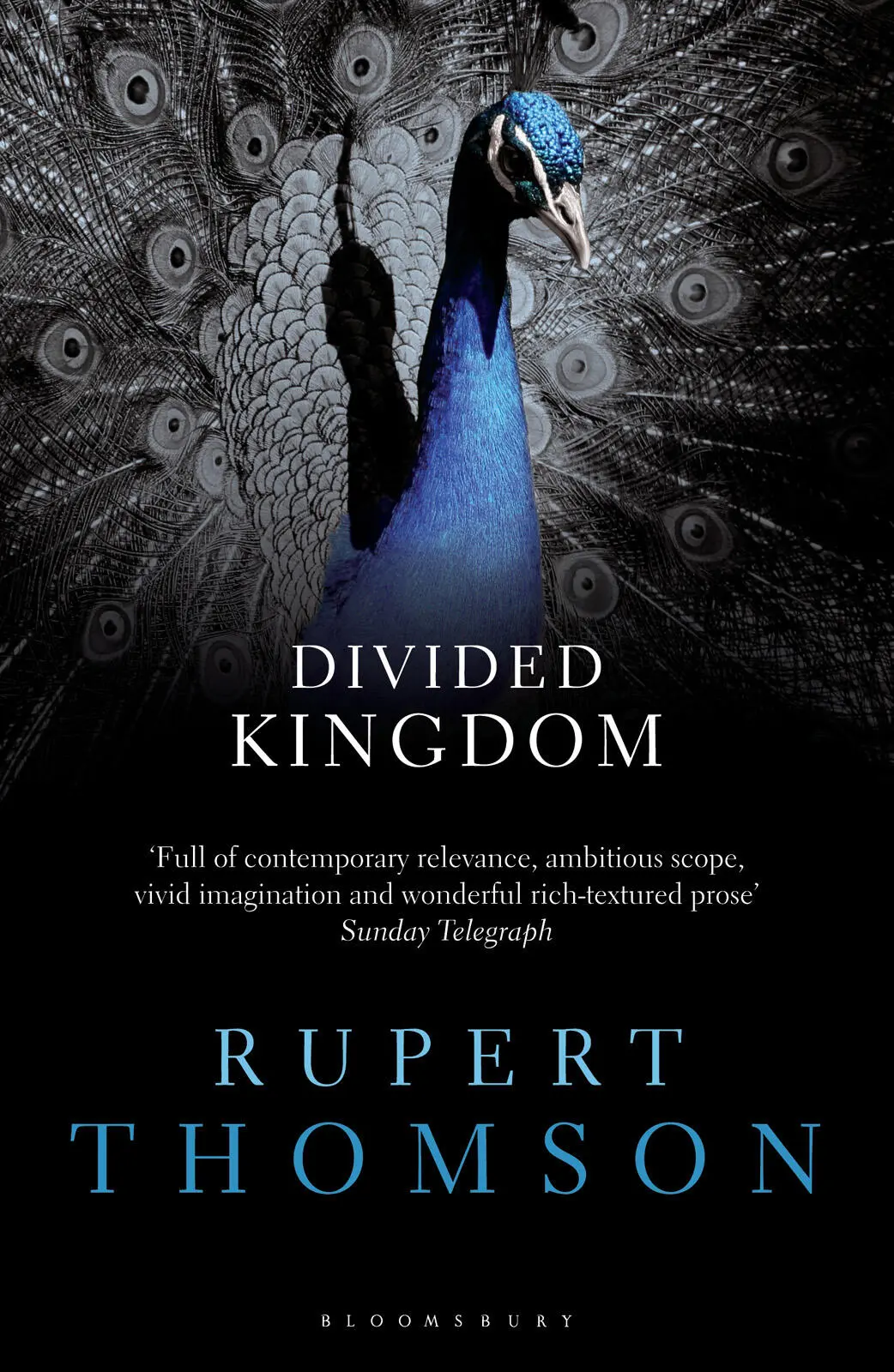
- Название:Divided Kingdom
- Автор:
- Издательство:Bloomsbury UK
- Жанр:
- Год:2012
- ISBN:нет данных
- Рейтинг книги:5 / 5. Голосов: 1
-
Избранное:Добавить в избранное
- Отзывы:
-
Ваша оценка:
Divided Kingdom: краткое содержание, описание и аннотация
Предлагаем к чтению аннотацию, описание, краткое содержание или предисловие (зависит от того, что написал сам автор книги «Divided Kingdom»). Если вы не нашли необходимую информацию о книге — напишите в комментариях, мы постараемся отыскать её.
Divided Kingdom — читать онлайн бесплатно полную книгу (весь текст) целиком
Ниже представлен текст книги, разбитый по страницам. Система сохранения места последней прочитанной страницы, позволяет с удобством читать онлайн бесплатно книгу «Divided Kingdom», без необходимости каждый раз заново искать на чём Вы остановились. Поставьте закладку, и сможете в любой момент перейти на страницу, на которой закончили чтение.
Интервал:
Закладка:
I stole a look over the fence. Clouds hung before me, rimmed in silver. To my right was the bridge, the black river flowing underneath. I lifted my head a fraction higher. There they were, below me. They had removed all their clothes, and they were standing in the shallows, two men and a woman. Pale as stone or marble, they looked like damaged statues, half their legs gone, the tips of their fingers too. They began to wash themselves. They didn’t hurry, despite the fact that it was winter, and I wondered whether they had lost the ability to feel the cold, along with everything else. The river swirled around their knees with the dark glint of crude oil. I was struck by how methodical and self-contained they were. Their nakedness had no sexual overtone. In fact, they behaved as unselfconsciously as children. There was also an understated dignity about the scene which I found strangely poignant, and which gave me the feeling, just for a moment, that I was looking at a painting. These people had nothing — nothing, that is, except their freedom, the license to go wherever they pleased … As I watched them, an idea occurred to me. I wouldn’t do anything just yet, though. No, I would wait. I needed to think things through. Prepare myself.
I had been standing by the fence for about five minutes when the woman’s body stiffened. She had been bent over, scooping water on to her back, first over one shoulder, then the other, but now, suddenly, she had frozen, one hand braced on her thigh, the other still dangling in the river. Her head turned towards me. My chest locked, all the breath held deep inside. I didn’t think she’d seen me. She acted more as if she’d picked up the scent of something foreign, something that didn’t belong. Her eyes still angled in my direction, she slowly straightened up and, tilting her head sideways, wrung out the thick cable of her hair. Black water spilled from between her hands. Without even exchanging a glance, the two men stopped washing and began to wade towards the bank.
I ducked down, then hurried off through the churchyard. I wasn’t embarrassed, or even afraid exactly — Victor had always maintained that White People were peaceful and harmless, and that people only feared them out of ignorance — but at the same time I didn’t want to risk a confrontation. Vaulting over the wall, I kept low until I reached the far end of the bridge. There was nobody in the river now, and the cemetery lay quiet and dark and still. They must have fled along the bank. I glanced at the watch Clarise had given me for Christmas. Twenty-five to twelve. It had been time for me to leave in any case, or she’d start worrying. She could never rest easy in her bed until she was sure that all her boys were home.
On arriving back, I saw that the downstairs lights had been switched off. I unlocked the front door, locked it again behind me and was just making for the stairs when a figure stepped away from the banisters.
‘You’re up to something, aren’t you?’ Horowicz’s face rose out of the grey gloom of the hall.
‘I’ve been out for a walk,’ I said, ‘as usual.’
He gave me a knowing look, then laughed softly, cynically, and shook his head. ‘You can’t fool me, Wig. I’ve been watching you.’
After a brief silence, I moved past him and started to climb the stairs. When I reached the landing, he was still standing in the hall, looking up at me, his eyes glinting in the half-light like a drawer full of knives.
In recent years, Iron Vale had become home to the Museum of Tears, and it was the inalienable right of every melancholic, no matter where they might live, to have a sample of their tears stored within the museum walls. All you had to do was write to the curators, enclosing proof of identity. They would send you an air-tight glass vial, no bigger than a lipstick. The next time you cried, you collected your tears and transferred them to the vial. Some people waited for an important event — the death of a loved one being the most obvious, perhaps — but it was up to you to choose which aspect of your melancholy nature you wanted to preserve. When it was done, you sealed the vial and returned it to the museum, where it would be catalogued and then put on display, along with millions of others.
One evening towards the end of January, we were sitting in the front room, all nine of us, when Horowicz launched a vitriolic attack on the museum. He thought it self-indulgent, overblown — a total waste of tax-payers’ money. What was there to look at? Row after row of tiny bottles, each containing more or less the same amount of more or less the same transparent fluid. You could hardly call it an attraction , he said. If anything, there was something repellent about the whole idea.
Clarise let him finish, then slowly shook her head. ‘You don’t understand,’ she said.
Horowicz’s eyebrows lifted. When someone started complaining, people generally joined in, and the level of complaint would escalate. The sessions would go on for hours, becoming ever more self-righteous and extreme. But not tonight.
‘Think about happiness for a moment, Martin,’ Clarise said. ‘Can you remember being happy?’
Horowicz let out a snort, as though he found the question absurd.
There was a fundamental problem with happiness, Clarise went on, quite unperturbed. Happiness had a slippery, almost diaphanous quality. It gave nothing off, left nothing behind. Grief was different, though. Grief could be collected, exhibited. Grief could be remembered. And if we had proof that we’d been sad, she argued, then we also had proof that we’d been happy, since the one, more often than not, presupposed the other. In preserving grief, therefore, we were preserving happiness. The Museum of Tears stood for much more than its name might initially suggest. It wasn’t just to do with rows of identical glass bottles — though that, in itself, said a lot about equality, if you thought about it. It was to do with people trying to hold on to such happiness as they had known.
Her eyes returned to Horowicz, who was staring at the carpet. ‘But maybe you don’t know what that feels like,’ she said. ‘Maybe you’ve never lost someone. In which case, though it sounds odd to say it, I’m sorry for you, I really am.’
‘I know what it feels like,’ he muttered.
Later, Clarise expanded on her thesis. She believed the museum was both a testament to individuality and a collective ode to the country in which we lived. We were all unique, she said, and yet we shared a common humanity, a common humour. I had never heard her so impassioned, so articulate.
‘And there’s also the little matter of immortality,’ she went on. ‘It’s hard to resist, the offer of immortality.’ She sent a sideways look at Horowicz, who reached for his beer and drank quickly. ‘I wouldn’t be surprised, Martin, if you didn’t end up in there yourself one day.’
He shook his head savagely but unconvincingly.
‘I’m in there,’ Jack Starling said.
I watched Horowicz’s top lip curl. He would view Starling’s announcement as tantamount to a betrayal.
‘The night my still exploded,’ and Starling turned to Clarise, ‘remember? Half the outhouse went up with it. I shed a few tears over that, I can tell you.’
‘What, and you kept them?’ Horowicz’s voice was acidic with disbelief.
‘You know, you’re right,’ Starling said, still speaking to Clarise. ‘I can walk into that museum and look at my tears and it all comes back to me, that first batch of sloe gin I made, and the nights we had on it, those brilliant nights, and you know the really strange thing?’ He put down his glass so as to make the point more emphatically. ‘That little vial, it’s like a miniature. The vial’s the gin bottle, and my tears, they’re the gin. It’s like the whole thing’s there, the whole memory, only tiny.’
Читать дальшеИнтервал:
Закладка:
Похожие книги на «Divided Kingdom»
Представляем Вашему вниманию похожие книги на «Divided Kingdom» списком для выбора. Мы отобрали схожую по названию и смыслу литературу в надежде предоставить читателям больше вариантов отыскать новые, интересные, ещё непрочитанные произведения.


Обсуждение, отзывы о книге «Divided Kingdom» и просто собственные мнения читателей. Оставьте ваши комментарии, напишите, что Вы думаете о произведении, его смысле или главных героях. Укажите что конкретно понравилось, а что нет, и почему Вы так считаете.