Rupert Thomson - Divided Kingdom
Здесь есть возможность читать онлайн «Rupert Thomson - Divided Kingdom» весь текст электронной книги совершенно бесплатно (целиком полную версию без сокращений). В некоторых случаях можно слушать аудио, скачать через торрент в формате fb2 и присутствует краткое содержание. Год выпуска: 2012, Издательство: Bloomsbury UK, Жанр: Современная проза, Фантастика и фэнтези, на английском языке. Описание произведения, (предисловие) а так же отзывы посетителей доступны на портале библиотеки ЛибКат.
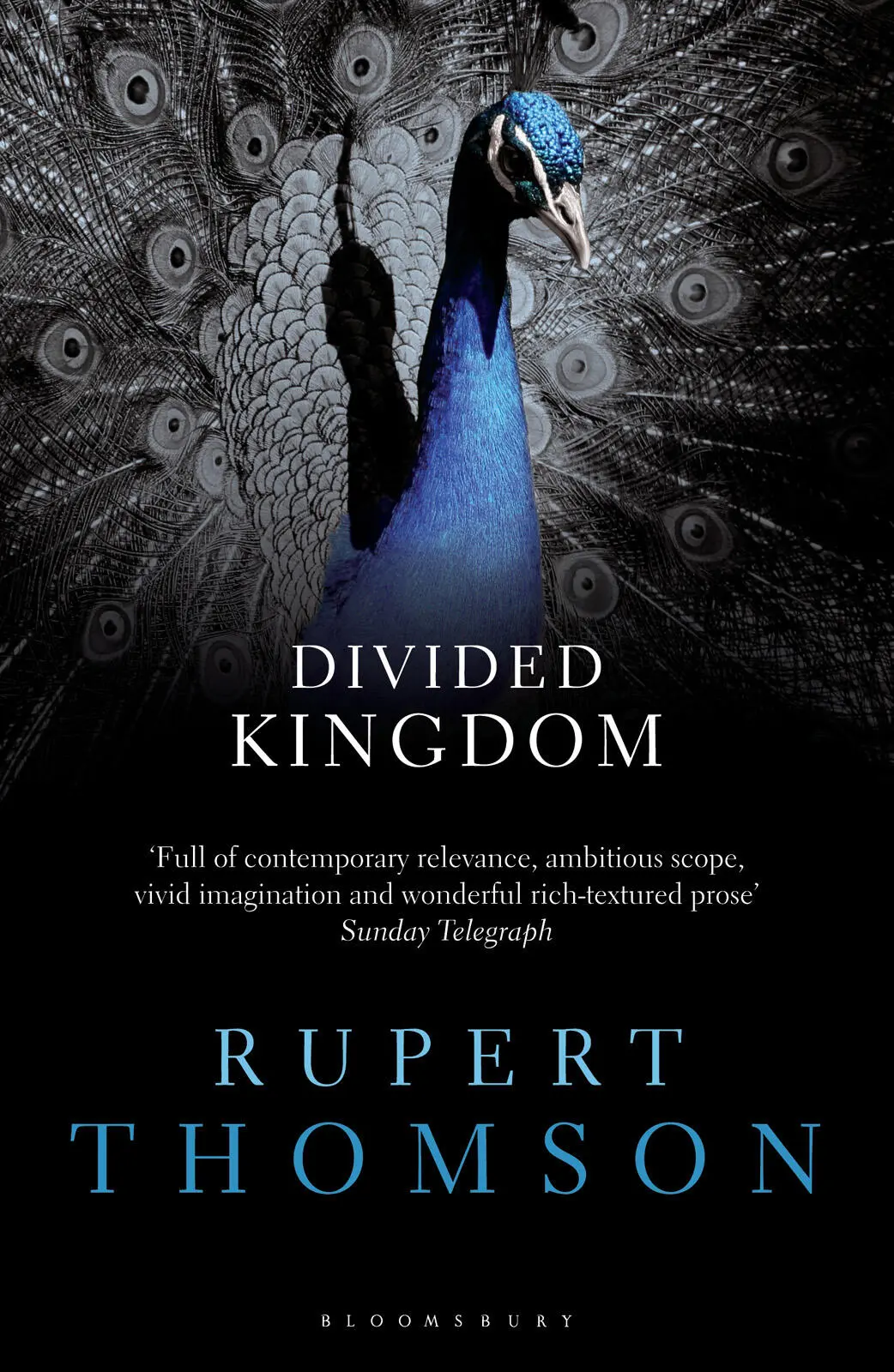
- Название:Divided Kingdom
- Автор:
- Издательство:Bloomsbury UK
- Жанр:
- Год:2012
- ISBN:нет данных
- Рейтинг книги:5 / 5. Голосов: 1
-
Избранное:Добавить в избранное
- Отзывы:
-
Ваша оценка:
Divided Kingdom: краткое содержание, описание и аннотация
Предлагаем к чтению аннотацию, описание, краткое содержание или предисловие (зависит от того, что написал сам автор книги «Divided Kingdom»). Если вы не нашли необходимую информацию о книге — напишите в комментариях, мы постараемся отыскать её.
Divided Kingdom — читать онлайн бесплатно полную книгу (весь текст) целиком
Ниже представлен текст книги, разбитый по страницам. Система сохранения места последней прочитанной страницы, позволяет с удобством читать онлайн бесплатно книгу «Divided Kingdom», без необходимости каждый раз заново искать на чём Вы остановились. Поставьте закладку, и сможете в любой момент перейти на страницу, на которой закончили чтение.
Интервал:
Закладка:
Clarise held me close and said the same words over and over.
Let it out. Let it all out.
As February began, gales swept the length and breadth of the country, causing untold damage. Several people were killed by falling trees. In the south a headless man was seen speeding down a village high street on his bicycle. He had been decapitated by a flying roof-tile only seconds earlier. The freak conditions and unusual sightings sparked off the kind of doom-laden apocalyptic talk that wouldn’t have been tolerated even for a moment in the place I came from, though I found myself susceptible to it, perhaps because I was waiting for circumstances to favour me. As a result of what had happened to me during the previous month or so, a certain threshold had been crossed, a decision had been reached, but everything now depended on the White People, and they seemed to have vanished without trace. Weeks had elapsed since that night in the graveyard, and I hadn’t so much as caught a glimpse of them. The only advantage was that Horowicz had lost interest in me. Whenever we spoke, which was rarely, he would berate me for my apathy, my fecklessness, almost as though he was trying to goad me into an action that he could then expose, condemn. I still went for walks after supper. On returning to the house, however, I would often join the others for a drink in an attempt to dull my frustration, to anaesthetise myself.
One Thursday evening I was on my way upstairs to change — Urban Smith was taking part in a talent contest in the local pub that night, and some of us were going along to support him — when I chanced to look out of the landing window. Across the street, beneath the drooping branches of a magnolia, stood a man in a white cloak. The tree had flowered early, and the man blended with its creamy blooms so perfectly that I had almost failed to notice him. I steered an uneasy glance over my shoulder. The landing was deserted, all the bedroom doors were closed. Somewhere below, I could hear Urban doing his voice exercises. Quickly, I went through my pockets. All I had on me was a cigarette-lighter, my dream notebook and a key to the front door. I had some money too, saved for precisely this eventuality. Round my neck was the silver ring I had found, which I now regarded as a sort of talisman. I couldn’t think of anything else I might need. I looked out of the window again. The man was still standing in the shadow of the magnolia tree. I thought of Victor and Marie lost in the mist and shivered. I didn’t know if I should feel apprehensive or reassured. I checked the time. Twenty to seven. What with the excitement of the competition, I doubted anybody would notice my absence, and if Urban won and the men drank enough of Starling’s latest brew, a lethal poteen, then it might easily be morning before they realised I was gone.
My abrupt departure would not come as a surprise to everyone. Clarise had treated me so kindly that I had felt duty bound to let her in on at least part of the secret. I had waited until it was my turn to help her with the dinner. On the night in question, I stood at the kitchen sink, washing spinach, while she sat at the table behind me and coated veal in egg and breadcrumbs. The men were out somewhere, playing darts. Only Lars Friedriksson had stayed behind, and he was in the basement, poking, two-fingered, at his ancient portable. Though he had already written a thousand pages, he claimed that he had hardly scratched the surface. He would not disturb us.
‘I’ll be leaving soon,’ I said.
Clarise’s wide, unblinking eyes veered towards me.
‘I’m not going to give you the details,’ I said. ‘I just want you to know that it’ll happen sometime in the near future.’
‘You can’t leave,’ she said, ‘not unless they relocate you. It’s not allowed.’
I couldn’t help smiling. She only ever invoked the law out of anxiety or panic.
‘I’m telling you now because I don’t want it to upset you,’ I said. ‘I wouldn’t want you to think’ — and I paused — ‘that I had come to any harm.’
‘Are you so unhappy here?’
I went over, took her hand. ‘You’ve been good to me, Clarise. I owe you a lot. It wouldn’t be fair if I did it behind your back. You mustn’t try and stop me, though.’
She looked up at me, tears beginning to fill her eyes. ‘Where will you go?’
‘It’s better you don’t know. And anyway, it might all go wrong, in which case I’ll end up here again.’
She tried to smile through her tears, which were dripping off her cheeks and down into the breadcrumbs. Later that evening, at dinner, Bill Snape would tell her, in that precise, fastidious voice of his, that although the veal was delicious she had, in his opinion, used a little too much salt.
Yes, she would realise what had happened, I thought, as I turned from the window, and I knew I could trust her not to give anything away. She had even promised to wait a few hours before she informed the authorities.
I managed to reach the kitchen without running into anyone. The lid vibrated gently on a saucepan of root vegetables and chicken bones, stock for a risotto Clarise would be making in the morning. I opened the back door, then eased it shut behind me, and I was just setting off along the narrow passageway that led to the street when a voice called my name. Brendan Burroughs was standing by the outhouse. He had one hand cupped in the other, and his chin had moved into the air above his right shoulder, as if he had to peer round a corner to see me. He asked where I was going.
‘A walk,’ I said. ‘To clear my head.’
‘Aren’t you coming to the pub?’
‘Maybe later on.’
‘Tell you what,’ he said. ‘I’ll come with you.’
‘No,’ I said.
‘Yes, I’d like a walk. My head needs clearing too. And, after all, moonlight can’t hurt me, can it?’ He took several rapid steps in my direction, half tripping on a drain in his eagerness to join me.
I took out my lighter and struck the flint. A flame sprang up between us. ‘Didn’t you hear me, Brendan? I said no.’
Shrinking back, his mouth opened in a crooked, incredulous grin. He couldn’t believe I’d done such a thing. I wasn’t Starling or Horowicz. I wasn’t cruel like them.
‘Wig,’ he said, his voice balanced precariously between pleading and reproach.
‘No.’ I snapped the lighter shut again. With one last look at him, a steady look, to show him that I wasn’t joking, I turned away.
When I stepped out on to the pavement, the space beneath the magnolia tree was empty. I looked left, then right, just in time to see the cloaked man shamble through the gate and down into the park. I risked a glance over my shoulder. Brendan was still loitering in the shadows at the side of the house, one hand clasping the other, hoping that I might relent.
‘No,’ I said.
Once I was safely out of sight of the Cliff, I broke into a run. I had waited so long, and it might be weeks before another chance presented itself. I needn’t have worried. When I reached the black railings I could see the man below me, beneath the overhanging trees, his pale cloak appearing to hover in the gloom.
He followed the polluted stream for a while as it wound behind the backs of houses and under roads, then he turned to the south, using a maze of lanes and alleys I had never been along before. He seemed to know the town in such detail — its recesses, its hiding places. I realised that if I’d seen so little of the White People recently it was because they had mapped out an alternative geography. Their existence lay parallel to everybody else’s.
At last he stepped out on to a road I recognised. It led downhill past a school, fetching up close to the river. His hood had fallen back, and the light from a street lamp caressed his bare head as he passed beneath it. No more than fifty yards separated us, but he didn’t appear to have noticed me. Was he preoccupied, or merely simple? I couldn’t have said. It would be a kind of suicide, what I was about to attempt, but at the same time it would be a transformation — another life entirely. The White People were treated either as scapegoats or as deities, depending on the territory into which they wandered, and this, I thought, was the basic yet paradoxical truth about them, namely that, although they had been certified as non-persons, they had access to a far wider range of experience than the rest of us. We were limited, imprisoned, but they walked free. Another life indeed …
Читать дальшеИнтервал:
Закладка:
Похожие книги на «Divided Kingdom»
Представляем Вашему вниманию похожие книги на «Divided Kingdom» списком для выбора. Мы отобрали схожую по названию и смыслу литературу в надежде предоставить читателям больше вариантов отыскать новые, интересные, ещё непрочитанные произведения.

Обсуждение, отзывы о книге «Divided Kingdom» и просто собственные мнения читателей. Оставьте ваши комментарии, напишите, что Вы думаете о произведении, его смысле или главных героях. Укажите что конкретно понравилось, а что нет, и почему Вы так считаете.