Rupert Thomson - Divided Kingdom
Здесь есть возможность читать онлайн «Rupert Thomson - Divided Kingdom» весь текст электронной книги совершенно бесплатно (целиком полную версию без сокращений). В некоторых случаях можно слушать аудио, скачать через торрент в формате fb2 и присутствует краткое содержание. Год выпуска: 2012, Издательство: Bloomsbury UK, Жанр: Современная проза, Фантастика и фэнтези, на английском языке. Описание произведения, (предисловие) а так же отзывы посетителей доступны на портале библиотеки ЛибКат.
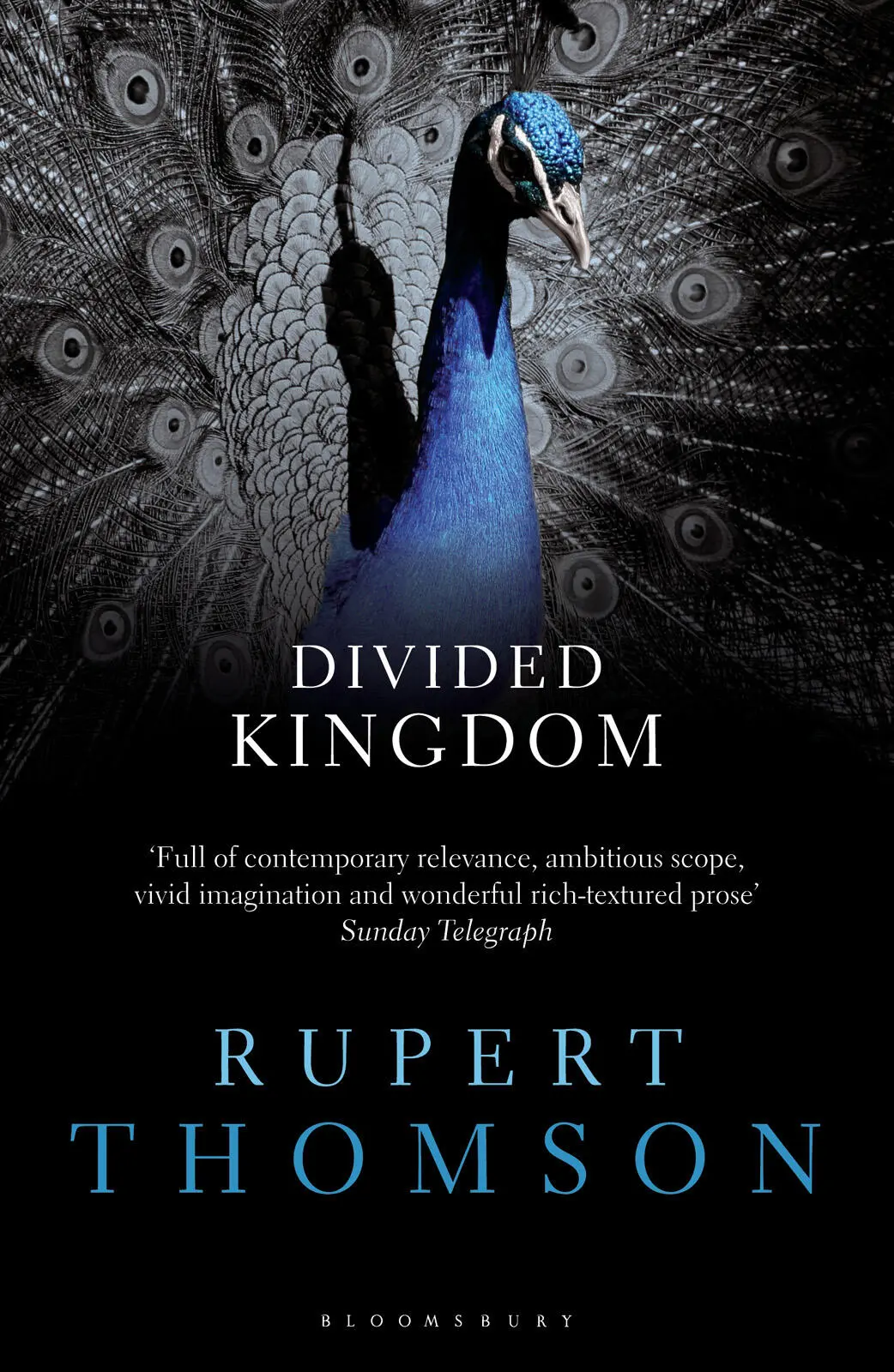
- Название:Divided Kingdom
- Автор:
- Издательство:Bloomsbury UK
- Жанр:
- Год:2012
- ISBN:нет данных
- Рейтинг книги:5 / 5. Голосов: 1
-
Избранное:Добавить в избранное
- Отзывы:
-
Ваша оценка:
Divided Kingdom: краткое содержание, описание и аннотация
Предлагаем к чтению аннотацию, описание, краткое содержание или предисловие (зависит от того, что написал сам автор книги «Divided Kingdom»). Если вы не нашли необходимую информацию о книге — напишите в комментариях, мы постараемся отыскать её.
Divided Kingdom — читать онлайн бесплатно полную книгу (весь текст) целиком
Ниже представлен текст книги, разбитый по страницам. Система сохранения места последней прочитанной страницы, позволяет с удобством читать онлайн бесплатно книгу «Divided Kingdom», без необходимости каждый раз заново искать на чём Вы остановились. Поставьте закладку, и сможете в любой момент перейти на страницу, на которой закончили чтение.
Интервал:
Закладка:
Smiling broadly, Clarise told him he had just summed it all up, everything she’d been talking about, then she turned to me and asked if I’d been to the museum yet. I shook my head.
‘You should go,’ she said.
A few days later I walked down into the town. The museum stood on a narrow street, directly opposite the public library. Looking at the staid red-brick façade and the antiquated ventilation units, I guessed that the building had once housed municipal offices — the council, maybe, or the gas board. A modest brass plaque had been bolted to the wall, just to the left of the double-doors: The Museum of Tears — Please ring for entry.
Although I had gone along with what Clarise had been saying that night, I hadn’t known what to expect from the museum, or even why I was there, really, but I found a stillness settling over me as I ventured into the first of the rooms. All these people reduced to a few ccs of salty water, as if a kind of essence had been wrung from each of them. Was Marco Rinaldi here? What about Boorman? I wandered dreamily from floor to floor. Apart from the museum guards, I had the vast place to myself.
The glass vials were arranged in three parallel rows at shoulder-height, and underneath each of them was a rectangle of white card indicating the donor’s name and date of birth (and, if necessary, death). In themselves, the vials had a somewhat medical aura. They reminded me of test-tubes and, by association, of hospitals and laboratories. In the manner of their presentation, though — the careful labelling, the fashionable austerity — I detected more than a hint of the art gallery. And yet the interior itself, its ambience, had something in common with a school — the grey-blue walls in need of redecoration, the dark, slightly greasy parquet floors. Research, creativity, nostalgia … In the end, the museum displayed characteristics of so many different kinds of institutions that I was no longer sure how to behave or what to think. There was something inherently awkward, or inchoate, perhaps, about the whole experience.
After half an hour I felt I had seen enough, and I walked back towards the stairs that led to the exit. I was passing through a perfectly innocuous room on the second floor when my eye happened to fall on a name I recognised. Micklewright. The air around me appeared to sag and then fold in on itself. I looked away from the wall and blinked two or three times, then I looked back again. The name was still there. In fact, the name was there twice: Micklewright, Sally , and then, right next to it, Micklewright, Philip.
My mother and father.
A trap-door opened in me somewhere and my heart dropped through it. My hand over my mouth, I sank on to the ottoman in the middle of the room.
My mother and father. My parents.
I had thought of them so seldom during the last twenty-seven years. Partly this had to do with survival. If I’d thought of them, I wouldn’t have been able to go on. I’d had no choice but to put them behind me, out of sight. Partly, also, it came down to the image I carried in my head of two people standing on a road in the middle of the night. Her bare feet, his sleepy face — rain slanting down … It was so timeless, so static. So complete. As the years went by, it had taken on an eternal unyielding quality, like a cenotaph, and it had been impossible for me to think around it, impossible for me to remember, or even imagine, anything that had happened before that moment. Then came my visit to the club, exposing the need in me, the ache — the hollowness that lay beneath a life so seemingly well ordered, even charmed. When I stepped through that pale-gold door, something had given in me. Fragments of another life had been released. There had not been much, and it had come so late, so very late, but it had altered me for ever. Everything I had built had been revealed for what it was — mere scaffolding. Everything would have to be remade.
I stood up again and went over to the wall. This time I noticed the dates beneath my parents’ names. They were both dead. I tilted my head to one side, as if I needed another angle on what I was being told. As if that might help me to comprehend. My father had died first. My mother had survived him by eight years. Neither of them had lived to a great age. My father had been fifty-nine, my mother sixty-three. Had they been melancholic all along, or had they been transferred at some point, as I had? What was their story? I had no way of knowing. Since the vials were exhibited in strict chronological order, the two belonging to my parents must have arrived at the museum simultaneously. It was quite conceivable then that they had been crying at the same time — possibly for the same reason — and that those were the tears they had chosen to collect. I wondered if they had been thinking of the boy they’d lost. I wondered if they’d ever forgiven him for turning away from them. Or perhaps they hadn’t even noticed. All they had understood, in their confusion, in their distress, was that their only son was being taken from them. Gazing at their remains, I felt instinctively that they hadn’t tried too hard to stay alive, that they had given up, in other words, and I couldn’t really say I blamed them.
So the museum was a graveyard too.
I stared at the names and dates until they blurred. I hadn’t found my parents — not really. Perhaps they had been present for a few minutes, while I was sitting, head lowered, on the ottoman, but now they had disappeared again. All in all, it hadn’t been much of a reunion. I reached up slowly with one hand.
‘No touching, please.’
I looked round to see a museum guard standing in the doorway to the room. My hand dropped to my side. The guard nodded and moved on.
Out on the street again, I felt as though years had gone by. I wouldn’t have been surprised if the library had been knocked down and new buildings had been erected in its place.
I walked back to the Cliff, the air glassy, dazzling.
When I opened the door, Clarise was standing at the far end of the hall. She asked me whether I would like a cup of tea. She was just about to put the kettle on, she said. I shook my head, then stepped sideways into the front room. I heard her come after me.
‘What is it, Wig?’ she said. ‘What’s the matter?’
‘This is a terrible place.’
‘Here?’ Clarise’s face whirled like a clumsy planet, taking in the mould-green three-piece suite, the velour curtains, the gas fire with its tile surround.
I shook my head again.
A boy could balance on one leg for hours. A man could make a book from his wife’s shoes. A couple could stand on a road in the middle of the night and call their son’s name, only to have him turn his back on them. Candles burned in windows all year round, memorials to those who had gone but were not dead. There were very few who didn’t live in the shadow of some separation or other. The divided kingdom was united after all, by just one thing: longing.
I sank down among the sofa’s sagging cushions. Clarise sat beside me. I told her that I had visited the museum and that I had found my parents, my real parents, but then my voice began to tremble and I couldn’t carry on. The grief had been stored inside me for too long. It hurt to bring it out. Clarise took me in her arms and held me against her. I smelled the wool of her cardigan, and her face powder, and the oil at the roots of her hair. My whole body jerked, as if caught on a fisherman’s hook.
‘There, there,’ she said. ‘Let it out.’
And though I was crying I learned something about myself just then. I saw it clearly for the first time. I had never been sanguine — at least, not so far as I could remember. No, wait — that was wrong. I had been sanguine until the moment I was classified as sanguine, but all my happiness had ended there, and all my optimism too. Ever since that night, the only thing I had ever really wanted was to find my way back. I was like someone who has died and can’t let go, someone who wants desperately to rejoin the living. And it wasn’t possible, of course. It wasn’t even possible to remember, not really — or rather, there was a limit to what could be recovered. None of that mattered, though. It was enough to believe, enough to know. That my parents had mourned me while they were alive. That they had died still missing me. That they had loved me.
Читать дальшеИнтервал:
Закладка:
Похожие книги на «Divided Kingdom»
Представляем Вашему вниманию похожие книги на «Divided Kingdom» списком для выбора. Мы отобрали схожую по названию и смыслу литературу в надежде предоставить читателям больше вариантов отыскать новые, интересные, ещё непрочитанные произведения.

Обсуждение, отзывы о книге «Divided Kingdom» и просто собственные мнения читателей. Оставьте ваши комментарии, напишите, что Вы думаете о произведении, его смысле или главных героях. Укажите что конкретно понравилось, а что нет, и почему Вы так считаете.