Rupert Thomson - Divided Kingdom
Здесь есть возможность читать онлайн «Rupert Thomson - Divided Kingdom» весь текст электронной книги совершенно бесплатно (целиком полную версию без сокращений). В некоторых случаях можно слушать аудио, скачать через торрент в формате fb2 и присутствует краткое содержание. Год выпуска: 2012, Издательство: Bloomsbury UK, Жанр: Современная проза, Фантастика и фэнтези, на английском языке. Описание произведения, (предисловие) а так же отзывы посетителей доступны на портале библиотеки ЛибКат.
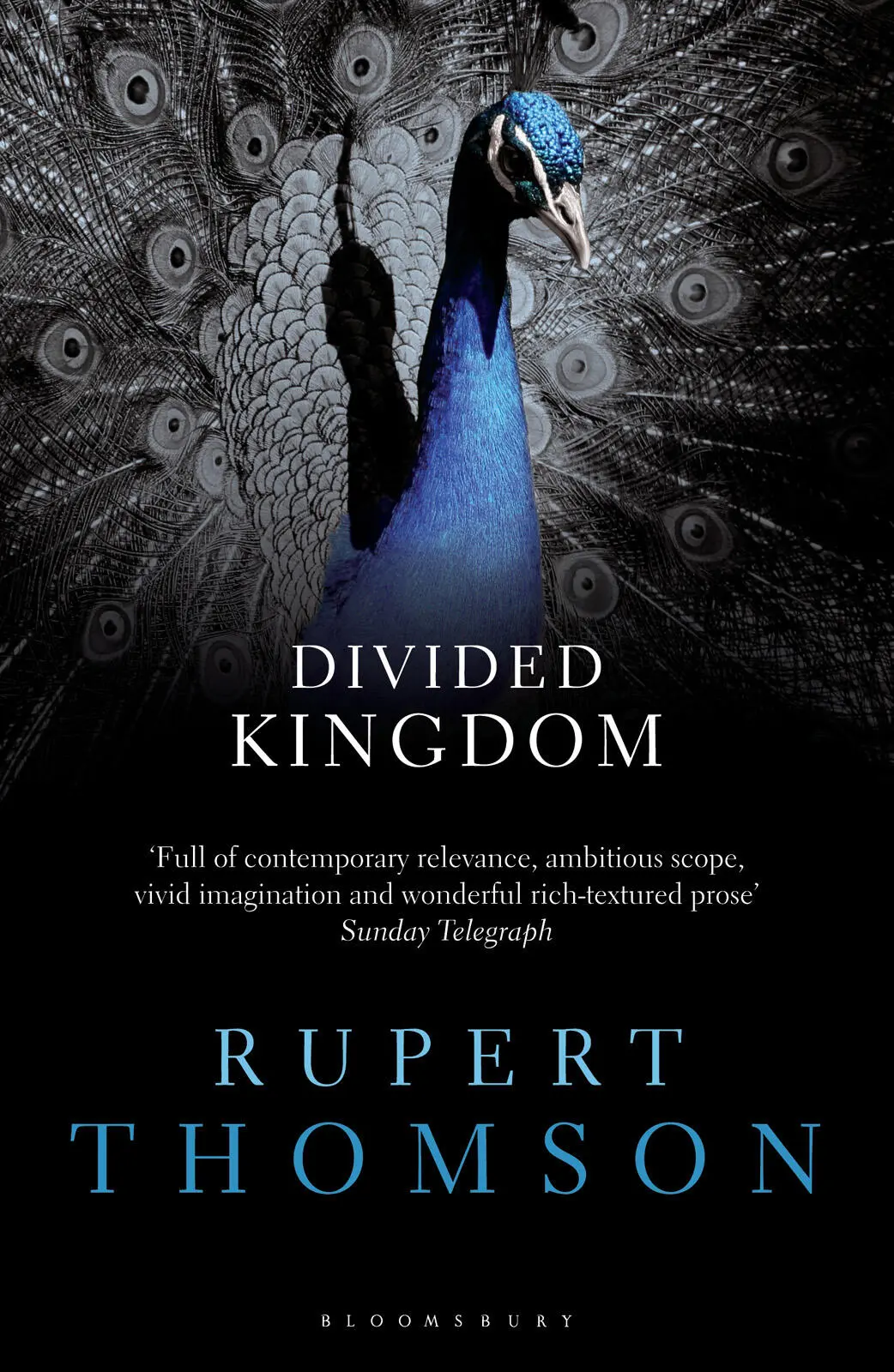
- Название:Divided Kingdom
- Автор:
- Издательство:Bloomsbury UK
- Жанр:
- Год:2012
- ISBN:нет данных
- Рейтинг книги:5 / 5. Голосов: 1
-
Избранное:Добавить в избранное
- Отзывы:
-
Ваша оценка:
Divided Kingdom: краткое содержание, описание и аннотация
Предлагаем к чтению аннотацию, описание, краткое содержание или предисловие (зависит от того, что написал сам автор книги «Divided Kingdom»). Если вы не нашли необходимую информацию о книге — напишите в комментариях, мы постараемся отыскать её.
Divided Kingdom — читать онлайн бесплатно полную книгу (весь текст) целиком
Ниже представлен текст книги, разбитый по страницам. Система сохранения места последней прочитанной страницы, позволяет с удобством читать онлайн бесплатно книгу «Divided Kingdom», без необходимости каждый раз заново искать на чём Вы остановились. Поставьте закладку, и сможете в любой момент перейти на страницу, на которой закончили чтение.
Интервал:
Закладка:
Yes. Well.
My anger had died down since then. There was no going back to the club, I knew that now, and I would be fooling myself if I thought any different. I would have to make do with what I already had, a few brief glimpses of a buried past — the house I had lived in, my mother’s voice, my face pushed against her skirt … I wasn’t always sure if I was remembering, or just imagining, and in a way it didn’t matter. The point was, the fragments felt authentic. They felt real. In the absence of so much, they were something I could turn to when I needed to, something I could count on.
‘Would you do me a favour?’
It was the woman sitting opposite me. As I glanced over, she brought her hand down and pressed her crumpled tissue to one eye, then the other.
‘Of course,’ I said.
‘Would you hold me?’ She was looking down into her lap. ‘Just put your arms around me,’ she said. ‘Please.’
I was glad she had asked, though I couldn’t have explained why exactly.
When I sat beside her, she turned to me clumsily, almost blindly, and laid her head against my chest, both hands clasped beneath her chin. I put an arm around her shoulders and drew her close. She murmured, but I didn’t think she had spoken; it was the sort of sound people make just before they fall asleep, part pleasure, part relief. And then she did fall asleep, her breathing becoming coarser and more regular, her right arm reaching across my chest in a gesture that would have seemed too intimate had she still been conscious.
We left the motorway at an exit marked Cledge East , the slip-road leading directly to a checkpoint. The Green Quarter guards scarcely even glanced at our papers, their lax, fatalistic approach to security reflecting the fact that they were quite accustomed to the sight of new arrivals. The melancholic humour was associated with old age, so there was something logical, if not inevitable, about being transferred here. It was like a kind of natural progression.
Shortly after crossing the border, the woman woke up and lifted her face to mine, her eyes wide open but entirely blank. ‘I don’t know who you are,’ she said.
‘You’re safe,’ I said quietly. ‘Go back to sleep.’
She muttered something I didn’t understand, then her head dropped back against my shoulder, and her breathing deepened once again.
We meandered through the outskirts of Cledge — shops boarded up, street lights out of order — and before too long the city was behind us. On we went, past little restless towns. It was late now, almost one in the morning, but lamps still burned in many of the windows. This was a land much troubled by insomnia.
And then the spaces between towns began to widen. The road sliced unsentimentally through flat fields. There was nothing there, nothing to see, only the night rushing towards the coach’s windscreen, and the shrinking tail-lights of overtaking cars. My right arm was trapped behind the sleeping woman’s back, and I had to keep adjusting its position so as to keep it from going numb.
The brakes hissed. Our driver stood up and stretched, then he switched all the lights on and took down a clipboard from the rack above his head. Groans came from passengers who had just been woken up. We had stopped outside a semi-detached house, its front door open wide. The spill of light from the hall revealed a couple of brick steps, a concrete path and part of a rockery. In the foreground, by the gate, stood a large woman in a quilted housecoat and a pair of fluffy slippers.
The following people were to leave the bus at this point, the driver told us. He read out three names, one of which was mine. Everybody else should stay in their seats, he said. He read the names again, then lifted his eyes and looked down the aisle.
I tried gently to disentangle myself from the woman, but she sat up quickly, blinking. ‘Sorry to wake you,’ I said. ‘I have to go now.’
‘Oh. Yes. Of course.’ Her hand skimmed lightly over her hair, touching it in several places. She seemed brisker, more businesslike. Even more of a stranger.
‘Will you be all right?’ I said.
She nodded. ‘I’ll be fine. And thank you for —’ She broke off, not knowing how to complete the sentence. As I rose to my feet and reached up for my bag, she caught hold of my wrist. ‘I’m Iris,’ she said. ‘Iris Gilmour.’
I told her my name, then wished her luck.
‘And you, Thomas,’ she said. ‘Good luck to you too.’
Stepping out of the bus, I felt a chill in the air and saw how the breath of the other two men ballooned in front of their faces. The sky had the hard, cold lustre of enamel. I knew then that we had come a long way north.
I turned towards the house. On one of the gateposts was an oval of wood, its varnished surface ringed with bark. The Cliff , it said. I smiled grimly. You’d think they would have banned names like that, along with all the bridges and high buildings. I waited for the other men to introduce themselves to the woman in the housecoat — the taller of the two was called Friedriksson, the other one was Bill something — then I walked over and held out my hand.
No sooner had I told the woman who I was than she began to shake her head. ‘No, no,’ she said. ‘There must be some mistake.’ She turned her back on me and walked a few paces up the street.
I asked the coach driver what was wrong. Her husband had been called Thomas, he told me. He’d been run over a few years ago, and Clarise had never really recovered. We stood about on the pavement, the four of us, uncertain what to do. At the end of the street, beyond a row of black railings, I could see a park. Birds were beginning to fidget in the trees. Dawn could not be far away.
Clapping his hands and then rubbing them together, the driver said he should be going. He was behind schedule, he said. He wasn’t addressing anyone in particular, and nobody responded. I watched the door slot hydraulically back into position as he settled himself behind the steering-wheel. The coach reversed into a nearby side-street and then pulled away, Iris Gilmour’s face floating in the dark window like a moon trapped in a jar. When she gave me her name, there had been such intensity in her, such earnestness, as though she feared that I might be the last person ever to hear of her, and that if I didn’t remember her no one would. The coach reached the corner, tail-lights blushing briefly, then it was gone.
‘Not right,’ I heard the woman murmur.
I glanced at Friedriksson, but he just shrugged and looked off towards the park, as if he was expecting someone to come for him. The other man had his back to me. He must have been feeling the cold because he was hugging himself. I could see the tips of his fingers on either side of his rib-cage.
In the distance a cock crowed, raucous and yet forlorn.
At last the woman blew her nose, then she looked at us over her shoulder, her face puffy and tragic. We followed her indoors. I waited in the hallway while she took the others down to the basement. The house smelled like a cheap hotel. Armpits, cigarettes and gravy. The stair-carpet had turned pale down the middle, its pile almost worn away, and the paint had chipped off the banisters, revealing the wood beneath. When the woman returned, she locked the front door, then led me up the stairs, letting out a faint but urgent grunt with every step.
Once she had showed me to my room, which was on the first floor at the side of the house, she went downstairs again, muttering something about the television. I said goodnight and closed my door. The room was small and square, almost exactly the same dimensions, curiously, as my room in the house on Hope Street. A single bed had been pushed up against the left-hand wall, and an armchair was wedged into the gap behind the door. A chest of drawers doubled as a bedside table. On the wall above the bed was a painting of a clown with a fistful of wilting marigolds. Putting my bag down, I went to the window and looked out. A yard, a wooden fence. A mangle. The sky was a grey lid on the new drab world to which I had been delivered. Once, as I stood there, a light came on in the bathroom of the house next door, a burst of yellow behind a pane of blurry scalloped glass, and then, perhaps a minute later, it went out again, and everything was the same as before. Lowering myself on to the edge of the bed, a great burden of familiarity settled over me, as though I had already spent long years in the room. I seemed to be looking back on something that hadn’t happened yet — my own existence, endless and unvarying. Was the Cliff, with its ominously precipitous name, the place where it would all, finally, come to an end?
Читать дальшеИнтервал:
Закладка:
Похожие книги на «Divided Kingdom»
Представляем Вашему вниманию похожие книги на «Divided Kingdom» списком для выбора. Мы отобрали схожую по названию и смыслу литературу в надежде предоставить читателям больше вариантов отыскать новые, интересные, ещё непрочитанные произведения.

Обсуждение, отзывы о книге «Divided Kingdom» и просто собственные мнения читателей. Оставьте ваши комментарии, напишите, что Вы думаете о произведении, его смысле или главных героях. Укажите что конкретно понравилось, а что нет, и почему Вы так считаете.