Rupert Thomson - Divided Kingdom
Здесь есть возможность читать онлайн «Rupert Thomson - Divided Kingdom» весь текст электронной книги совершенно бесплатно (целиком полную версию без сокращений). В некоторых случаях можно слушать аудио, скачать через торрент в формате fb2 и присутствует краткое содержание. Год выпуска: 2012, Издательство: Bloomsbury UK, Жанр: Современная проза, Фантастика и фэнтези, на английском языке. Описание произведения, (предисловие) а так же отзывы посетителей доступны на портале библиотеки ЛибКат.
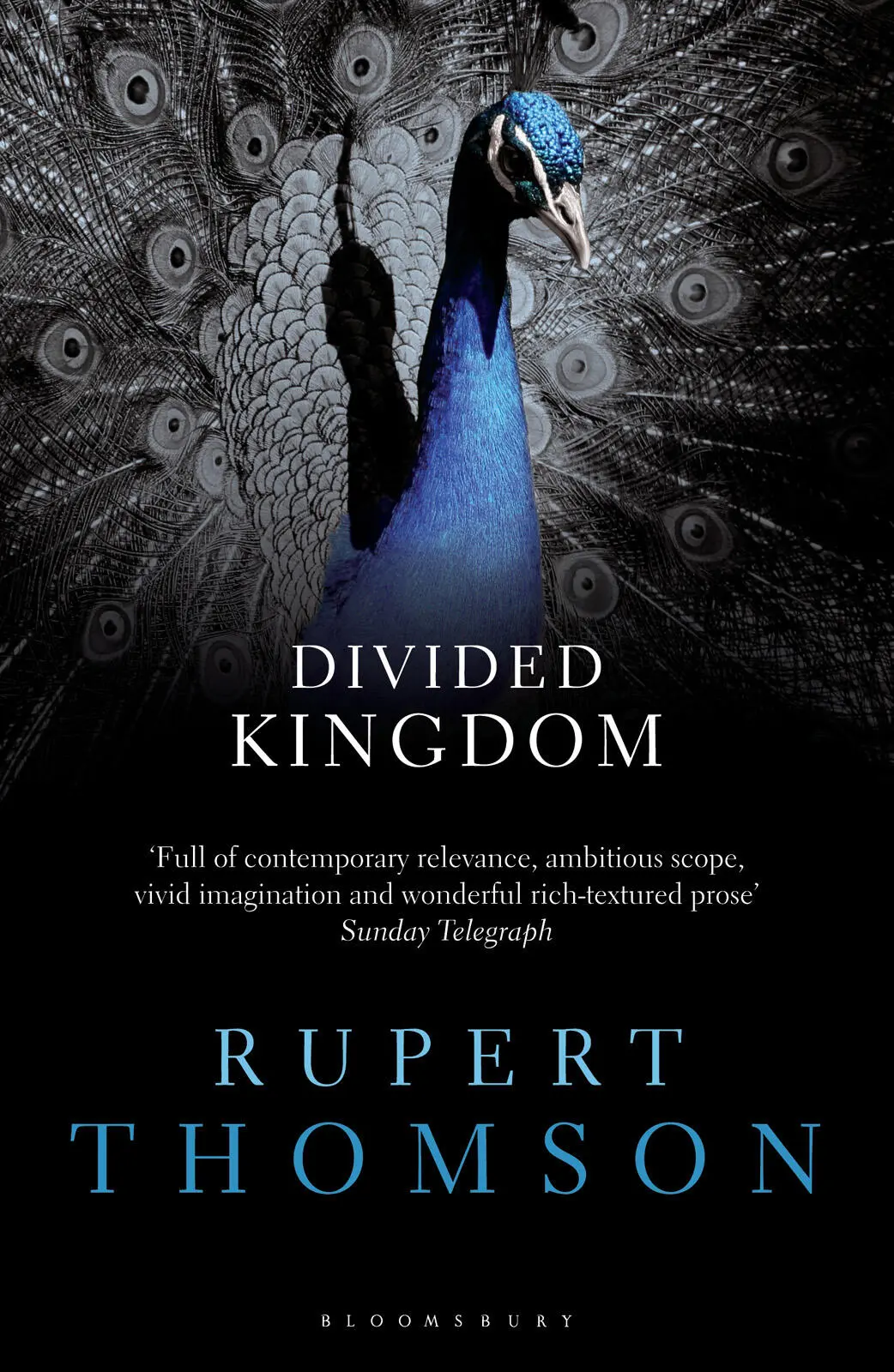
- Название:Divided Kingdom
- Автор:
- Издательство:Bloomsbury UK
- Жанр:
- Год:2012
- ISBN:нет данных
- Рейтинг книги:5 / 5. Голосов: 1
-
Избранное:Добавить в избранное
- Отзывы:
-
Ваша оценка:
Divided Kingdom: краткое содержание, описание и аннотация
Предлагаем к чтению аннотацию, описание, краткое содержание или предисловие (зависит от того, что написал сам автор книги «Divided Kingdom»). Если вы не нашли необходимую информацию о книге — напишите в комментариях, мы постараемся отыскать её.
Divided Kingdom — читать онлайн бесплатно полную книгу (весь текст) целиком
Ниже представлен текст книги, разбитый по страницам. Система сохранения места последней прочитанной страницы, позволяет с удобством читать онлайн бесплатно книгу «Divided Kingdom», без необходимости каждый раз заново искать на чём Вы остановились. Поставьте закладку, и сможете в любой момент перейти на страницу, на которой закончили чтение.
Интервал:
Закладка:
‘You did seem a bit nervous,’ I said.
He let out an explosive sound that was only distantly related to laughter. ‘Do you have any idea what’s going on round here?’ He watched me across the candle flame, the shadows shifting on his face. ‘No. Probably not.’ He drank from his glass again, icecubes jostling against his teeth.
The authorities pretended to be initiating transfers, he told me, but what they were actually doing was throwing people into prisons or detention centres, or even, and here his voice trembled, into unmarked graves.
‘It’s true,’ he said when he saw my reaction. ‘At least one person I know has disappeared. Because he spoke out. Because he said it was wrong, the way our country’s organised, and that no government should have the right to —’ He shook his head, as if it was useless to go on about such things, then he finished his drink and stared fiercely into the empty glass.
‘It doesn’t sound very phlegmatic,’ I said.
‘You don’t have to be strong to abuse power. You can abuse it out of weakness or insecurity. Out of fear. We’ve had so many governments during the last decade that every new one spends most of the time looking over its shoulder, trying to consolidate its position — using whatever means it can.’ Once again, he saw the expression on my face. ‘You think I’m exaggerating.’
I didn’t say anything.
‘Do you still live in the Red Quarter?’ he said.
‘It’s where I’ve been living,’ I said, ‘yes.’
‘Well, let me tell you something,’ he said. ‘It’s happening there too.’
I started to remonstrate, but he talked over me.
‘Maybe not the killings, but the arrests, the imprisonment without trial, the interrogations. That’s why we all have an Internal Security Act. That’s what it’s for. He looked at me and shook his head again, as though he couldn’t believe my naivety. ‘Why do you think you have the same leader year after year?’
‘Maybe people are happy with the way things are,’ I said quietly.
‘Happy?’ He almost choked on the word. Then he beckoned to the waiter and ordered two more drinks.
‘I don’t know how you know all this,’ I said.
‘Because I talk to people,’ he said. ‘Because I listen. Because I don’t go round with my head buried in the sand.’
We sat in silence until the waiter brought our drinks. This time I paid.
I glanced down into the pool where a young couple were sitting at a table, kissing. ‘So you knew about Bracewell.’
De Vere looked up slowly. ‘That’s not his name.’
‘Maclean,’ I said. ‘How did you find out?’
‘A policeman I was having sex with told me.’ He stared at me, chin lifted, and I caught a glimpse of Cody, the boy I used to know — his combative spirit, his iconoclasm — then he looked down and began to fidget with his plastic swizzle-stick. ‘I used to have a thing about policemen in those days. Border guards as well. Maybe it was the uniforms — or maybe it was as close as I could get to being somewhere else.’
The policeman in question was one of the people who had found Maclean. Haunted by the case, he had given De Vere a graphic description of the mutilated body, as if by recording every detail he might exorcise himself.
‘He even told me about —’ De Vere broke off. He wiped at his nose savagely with the palm of his hand. ‘Fuck,’ he said. ‘Fuck it.’ He wiped at his nose again, then his eyes, and then sniffed loudly. ‘What did you have to turn up for? What are you doing here, anyway?’
I was silent for a moment.
Then I spoke again. ‘So you were sent to the Yellow Quarter?’
‘I spent eight years in the Yellow Quarter. Now I’m here. They don’t seem to know what to do with me. Can’t make up their minds.’
‘And he knew you were there?’
‘Maclean? Yes, he knew.’ De Vere’s face twisted, and he looked away. ‘He wanted to join me. He wanted to be with me. That’s why he tried to escape.’ De Vere laid his hand flat on the table, the palm facing down. The way he was staring at it, it could have belonged to someone else. ‘He never stopped loving me — did he?’
‘No,’ I said. ‘He talked about you all the time.’
With a single violent gesture, De Vere reached into his pocket and tossed something on to the table. The object behaved much as a dice would have done, only it seemed heavier, clumsier. When it came to rest, I saw it was his wedding ring. I remembered Bracewell telling me that they had both thrown their rings into the moat. Was that a lie, or had De Vere gone back later and fished his out again?
‘Crazy, isn’t it,’ he said. ‘It’s just the wheel-nut from some old bastard’s car.’
‘It’s more than that,’ I said.
He eyed me sceptically. I was presuming to speak for him, and I didn’t have the right. With an impatient sound, half sigh, half snarl, he snatched up the ring and thrust it back into his pocket, as if he hated himself for keeping it but couldn’t help himself, then he reached for his glass and swirled the contents. ‘Another drink?’
Wondering how late it was, I risked a look at De Vere’s watch. He noticed.
‘I’m sorry,’ I said. ‘There’s somewhere I’ve got to be. I mean, I don’t —’
‘Yes. Of course.’ He jumped to his feet, rocking the table. His drink toppled over. ‘Sorry to have kept you.’
‘No, wait. I didn’t mean —’
But he was already brushing past me. By the time I twisted round in my chair, he had disappeared through the double-doors at the far end of the pool. Somehow, I felt I could still see him, though — his tousled red-brown hair, his tight, hoisted shoulders, the worn-down heels on his shoes.
When I left the bar moments later I half expected to find him on the towpath, pacing up and down, or scowling into the canal. He would still be smarting from what he would have perceived as an insult, but I was ready to apologise. I had been insensitive, unthinking. Also, I wanted to have the chance to explain myself. If I told him what I was doing, I was sure that he would understand. But he had gone. I listened for his footsteps, called his name. Out in the fog somewhere was De Vere, who I hadn’t seen for twenty-seven years.
I waited ten or fifteen minutes, but he didn’t return. I had lost him, probably for ever. Even an unexpected stroke of luck — a water-taxi gliding out of the fog with its ‘for hire’ light on — couldn’t lift my spirits. I flagged the taxi down. It cut its speed and drifted towards me. In a listless voice, I gave the driver the address.
‘That’s quite a way,’ he said.
‘It’s all right,’ I said. ‘I’ve got money.’
I stepped down into the cabin. Everything I touched was damp and slightly sticky. If anything, the fog had thickened since the early evening, and the taxi’s engine had a flat, dead sound as we pulled out into the canal. There wasn’t a single second during that long ride out to the club when I didn’t regret my tactlessness.
I suppose I should’ve known that something would go wrong. There had been any number of warning signs, not least De Vere with his sinister disclosures. I was dreaming of a reunion, though, a kind of homecoming, and when the club’s white stucco rose out of the murk, lights burning in the ground-floor windows, my excitement was so great that I didn’t doubt that it was all about to happen. I didn’t really notice the figures standing on the towpath, let alone grant them any particular significance. I paid the taxi-driver. My hands shook so much that I almost dropped my wallet in the canal. There were no thoughts of a journey back to the centre, no thoughts of anything beyond this moment… Only when I approached the club did I realise that the figures were all dressed identically, in dark-blue tunics, and dark-blue hats with black plastic brims, and that their eyes were trained exclusively on me. They were police, of course. One of them stepped forwards, flipping open a small notebook. ‘Thomas Parry?’
Читать дальшеИнтервал:
Закладка:
Похожие книги на «Divided Kingdom»
Представляем Вашему вниманию похожие книги на «Divided Kingdom» списком для выбора. Мы отобрали схожую по названию и смыслу литературу в надежде предоставить читателям больше вариантов отыскать новые, интересные, ещё непрочитанные произведения.


Обсуждение, отзывы о книге «Divided Kingdom» и просто собственные мнения читателей. Оставьте ваши комментарии, напишите, что Вы думаете о произведении, его смысле или главных героях. Укажите что конкретно понравилось, а что нет, и почему Вы так считаете.