William Maxwell - The Chateau
Здесь есть возможность читать онлайн «William Maxwell - The Chateau» весь текст электронной книги совершенно бесплатно (целиком полную версию без сокращений). В некоторых случаях можно слушать аудио, скачать через торрент в формате fb2 и присутствует краткое содержание. Год выпуска: 2012, Издательство: Vintage, Жанр: Современная проза, на английском языке. Описание произведения, (предисловие) а так же отзывы посетителей доступны на портале библиотеки ЛибКат.
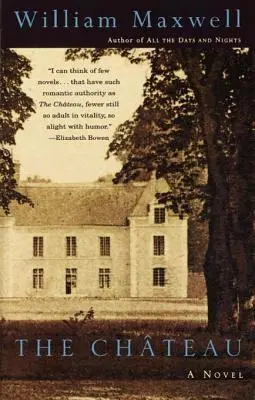
- Название:The Chateau
- Автор:
- Издательство:Vintage
- Жанр:
- Год:2012
- ISBN:нет данных
- Рейтинг книги:4 / 5. Голосов: 1
-
Избранное:Добавить в избранное
- Отзывы:
-
Ваша оценка:
The Chateau: краткое содержание, описание и аннотация
Предлагаем к чтению аннотацию, описание, краткое содержание или предисловие (зависит от того, что написал сам автор книги «The Chateau»). Если вы не нашли необходимую информацию о книге — напишите в комментариях, мы постараемся отыскать её.
The Chateau — читать онлайн бесплатно полную книгу (весь текст) целиком
Ниже представлен текст книги, разбитый по страницам. Система сохранения места последней прочитанной страницы, позволяет с удобством читать онлайн бесплатно книгу «The Chateau», без необходимости каждый раз заново искать на чём Вы остановились. Поставьте закладку, и сможете в любой момент перейти на страницу, на которой закончили чтение.
Интервал:
Закладка:
He paid the check and they got up and went around the corner, into the rue Malène. Just as he put out his hand to ring the bell, a man stepped out of a small car that was parked in front of their door. They saw, with surprise, that it was Eugène. He made them get into the car with him, and after a fashion—after a very peculiar fashion—they saw Paris by night. It was presumably for their pleasure, but he drove as if he were racing somebody, and they had no idea where they were and they were not given time to look at anything. “Jeanne d’Arc, Barbara!” Eugène cackled, as the car swung around a gilded monument on two wheels. Now they were in a perfectly ordinary street, now they were looking at neon-lighted night clubs. “La Place Pigalle,” Eugène said, but they had no idea why he was pointing it out to them. Politely they peered at a big windmill without knowing what that was either.
The tour ended in Montmartre. Eugène managed to park the car in a street crowded with Chryslers and Cadillacs. Then he stood on the sidewalk, allowing them to draw their own conclusions from the spectacle provided by their countrymen and by the bearded and sandaled types (actors, could they be, dressed up to look like Greenwich Village artists of the 1920’s?) who circulated in the interests of local color. He showed them the lights of Paris from the steps of the Sacré-Coeur, and then all his gaiety, which they could only feel as an intricate form of insult, suddenly vanished. They got in the car and drove home, through dark streets, at a normal rate of speed, without talking. And perhaps because he had relieved his feelings, or because, from their point of view, he had done something for them that (even though it was tinged with ill-will) common politeness required that he do for them, or because they were all three tired and ready for bed, or because the city itself had had an effect on them, the silence in the car was almost friendly.
Chapter 14
THE RINGING OF AN ELECTRIC BELL in the hour just before daylight Harold heard in his sleep and identified: it was the ting-a-ling of the Good Humor Man. He wanted to go right on dreaming, but someone was shaking him. He opened his eyes. The hand that was shaking him so insistently was Barbara’s. The dark all around the bed he did not recognize. Then that, too, came to him: they were in Paris.
“There’s someone at the door!” Barbara whispered.
He raised himself on his elbows and listened. The bell rang twice more. “Maybe it’s the telephone,” he said. He could feel his heart racing as it did at home when the telephone woke them—not with its commonplace daytime sound but with its shrill night alarm, so suggestive of unspecified death in the family, of disaster that cannot wait until morning to make itself known. If it was the telephone they didn’t have to do anything about it. The telephone was in the study.
“No, it’s the door.”
“I don’t see how you can tell,” he said, and, drunk with sleep, he got up out of bed and stumbled out into the pitch-dark hallway, where the ringing was much louder. He had no idea where the light switches were. Groping his way from door to door, encountering a big chair and then an armoire, he arrived at a jog in the hallway, and then at the foyer. After a struggle with the French lock, he succeeded in opening the front door and peered out at the sixth-floor landing and the stairs, dimly lighted by a big window. Confused at seeing no one there, he shut the door, and had just about convinced himself that it was a mistake, that he had dreamed he heard a bell ringing somewhere in the apartment, when the matter was settled once and for all by a repetition of the same silvery sound. So it w as the telephone after all.…
He started across the foyer, intending to wake Eugène, who must be sleeping the sleep of the dead. Before he reached the door of the study a new sound stopped him in his tracks: someone was beating with both fists on a door. Feeling like the blindfolded person who is “it” in a guessing game, he retraced his steps down the dark hallway, as far as the door into the kitchen. The pounding seemed to come from somewhere quite near. He crossed the threshold and to his surprise and horror found that he was walking barefoot in water. The kitchen floor was awash, and there was another sound besides the voices and the pounding—a sound that was like water cascading from a great height. He found the back door and couldn’t unlock it. Angry excited voices shouted at him through the door, and try as he might, turning the huge key back and forth and pulling at the spring lever that should have released the lock, he couldn’t get the door open. He gave up finally and ran back into the hallway, shouting “Eugène!”
Even so, Eugène did not waken. He had to open the study door and go in and, bending over the bed, shake him into sensibility.
“Il y a un catastrophe!” Harold said loudly.
There was a silence, and then Eugène said, without moving: “Une catastrophe?”
The pounding was resumed, the bell started ringing again, and Eugène sat up and reached for his dressing gown. Harold turned and ran back to the kitchen. Awake at last, he managed to get the door open. The concierge and a boy of fifteen burst in upon him. They were both angry and excited, and he had no idea what they were saying to him. The single word “inondation” was all he understood. The concierge turned the kitchen light on. Harold listened to the cascade. A considerable quantity of water must be flowing over the red-tiled floor and out the door and down six flights of the winding metal stair that led down into the courtyard, presumably. And maybe from there the water was flowing into the concierge’s quarters. In any case, it was clear that she blamed him, a stranger in the apartment, for everything.
Eugène appeared, with his brocade dressing gown over his pajamas, and his massive face as calm and contained as if he were about to sit down to breakfast. Without bothering to remove the Turkish slippers, he waded over to the sink and stood examining the faucets. He and the concierge and the boy carried on a three-way conversation that excluded foreigners by its rapidity, volubility, and passion. They turned the faucets on and off. With their eyes, with their searching hands, they followed the exposed water pipes around the walls of the kitchen, and, passing over the electric hot-water heater, arrived eventually at a small iron stove—for coal, apparently, and not a cooking stove. (There were three of those in the kitchen.) It was cylindrical, five feet high, and two feet in diameter, with an asbestos-covered stove pipe rising from the top and disappearing into a flue in the wall. The concierge bent down and opened the door of the ash chamber. From this unlikely source a further quantity of water flowed out over the floor and down the back stairs. For a moment, as if he had received the gift of tongues, Harold understood what Eugène and the concierge and the boy were saying. Eugène inquired about the apartment directly below. The people who lived there were away, the concierge said, and she had no key; so there was no way of knowing whether that apartment also was being flooded. A plumber? Not at this hour, she said, and looked at Harold balefully. Then she turned her attention to the pipes in the pantry, and Eugène stood in front of the electric hot-water heater, which was over the sink. Yesterday morning he had put the plug into the wall socket and explained that the heater took care of the hot water for the dishes. He said nothing about removing the plug when they were finished, and so, remembering how the light in the elevator and the light on the sixth-floor landing both extinguished themselves, barely leaving time to reach the door of the apartment before you were in total darkness, they had left the heater in charge of its own current. Foolishly, Harold now saw, because it must be the heater. Unless by some mischance he had forgotten to turn the gas off after Barbara’s bath, last night. He distinctly remembered turning the gas off, and even so the thought was enough to make him have to sit down in a chair until the strength came back into his knees. Once more he inquired if the flood was something that he and Barbara had done. Eugène glanced around thoughtfully, but instead of answering, he joined the search party in the pantry. Cupboard doors were opened and shut. Pipes were examined. Hearing the word “chauffage” again and again from the pantry, Harold withdrew to the bathroom at the end of the hall, expecting to discover the worst—the gas heater left burning all night, a burst pipe, and water everywhere. The heater was cold and the bathroom floor was dry. He was on the point of absolving himself of all responsibility for the inundation when a thought crossed his mind—a quite hideous thought, judging by the expression that accompanied it. He went down the hall past the kitchen and opened the door of the little room that contained the toilet.
Читать дальшеИнтервал:
Закладка:
Похожие книги на «The Chateau»
Представляем Вашему вниманию похожие книги на «The Chateau» списком для выбора. Мы отобрали схожую по названию и смыслу литературу в надежде предоставить читателям больше вариантов отыскать новые, интересные, ещё непрочитанные произведения.








Обсуждение, отзывы о книге «The Chateau» и просто собственные мнения читателей. Оставьте ваши комментарии, напишите, что Вы думаете о произведении, его смысле или главных героях. Укажите что конкретно понравилось, а что нет, и почему Вы так считаете.