Natashia Deon - Grace
Здесь есть возможность читать онлайн «Natashia Deon - Grace» весь текст электронной книги совершенно бесплатно (целиком полную версию без сокращений). В некоторых случаях можно слушать аудио, скачать через торрент в формате fb2 и присутствует краткое содержание. Год выпуска: 2016, Издательство: Counterpoint, Жанр: Современная проза, на английском языке. Описание произведения, (предисловие) а так же отзывы посетителей доступны на портале библиотеки ЛибКат.
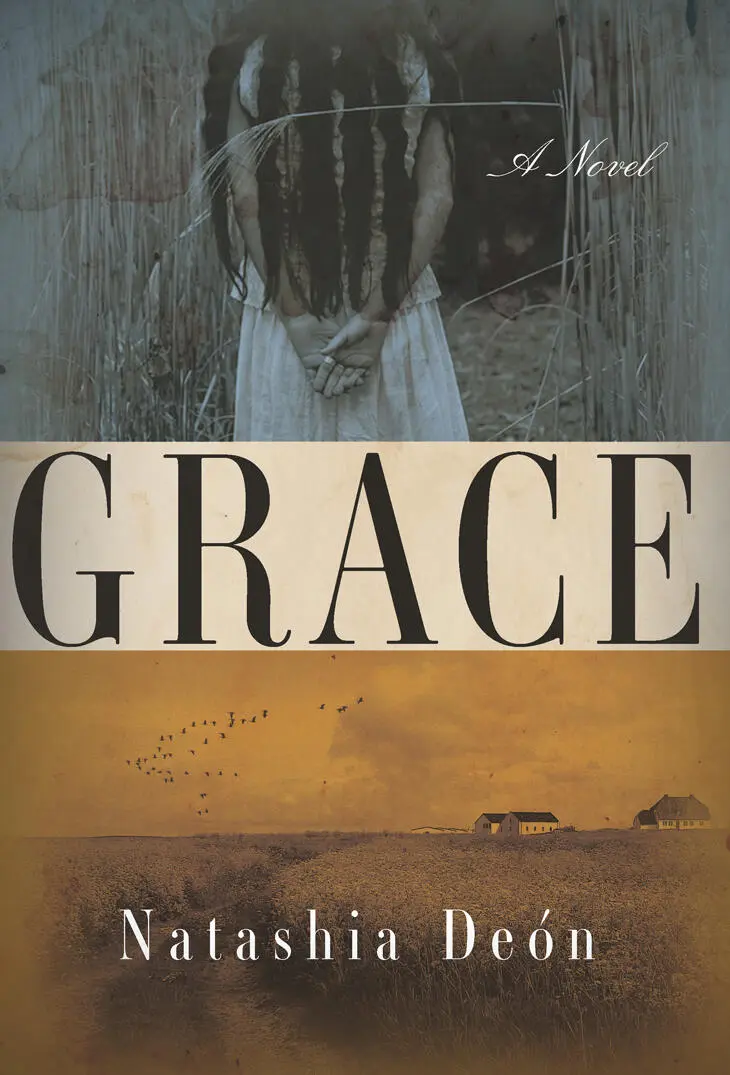
- Название:Grace
- Автор:
- Издательство:Counterpoint
- Жанр:
- Год:2016
- ISBN:нет данных
- Рейтинг книги:5 / 5. Голосов: 1
-
Избранное:Добавить в избранное
- Отзывы:
-
Ваша оценка:
Grace: краткое содержание, описание и аннотация
Предлагаем к чтению аннотацию, описание, краткое содержание или предисловие (зависит от того, что написал сам автор книги «Grace»). Если вы не нашли необходимую информацию о книге — напишите в комментариях, мы постараемся отыскать её.
The product of Naomi and Jeremy’s union is Josey, whose white skin and blonde hair mark her as different from the other slave children on the plantation. Having been taken in as an infant by a free slave named Charles, Josey has never known her mother, who was murdered at her birth. Josey soon becomes caught in the tide of history when news of the Emancipation Proclamation reaches the declining estate and a day of supposed freedom quickly turns into a day of unfathomable violence that will define Josey — and her lost mother — for years to come.
Deftly weaving together the stories of Josey and Naomi — who narrates the entire novel unable to leave her daughter alone in the land of the living—
is a sweeping, intergenerational saga featuring a group of outcast women during one of the most compelling eras in American history. It is a universal story of freedom, love, and motherhood, told in a dazzling and original voice set against a rich and transporting historical backdrop.
Grace — читать онлайн бесплатно полную книгу (весь текст) целиком
Ниже представлен текст книги, разбитый по страницам. Система сохранения места последней прочитанной страницы, позволяет с удобством читать онлайн бесплатно книгу «Grace», без необходимости каждый раз заново искать на чём Вы остановились. Поставьте закладку, и сможете в любой момент перейти на страницу, на которой закончили чтение.
Интервал:
Закладка:
It’s what happened to Momma, too.
Charles keeps socks on her hands at night now in case her nails grow and make her dangerous to herself. Everything with jagged edges is a threat. It’s what made her sickness real to Charles.
She spoons a mouthful of stew while Charles churns the clothes in the bucket, his pole knocking on the wood bottom. He lowers hisself to the floor next to the bucket and picks out a shirt. He wrings it mostly dry and does the same with the next piece and the next ’til his water bucket’s empty. He puts the pieces in a wicker basket for Josey to hang.
When she finishes her food, she takes his damp things and joins the wind outside. It gusts in patterns of circles and crosses, blowing her stink off — onion and garlic of stew. Josey hangs clothes on the line to dry, hand-straightening them as she goes. The button-down white shirt that Charles wore for what was supposed to be Freedom Day still has a stain on it.
Josey reaches down for his trousers, her britches, and a dress when giggles of children and the sounds of running-away feet blow by me. Not real.
I hear Josey’s thoughts sometimes. They’re like her prayers spoken that I cain’t answer. I’m not God. But I hear her just the same and I don’t know why. Not just hers.
But those noises of running children ain’t real. The voices, neither. They’re only troubling thoughts. Thoughts like visions that come and go. Not real. Like this fog that she keeps seeing roll in, over the property. Not real.
The real and not real blend together for her like it’s doing right now.
The sunshine. That’s real. The melting snow. Real. These clothes. Real. That fog near the woods and that black shadowy figure sprinting across the yard. Not real.
Josey reaches down to grab her wet stocking from her bucket.
The bucket’s gone.
Our clothes sway on the line to the rhythm of children’s pitter-patter. Real. Not real.
The fog near the wood’s a blanket. Not real.
A child walks out from the woods, between the trees, surrounded by a gray cloud of fog. She’s just a girl. Eight or nine. She waves to Josey, then skips alongside the trees, got a brand-new rolling hoop around her neck. Not real.
The wind blows the hanging clothes and whips Charles’s trousers into a split. Real. They flare and behind ’em is Ada Mae. . when she was just nine years old. She stands alongside the rest of the trash gang. None of ’em are a day older than seven. They take off running, zigzagging, toward a start line finger-drawn in the dirt. They ready to race. They’re holding handmade hoops — long broken branches with the leaves wiped off, bent backward and fastened in a circle, end to end.
I don’t stop Josey from running over to join ’em. Our hoop is as nice as Ada Mae’s was new. We stand on the start line a foot taller and years older than everybody else. We cain’t lose.
Ada Mae teeters on her tiptoes alongside us with a white rag in her clutches. Her arm falls. “Go!” she yells. And Josey takes off, beating the top of her hoop with a stick, moving in front of the others. Ada Mae crosses my path to the finish line, waving us on. Josey’s gon’ win! Josey’s gon’ win!
A big-busted and big-boned girl runs up next to Josey, six foot tall and feral-looking. A challenger. But we move faster, more nimble, ’til that dusty girl curves around us and makes Josey lose her hoop and her balance. Josey slams into the girl and they both tumble over. Josey leaps up, grabs her hoop, and gets us ready to start again but the girl pushes Josey to the ground. “Don’t hold me!” Josey say. “If you don’t let go, we both gon’ lose.”
The other racers are on their way, not slowing down.
“Let me go!” Josey say, kicking the girl.
By the time she breaks free, the racers are passing us. Ada Mae is at the finish line, waving her white rag, but she’s beginning to fade away. All the racers do. Our hoops do, too. Only Charles’s trousers are billowing. Those, and the feral girl’s.
She throws Josey to the ground and puts her hand on Josey’s mouth. “I ain’t gon’ hurt you. Don’t scream.” Her words trigger Josey’s memory of George sitting on top of her, strangling her, seething through clinched teeth. “You scream,” he say. “I’ll kill you!”
Another girl, a woman, runs out of the woods. Real.
She say to Feral, “You get the clothes. I’ll hold this one down,” and straddles Josey now.
Josey screams, “Da—!” But the woman slaps her hand over Josey’s mouth. Her broken yellow fingernails are murky like grease-soaked paper.
“Stop moving, girl,” the woman say. “We just need warm clothes.”
“Mama!” Feral say. “I got ’em!”
Josey watches the shadow of a tree roll across the ground and touch her shoulder, her neck, all over her stomach. Her eyes widen and her body seizes, helpless from the memories of these trees that once held her prisoner.
“Come on, Mama!” Feral say, running away from our clothesline. She got Charles’s shirt and all of Josey’s clothes, except one dress. They disappear into the silence of Tallassee.
Scattering noises revive.
They’re loud like a flock of nesting birds awakened. It’s coming toward us. A space between the trees sweeps open. A gray Confederate uniform. A black man. Under one arm is a pile of her clothes. Jackson throws his bag from his back and lifts Josey over his shoulder, pushes forward to the house.
30/ FLASH, Conyers, Georgia, 1847
TWO WEEKS AND I haven’t told Jeremy that I forgive him yet ’cause when you love the way we love, been through what we been through, you ain’t got to say it. Staying is enough.
EVERY DAY SINCE that day with Mr. Shepard, I been waiting for him to come back to work. It’s almost noon and he ain’t been here today, either. I scooch back on his piano stool, slide open the cover, and fall on a key. It tings.
I press another lightly.
Ting.
I start playing the only song I know. The same song I learned from watching him play. He up to four songs now but his music never gets old. But my song don’t sound like his.
That man with the satchel came by yesterday at sunrise. A Freedom Fighter. The one Albert told me was gon’ come and escape us from here. He came a week late. When he rattled the door, I was hung over my broom sulking. The noise made me jump ’cause don’t nobody come ’round that early. Almost 8:00 a.m. And we don’t open ’til two on Mondays and Tuesdays. So when he knocked, I didn’t answer.
I started sweeping my broom toward the door instead, leaned into the crack of it to peek at him. He must have heard me ’cause he took a step back, arms held up, a leather satchel in his hand, and let me look. He was a white man, plain as any but honest-looking — not like those around here. He had a boy’s face on a man’s body, the only giveaway to his age was the thin creases in his wide forehead. His blonde hair was groomed but not too much to mistake him for not-a-hardworker. Just cut nice, is all.
His brown leather vest laid over his blue-buttoned shirt and above his trousers the round of his silver belt buckle shined.
He said, “I’m looking to hire out a blacksmith and a nurse for the day.” He went on about needing help for his young son, needing horseshoes. “Soon as possible,” he said.
His satchel had an orange stripe across the flap where Albert said it’d be and he shifted it from one hand to the other as he talked, casual-like, made sure I saw it.
He pointed to the wagon behind him where two dark negroes was already in the seats, ones I ain’t never seen around here before. Twelve or thirteen was the girl, and the boy was nine or so.
He asked if he could at least see who he was talking to so I cracked the door open and let him see a piece of me. He nodded. I remembered what Albert said, “Nobody’ll suspect us if we travel this way. Not only are we traveling in the daylight, we’re going the wrong way. Hired-out day laborers, we are. Fancy word for borrowed slaves. And by the time Cynthia realize we wasn’t coming back, we’d be long gone and too far away for her to care. Maybe she wouldn’t care, no way. She don’t own us. But that fact don’t keep some folks from acting like it.”
Читать дальшеИнтервал:
Закладка:
Похожие книги на «Grace»
Представляем Вашему вниманию похожие книги на «Grace» списком для выбора. Мы отобрали схожую по названию и смыслу литературу в надежде предоставить читателям больше вариантов отыскать новые, интересные, ещё непрочитанные произведения.










Обсуждение, отзывы о книге «Grace» и просто собственные мнения читателей. Оставьте ваши комментарии, напишите, что Вы думаете о произведении, его смысле или главных героях. Укажите что конкретно понравилось, а что нет, и почему Вы так считаете.