Natashia Deon - Grace
Здесь есть возможность читать онлайн «Natashia Deon - Grace» весь текст электронной книги совершенно бесплатно (целиком полную версию без сокращений). В некоторых случаях можно слушать аудио, скачать через торрент в формате fb2 и присутствует краткое содержание. Год выпуска: 2016, Издательство: Counterpoint, Жанр: Современная проза, на английском языке. Описание произведения, (предисловие) а так же отзывы посетителей доступны на портале библиотеки ЛибКат.
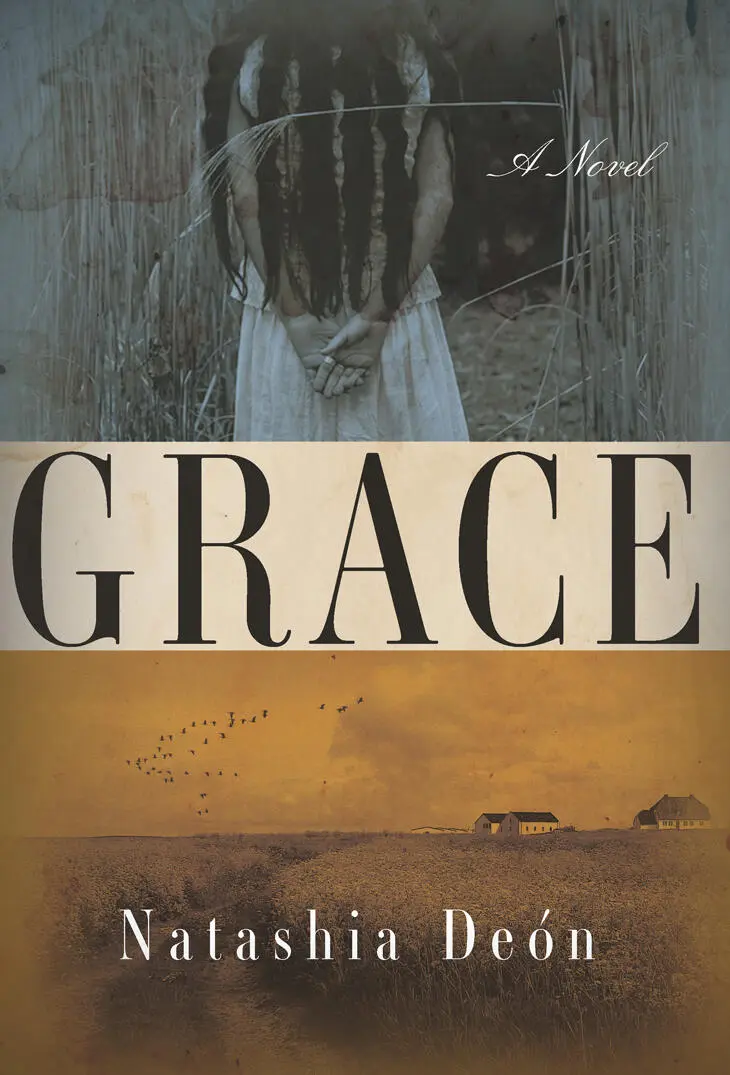
- Название:Grace
- Автор:
- Издательство:Counterpoint
- Жанр:
- Год:2016
- ISBN:нет данных
- Рейтинг книги:5 / 5. Голосов: 1
-
Избранное:Добавить в избранное
- Отзывы:
-
Ваша оценка:
Grace: краткое содержание, описание и аннотация
Предлагаем к чтению аннотацию, описание, краткое содержание или предисловие (зависит от того, что написал сам автор книги «Grace»). Если вы не нашли необходимую информацию о книге — напишите в комментариях, мы постараемся отыскать её.
The product of Naomi and Jeremy’s union is Josey, whose white skin and blonde hair mark her as different from the other slave children on the plantation. Having been taken in as an infant by a free slave named Charles, Josey has never known her mother, who was murdered at her birth. Josey soon becomes caught in the tide of history when news of the Emancipation Proclamation reaches the declining estate and a day of supposed freedom quickly turns into a day of unfathomable violence that will define Josey — and her lost mother — for years to come.
Deftly weaving together the stories of Josey and Naomi — who narrates the entire novel unable to leave her daughter alone in the land of the living—
is a sweeping, intergenerational saga featuring a group of outcast women during one of the most compelling eras in American history. It is a universal story of freedom, love, and motherhood, told in a dazzling and original voice set against a rich and transporting historical backdrop.
Grace — читать онлайн бесплатно полную книгу (весь текст) целиком
Ниже представлен текст книги, разбитый по страницам. Система сохранения места последней прочитанной страницы, позволяет с удобством читать онлайн бесплатно книгу «Grace», без необходимости каждый раз заново искать на чём Вы остановились. Поставьте закладку, и сможете в любой момент перейти на страницу, на которой закончили чтение.
Интервал:
Закладка:
Throw-up’s racing up my throat this time. I run out the door, shoot it all over the rail. “Jesus!” I cry and hollow out empty. The pain comes back again and I hang over the porch in the dark like somebody’s washed and forgot clothes.
“Ungrateful!” I hear Cynthia say behind me.
I look over my shoulder, see her parading across the parlor with an armful of my things, talking to herself out loud, making sure I hear her, see her. “You’re getting out of here tonight!” she say.
She kicks open the gambling parlor door, bumps around through the room, knocks open the side door, my things hurled from her arms: my fire poker, my clothes, my Bible, a jewelry box Bernadette gave me. They clatter when the heavy things hit the ground but I don’t care. Most everything she got rid of was hers anyway.
ALBERT EMERGES FROM Cynthia’s field coming my way. When he reach the bottom of this porch, he looks up at me. His expression is like he feel sorry but I don’t need nobody feeling sorry for me, getting near me, except my man.
He takes a step up the porch and say, “Can I. .” “I don’t want to see you,” I say. “Not you! Not Cynthia! No part of this place. Get the hell away from me! And don’t. .”
A whoosh passes my ear and explodes a glass bottle on the porch, wetting the wood steps. Broken pieces fly and just miss Albert. My ankle burns and a thin red line appears there, just below the hem of my dress where my skin was sliced — the separation cries blood.
I bend down and hold the place with my hand, see Cynthia standing inside drinking from a new bottle she got. She cocks it back to throw it. I leap from the porch! “Ungrateful bitch!” she say. “You better not come back nowhere on this property! Albert, get away from her!”
I take off running.
Keep running.
Running again.
I ain’t got nowhere else to go.
32/ JUNE 1865, Tallassee, Alabama
W E SURRENDERED.
April 1865 the Confederate States of America raised their white flags and gave up. Less than a week later, President Lincoln was murdered like it was done in trade.
“But slavery ain’t illegal,” Slavedriver Nelson said. We can still keep slaves, he reckoned. “It’ll take a constitutional amendment to take away my rights as an American citizen,” he said. And when he found out the proposal for the Thirteenth Amendment to end slavery was making its rounds in Congress last month, expected to be voted on and approved by the end of the year, he got on his new horse and just left, like most people. Slave and free. Nobody’s stopping nobody, ’cause there’s no extra food, no extra men, no extra ammunition, and no hope. Annie didn’t want Nelson here in the first place.
George has been missing for months and Josey and Charles’ll be disappearing from here soon, too. Go someplace where George could never find her. But she got Jackson’s protection now.
For the last six months, Jackson’s been keeping everybody here laughing, telling ’em his war stories. “We ducked down low like this. Me and Collins,” Jackson will start.
He’ll lay on somebody’s floor or in the dirt, depending on who he’s talking to and where, then flatten his belly and aim his imaginary rifle. “They caught me once,” he’ll say. “They weren’t gon’ catch me again. We wasn’t going back without a fight. Northerners telling us they fighting for our freedom, then keeping us prisoner through the war. What kind of bullshit’s that?”
Then he’ll make a popping noise with his mouth, pretend-shooting trees and doors and people, then he’ll drop his pretend rifle and scramble across the ground where he’ll take the place of his victim and put one hand on his ass cheek, hollering like he was the one who got shot.
He’ll get to carrying on and whining so that nobody can stop laughing. Josey’s always the most tickled and loud, her laughing tears are showers no matter how many time she hears the story. Then, Jackson will run back to his place as the shooter and yell, “I don’t want your freedom. I’m here to defend Dixie!”
The only laughter in all of Alabama comes from here on this plantation, a song because of Jackson.
The day he came back, the day them women tried to steal everything, Josey slept all day.
She only woke for a moment, drowsy-drunk, and Charles dressed her in clean bedclothes. Even the sizzle and pop of bacon fat from the stove didn’t wake her the next morning, though the dead walls came alive, its wood pine oozed sap again. The fragrance cleaned the air and took away the dry cough Charles had carried for months. Jackson’s a healer of the dead, the sick, the soul.
And it was like he and Charles were best friends from the start. Better, family. Jackson was some lost son and Charles the grateful father. And Jackson was a savior to Josey. Charles still cain’t forgive hisself for not hearing nothin on the day those women came and tried to steal the washing. “You’re a better man than me,” he told Jackson. But Jackson said, “Only man better than you is God. I’ve grown up watching you.”
“Don’t burn it,” Jackson said, laughing a little, just before Josey woke up the second day. He was leaning back in his chair, biting an apple when Josey dragged the hanging sheet over, showing herself to the room. He almost fell over.
“Here she is!” Charles said when he saw her. He rushed Josey, put his arm around her. “Don’t be shy now, baby. Say hi to your friend.” But she wouldn’t speak that day. Only on the third day, when Jackson embarrassed her after he saw that she was still wearing the faded-to-pink bracelet he’d given her years before on her birthday, did she turn bright red and speak.
“I knew you loved me,” he said, and smiled.
Jackson had gotten all their clothes back from Feral that first day. “Couldn’t say much for my shirt, though,” Charles said, laughing. Jackson had already tied what was left of it around his head.
“It’s a blessing Jackson came when he did,” Charles told Josey. “I can get another shirt. Cain’t get another you.”
Jackson brought with him all kinds of rations from war. Salt pork, sugar, flour. The bacon and coffee was already on. Charles drained the bacon grease on a clean rag next to the stove while I raced around the room, excited that Jackson had come home a hero. And for the first time my sprints caused the front door to open and they all looked at me. Not seeing. Jackson said, “Just the wind.”
His words gave me hope that day. Hope that I can have hands again. For George.
BEFORE JACKSON CAME back, Richard left Annie with only doubt and questions and a rifle he won from the mill. He and Kathy took everything that wasn’t tacked down, like they promised, except the gun cabinet, her gin, and the shutters falling off her empty house. But she’s still holding on. Bedless. Without a place to set a dish, a place to eat. The emptiness inside her house is like poisoned air. The society ladies don’t go around there no more. Not since word of divorce. And now that their world has surrendered, everybody’s empty.
Hell is everywhere.
Annie will shuffle through her corridors mumbling and blaming herself for the things she did wrong. Like Josey. She cries in Josey’s old pink-painted baby room, mumbles her regrets, the wrongs she didn’t see. “I was so selfish,” she’ll mumble, and, “My baby,” she’ll say.
And now, she’s lost everything.
Not Josey.
Not me.
Not today.
Brittle sycamore leaves cartwheel across the yard in celebration. One catches on the heel of Josey’s bare foot, shifts, and gets swept away, chased over Josey’s decorated broomstick.
The minister, maybe nineteen years old, and his wife and three children — the youngest, a baby of a few weeks — were just passing through on their way west. Whatever you could spare, they asked. We got plenty, Jackson said.
Читать дальшеИнтервал:
Закладка:
Похожие книги на «Grace»
Представляем Вашему вниманию похожие книги на «Grace» списком для выбора. Мы отобрали схожую по названию и смыслу литературу в надежде предоставить читателям больше вариантов отыскать новые, интересные, ещё непрочитанные произведения.










Обсуждение, отзывы о книге «Grace» и просто собственные мнения читателей. Оставьте ваши комментарии, напишите, что Вы думаете о произведении, его смысле или главных героях. Укажите что конкретно понравилось, а что нет, и почему Вы так считаете.