Borislav Pekic - Houses
Здесь есть возможность читать онлайн «Borislav Pekic - Houses» весь текст электронной книги совершенно бесплатно (целиком полную версию без сокращений). В некоторых случаях можно слушать аудио, скачать через торрент в формате fb2 и присутствует краткое содержание. Год выпуска: 2016, Издательство: NYRB Classics, Жанр: Современная проза, на английском языке. Описание произведения, (предисловие) а так же отзывы посетителей доступны на портале библиотеки ЛибКат.
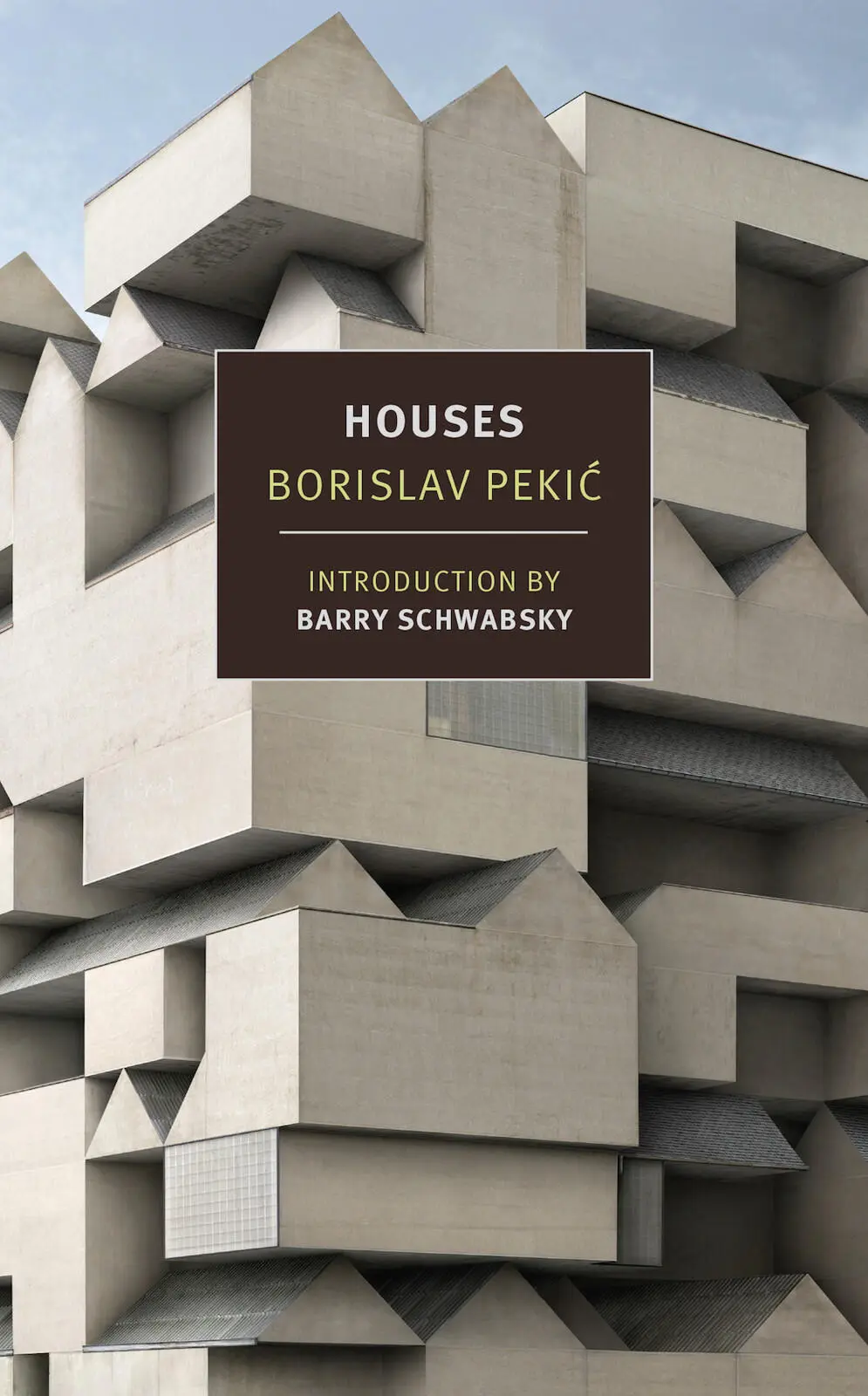
- Название:Houses
- Автор:
- Издательство:NYRB Classics
- Жанр:
- Год:2016
- ISBN:нет данных
- Рейтинг книги:4 / 5. Голосов: 1
-
Избранное:Добавить в избранное
- Отзывы:
-
Ваша оценка:
Houses: краткое содержание, описание и аннотация
Предлагаем к чтению аннотацию, описание, краткое содержание или предисловие (зависит от того, что написал сам автор книги «Houses»). Если вы не нашли необходимую информацию о книге — напишите в комментариях, мы постараемся отыскать её.
Bon vivant, Francophile, visionary, Negoyan spent the first half of his life building houses he loved and even gave names to — Juliana, Christina, Agatha — making his hometown of Belgrade into a modern city to be proud of. The second half of his life, after World War II and the Nazi occupation, he has spent in one of those houses, being looked after by his wife and a nurse, in hiding. Now, on the last day of his life, Negoyan has decided to go out at last to see what he has wrought.
Negoyan is one of the great characters in modern fiction, a charming monster of selfishness and self-delusion. And for all his failings, his life poses a question for the rest of us: Where in the modern world is there a home except in illusion?
Houses — читать онлайн бесплатно полную книгу (весь текст) целиком
Ниже представлен текст книги, разбитый по страницам. Система сохранения места последней прочитанной страницы, позволяет с удобством читать онлайн бесплатно книгу «Houses», без необходимости каждый раз заново искать на чём Вы остановились. Поставьте закладку, и сможете в любой момент перейти на страницу, на которой закончили чтение.
Интервал:
Закладка:
That’s right, Arsénie, that’s right! If you’d really wanted to find a way around the procession, you’d have taken the streetcar and gone behind it along General Mišić Street, around Kalemegdan Park and the Zoo.
No streetcar could have got out from Kosančićev Venac onto the boulevard under those circumstances.
Or you could have telephoned to request a postponement of the auction.
Impossible! That was quite contrary to good business practice.
Why didn’t you participate in the auction by phone? You had the right to nominate a representative — it could have been anyone. From Kosančićev Venac you could have raised the price until your last rival withdrew.
Yes, indeed, but I didn’t think of it at the time.
Perhaps you were afraid that Niké’s strength would displace all the other houses from your mind. She clearly had tendencies in that direction: she was selfish, egocentric, jealous of every thought which your affairs obliged you to devote to rival buildings.
Reflecting on all this, I have at last found enough courage to utter the word premeditation . It had been a hypocritical hope that Niké’s destruction, over which I had certainly had no influence, would liberate me from my feeling of guilt, for the house had died even before the bombs sought her out. Niké passed away on March 27, 1941, at 1900 hours, when it became clear to everyone on Kosmajska Street that Arsénie Negovan was not coming to the auction. And it was I who had killed Niké.
Yes, just as I was responsible for the destruction which threatened Simonida, and for that greedy shoemaker’s shop clamped to Aspasia’s tender back. I had taunted George with desertion, but what had I done myself? What difference was there between my seclusion at No. 17 Kosančićev Venac and his confinement at concession No. 17 in the New Cemetery? Even the coincidence of the numbers underscored the similarity of our cowardice.
Meanwhile I had an oppressive feeling in my chest. I’d become unaccustomed to walking, even though formerly I’d been able to spend hour upon hour making the rounds of my own houses and building sites, and observing those of others, without feeling at all wearied. True, it was swelteringly hot — the warm air wrapped itself around me like a sticky band of flypaper — but more likely it was my seventy years which undermined my freshness and drove me to a bench where I could rest my legs.
That morning the park was fairly empty. Children were clambering over the jungle gym like spiders along their glistening threads, the rusty moving parts of the swings and seesaws creaked piercingly, and children’s heads bobbed up and down from behind the ragged edge of the concrete sandbox like pink water lilies. (I’m ashamed to admit that I was never overfond of children. How many times had I come upon the front walls of houses defaced with their drawings just after the painters had finished their work? They all used colors in the same unexpected way, and pencils, chalk, coal, and sharp stones, too. My cousin Leonid Negovan termed these drawings “a direct expression of primitive, Altamira-like genius”—which was easy for him to say, since the houses were never his. I on the other hand — again, because the houses indeed often were mine — saw the drawings as evidence of bad upbringing for which the parents ought to be punished.)
All that equipment and ironwork for children hadn’t even been there before, but the monument to Vuk still dominated the park. With my binoculars I made the aggressive iron figure stand out against the green foliage.
GENERAL VUK, 1880–1916
JADAR
KONATICA
BELGRADE
VLASINA
KAJMAKČALAN
SIVA STENA
GRUNIŠTE
At that moment it seemed as if the general had rushed out of the forest, out from behind those scattered chestnut trees, with his chest out and one leg bent at the knee, bandaged with a field dressing, while the other leg pushed down at a sharp angle against the yellowed, rough-hewn pedestal. The policeman I had glimpsed bearing down on me before I finally lost consciousness on the cobblestones of Pop-Lukina Street had been something like that guerrilla general. I had been knocked down and my pince-nez smashed, but I could still — thank God — control my movements, although I could achieve little apart from defending my face against being trodden underfoot. Feet were trampling down everything around me as if crushing grapes in a vat, rising and falling with the speed and uniformity of a pneumatic hammer, but I couldn’t swear to it that I had any feeling of pain, nor could I hear the din which had been going on during the speech and later during the fight, while I had still been on my feet. On the contrary, as soon as I was knocked down everything suddenly went quiet, though it all continued to writhe, jostle, and stagger in the artificial silence, as if the tumult of a moment earlier had reached a pitch where it could no longer be heard even though still raging. Before everything went completely blank, I managed to focus my eyes, like the shaded lens of a pair of unadjusted binoculars, on a true copy of the Vuk monument: the policeman rushing at me with his truncheon swinging.
Of that rumbled period when my senses returned — the process went on for quite a while, as I regained and lost consciousness several times — I recall only Katarina’s mistily swimming face; those jerky, ruby-red outlines which looked more like the darting tongues of a burning flame than living beings, cut certainly not like my nurses; and strangely, that green limb with the iron bandage around its joint, which, unattached to my body, plunged hissing into the furniture. My eyes finally cleared like a binocular lens at last adjusted for distance, and I managed to make out real objects from the fiery waves which, for a long while after I came to, went on flaring up from somewhere and setting fire to the corners of the room. It was our bedroom at Kosančićev Venac. Apparently I was being undressed, and someone was trying to pry something from my rigidly clenched fingers — something torn, hard, battered.
It was that very object, which seemed to have become part of my fist as if to give me some little comfort, that helped me back to consciousness: my lost hat, the Borsalino with the cleft crown, stiff turned-up brim, and black silk band. In a sorry state, it’s true, but I recognized it. (In any case it had my name inside it.) How I had managed to find it I couldn’t say, nor could the police patrol which found me, identified me, put me in a hired cab and with true deference brought me to Kosančićev Venac. The sergeant could only say with official certainty that when the red mob had been dispersed, they had pulled Mr. Negovan out of a gutter where the sewer carries the — pardon the expression — shit into Kosmajska Street. But they could not say how he had got down there among the excreta, unless he’d taken part in the riot, which, given the gentleman’s reputation, they certainly couldn’t believe (although one never knows). He had been in a bad, an extremely bad, way: beaten, unconscious, left for dead, and as they say, ready for the last rites; in his left hand he was gripping the aforementioned hat, from which they unsuccessfully tried to separate him while they were getting him into the cab.
The diagnosis was made by our family doctor, and confirmed by the second opinion of the surgeon George Negovan (whose professional assistance I myself would never have requested). This diagnosis, which I have kept among my papers, states: Fractura tibiae et fibulae dextre, Fractura costarum II lat. sin. et III, IV lat. dex., Contusio cerebri et Haematoma faciae et corporis , which confirmed that both bones of my lower leg were broken; that three ribs were cracked (the second on the left and the third and fourth on the right side of my rib cage); that I had suffered cerebral contusions (the effects of which made themselves felt in the temporary paralysis of the left side of my face); and that, finally, I was completely covered with bruises and swellings from blows received during the incident.
Читать дальшеИнтервал:
Закладка:
Похожие книги на «Houses»
Представляем Вашему вниманию похожие книги на «Houses» списком для выбора. Мы отобрали схожую по названию и смыслу литературу в надежде предоставить читателям больше вариантов отыскать новые, интересные, ещё непрочитанные произведения.




Обсуждение, отзывы о книге «Houses» и просто собственные мнения читателей. Оставьте ваши комментарии, напишите, что Вы думаете о произведении, его смысле или главных героях. Укажите что конкретно понравилось, а что нет, и почему Вы так считаете.