Borislav Pekic - Houses
Здесь есть возможность читать онлайн «Borislav Pekic - Houses» весь текст электронной книги совершенно бесплатно (целиком полную версию без сокращений). В некоторых случаях можно слушать аудио, скачать через торрент в формате fb2 и присутствует краткое содержание. Год выпуска: 2016, Издательство: NYRB Classics, Жанр: Современная проза, на английском языке. Описание произведения, (предисловие) а так же отзывы посетителей доступны на портале библиотеки ЛибКат.
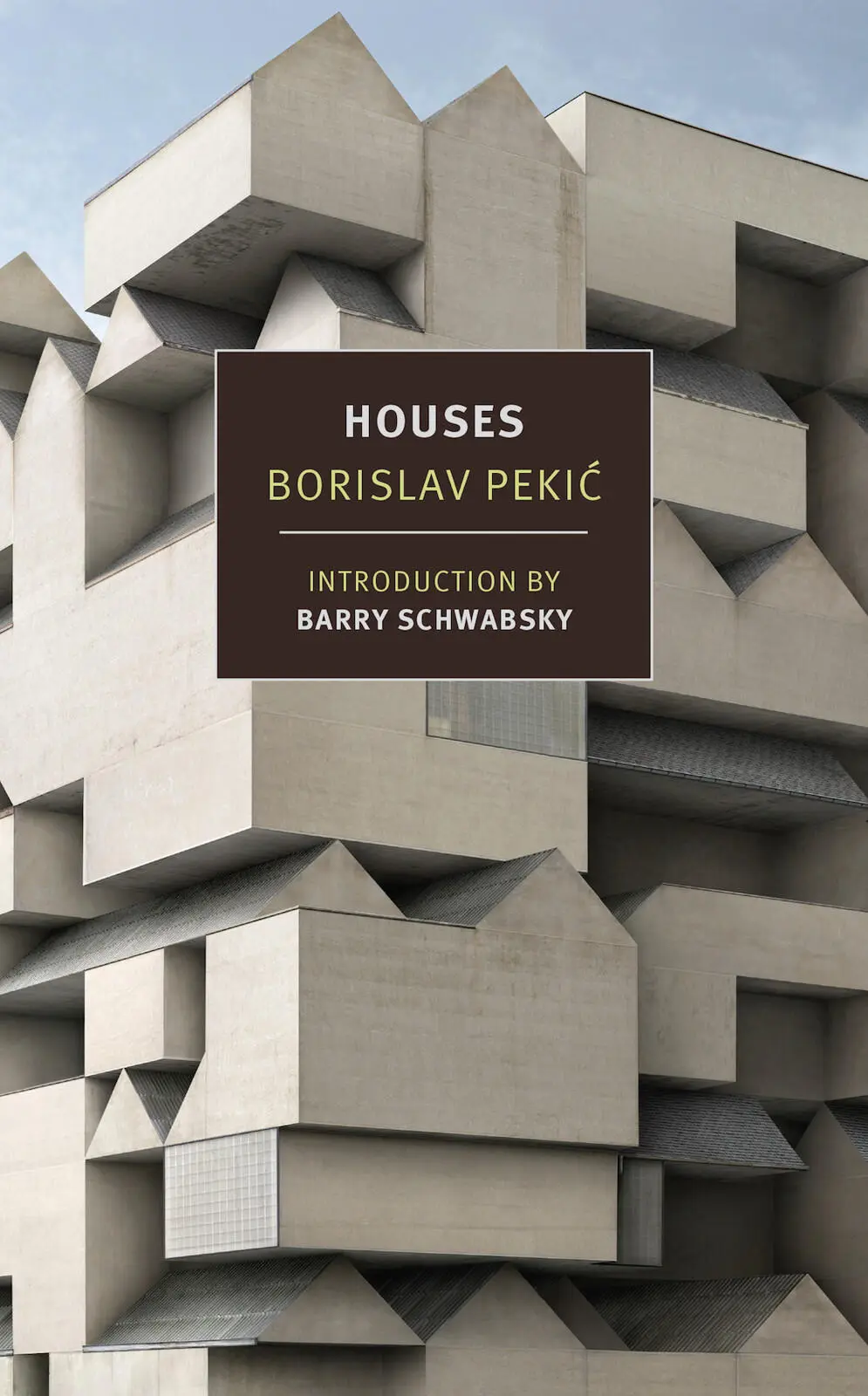
- Название:Houses
- Автор:
- Издательство:NYRB Classics
- Жанр:
- Год:2016
- ISBN:нет данных
- Рейтинг книги:4 / 5. Голосов: 1
-
Избранное:Добавить в избранное
- Отзывы:
-
Ваша оценка:
Houses: краткое содержание, описание и аннотация
Предлагаем к чтению аннотацию, описание, краткое содержание или предисловие (зависит от того, что написал сам автор книги «Houses»). Если вы не нашли необходимую информацию о книге — напишите в комментариях, мы постараемся отыскать её.
Bon vivant, Francophile, visionary, Negoyan spent the first half of his life building houses he loved and even gave names to — Juliana, Christina, Agatha — making his hometown of Belgrade into a modern city to be proud of. The second half of his life, after World War II and the Nazi occupation, he has spent in one of those houses, being looked after by his wife and a nurse, in hiding. Now, on the last day of his life, Negoyan has decided to go out at last to see what he has wrought.
Negoyan is one of the great characters in modern fiction, a charming monster of selfishness and self-delusion. And for all his failings, his life poses a question for the rest of us: Where in the modern world is there a home except in illusion?
Houses — читать онлайн бесплатно полную книгу (весь текст) целиком
Ниже представлен текст книги, разбитый по страницам. Система сохранения места последней прочитанной страницы, позволяет с удобством читать онлайн бесплатно книгу «Houses», без необходимости каждый раз заново искать на чём Вы остановились. Поставьте закладку, и сможете в любой момент перейти на страницу, на которой закончили чтение.
Интервал:
Закладка:
“… on the occasion of the Anschluss in Austria, when our sister Czechoslovakia was shamefully attacked and occupied!”
Fortunately the Germans didn’t bomb Prague as they later did Warsaw — though to tell the truth, some of the most beautiful houses in the Polish capital were saved. Such preservation is crucial for a town.
“Comrades, students, and workers! At last that great day — the day we can boldly express our infinite love for our powerful brother, the great Soviet Union, invincible land of workers and peasants!”
“And soldiers!”
“And soldiers. That is why we demand a pact of mutual aid with the Soviet Union, which alone can guarantee the peace and independence of this country. And that is why we cry: Long live the Soviet Union, the bastion of peace and independence for smaller nations!”
By now the invited buyers will have assembled, probably standing around that Empire-style salon on the ground floor. Soon they will be starting off on their tour of the house. Yon (Jelena’s Transylvanian variant of the name of the butler, John) will be serving drinks in conical glasses of Czech crystal, which he carries around on a gilt tray like a church collection bowl. Those fine gentlemen can choose between delicate aromatic liqueurs and harsh, fiery, warming alcohol. Before this afternoon they have seen Niké only from the outside, and each has imagined her interior in his own way. Now they will see that they have been mistaken; Niké will put their pampered imagination to shame, mysterious Niké who hasn’t yet opened her doors to them or revealed her wonderful marble perspectives and her dusky outlines lit by lacquered wall lamps. In sordine the first cautious impressions are exchanged, concurrently misleading and covered with mimicking disguises. The guests around Stefan cordially inquire what has become of the mistress of the Negovan-Georgijević house and discover that she has asked her husband to excuse her absence. “In fact, she loves this house so much that she couldn’t bear to be present at its sale.” Of course the potential buyers recognize the appeal of her owner’s anguish. All this is terribly complicated. Commerce is a distasteful business in which no intelligent man would involve himself if it didn’t, as sociology defines it, help develop the forces of production without which mankind would perish.
Meanwhile, everyone’s eyes are fixing themselves on Niké’s tender innards like the moist tentacles of an octopus. Exploratory probes verify the soundness of her walls, the quality of the construction work, the individuality of the ornamentation. At the far edge of the conversation flow figures, measurements, queries, impressions, and data. Those present seem indifferent, indolent, inattentive, but in fact they are impatiently awaiting the auction, though they refrain from commenting on Stefan’s delay. And so they wait with the fire of battle in their bellies, a fire that competition will ignite with every ringing stroke of the auctioneer’s hammer on the improvised stand in the vestibule. The discontent at the delay keeps growing and the whole hardened gathering is transformed imperceptibly into a minefield where each careless step can lead to an explosion. In the nick of time Stefan invites them, according to custom, to follow him so he can show them the house, “which, gentlemen, I shall do without embellishment or exaggeration.” No, he won’t influence the buyers at the auction by a single observation — he knows he couldn’t even if he wanted to: these marketeers of the capital are wolves — but he’ll serve them as Cicerone, an impassive guide through his architectural kingdom which, as they probably already know, is patterned on the plans of Dietrich and Eizenhofer for the Academy of Sciences in Vienna, built in 1755.
But you can be absolutely certain that during this obvious procrastination he’ll be surreptitiously glancing at the clock, that yellow sunlike face over the doorway, and listening for the ring of your arrival, at first surprised that you aren’t there, later perhaps offended, and of two minds whether to abandon his personal haughtiness and telephone to find out why you haven’t responded to his loyal invitation. Nevertheless, he won’t reach for the phone, not because those present would suspect some kind of collusion between relatives but because, after thinking it over, he must have realized how much the absence of Arsénie Negovan was to his advantage, how well it suited his hypocritical aim of not surrendering the house to me — the customary Negovan vileness (which as usual would seem correct to everybody), entirely neglecting the fact that my desire for Niké had forced the price up to vertiginous heights. And so all of them — except me, of course — will turn to the owner and, following his advice from the hall, choose the quickest way to get around the house, while at the same time fixing as precisely as possible in their adding-machinelike heads the numbers, measurements, and impressions they note on the way. And where are you , just when you’ve been given the chance of becoming Niké’s official owner (for you long ago made her your own)? Instead of cutting short that whole undignified comedy by stating an insurmountable price, you’re shivering here on the cobblestones, hatless, torn, spat upon, stained with mud, trapped by fetid bodies and coarse voices of encouragement from out of whose fine net you can again distinguish the baritone of the orator:
“The deposed government was the embodiment of blood-thirsty illegality, unrestrained corruption, and willful treachery! We call upon citizens, students, peasants, and the esteemed intelligentsia to join with the workers in the struggle for the rights of the people! We call upon the army to unite with the people! We demand the abolition of concentration camps! We demand freedom of the press, a general amnesty, and a ruthless purge of the government.”
Once again the chorus uttered “That’s right!” Several times — a kind of liturgical “Amen, amen” in which the orator’s élan was lost.
“We demand the abolition of the power of capital over human labor. We demand that factories, railways, and mines be nationalized and transferred to collective ownership!”
“And the banks — banks — the banks, too!”
The sonorous voice rang out like a shot whose crystal clarity shattered the silence. The enflamed audience was saving its breath for new acclamations.
But whose voice was that? Who appended to industry, transport, and the mines, those cancer wounds of our domestic economy, that most malignant one of all: banking? Or has the owner of that decisive voice disowned it? For these past twenty-seven years perhaps he’s been ashamed to think of it, or he’s decided that the voice must have been fortuitous; an automatic reflex which burst out of the speaker’s throat as an undisciplined offshoot of some inner soliloquy. Or is this the first false step that we’ve been looking for? Naturally the owner of that voice would gladly abandon this dangerous reconstruction and hurry on to Simonida, who anxiously awaits him.
That would be the best thing to do.
And afterward would you go back up to Kosančićev Venac, back into your ark of gopher wood, and seal it within and without, while outside those impenetrable walls of your beloved houses continue to be destroyed?
No, not for anything. That’s all over and done with.
If that’s really so, and I hope it is, if you really think that despite the passage of the years you can take over your own affairs again, why does it cause you such anguish to recall what made you give them up?
Because of what I shouted about the banks. Though it seemed as if it wasn’t really me shouting at all.
But it was.
Unfortunately.
I hated banks, I have always hated banks and bankers. I even hated bank notes. From the bottom of my owner’s heart I despised everything placed willfully between Possessed and Possessor, everything which transformed true possession into mere power over empty, hollow, emaciated figures.
Читать дальшеИнтервал:
Закладка:
Похожие книги на «Houses»
Представляем Вашему вниманию похожие книги на «Houses» списком для выбора. Мы отобрали схожую по названию и смыслу литературу в надежде предоставить читателям больше вариантов отыскать новые, интересные, ещё непрочитанные произведения.






Обсуждение, отзывы о книге «Houses» и просто собственные мнения читателей. Оставьте ваши комментарии, напишите, что Вы думаете о произведении, его смысле или главных героях. Укажите что конкретно понравилось, а что нет, и почему Вы так считаете.