Esmé Wang - The Border of Paradise
Здесь есть возможность читать онлайн «Esmé Wang - The Border of Paradise» весь текст электронной книги совершенно бесплатно (целиком полную версию без сокращений). В некоторых случаях можно слушать аудио, скачать через торрент в формате fb2 и присутствует краткое содержание. Год выпуска: 2016, Издательство: The Unnamed Press, Жанр: Современная проза, на английском языке. Описание произведения, (предисловие) а так же отзывы посетителей доступны на портале библиотеки ЛибКат.
- Название:The Border of Paradise
- Автор:
- Издательство:The Unnamed Press
- Жанр:
- Год:2016
- ISBN:нет данных
- Рейтинг книги:3 / 5. Голосов: 1
-
Избранное:Добавить в избранное
- Отзывы:
-
Ваша оценка:
The Border of Paradise: краткое содержание, описание и аннотация
Предлагаем к чтению аннотацию, описание, краткое содержание или предисловие (зависит от того, что написал сам автор книги «The Border of Paradise»). Если вы не нашли необходимую информацию о книге — напишите в комментариях, мы постараемся отыскать её.
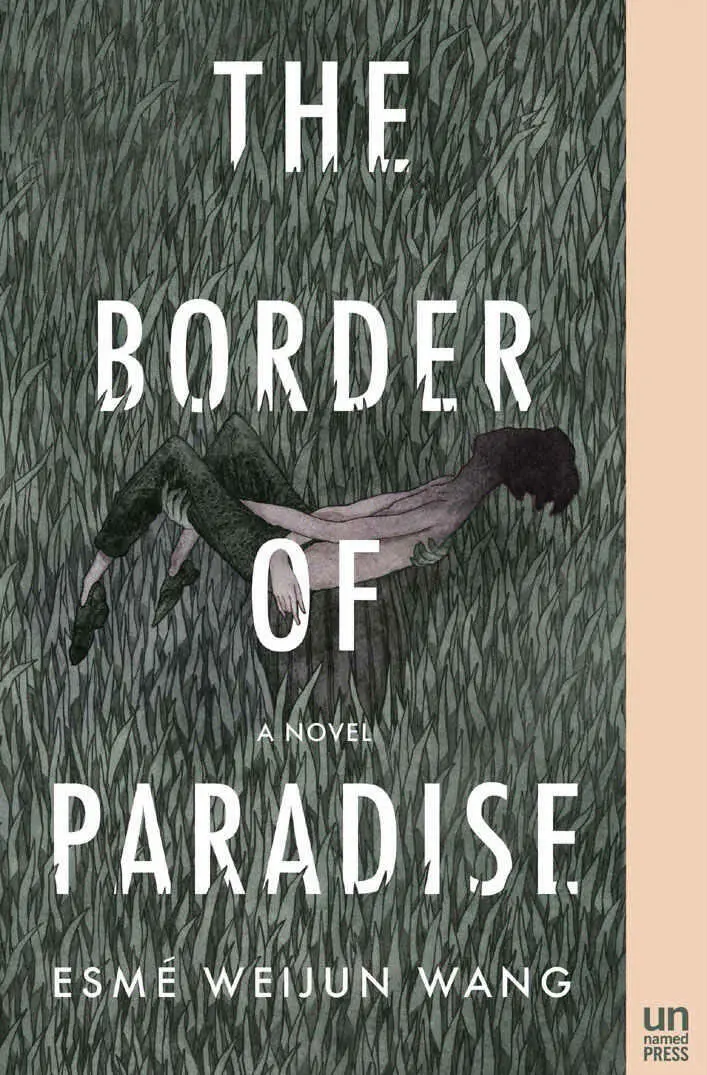
transports readers into the world of an iconoclastic midcentury family.
In booming postwar Brooklyn, the Nowak Piano Company is an American success story. There is just one problem: the Nowak’s only son, David. A handsome kid and shy like his mother, David struggles with neuroses. If not for his only friend, Marianne, David’s life would be intolerable. When David inherits the piano company at just 18 and Marianne breaks things off, David sells the company and travels around the world. In Taiwan, his life changes when he meets the daughter of a local madame — beautiful, sharp-tongued Daisy. Returning to the United States, the couple (and newborn son) buy an isolated country house in Northern California’s Polk Valley.
As David's mental health deteriorates, he has a brief affair with Marianne, producing a daughter. When Marianne appears at their doorstep, the couple's fateful decision to take the child as their own determines a tragic course of events for the entire family. Told from multiple perspectives,
culminates in heartrending fashion, as the young heirs to the Nowak fortune must confront their past and the tragic reality of their future.
The Border of Paradise — читать онлайн бесплатно полную книгу (весь текст) целиком
Ниже представлен текст книги, разбитый по страницам. Система сохранения места последней прочитанной страницы, позволяет с удобством читать онлайн бесплатно книгу «The Border of Paradise», без необходимости каждый раз заново искать на чём Вы остановились. Поставьте закладку, и сможете в любой момент перейти на страницу, на которой закончили чтение.
Интервал:
Закладка:
His lips part slightly. His brow knits, and Gillian snaps out of her daze. She smiles at him. “Time to go,” she says. He says goodbye and blinks one eye, as though he’s got something caught in it. Reflexively, I try to do the same and find I cannot. Ma doesn’t say anything. We continue to walk, and behind us the cart begins, again, to rattle and squeak. Whether we’ve passed muster with Ma I’m not sure, but I am sure that we will be heading home more quickly than usual now, and when we get home, I will get Gillian into our bed, because I am still aroused, perhaps more now than I was before we spurned the red-haired kid — aroused, perhaps, as a result of triumph. Then again, I’m not entirely victorious, though I will be soon enough when I get the stock boy out of her head and mine.
We walk. I see Gillian stop to pinch a cellophane-wrapped loaf of white bread, hard.
“You know not to speak to strangers,” Ma says quietly.
“I didn’t say anything to him,” Gillian says. She is standing next to the ice-cream case, a sheet of cloudy glass behind her. Ma pretends not to hear. “I didn’t say anything to him,” she says again, and Ma pushes the cart to the frozen vegetables.
We begin to put our groceries on the checkout counter, and the cashier looks up at us. The two women exchange pleasantries while the cashier calculates a total cost, and with her head down in concentration, she says, “Terrible about the fire, isn’t it?”
Ma takes out her wallet and prepares to write a check. She has a photograph of our family in the window where a driver’s license ought to go, turned with the back facing out so that it just says: KODAK KODAK KODAK.
“I hope you folks stay safe. A fire like that…” The cashier shakes her head, and not one of us looks at one another, or says anything in reply.

At the car Ma settles into the driver’s seat and switches on the ignition. I am standing next to my sister and can barely hear the car stereo, which emits a solemn voice and not the usual swell of classical radio. A man is announcing a “fast-moving forest fire.” I’m carrying a bag of groceries alongside the Buick. Gillian’s hands rest on the cart’s scarlet push-handle. The announcer drones on: all residents of the wooded northeast corner of Nevada County are to evacuate to the community center at St. Joseph’s Church in downtown Polk Valley, immediately. (Gillian says, in Mandarin, “That’s us.”) All residents who have no mode of transport are to call such-and-such a number for assistance. This is a mandatory evacuation due to a fast-moving forest fire. All residents of the northeast—
Ma turns off the radio. The Buick is parked on the outside edge of the small parking lot, facing a row of scrubby bushes. Both of her hands rest on the steering wheel at the eleven and one o’clock positions, and the three of us look to the gray-yellow sky.
“Did he say that we had to evacuate? Does that mean we have to leave?” Gillian asks. “Right now?”
“All right,” Ma says calmly, the door still open, “get in the car.”
But Gillian continues, looking again at the sky: “Should we turn the radio back on? So that we know what’s happening?”
“In the car, please.”
The simplest next step would be for Ma to take us to the community center. How do we know that this will happen? Because it is the logical thing to do? I set the grocery bag back in the cart and go to the car. I put my hand on the car door. Perhaps Ma will take us to the community center. Perhaps Gillian will get in the car.
But this is not what happens. While I open my door my sister pauses a long while, considering, and finally says, “No,” shaking her head. “No, I’m not coming,” she says. Not firmly, but the opposite of that. “What about the groceries?” she adds. There’s an edge to her voice. She’s backing up and pulling the cart with her, making that rattling sound. I turn and look and her hand is on an exposed box of cornflakes. She is almost still. In her stillness she is absurdly, heart-meltingly beautiful, a ragged scrap of a lovely dream. Her naysaying head sways.
“We won’t be able to bring them to the center,” I say. “They won’t have a place to put them. There’s no point. And I’m sure they’ll feed us there.”
We stand and watch the smoke and the sky turned apocalyptic. Here is the back of Ma’s gently curled hair and the naked bit of bone-white scalp beneath black wisp, her spine so straight that we could plant a ruler behind it, lining vertebra by vertebra from inch to inch, and I know what Gillian knows. It suddenly seems crazy, absolutely crazy, to consider what will happen if we get into that car and let our mother drive us home, the way that she has been driving us home for all of our lives. But what choice do I have, really? So I don’t consider it.
I open the door and get inside. It smells of dust and something spicy and candy-sweet. I remember David sitting in front of where I am presently sitting. His thin — he was more substantial when he was well, but in my memories he is almost always bone-thin — body would lean back in the seat. He’d stretch one arm out to the steering wheel and hold a cigarette in the other, and he’d be driving with his right hand, the one with all the striped and spotted scars, some thick like twine and some merely dark against the skin, those scars that we felt such conflict over — tenderness, fear, confusion. He’d said, when we asked why his hand looked like that, that he’d been hurt, and hadn’t we ever gotten hurt before? And we’d learned to fear it only after we realized that others feared it, and withdrew from that hand. I’d even seen Mrs. Kucharski flinch, once, when he handed her a wad of bills from his wallet.
Inside the car Ma and I watch Gillian through the window. The shimmer of Gillian. The tremble of pink flowers against her body from a breeze.
Ma unbuckles the latch on her seat belt. The loud click. She climbs out. “ Guai haizi ,” she calls gently, and closes the door. I can’t hear anything from inside the car. I whip around in my seat. She walks to Gillian and takes her hand. Gillian doesn’t pull away as Ma pushes the cart aside to make way for the Buick’s retreat. Ma leads and Gillian somnambulates to the right side. Their torsos are framed together: one white, one pink and patterned, in the window. Here is Ma opening the door, and here is Gillian climbing in, so very slowly, without looking at me.
On our way up the mountain, Gillian erupts into tiny, wheezy sobs, which unnerves me more than any fistfight would have. This even unnerves me more than the fact that we are going in the opposite direction of a caravan of cars crawling down the skinny road toward town, some of which are honking, or the silenced radio, which tells us nothing at all. But Gillian’s hands are balled into child’s fists. Gillian is in a universe of her own.
The trailer park dog, as I purposefully neglect to point out to her, is gone. The trailer park itself is evacuated both of cars and of people. Up the winding road we go. The sky darkens the windshield with either ash dusting the glass or the view of the sky from inside the car, but with windows up, it’s hard to tell.
I can see the interiors of other cars going down the mountain through the haze. Some of them are full of people and nothing else. Most are crammed with things like suitcases and cardboard boxes with presumably valuable lamps and enormous leather-bound photo albums sticking out the tops; these boxes sit on people’s laps. The people’s faces are steady and serious; these men and women look like people who know in this moment that their homes are already on fire. The people are young and middle-aged, mostly, and some of them are old. There is one old couple in particular — the skinny, bald old man is driving and the skinny, white-haired old woman is sitting in the passenger’s seat, but the old man’s right hand is resting on the back of her neck as though she were a child. There is nothing in their backseat.
Читать дальшеИнтервал:
Закладка:
Похожие книги на «The Border of Paradise»
Представляем Вашему вниманию похожие книги на «The Border of Paradise» списком для выбора. Мы отобрали схожую по названию и смыслу литературу в надежде предоставить читателям больше вариантов отыскать новые, интересные, ещё непрочитанные произведения.








Обсуждение, отзывы о книге «The Border of Paradise» и просто собственные мнения читателей. Оставьте ваши комментарии, напишите, что Вы думаете о произведении, его смысле или главных героях. Укажите что конкретно понравилось, а что нет, и почему Вы так считаете.