Esmé Wang - The Border of Paradise
Здесь есть возможность читать онлайн «Esmé Wang - The Border of Paradise» весь текст электронной книги совершенно бесплатно (целиком полную версию без сокращений). В некоторых случаях можно слушать аудио, скачать через торрент в формате fb2 и присутствует краткое содержание. Год выпуска: 2016, Издательство: The Unnamed Press, Жанр: Современная проза, на английском языке. Описание произведения, (предисловие) а так же отзывы посетителей доступны на портале библиотеки ЛибКат.
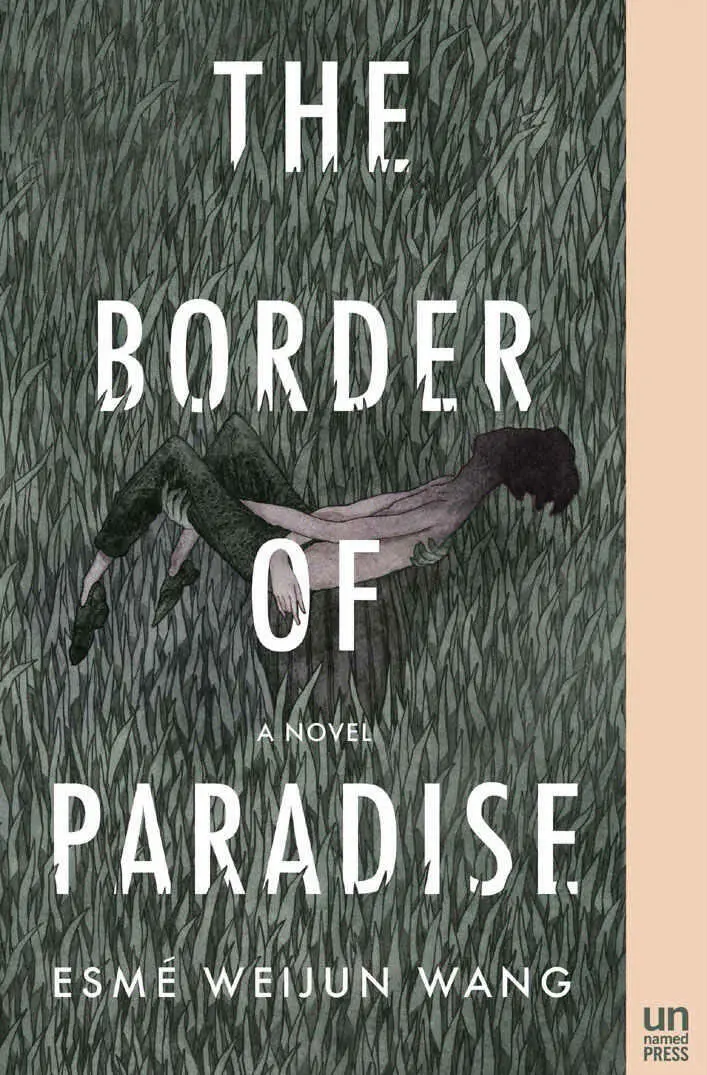
- Название:The Border of Paradise
- Автор:
- Издательство:The Unnamed Press
- Жанр:
- Год:2016
- ISBN:нет данных
- Рейтинг книги:3 / 5. Голосов: 1
-
Избранное:Добавить в избранное
- Отзывы:
-
Ваша оценка:
The Border of Paradise: краткое содержание, описание и аннотация
Предлагаем к чтению аннотацию, описание, краткое содержание или предисловие (зависит от того, что написал сам автор книги «The Border of Paradise»). Если вы не нашли необходимую информацию о книге — напишите в комментариях, мы постараемся отыскать её.
transports readers into the world of an iconoclastic midcentury family.
In booming postwar Brooklyn, the Nowak Piano Company is an American success story. There is just one problem: the Nowak’s only son, David. A handsome kid and shy like his mother, David struggles with neuroses. If not for his only friend, Marianne, David’s life would be intolerable. When David inherits the piano company at just 18 and Marianne breaks things off, David sells the company and travels around the world. In Taiwan, his life changes when he meets the daughter of a local madame — beautiful, sharp-tongued Daisy. Returning to the United States, the couple (and newborn son) buy an isolated country house in Northern California’s Polk Valley.
As David's mental health deteriorates, he has a brief affair with Marianne, producing a daughter. When Marianne appears at their doorstep, the couple's fateful decision to take the child as their own determines a tragic course of events for the entire family. Told from multiple perspectives,
culminates in heartrending fashion, as the young heirs to the Nowak fortune must confront their past and the tragic reality of their future.
The Border of Paradise — читать онлайн бесплатно полную книгу (весь текст) целиком
Ниже представлен текст книги, разбитый по страницам. Система сохранения места последней прочитанной страницы, позволяет с удобством читать онлайн бесплатно книгу «The Border of Paradise», без необходимости каждый раз заново искать на чём Вы остановились. Поставьте закладку, и сможете в любой момент перейти на страницу, на которой закончили чтение.
Интервал:
Закладка:
This fifteen-minute drive is almost all that we know of the world, though I do remember long drives from home to the city. On those drives, through the sun-streaked windows, I saw the landscape of groves and orchards, hand-painted signs in dripping red that David read aloud to us kids in the backseat, not because we couldn’t read, both of us being taught to read at a young age, but because David loved the sound of EGGS ASPARAGUS and CANDY NUTS PEACHES. FRESH STRAWBERRIES FRESH PICKED DAILY amid alfalfa bales. “Doughnuts and liquors,” he said as we passed a storefront with a neon doughnut and a martini glass. Once he was driving us home from Mrs. Kucharski’s in a thunderstorm and said, “Don’t worry about the fireflies. They’ll just pull out their umbrellas.” Another time he explained to Gillian and me what trains were as we stopped at the tracks, bewildered as a locomotive brought its long string of cars across our road and made mechanical, and somehow also animal, sounds.
“Where do they go?” Gillian had asked.
“Other places,” David said. “Places we don’t go, kiddo.”
He had a rhyme that we chanted on the way to lessons:
Highway and right on Cedar Street,
Right on Elm three miles to meet
A mighty oak, and left you’ll see
Samson Drive, 1-9-8-3.
Dry grass flat to the blue-and-white Sierras. Black cows grazing under trees, coats glossy as oil; granite quarries gray against the orange earth. “Amador County Fair, well, that sounds fun, doesn’t it?… Jack Dunn Water Well Drilling, Pine Grove Stage Stop, Sierra Baptist Church, Four-Square Gospel Church of the Healing Word.” Gillian never talked much on those drives because of her motion sickness, but she loved it, she told me later, she loved all of it, just as she melts at that dog and those trailers and, now, the National Auto Gas Station at the outermost corner of Main Street, the slender, stick-straight road flanked by nineteenth-century storefronts and signs. Ma parks behind the K & Bee Grocery, slipping the Buick between a white truck and a low orange car. From the window we can see families, townsfolk, clean-cut, the kind of people David once explained as retirees out looking for a little plot of bramble to turn into a lawn. An old man in a plaid shirt shuffles down the sidewalk with a walker, the brim of his hat shielding his leathery face. Little girls run and give chase, shrieking, as a woman hollers behind them.

Gillian jitters in front of us, taking quick, clipped steps around the side of K & Bee to the entrance, passing a woman and her little boy in dungarees. We must not ever touch in public; this is a rule that underscores our difference in this world, as well as what makes us special. The K & Bee logo, painted on a hanging awning sign, is of a big red K alongside a big-eyed bee. We know that it’s a male bee because he is wearing overalls, and his path of flight, indicated by a dotted line, swirls around the backbone of the K. K & Bee and the Apothecary Rx have become the only establishments in our regular rotation since David died, the remnants of a circle that’s fragmented over the years. These are the essentials of our lives: food and cheap toilet paper, new toothbrushes when the bristles have half fallen out. And unlike home, these things change, are mutable; brands add MORE CLEANING POWER! or become HEALTHY! HEARTY! GOOD FOR YOU! Gillian was, at thirteen, devastated when K & Bee stopped carrying Apple of My Pie fruit pies, which caused me to question her maturity but, in retrospect, seems to speak to some extended need of hers for consistency in all things she loves, even sickly sweet, rectangular fruit pies.
Gillian drowses to the rightmost aisle and snakes her way through. I am at her side. Ma allows us this as she follows behind with a small and clattering cart. In the canned-food aisle Gillian’s fingers, outstretched, brush against tins of corned beef and sardines. I follow and watch as she pauses to examine this thing or that, expecting to hear her marvel, but today she doesn’t say much, just looks and touches, and my heart swells at how I can love a girl so easily pleased on a monthly basis by three sorts of corn niblets and an equal variety of peas, this being so different from the brittle housewives moving in buttoned dresses, bare-legged for summer, hands holding shopping lists of scrawl, and thrusting objects into their carts with native finality; women toward whom I have fascination but no attraction. We look at bloody meat chilled in cases and racks of bottled Coca-Cola, Friskies Dog Food Meals, soup cans and signs. Ma asks for her standard three pounds of ground beef at the meat counter, and while she waits Gillian walks around the corner to examine a display of root beer (BE THE KING OF YOUR CASTLE WITH OLD CASTLE!). I follow. When a stock boy in an apron appears from behind us, pushing a tall thing of red crates, muttering, “‘Scuse me, ‘scuse me,” I move closer to Gillian without thinking, pulling her to me as we squeeze against the root beer display. Immediately my body awakens.
The stock boy — one we’ve never seen before, with spots on his face and orange hair — turns to look at Gillian, his eyes subtly roving over her from head to sandal-shod foot as I attempt to conceal myself. But he couldn’t care less about me or my engorgement. He smiles. He carefully dissects her parts, as though he can’t decide which way to mount her first, and then he considers her legs, twisted slightly inward at the knees, with calves pulled down to delicate ankles (not seeing the scars from scrapping in the brush with me), the swollen small breasts, her pinkish-white face.
“Good afternoon,” he says. “Haven’t seen you around here before.”
Gillian replies, slowly, “We don’t come often.” And then she stops. Speaking to strangers is not a thing we do.
“Pity,” he says. “I just moved here for the summer to be with my cousin. Make some money before I go back to Killington. You ever been to Killington?”
“How nice for you,” I say. “Good-bye.”
He laughs. “Aw, what — you two sweethearts?” The stock boy has righted his dolly and is leaning against it now, making him the same height as Gillian. From here I can smell his nauseating perfume, and I can only imagine what sort of filthy smells he would emit otherwise. I want to say, Yes, we’re sweethearts, and I knew her last night, you moron, but I am suddenly very aware of Ma’s ominous presence. She appears with the package of meat and cart, watching. What could Gillian possibly be thinking at this moment? Gillian and I are usually ignored, nonentities; we don’t make eye contact. But she is now half smiling at him with a kind of stunned — or is it starstruck? — look. My belly roils. If I’m unaware of what conventional female beauty is, I’m still more dubious in regards to what arouses my sister, and it could be this stock boy covered in blotches.
I could grab her arm and say that there’s something urgent that needs attending to, though if she’s enjoying this encounter, I’m not inclined to anger her. The truth is that if her interaction goes much further, these happy jaunts will undoubtedly be put on pause for a month, or maybe more, which is not devastating to me, certainly, as I imagine myself with her sans distraction, but Gillian cares greatly about going into town. And I want her to be happy. So I say, “ Mei …” in the quietest voice that I can muster, and when her eyes turn to meet mine, I mumble something about our mother needing help with a bag of Friskies. Then I hear the cart again, and Ma steps toward us.
Ma says to the stock boy, “Go away, please.”
Читать дальшеИнтервал:
Закладка:
Похожие книги на «The Border of Paradise»
Представляем Вашему вниманию похожие книги на «The Border of Paradise» списком для выбора. Мы отобрали схожую по названию и смыслу литературу в надежде предоставить читателям больше вариантов отыскать новые, интересные, ещё непрочитанные произведения.










Обсуждение, отзывы о книге «The Border of Paradise» и просто собственные мнения читателей. Оставьте ваши комментарии, напишите, что Вы думаете о произведении, его смысле или главных героях. Укажите что конкретно понравилось, а что нет, и почему Вы так считаете.