Esmé Wang - The Border of Paradise
Здесь есть возможность читать онлайн «Esmé Wang - The Border of Paradise» весь текст электронной книги совершенно бесплатно (целиком полную версию без сокращений). В некоторых случаях можно слушать аудио, скачать через торрент в формате fb2 и присутствует краткое содержание. Год выпуска: 2016, Издательство: The Unnamed Press, Жанр: Современная проза, на английском языке. Описание произведения, (предисловие) а так же отзывы посетителей доступны на портале библиотеки ЛибКат.
- Название:The Border of Paradise
- Автор:
- Издательство:The Unnamed Press
- Жанр:
- Год:2016
- ISBN:нет данных
- Рейтинг книги:3 / 5. Голосов: 1
-
Избранное:Добавить в избранное
- Отзывы:
-
Ваша оценка:
The Border of Paradise: краткое содержание, описание и аннотация
Предлагаем к чтению аннотацию, описание, краткое содержание или предисловие (зависит от того, что написал сам автор книги «The Border of Paradise»). Если вы не нашли необходимую информацию о книге — напишите в комментариях, мы постараемся отыскать её.
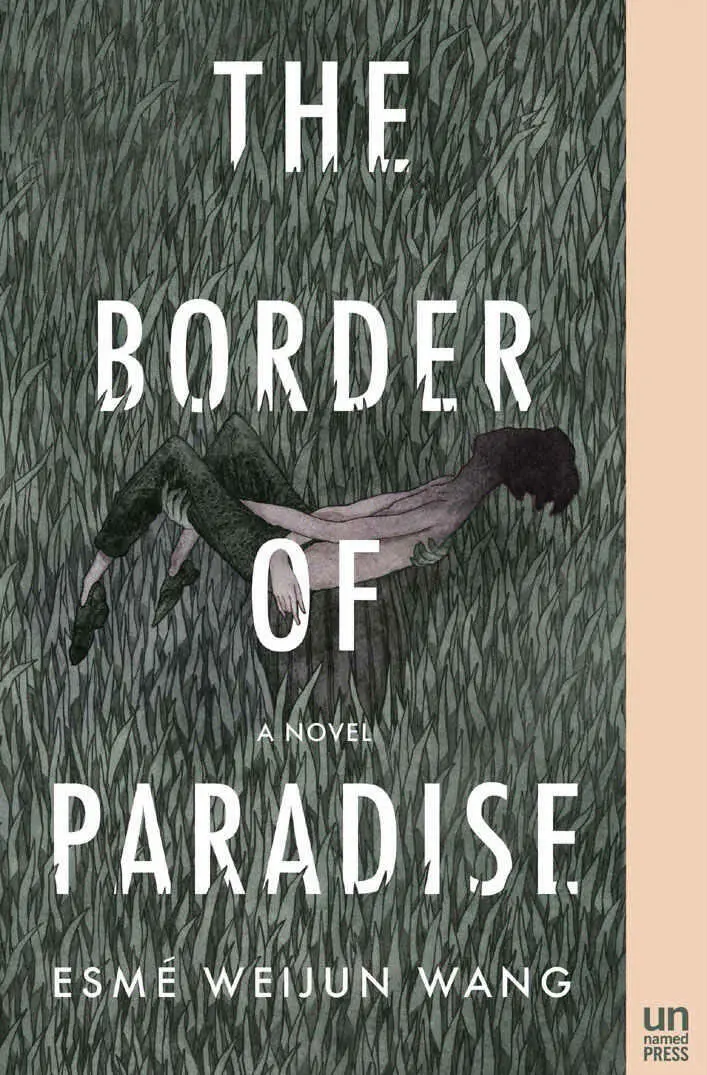
transports readers into the world of an iconoclastic midcentury family.
In booming postwar Brooklyn, the Nowak Piano Company is an American success story. There is just one problem: the Nowak’s only son, David. A handsome kid and shy like his mother, David struggles with neuroses. If not for his only friend, Marianne, David’s life would be intolerable. When David inherits the piano company at just 18 and Marianne breaks things off, David sells the company and travels around the world. In Taiwan, his life changes when he meets the daughter of a local madame — beautiful, sharp-tongued Daisy. Returning to the United States, the couple (and newborn son) buy an isolated country house in Northern California’s Polk Valley.
As David's mental health deteriorates, he has a brief affair with Marianne, producing a daughter. When Marianne appears at their doorstep, the couple's fateful decision to take the child as their own determines a tragic course of events for the entire family. Told from multiple perspectives,
culminates in heartrending fashion, as the young heirs to the Nowak fortune must confront their past and the tragic reality of their future.
The Border of Paradise — читать онлайн бесплатно полную книгу (весь текст) целиком
Ниже представлен текст книги, разбитый по страницам. Система сохранения места последней прочитанной страницы, позволяет с удобством читать онлайн бесплатно книгу «The Border of Paradise», без необходимости каждый раз заново искать на чём Вы остановились. Поставьте закладку, и сможете в любой момент перейти на страницу, на которой закончили чтение.
Интервал:
Закладка:
“Oh,” she says.
My face turns upward between her thighs, and she cries out, “Please stop—”
“What?” I ask. My voice sounds harsher than I’d intended. “I’m sorry. What?” I say again, softening the word so that the punctuation afterward resembles a comma, an ellipsis.
“It — it frightens me,” she says. “Please — don’t…”
“I frighten you? How?”
She hastily pulls up her panties. She says, “You become someone different, is all.”
I blush. I wrap my arms around her legs and kiss her wrinkled white knees; I lean my forehead against them. My arousal has gone completely. I let go of her, moving to the bed. I don’t know what to do with my hands or eyes. “I’m sorry,” I say.
She murmurs, “It’s okay.”
“I must’ve temporarily lost my mind.”
“Maybe we should send you to Wellbrook,” Gillian says, and I am relieved to see a faint smile. I crawl under the covers and say, “I’ll leave you alone. I’ll stay right here. A foot of space between us.” How could I ever make her unhappy? Slowly I inch closer to her and fall asleep, with my face muffled against the soft space between her shoulder blades.

Tonight I awaken, stirred by noise, and she is across the room from me in a moonlit bookcase shadow. She is absently crouched over a sketchpad with a pen in her hand. I look at her and the soft frankness of her pose, the way her knees splay indecorously, touches me. She doesn’t look up or notice. I make no sound. She draws or writes — though, by the gesture, it seems like drawing — and pauses, lifts the pen to her mouth, and sucks on the tip, ink spotting her tongue and lips. The pen returns to the paper at her feet.
Gillian looks directly at me. “Hey. I didn’t mean to wake you.”
“You didn’t.”
“I couldn’t sleep,” she says.
“Come to bed,” I say, but she shakes her head and pulls her legs into a more ladylike, cross-legged pose. “Come on,” I say again, “come to bed. You need your beauty rest.”
“I’m not tired.”
“It’s three in the morning, xiao mei .”
Gillian sighs. She puts her things down and slinks to the bed, sliding under the covers with her back to me. But when morning comes she’s not in the room, and in the haze of half-awakening, it’s like Gillian never existed. The songbirds are chirping, Come to me, come to me … I quickly dress to leave, surrounded by her dirty underthings and her stiff and glassy-eyed animals. Foreboding fades into a daydream. She will be in the kitchen, eating, or in the living room, looking at a book. Perhaps she will be sitting next to Ma on the sofa. What a treat it is, to be able to anticipate a day with such fervor — to have something (someone!) spectacular to look forward to. And now the chirping cheers me, and the sunlight is less garish and more pleasant, even as I leave it.
But she’s not in the kitchen, though the kitchen smells like coffee and bacon, and the dirty dishes are beneath a thin sheet of cloudy water. She’s not in the living room, and she’s not, as I look through the peephole, on the porch or boulders. The house is eerily quiet. So I go to the other end of the hall, but as soon as I reach the door, it opens. Gillian steps out of Ma’s room. I am relieved and unnerved. She stares at me. Pushes up the bridge of her glasses. She says, “Let’s go outside.”
There are three boulders out past the porch, and they are arranged in a perfect triangular pattern such that the largest rock is at the northernmost tip. As children we found the rocks perfect for games of Lost on an Island. As young adults we lie on them to be alone. Gillian stretches out on the biggest one, maneuvering carefully so that her feet are pressing against the second-largest rock for support. I do the same, but I begin to clench up, expecting her to make a revelation. The thing about lying on the big rock together is that there’s no room to move anywhere but down, eliminating the ability to turn and look at each other or otherwise be in any position other than the one you’re in: staring at a circle of clouds and sky, bordered by the tips of evergreens.
I now know her body more intimately than anyone has ever known it. Yet the intimacy seems to have created an inverse relationship to my knowledge of her deepest self. So I wade into the conversation carefully. I ask her what she was doing in Ma’s room, but I make sure to keep my tone even.
Instead of answering, Gillian says, “Why does she care so much that I do a good job as your tongyangxi ?”
My heart tightens. I say, “Isn’t it obvious? I should say because it’s the best thing for us.” When I receive no answer, I forge on: “We’re so compatible — in music, in our education, even in our language. I can’t imagine any two people more compatible.”
“You wouldn’t know,” she says. “And neither would I.”
“There’s a reason for that,” I say. “Other people are different. Significantly different.”
“When we see them.”
“Yes. Consider the dullards we meet when we go into town. They’re nothing like us. It stands to reason that they would relate to one another differently.”
She seems to consider this, or is ignoring me, watching some bird circle. Finally: “You might be right.”
“I know I’m right.”
“What it actually is,” she says, “is the best thing for her , isn’t it? She’d be lonely, you know, without us.”
“That isn’t particularly romantic.”
“No. It’s not.”
“David wanted this, too.”
“Yeah.”
“You act as though she’s being selfish, as though we don’t need her, or as if she doesn’t give us anything. She does everything for us. What you’re saying doesn’t make sense. And since when have you been thinking about all of this?”
“I think,” she says, “because there’s nothing else to do. But haven’t you thought about any of this? Nothing to do? Nowhere to go? There’s a snarl in my gut — things are changing, and it makes me nervous.”
What a strange mood she’s in today, and I hope that it passes quickly. Chalk it up to hormones. Estrogen gone haywire in her pituitary. Never mind letting her words permeate, though, of course, they do, with our situation working to my advantage, and Gillian’s discontent worming its way into my brain, though she’s incorrect in that we have had no choice. We are not calves, after all, locked up in crates. She could walk out that door any time she wanted to.
It is two weeks after our honeymoon. In the grass behind the house Gillian and I blow up half a bag of white balloons. The balloons are a gift from Ma, who bought them in Sacramento during our honeymoon week, and though they’re an odd choice — balloons are for birthdays, for Easter — Gillian is eager to try them out. So we stand in a field of low golden grass and I am, after puffing my poor pale chest into six balloons, ready to call the whole thing off. But Gillian persists, and insists that we blow and scatter till the palm-sized bag is empty. We stand in a pond of bobbing pearlescent teardrops.
“My cheeks,” she says, and rubs them with the tips of her fingers. “I’m more than a little bit light-headed. Golly.”
A sudden breeze comes. The balloons rise a few inches and dance before settling on the grass. Gillian bends over and lifts one with both palms, bouncing it, keeping it aloft. She bounces it to me, and I barely graze it with my fingertips, sending it back, which makes her giggle as she leaps to bat it in return.
Читать дальшеИнтервал:
Закладка:
Похожие книги на «The Border of Paradise»
Представляем Вашему вниманию похожие книги на «The Border of Paradise» списком для выбора. Мы отобрали схожую по названию и смыслу литературу в надежде предоставить читателям больше вариантов отыскать новые, интересные, ещё непрочитанные произведения.







Обсуждение, отзывы о книге «The Border of Paradise» и просто собственные мнения читателей. Оставьте ваши комментарии, напишите, что Вы думаете о произведении, его смысле или главных героях. Укажите что конкретно понравилось, а что нет, и почему Вы так считаете.