Esmé Wang - The Border of Paradise
Здесь есть возможность читать онлайн «Esmé Wang - The Border of Paradise» весь текст электронной книги совершенно бесплатно (целиком полную версию без сокращений). В некоторых случаях можно слушать аудио, скачать через торрент в формате fb2 и присутствует краткое содержание. Год выпуска: 2016, Издательство: The Unnamed Press, Жанр: Современная проза, на английском языке. Описание произведения, (предисловие) а так же отзывы посетителей доступны на портале библиотеки ЛибКат.
- Название:The Border of Paradise
- Автор:
- Издательство:The Unnamed Press
- Жанр:
- Год:2016
- ISBN:нет данных
- Рейтинг книги:3 / 5. Голосов: 1
-
Избранное:Добавить в избранное
- Отзывы:
-
Ваша оценка:
The Border of Paradise: краткое содержание, описание и аннотация
Предлагаем к чтению аннотацию, описание, краткое содержание или предисловие (зависит от того, что написал сам автор книги «The Border of Paradise»). Если вы не нашли необходимую информацию о книге — напишите в комментариях, мы постараемся отыскать её.
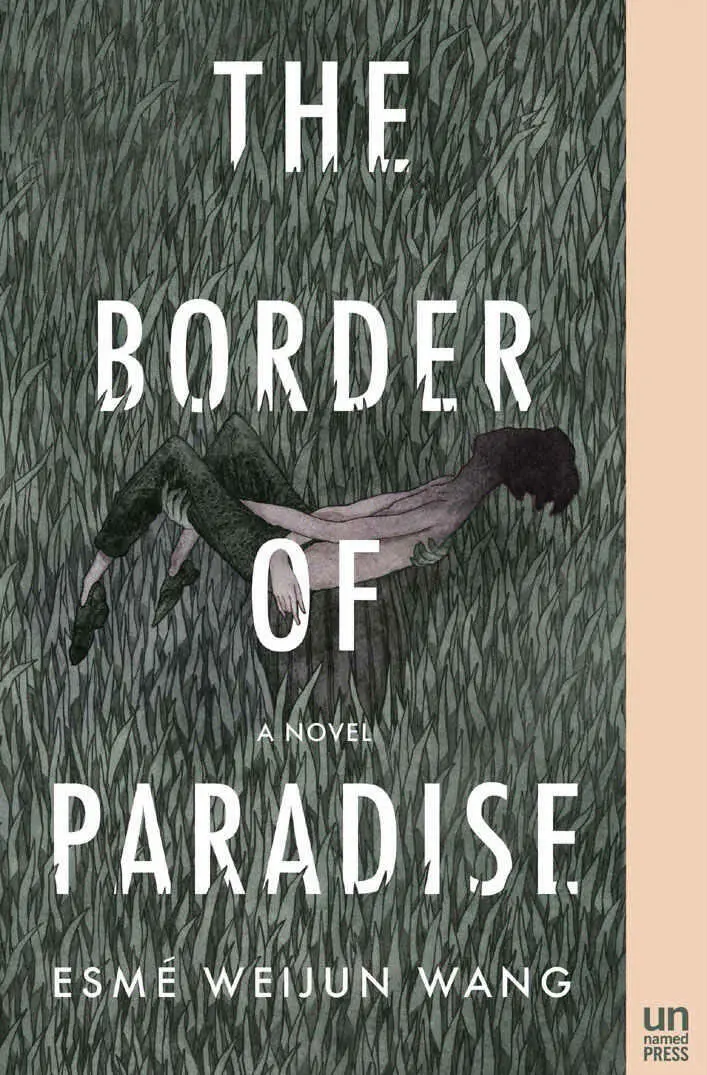
transports readers into the world of an iconoclastic midcentury family.
In booming postwar Brooklyn, the Nowak Piano Company is an American success story. There is just one problem: the Nowak’s only son, David. A handsome kid and shy like his mother, David struggles with neuroses. If not for his only friend, Marianne, David’s life would be intolerable. When David inherits the piano company at just 18 and Marianne breaks things off, David sells the company and travels around the world. In Taiwan, his life changes when he meets the daughter of a local madame — beautiful, sharp-tongued Daisy. Returning to the United States, the couple (and newborn son) buy an isolated country house in Northern California’s Polk Valley.
As David's mental health deteriorates, he has a brief affair with Marianne, producing a daughter. When Marianne appears at their doorstep, the couple's fateful decision to take the child as their own determines a tragic course of events for the entire family. Told from multiple perspectives,
culminates in heartrending fashion, as the young heirs to the Nowak fortune must confront their past and the tragic reality of their future.
The Border of Paradise — читать онлайн бесплатно полную книгу (весь текст) целиком
Ниже представлен текст книги, разбитый по страницам. Система сохранения места последней прочитанной страницы, позволяет с удобством читать онлайн бесплатно книгу «The Border of Paradise», без необходимости каждый раз заново искать на чём Вы остановились. Поставьте закладку, и сможете в любой момент перейти на страницу, на которой закончили чтение.
Интервал:
Закладка:
“A regular St. Francis. Are you going to ask Ma about it? She’s in her room,” he adds, “getting dressed and undressed, reapplying her rouge. Hey, girl.” He crouches and holds out his hand.
“Her name is Sarah.”
“Sarah. Nice.”
I make William watch Sarah while I go inside with my heart beating fast and poke around in the kitchen. We do not own animals; my father was far more likely to stuff a creature than to feed it twice a day. All I can find that might be good is a pound of ground beef wrapped in butcher paper. I feel daring and take half of the cold, soft pinkness to put on a proper plate, thinking of Ma in the next room doing, as William says, God knows what.
“Gillian,” she calls as I squeak around the corner of the kitchen door, and I say, “What?” trying not to sound like a girl with ground beef on a plate. She asks me where I’ve been all morning. I say I was out in the long meadow, which is something that my father used to call it, and I always liked to hear the phrase “the trees in the long meadow” as a result. “I was mending a dress,” I say, “just enjoying the sun,” and I hear Sarah whimper from outside, I hear her bark, and William says, “Whoa.”
And of course Ma comes out of the bedroom one-fourth of a second after the bark. Her hair is in sea-green curlers, the kind with foam and a grip, and she asks in Taiwanese, “ Na shih gao-ah? ”
“Shih.”
“And that? Meat’s not cheap,” she says, pointing, switching back to Mandarin, and though she doesn’t outright pull the plate from my hands in this moment, I wouldn’t be surprised if she did a second from now, when she thinks I’m not aware of her gears churning. But I wouldn’t let go. There would be meat on the floor and I’d clean it up because that’s what I do. I’d pick the meat up and put it back on the plate, and I’d head right outside. Ma says, “Well, go ahead, then,” and she comes with me.
Sarah is at my feet right away, her tail tentatively wagging as though she knows she shouldn’t, but can’t help herself. Her tongue, spongy white and pink, is hanging out; she comes to the plate, which I put on the porch, and she snuffles into the meat straightaway. It hurts me to watch her, Sarah, who is trembling like her sturdy build isn’t enough to keep her upright.
William says, in English, “Sarah, nobody’s going to take it away from you.” And then, “Gillian, please get your dog to relax. She’s going to choke on it.”
“In Taiwan,” Ma says, “we had dogs like this everywhere. Street dogs, eating out of the garbage, chewing on their own tails.” She goes back inside and William goes back to the rocker and watches us. I don’t touch her yet. What would our father say about bringing a dog home? He’d let me, I think. He’d let me have this thing to love. Always he was so good at loving, so good at making me feel like the best girl in the world. A girl who could, and should, have everything — everything within reason, but still — everything.

Sarah sleeps outside. Sarah eats the leftovers that I put on the same plate I used the first day, and she’ll eat practically anything, but is happiest with meat. Sarah has hydrogen peroxide and a bandage put on her muzzle, her paws; she doesn’t try to bite. Sarah looks sad all day and is especially sad when I go inside at night, when the mosquitoes come for me, and Sarah sounds a low whine that I can hear through the closed door before she goes quiet. Sarah is on a long rope tied around a post. Sarah is a hopeless creature.
In the mornings, at approximately six o’clock, she begins to scratch on the front door, a faint sound like rats scurrying in the walls, and William, who sleeps more heartily now because of exertion, doesn’t hear and doesn’t wake up earlier than I do to play the piano. I’m the one who gets up and goes to the kitchen, poking through the refrigerator, and whatever is left over and will draw the least amount of criticism from Ma is what goes on Sarah’s plate: fish heads, wilted cabbage. I assemble a meal until the fridge begins to look emptier, and then I put the last offending object back. When I open the front door, while the screen is still shut, Sarah is already waiting for me with her front paws high, standing precarious on her hind legs, wobbling like pudding, jerking her head with her tongue hanging loose out. If I try to touch her she’ll back away from the plate by my feet and won’t eat till my hands are hidden or relaxed at my sides. I sit in the rocker and watch her approach. She investigates the food with a few sniffs, eats with her lips back so that I can see her big teeth. She licks the plate and then, with a satisfied half-whimper, half-groan, trots to me. After a week, she lets me touch her gently behind the ears, where the fur is surprisingly soft.
Sarah solidifies my place in the world. I was mending a dress in the meadow and conjured her alone. I spend so much time with her that they worry. What worry, for what purpose?
One night I come into the bedroom to change into a nightgown and William says, “Haven’t seen you in a while.”
“We live in the same house,” I reply. I go to the wardrobe and open it, facing the mirror glued to the inner door. I see myself and my tangled, matted hair, and I see part of William on the bed with a book open on his lap. There’s a bloody spot on his chin where he’s popped a pimple, and when he catches my eye in the glass he touches his chin briefly, as if to hide it from me.
“That dog is getting better,” he says. “She’s probably practically healed under those bandages, you know. You won’t know unless you take off those bandages.”
“She’s not healed.”
“And her ribs don’t show anymore. You feed her better than you feed yourself.”
I say, “It’s sweet of you to care.”
You’re more important is what he’s thinking, but he doesn’t say it. I unbutton the dress I’m wearing down to the waist, one of the few dresses I own that isn’t feed-sack: a red-and-white swirling cotton print. He’s so good at undoing my undergarments with one hand or his teeth, unwrapping me, but these days I don’t give him the satisfaction. I’m either dressed or undressed. Here or not here. In or out.
In the cold bed under cold sheets he first turns toward me on his side — piped pajamas off, underwear on — and kisses my left breast. “You like it,” he says, “don’t you, kitten?”
“I like most things,” I say, not lying, exactly, my thighs tingling in an anticipatory hurt.
Sarah is sleeping on the porch by now, or maybe she’s waiting for me, like I’m waiting for William to put my hand where he wants it. And when he finishes I can go to our bathroom and put my hand into my underwear and jiggle my fingers around, in the cold, with my forehead pressed against the sink, until my muscles spasm and my head turns to air. That’s what sex is.
I do wonder if there can be an alternative to this. There are marriages in our books that are not like this one — people wed without the bond of family to tie them, although there is still love as there is love in this room. I am the problem here, but perhaps I would not be the problem somewhere else. And why consider it? It’s not as though I can be someone other than who I am. I am born as I am and I live as I am.
When our dad died I cried under my bed for hours, days maybe, and while I lay there I saw William’s feet pad in. He said, “No, it’s not okay, and that’s why I love you.” I can only assume it was a different love then. He was thirteen, and unlike me, he always wore socks — but now we both know that he likes to be completely naked with me when we are in “the act.” His feet are cramped, sad. Little hairs on the toes. I do try to find him charming. The way he speaks is our father all over, but with flourishes. They have the same features stuck in opposite faces: the foxlike versus the jowly walrus or bony antelope.
Читать дальшеИнтервал:
Закладка:
Похожие книги на «The Border of Paradise»
Представляем Вашему вниманию похожие книги на «The Border of Paradise» списком для выбора. Мы отобрали схожую по названию и смыслу литературу в надежде предоставить читателям больше вариантов отыскать новые, интересные, ещё непрочитанные произведения.










Обсуждение, отзывы о книге «The Border of Paradise» и просто собственные мнения читателей. Оставьте ваши комментарии, напишите, что Вы думаете о произведении, его смысле или главных героях. Укажите что конкретно понравилось, а что нет, и почему Вы так считаете.