Elin Hilderbrand - The Island
Здесь есть возможность читать онлайн «Elin Hilderbrand - The Island» весь текст электронной книги совершенно бесплатно (целиком полную версию без сокращений). В некоторых случаях можно слушать аудио, скачать через торрент в формате fb2 и присутствует краткое содержание. Жанр: Современная проза, на английском языке. Описание произведения, (предисловие) а так же отзывы посетителей доступны на портале библиотеки ЛибКат.
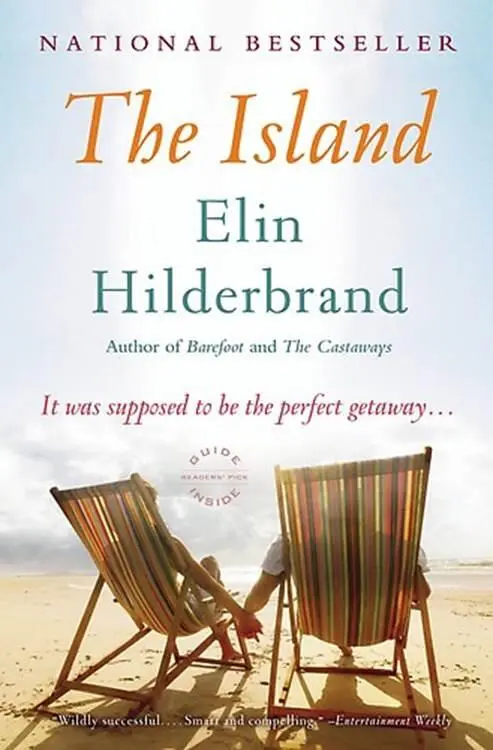
- Название:The Island
- Автор:
- Жанр:
- Год:неизвестен
- ISBN:нет данных
- Рейтинг книги:3 / 5. Голосов: 1
-
Избранное:Добавить в избранное
- Отзывы:
-
Ваша оценка:
The Island: краткое содержание, описание и аннотация
Предлагаем к чтению аннотацию, описание, краткое содержание или предисловие (зависит от того, что написал сам автор книги «The Island»). Если вы не нашли необходимую информацию о книге — напишите в комментариях, мы постараемся отыскать её.
It's only the first hint of what will be a summer of upheavals and revelations. Before the dust has even begun to settle, far worse news arrives, sending Chess into a tailspin of despair. Reluctantly taking a break from the first new romance she's embarked on since the recent end of her 30-year marriage, Birdie circles the wagons and enlists the help of her younger daughter Tate and her own sister India. Soon all four are headed for beautiful, rustic Tuckernuck Island, off the coast of Nantucket, where their family has summered for generations. No phones, no television, no grocery store – a place without distractions where they can escape their troubles.
But throw sisters, daughters, ex-lovers, and long-kept secrets onto a remote island, and what might sound like a peaceful getaway becomes much more. Before summer has ended, dramatic truths are uncovered, old loves are rekindled, and new loves make themselves known. It's a summertime story only Elin Hilderbrand can tell, filled with the heartache, laughter, and surprises that have made her page-turning, bestselling novels as much a part of summer as a long afternoon on a sunny beach.
The Island — читать онлайн бесплатно полную книгу (весь текст) целиком
Ниже представлен текст книги, разбитый по страницам. Система сохранения места последней прочитанной страницы, позволяет с удобством читать онлайн бесплатно книгу «The Island», без необходимости каждый раз заново искать на чём Вы остановились. Поставьте закладку, и сможете в любой момент перейти на страницу, на которой закончили чтение.
Интервал:
Закладка:
In the kitchen, she poured herself another glass of wine. She checked to make sure Chess was still breathing. Yes? Okay.
Posing for Lula was as secret as a love affair. India refused to pose in Lula’s studio or in any other PAFA-owned space. And so they decided on Lula’s apartment.
India checked in with the doorman under an assumed name, Elizabeth Tate, which was, India told Lula, a family name. Lula didn’t understand the need for aliases-the doorman was discreet, India could use her own name. But no, she wouldn’t.
Lula met India at the apartment door. She had Schubert playing, which was a balm for India’s sensibilities; in her studio at school, Lula listened to the Smashing Pumpkins and the Sex Pistols and the Ramones at ludicrous volume. (The other students would have complained if it had been anyone but Lula.) Lula greeted India in a businesslike manner-a crisp hello, no kiss-and handed India a waffled white robe.
“You can change in the bathroom,” she said.
Lula’s bathroom was sleek and modern like the rest of the apartment, and as impersonal as a bathroom at a hotel. All of Lula’s personal effects were secreted away behind mirrored cabinets. So many mirrors, doubling and quadrupling India’s form in its dishabille. She tried not to look at herself. Her mission here today was not one of personal vanity. It wasn’t about the body and what had happened to her once-magnificent ass (too much plum crumble, too many sweet cosmopolitans, age). It was about art.
She entered the living room in her robe. “Where would you like me?” she asked.
“I’m not sure,” Lula said. She wore a white ruffled tunic over some electric green leggings. She was barefoot, she was smoking. Her hair was half-up, half-down; she had kohl smudged around her eyes. “I’ve been thinking about it. Let’s start on the sofa.”
The sofa was white suede. India was afraid of it. Or rather, what she was afraid of was this moment, the moment she was to remove her robe. It wasn’t like India to be nervous; it wasn’t like India to feel vulnerable. She tried to concentrate on other things. The Schubert was nice. There was a vase of crimson dahlias on the table next to the sofa.
She slipped off her robe, exposing her backside to Lula. She lay down on the sofa. “Like this?” she said. Her voice sounded strange.
Lula barely nodded her assent. Her pencil made a frantic scratching sound against the paper. India was electrified. She was instantly aroused, as sexually turned on as she had ever been in her life. She was nothing at that moment but a naked body stretched out on skin-soft suede. She was a woman with another woman’s eyes all over her. It was obscene and exhilarating. Lula’s pencil was moving faster and faster. India felt as if the pencil was touching her, as if the eraser of the pencil were teasing at her nipples, which were now erect. Did Lula see? Did she see what she was doing to India?
Lula said, “Pivot your hips, a little, toward me.”
India had heard all the jokes, of course, about the sylphs from the stable. The girls who modeled at PAFA were, when class was over, the easiest lays in the Delaware Valley. It only depended on which student offered to buy her a drink first. Now, India understood why. It was an incredibly sensual experience to bare your body and let another person render you.
India closed her eyes. She was wet between the legs. She was pulsing with heat and light.
“Eyes open!” Lula snapped.
India opened her eyes.
She had managed to get out of the apartment an hour later without incident, a fact that had dismayed her at the time and came as an enormous relief once she was out on the cold city street.
What had happened in there? India wondered. What kind of witchcraft?
She decided she wouldn’t go back.
But go back she did, every Tuesday at five o’clock, for eight weeks. The posing took the place of their weekly dinners. India couldn’t sit with Lula and have a meal; something had shifted between them. The posing was serious business; during the sessions, they barely spoke. India didn’t know how to process the sexual energy. Did Lula sense it? Did she feel it, too? She didn’t let on.
During those eight weeks, India started to take care of her body again. She joined a gym in King of Prussia; it wasn’t a place where India would bump into anyone she knew, so the business of building her strength and endurance was her only focus. She hired a personal trainer named Robbie, who was a transvestite and worked her like an ox through the machines and the free weights. She ate chicken and fish and vegetables. She cut down on cigarettes and stopped drinking at home. She invested in creams and lotions for her skin; she booked manicures and pedicures and massages on the weekends. (Taking care of herself, India realized, could take up every spare hour if she let it. Did other people do this?) She flossed every time she brushed. She took vitamins. She soaked in lavender baths. She considered getting a risqué wax on her pubic hair, but she didn’t want to call attention to herself.
Lula didn’t seem to notice any change, until one day when India slipped off the robe, Lula said, “Are you getting skinny on me, Indie?”
India was quick to deny it.
“Really?” Lula said. “You look positively svelte. And you’re glowing. What’s that about?”
India shrugged.
“Lie down,” Lula said.
Then, the posing ended. It was spring break, which was two weeks long. India went to Greece with her college roommate Paula Dore-Duffy, who was now a professor of neurology at Wayne State University. Paula did research on the blood-brain barrier; she wasn’t interested in the art world or PAFA or late-emerging lesbian feelings, and India didn’t speak of these things. Paula wanted to shed her white lab coat, drink ouzo, and dance in the hotel discos, which overlooked the Aegean Sea, and India joined her in these pursuits. The one morning at breakfast when Paula did ask India about work, India joked that thinking about PAFA made her worry for her own blood-brain barrier, and she dove into her honey and yogurt. The subject didn’t come up again. It was a relief.
When India got back to the academy, things progressed into end-of-the-year mode. Third- and fourth-year students were preparing for the Annual Student Exhibition. India checked in with all of her advisees, including Lula. Lula was busy painting. She was back to her obsessive ways-in her studio from seven in the morning until midnight, smoking two packs a day, drinking ten lattes, ordering Indian food from Mumbai Palace that sat, untouched, in the cartons.
Everyone’s expecting big things, India told her.
Fuck you, Lula said. But she was smiling when she said it.
The ASE was always the biggest night of the academic year; it was, in many ways, more important than graduation. Graduation was a ceremony, a passing on of a (basically useless) degree in fine arts. But the ASE was the meat; it was the money. Art dealers from all over the city and from New York and Boston and Chicago attended-as well as family, friends, previous graduates, colleagues from other schools, other museum curators, serious collectors, novice collectors, and society matrons who couldn’t tell Winslow Homer from Homer Simpson but who wanted to see and be seen. The ASE was the premier evening in the Philadelphia art world; there was a line at the gates hours before.
India always wore something new and fabulous to the ASE because inevitably her photograph appeared on the society page of the Philadelphia Inquirer and the glossy center pages of Philadelphia magazine. She was, in so many ways, the face of PAFA; hers was the name people recognized. India Bishop, widow of the famous sculptor. And this year she knew her involvement would be deeper and more nuanced than it had been in years past. The paintings everyone would be talking about would be of her.
Читать дальшеИнтервал:
Закладка:
Похожие книги на «The Island»
Представляем Вашему вниманию похожие книги на «The Island» списком для выбора. Мы отобрали схожую по названию и смыслу литературу в надежде предоставить читателям больше вариантов отыскать новые, интересные, ещё непрочитанные произведения.





Обсуждение, отзывы о книге «The Island» и просто собственные мнения читателей. Оставьте ваши комментарии, напишите, что Вы думаете о произведении, его смысле или главных героях. Укажите что конкретно понравилось, а что нет, и почему Вы так считаете.