Elin Hilderbrand - The Island
Здесь есть возможность читать онлайн «Elin Hilderbrand - The Island» весь текст электронной книги совершенно бесплатно (целиком полную версию без сокращений). В некоторых случаях можно слушать аудио, скачать через торрент в формате fb2 и присутствует краткое содержание. Жанр: Современная проза, на английском языке. Описание произведения, (предисловие) а так же отзывы посетителей доступны на портале библиотеки ЛибКат.
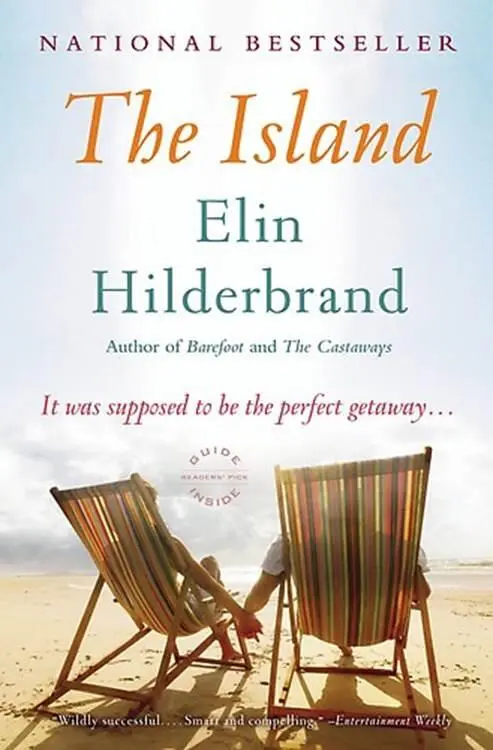
- Название:The Island
- Автор:
- Жанр:
- Год:неизвестен
- ISBN:нет данных
- Рейтинг книги:3 / 5. Голосов: 1
-
Избранное:Добавить в избранное
- Отзывы:
-
Ваша оценка:
The Island: краткое содержание, описание и аннотация
Предлагаем к чтению аннотацию, описание, краткое содержание или предисловие (зависит от того, что написал сам автор книги «The Island»). Если вы не нашли необходимую информацию о книге — напишите в комментариях, мы постараемся отыскать её.
It's only the first hint of what will be a summer of upheavals and revelations. Before the dust has even begun to settle, far worse news arrives, sending Chess into a tailspin of despair. Reluctantly taking a break from the first new romance she's embarked on since the recent end of her 30-year marriage, Birdie circles the wagons and enlists the help of her younger daughter Tate and her own sister India. Soon all four are headed for beautiful, rustic Tuckernuck Island, off the coast of Nantucket, where their family has summered for generations. No phones, no television, no grocery store – a place without distractions where they can escape their troubles.
But throw sisters, daughters, ex-lovers, and long-kept secrets onto a remote island, and what might sound like a peaceful getaway becomes much more. Before summer has ended, dramatic truths are uncovered, old loves are rekindled, and new loves make themselves known. It's a summertime story only Elin Hilderbrand can tell, filled with the heartache, laughter, and surprises that have made her page-turning, bestselling novels as much a part of summer as a long afternoon on a sunny beach.
The Island — читать онлайн бесплатно полную книгу (весь текст) целиком
Ниже представлен текст книги, разбитый по страницам. Система сохранения места последней прочитанной страницы, позволяет с удобством читать онлайн бесплатно книгу «The Island», без необходимости каждый раз заново искать на чём Вы остановились. Поставьте закладку, и сможете в любой момент перейти на страницу, на которой закончили чтение.
Интервал:
Закладка:
India poured Chess a glass of wine and refilled her own. She was drunk or nearly so, which was not a bad state to be in when embarking on a frank conversation.
“Sit with me,” India said.
Chess accepted the wine gratefully and sat at the picnic table. India rummaged through the kitchen for snacks-she found half a tin of Spanish peanuts and a box of Bremner wafers that had gone stale and tasted like wet cardboard.
India had an opening line on her tongue. Your mother wanted me to talk to you. But how awkward, how schoolmarmish. She would sound like a scold. The idea, India knew, was for her to talk to Chess about Bill-how Bill had died and what that had felt like and how she had recovered. But India didn’t want to talk about Bill. Her mind was elsewhere.
India pondered for a second as she studied Chess’s face. Without the frame of her hair, Chess’s face was even more striking than usual. She had light blue eyes with a dark ring around the iris, the effect of which was quite arresting. There were pink, crosshatched marks on her face where her cheek had met with the ass-scratching material of the living room sofa. The poor girl was dying for something-a scrap, a hint, some direction about what to do. She had broken her engagement; her fiancé had died. There were other things that she wasn’t telling. She wasn’t ready to talk, but looking at her now, India wondered if she might be ready to listen.
Would she be able to handle the story about Lula and her dear old aunt?
Oh, hell, India, she told herself. Get on with it!
“I received a letter today,” she said.
CHESS
Her depression was a place to hide. Birdie had knocked and Chess had ignored her. Barrett Lee had knocked and Chess had told him to go away. India had knocked and Chess-mostly because she couldn’t bring herself to be rude to her aunt-had agreed to listen. Aunt India talked about a student at PAFA, and a connection between them that couldn’t be reduced. The story was engrossing. For the first time since she’d arrived, Chess thought about something other than herself.
“Do you love her?” Chess asked.
India put her fingers to her temples and rolled her eyes back in her head, like a swami trying to see the future. “I don’t know,” she said. She smiled at Chess, then lit a cigarette. “The thing is, my darling, human emotions present themselves in any number of shocking ways. Do you know what I’m telling you?”
“What?” Chess said.
“I’m telling you that you aren’t alone.”
Day seven.
Human emotions present themselves in any number of shocking ways.
– India Bishop
Nick had kissed me. I thought about that kiss a hundred times a day, a thousand times. I tried to remember how I had acted or reacted, but it had happened so quickly that I couldn’t remember myself. I could only remember him. I wondered if I should have said something different or done something different, because after that one kiss, there was nothing for a long time. I should have said something to let him know how I felt about him, I should have kept him there longer, kissed him some more, done more than kiss him.
I continued to date Michael. I saw Nick infrequently-once a month we would go watch him play at the Bowery Ballroom or at Roseland and he would look upon me with intense longing, but only once, and then he wouldn’t look again. He always had women around him-skinny, long-haired girls in jeans and tank tops and handmade jewelry, beautiful, underfed girls who were the band’s groupies-but I never saw the same girl twice, and the one time I asked Michael if he thought Nick was dating, he said, “What, exactly, qualifies as dating?”
We attended family dinners with Cy and Evelyn, but Nick never came.
Michael saw Nick on Wednesday nights at his poker game. The game was hosted by Christo Snow, who had gone to Englewood High with Michael and Nick. The games were high stakes, the food was catered, and Christo hired not only a dealer from Atlantic City but a security guard as well. Michael made money or lost money. Nick always made money; it was his primary source of income. One night, after the game, Michael came home with a rosy, swollen eye. Nick had punched him.
I gasped, “Why?”
“We had a fight.”
“About what?”
As was usual after these poker games, Michael was drunk. Otherwise, he would never have told me.
“About you.”
“Me?”
“He said I wasn’t right for you.”
“Not right for me?”
“Not good enough for you.”
My head swam. I remembered that Michael had long ago broken Nick’s nose, over a girl. I should have felt some sympathy for Michael, but instead my heart felt like it was being carried away by bluebirds. Nick had feelings for me.
“Well, that’s silly,” I said.
I saw Nick again the week before Christmas. He was sitting on a bench in the lobby of my office building. I was leaving for the day; we had just put the February issue to bed with its comforting soups and stews and a menu for a snow-day sledding party. I felt the same massive relief I always felt when I put an issue to bed and the issue was good, and in addition, it was Christmas, I had twelve days off from work, and there was a fancy Christmas party that night for Michael’s company, which was being held at the Morgan Library. I was in a singular mood. I didn’t love Christmas the way Birdie or Tate loved Christmas; Christmas was for children and I didn’t have any children and I was no longer a child myself-but on that day, I was in the spirit.
And then I saw someone who looked like Nick but would never be Nick, sitting on a vinyl bench by the revolving door of our office building. I got closer and saw his face, his hair, those eyes. He was wearing a black wool coat and jeans, and the security guards that manned the entrance eyed him suspiciously.
I said, “Nick?”
He gave me the look. My head buzzed. They played carols in the lobby, and the song at that moment was Burl Ives singing “Have a Holly Jolly Christmas.”
He said, “I was in the neighborhood.”
That was a lie. I worked in Midtown. Nick Morgan would never have had any reason to be in Midtown.
I didn’t know what to say. I couldn’t take my eyes off him and I didn’t want him to take his eyes off me. We stood in the marble lobby of my building with people going past in both directions and Burl Ives crooning, locked in some kind of silvery force field.
Finally, he said, “Let’s get out of here.”
We walked. He led, I followed at his elbow. We walked up Fifth Avenue amid the throngs of people. So many people, so much Christmas cheer-tinsel on lampposts and wrapping paper covering the Louis Vuitton store and sugarplum visions in the window at Henri Bendel. We walked in front of the Plaza Hotel; across the street, the line at FAO Schwarz was five hundred people long. When I walked in the city with Michael, these details interested me. With Nick, I cared only about Nick.
We walked into the park, we took the first footpath. It was cold, but I didn’t care. Nick guided me toward a tree-bare-branched, majestic, sheltering. It instantly became our tree. I turned around to face Nick and he kissed me. He really kissed me, we were kissing, and God, he was the best kisser I had ever known. More sensual than Michael-more careful, less careful. He said, “I am obsessed with you.”
This should have come as a surprise to me, but it didn’t. Although I was dating Michael, I thought of Nick every hour of every day. I dreamed about him. I fixated on the poster in Michael’s kitchen and on the pictures of Nick and Michael as children in Cy and Evelyn’s house. I created excuses to say his name.
Читать дальшеИнтервал:
Закладка:
Похожие книги на «The Island»
Представляем Вашему вниманию похожие книги на «The Island» списком для выбора. Мы отобрали схожую по названию и смыслу литературу в надежде предоставить читателям больше вариантов отыскать новые, интересные, ещё непрочитанные произведения.



Обсуждение, отзывы о книге «The Island» и просто собственные мнения читателей. Оставьте ваши комментарии, напишите, что Вы думаете о произведении, его смысле или главных героях. Укажите что конкретно понравилось, а что нет, и почему Вы так считаете.