Elin Hilderbrand - The Island
Здесь есть возможность читать онлайн «Elin Hilderbrand - The Island» весь текст электронной книги совершенно бесплатно (целиком полную версию без сокращений). В некоторых случаях можно слушать аудио, скачать через торрент в формате fb2 и присутствует краткое содержание. Жанр: Современная проза, на английском языке. Описание произведения, (предисловие) а так же отзывы посетителей доступны на портале библиотеки ЛибКат.
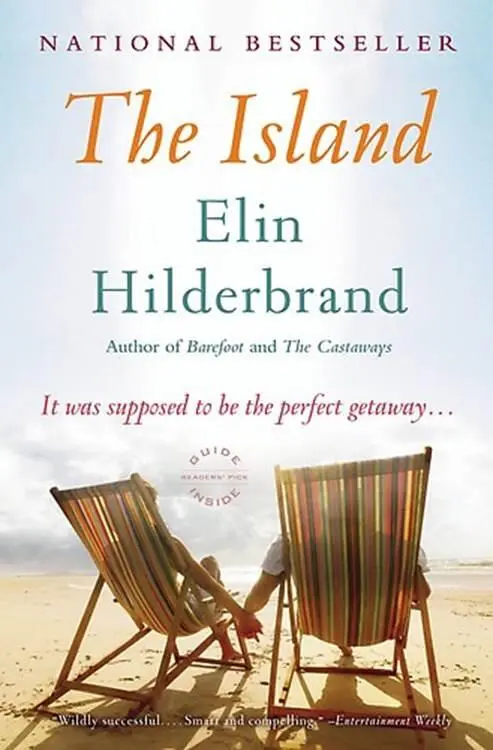
- Название:The Island
- Автор:
- Жанр:
- Год:неизвестен
- ISBN:нет данных
- Рейтинг книги:3 / 5. Голосов: 1
-
Избранное:Добавить в избранное
- Отзывы:
-
Ваша оценка:
The Island: краткое содержание, описание и аннотация
Предлагаем к чтению аннотацию, описание, краткое содержание или предисловие (зависит от того, что написал сам автор книги «The Island»). Если вы не нашли необходимую информацию о книге — напишите в комментариях, мы постараемся отыскать её.
It's only the first hint of what will be a summer of upheavals and revelations. Before the dust has even begun to settle, far worse news arrives, sending Chess into a tailspin of despair. Reluctantly taking a break from the first new romance she's embarked on since the recent end of her 30-year marriage, Birdie circles the wagons and enlists the help of her younger daughter Tate and her own sister India. Soon all four are headed for beautiful, rustic Tuckernuck Island, off the coast of Nantucket, where their family has summered for generations. No phones, no television, no grocery store – a place without distractions where they can escape their troubles.
But throw sisters, daughters, ex-lovers, and long-kept secrets onto a remote island, and what might sound like a peaceful getaway becomes much more. Before summer has ended, dramatic truths are uncovered, old loves are rekindled, and new loves make themselves known. It's a summertime story only Elin Hilderbrand can tell, filled with the heartache, laughter, and surprises that have made her page-turning, bestselling novels as much a part of summer as a long afternoon on a sunny beach.
The Island — читать онлайн бесплатно полную книгу (весь текст) целиком
Ниже представлен текст книги, разбитый по страницам. Система сохранения места последней прочитанной страницы, позволяет с удобством читать онлайн бесплатно книгу «The Island», без необходимости каждый раз заново искать на чём Вы остановились. Поставьте закладку, и сможете в любой момент перейти на страницу, на которой закончили чтение.
Интервал:
Закладка:
I said, “What are we going to do?”
He didn’t answer.
I thought about what would happen if I just told Michael, Listen, I’m in love with your brother. It would be bad, certainly; there would be another swollen eye or broken nose, or worse. Cy and Evelyn would be stymied, but would they let it destroy their world? Would they disown Nick, and if they did disown him, would it destroy our world?
Nick was shaking his head. He said, “I hate the guy, I really hate him, but I love him, too, and I just can’t do that to him.”
I said, “No, me either.”
Nick said, “But I couldn’t wait any longer. I had to come to you. I had to kiss you today.”
“Okay,” I said. “Yes,” I said. We kissed some more-I could not get enough of him-and then he pulled away and turned and left-left me there in the dark park, which was something his brother, the gentleman, would never have done.
A week later, Christmas Day, I went to the Morgans’ house in New Jersey, trembling with anticipation. That morning, Birdie had made our usual holiday brunch of eggs Benedict and sticky buns, and I hadn’t been able to eat a bite. Michael and I drove south to his parents’ house, and I pretended to be napping so I didn’t have to speak. We walked into the Morgan house, which, just like Birdie’s house, was festooned with evergreen garland and smelled like cinnamon. Evelyn popped out of the living room, where there was a roaring fire and a towering tree with dozens of presents piled under it. Evelyn was wearing an embroidered Christmas sweater and red velvet pants. She said, “I’m so glad you made it. Dora’s here, but your brother’s not coming.”
“Not coming?”
“He called this morning. He doesn’t feel well, he said.” Evelyn frowned. “Though he sounded perfectly fine to me.”
Tate came home from her day of solitude at North Pond sunburned and twitching with excitement. Her joy was off-putting. How could Chess confide in her sister about “all that had happened” when her sister was so happy?
Tate said, “Come up to the attic with me. I want to tell you something.”
Chess said, “I can’t. I’m helping Birdie with dinner.” This was true: she was shucking corn. But she had only one ear left.
“I need you now,” Tate said.
Chess sighed. “One second. Let me finish.”
The attic was a hotbox. The tiny window in the eaves was open, but no air passed through it. Tate pulled Chess next to her on the bed.
“Guess what happened?” Tate said.
“What?” Chess said.
“Barrett asked me on a date. To a dinner party on Nantucket tomorrow night.”
Chess was silent. What to say?
“I know he asked you first,” Tate said.
Chess wiggled her toes. “He asked me this morning. He was only doing it to be nice. To prove that he’s not mad anymore.”
“Why would he be mad at you?” Tate asked.
“Oh,” Chess said. She wasn’t sure she could switch gears and talk about Barrett. “Because of something that happened a long time ago.”
Tate crossed her eyes and stuck out her tongue. She was so childish sometimes, as emotionally crippled as a teenage boy. Tate was her sister, her love was unconditional, but the reality was tough: Tate didn’t possess the maturity or understanding to handle the things that Chess wanted to tell her. Tate was a computer person, not a literary person; for Tate, something either worked or it didn’t. She wasn’t interested in situations that were complex or morally ambiguous. She didn’t want to hear what had happened between Barrett and Chess thirteen years earlier; for Tate, the past was the past, and what was the point of revisiting it? Tate wasn’t evolved enough to understand how, in many ways, the past revealed things. Tate was only concerned with the past few hours, today, tomorrow, her and Barrett Lee together. She was floating, and Chess didn’t want to wield the needle that would pop her balloon.
“You’re going to have fun,” Chess said. “I think you and Barrett will be a much better match.”
“Yes,” Tate said. “We will be.”
BIRDIE
At two o’clock in the morning, she found herself awake.
She had gone to bed at ten o’clock as usual, after dinner and several glasses of wine and an hour or two spent needlepointing a stocking for India’s grandson.
She had asked India, “Are you excited about becoming a grandmother?”
They were sitting together on the screened-in porch. India was smoking her hundredth cigarette and drinking, she claimed, her eleventh glass of wine. She was drunk and waxing poetic. “I don’t think anyone is excited to become a grandmother, heralding as it does the fact that one is officially old. It’s hard to think of one’s self as a sex symbol when one is a grandmother, right? I mean, where did our lives go? It seemed like we were teenagers forever, and then we were young wives and then we were mothers, and then there was that interminable time when the kids were growing up and Bill and I were focused on building his career and taking care of the house and making it all work, and then Bill died, and there was a long stretch of mourning and then me picking myself up and getting on with my life, and for about five minutes, it seemed, I was free and independent and insanely productive, and now all of a sudden, it’s over. I’m going to be a grandmother. ” She blew out a stream of smoke. “But yes, I think once it happens, I’ll be excited.”
Birdie said, “Well, I’m excited to become a grandparent someday.”
India said, not unkindly, “Oh, Birdie, of course you are.”
Hank was a grandparent, Birdie thought, and he loved it. He was involved in his grandchildren’s lives. He took them on outings to the Stew Leonard dairy and the children’s museum in Norwalk. He picked them up from school every Tuesday.
Birdie sighed. She would like to go just ten minutes, just five minutes, without thinking about Hank. This would only happen, she realized, once she had a nice, long, meaningful conversation with the man. She craved this conversation physically, the way she craved food or nicotine. Tate had made a good point that afternoon: Birdie was calling Hank at a consistently bad time. And so, Birdie thought, she would ambush him. If she woke up in the middle of the night, she would get out of bed, walk to Bigelow Point with the aid of a flashlight, and call Hank then. The idea had wormed its way into Birdie’s subconscious, and voilà!-she woke up.
She felt her way down the stairs. She had left her cell phone and a flashlight next to each other on the counter. She gripped them both. She found her sandals. She slipped outside.
Okay, she thought, as she headed down the dirt path, she was certifiable. Here she was at two o’clock in the morning walking across Tuckernuck to Bigelow Point. She should have taken the Scout, but she was afraid the sound of the engine would wake India and the girls.
There was a waxing gibbous moon, which brightened her way considerably. Birdie shined the flashlight beam at the trail. She wasn’t afraid of wild animals, but she was afraid of tripping on a root or a stone and breaking her leg, or stepping into an unexpected hole and twisting her ankle. She proceeded cautiously, stopping every once in a while to look at Tuckernuck Island in the depths of night. It was starkly beautiful-the trail and surrounding low brush shone in the moonlight.
A simple world. Her complicated heart. She kept going.
It seemed a long way, and at one point, Birdie feared she was lost. Then she approached Adeliza Coffin’s house-even in the moonlight, it was dark and sinister. Her grandparents had told stories about Adeliza standing on her doorstep with a shotgun, scaring away those who dared to trespass on Tuckernuck’s hallowed acres. “She was a formidable woman,” Birdie’s grandfather had said, though it was unclear if he’d known her personally or was simply recounting legend. Birdie hurried past Adeliza’s house-as children, she and India had held their breath and plugged their noses. The good news about Adeliza Coffin’s house was that it was the last landmark before the water. Birdie kept going, and soon she heard waves and saw water sparkling in front of her like a smooth silk sheet. She stepped onto the slender spit of land that contained North Pond: Bigelow Point.
Читать дальшеИнтервал:
Закладка:
Похожие книги на «The Island»
Представляем Вашему вниманию похожие книги на «The Island» списком для выбора. Мы отобрали схожую по названию и смыслу литературу в надежде предоставить читателям больше вариантов отыскать новые, интересные, ещё непрочитанные произведения.



Обсуждение, отзывы о книге «The Island» и просто собственные мнения читателей. Оставьте ваши комментарии, напишите, что Вы думаете о произведении, его смысле или главных героях. Укажите что конкретно понравилось, а что нет, и почему Вы так считаете.