Elin Hilderbrand - The Island
Здесь есть возможность читать онлайн «Elin Hilderbrand - The Island» весь текст электронной книги совершенно бесплатно (целиком полную версию без сокращений). В некоторых случаях можно слушать аудио, скачать через торрент в формате fb2 и присутствует краткое содержание. Жанр: Современная проза, на английском языке. Описание произведения, (предисловие) а так же отзывы посетителей доступны на портале библиотеки ЛибКат.
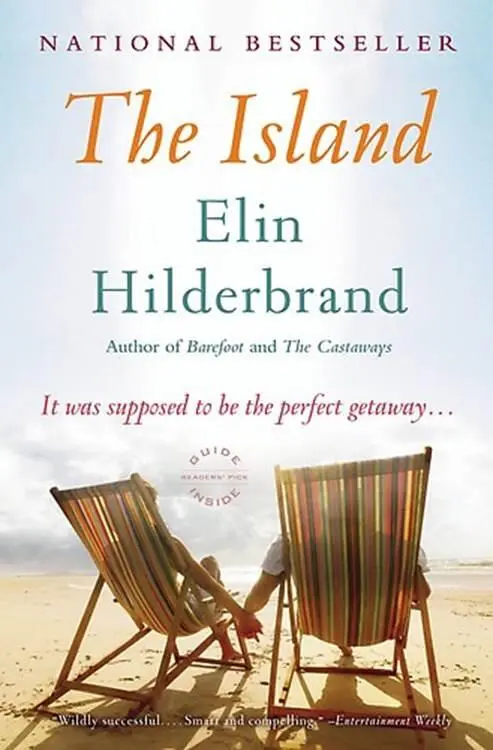
- Название:The Island
- Автор:
- Жанр:
- Год:неизвестен
- ISBN:нет данных
- Рейтинг книги:3 / 5. Голосов: 1
-
Избранное:Добавить в избранное
- Отзывы:
-
Ваша оценка:
The Island: краткое содержание, описание и аннотация
Предлагаем к чтению аннотацию, описание, краткое содержание или предисловие (зависит от того, что написал сам автор книги «The Island»). Если вы не нашли необходимую информацию о книге — напишите в комментариях, мы постараемся отыскать её.
It's only the first hint of what will be a summer of upheavals and revelations. Before the dust has even begun to settle, far worse news arrives, sending Chess into a tailspin of despair. Reluctantly taking a break from the first new romance she's embarked on since the recent end of her 30-year marriage, Birdie circles the wagons and enlists the help of her younger daughter Tate and her own sister India. Soon all four are headed for beautiful, rustic Tuckernuck Island, off the coast of Nantucket, where their family has summered for generations. No phones, no television, no grocery store – a place without distractions where they can escape their troubles.
But throw sisters, daughters, ex-lovers, and long-kept secrets onto a remote island, and what might sound like a peaceful getaway becomes much more. Before summer has ended, dramatic truths are uncovered, old loves are rekindled, and new loves make themselves known. It's a summertime story only Elin Hilderbrand can tell, filled with the heartache, laughter, and surprises that have made her page-turning, bestselling novels as much a part of summer as a long afternoon on a sunny beach.
The Island — читать онлайн бесплатно полную книгу (весь текст) целиком
Ниже представлен текст книги, разбитый по страницам. Система сохранения места последней прочитанной страницы, позволяет с удобством читать онлайн бесплатно книгу «The Island», без необходимости каждый раз заново искать на чём Вы остановились. Поставьте закладку, и сможете в любой момент перейти на страницу, на которой закончили чтение.
Интервал:
Закладка:
Because the ASE was student curated (which was part of the buzz: not even the administration knew what to expect), India hadn’t seen the paintings. A hundred times, India had been tempted to ask to see the paintings so she could confirm that the nude body would not be recognizable as her nude body-but she couldn’t risk insulting Lula this way. She and Lula had an understanding: her one condition would be honored.
India wore a flowing white one-shouldered Elie Tahari dress that, while quite lovely, most closely resembled a paint-splattered sheet thrown over her body. Before India even made it through the back entrance, before she lifted a glass of champagne from the tray, she was receiving compliments on it. Beautiful dress, so elegant, so fitting, where did you get it? People were everywhere, they were a flock of birds descending on her, seagulls at the beach where she had the only sandwich. Everyone wanted to talk to her; everyone wanted her attention. A reporter from the Inquirer snapped her picture while she still had her sunglasses on. India was overwhelmed. She needed the tiniest bit of personal space, a few moments to set down her purse, taste the champagne, get into the exhibit rooms. Had her entrance always caused such a buzz? Or was this interest caused by something else? Did they know? Was it obvious, or just a rumor?
India forced out a breath. She had to relax. The ASE was this overwhelming every year, she reassured herself, because she knew nearly everyone in the room, and those few people she didn’t know wanted an introduction. Still, scenes from her waking nightmares spooled through her head-her body hideous and lumpy, her face twisted and ugly, her form revealing what an evil bitch she really was-as she made her way through the crowd.
The president of the board of directors, Spencer Frost, was waiting for her just outside the exhibit rooms. He was flushed and sweating, as if experiencing his own private ecstasy. “My God, India, it’s fantastic. The girl is a superstar. I want to buy them all. I’ve already bought two for myself and one for the school. They are… well, go, woman, see for yourself.”
India entered the front room, which held huge, soaring canvases-like Delacroix at the Louvre-they were all Lula’s and they were all of India. It was India deconstructed and reconstructed-India in Rothko’s smudged planes of color-India’s breasts and legs and once-magnificent ass resplendent in a way that suggested fluid motion. Her skin was luminescent, the lines flawless. India had to jockey for position-the room was packed, and India’s heart momentarily went out to the students whose work would receive one-tenth of this attention-because she wanted to see them. When she viewed them properly, she was triumphant. Not for herself (well, maybe a little bit for herself) but for Lula.
What she thought was, She did it.
India rose from the picnic table with the letter. She poured herself another glass of wine and carried the letter upstairs to her bedroom. Roger was perched on the dresser; in the humidity his seaweed hair had gone limp. She tucked the letter from Lula into her dresser drawer and contemplated taking a nap on her jelly-filled mattress, but that would lead to her waking in an hour or two with a flannel mouth and a pounding headache. No, thank you.
Downstairs, she thought she heard Chess stirring. She shut the dresser drawer tight.
Was I wrong about you?
The 108th ASE was a success such as neither Lula nor India could have imagined. Lula sold every painting. She sold two to Spencer Frost for his private collection (and it was well known that he only collected dead painters ), and one to the school through Spencer Frost. She sold her largest canvas to Mary Rose Garth, rubber heiress, who was the most flamboyant presence at the ASE (she had been known to come to the show with a sheet of red dot stickers in her purse so she could claim the best paintings before anyone else even saw them). Lula sold one canvas to a collector in Seattle (it was unconfirmed, but rumor had it, it was Bill Gates), and one to the most prestigious all-female law firm in Philadelphia. Every gallery owner present had offered to represent her. Lula was going to be rich, and she was going to be famous.
“But I’m not dropping out of school,” she told India. “I’m going to finish. Get my goddamned certificate.”
“Of course you are, silly girl,” India said. “Silly goose.” She was quite drunk. It was late-twenty minutes past three. Lula and India had survived the show and the after-show reception, and the dinner at Tria after the reception, and drinks at Valanni after dinner, and dancing at 105 Social after those drinks. They smoked a joint on their way back to North Broad Street. Lula wanted to see the paintings one more time-some of them would be whisked away by their new owners in the morning-and India did, too.
It was as they stood in front of the paintings and Lula announced her promise to stay in school that Lula wound her arms around India’s waist and India felt Lula’s mouth on her neck. India was drunk and high and shimmying with the aftershocks of the most extraordinary night of her life. She might well have submitted to Lula, slipped underwater and drowned in the girl.
But instead, India pulled away. “No,” she said. “I’m sorry.”
Lula tried again. She was gentle and her voice was calm. “I saw it in you when you posed for me. I saw it in you, but I waited.”
What could India say? The hours that she had posed for Lula were the most erotic hours of her life. India couldn’t deny that. Had Lula made her advances when India was prone on the suede sofa, India would never have been able to rebuff her.
“I’m sorry,” India said.
“I love you,” Lula said. “I mean it. I love you, India.”
India shivered. For the first time that night, she thought of Bill and how frenzied and full her life with him had been. Even when the kids were sick and the weather was gray, even when he was manic or depressed, India felt alive. She felt engaged, interested, challenged. Such was life with a genius.
But she couldn’t do it again.
“Lula,” India said. She touched Lula’s chin and turned her face so Lula would look at her. “I’m sorry.”
Lula slapped her, hard, across the face.
India cried out. In the cavernous room, the cry echoed. Again, Bill: He had slapped her once in public, on a subway platform in Stockholm. She had promised to divorce him. But she hadn’t.
Should she slap Lula now? Did Lula want a catfight, with pulled hair and torn clothes? Would it end with the two of them intertwined in a writhing pile on the floor?
India turned. She picked her clutch off the waiter’s tray and walked out of the room.
“India!” Lula called. “INDIA!”
India didn’t stop. She drove all the way home and slept like a baby until noon the next day.
It was Memorial Day weekend. India spent it quietly at home, tending to her garden. By Tuesday morning, the news had spread like an epidemic: Tallulah Simpson was withdrawing. Transferring to Parsons.
When India got downstairs, Chess was blinking, her eyes wide and dazed like the eyes of someone who had just been born.
“What time is it?” Chess asked.
“Nearly five,” India said, though it was only quarter past four. “Would you like a glass of wine?”
“Yes,” Chess said. “Where’s my mother?”
“She’s out on a walk,” India said.
Chess nodded. “I’ve been asleep forever.”
“Do you sleep at night?” India asked.
“Like a rock.”
“Lucky you,” India said, though there was nothing lucky about it. The girl was depressed. India filled with guilt. She was supposed to talk to Chess. She was supposed to help. That was why she’d been invited along.
Читать дальшеИнтервал:
Закладка:
Похожие книги на «The Island»
Представляем Вашему вниманию похожие книги на «The Island» списком для выбора. Мы отобрали схожую по названию и смыслу литературу в надежде предоставить читателям больше вариантов отыскать новые, интересные, ещё непрочитанные произведения.




Обсуждение, отзывы о книге «The Island» и просто собственные мнения читателей. Оставьте ваши комментарии, напишите, что Вы думаете о произведении, его смысле или главных героях. Укажите что конкретно понравилось, а что нет, и почему Вы так считаете.