Elin Hilderbrand - The Island
Здесь есть возможность читать онлайн «Elin Hilderbrand - The Island» весь текст электронной книги совершенно бесплатно (целиком полную версию без сокращений). В некоторых случаях можно слушать аудио, скачать через торрент в формате fb2 и присутствует краткое содержание. Жанр: Современная проза, на английском языке. Описание произведения, (предисловие) а так же отзывы посетителей доступны на портале библиотеки ЛибКат.
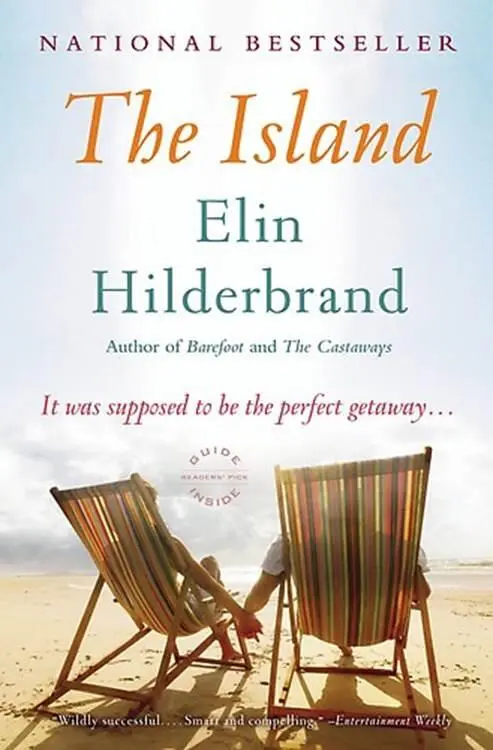
- Название:The Island
- Автор:
- Жанр:
- Год:неизвестен
- ISBN:нет данных
- Рейтинг книги:3 / 5. Голосов: 1
-
Избранное:Добавить в избранное
- Отзывы:
-
Ваша оценка:
The Island: краткое содержание, описание и аннотация
Предлагаем к чтению аннотацию, описание, краткое содержание или предисловие (зависит от того, что написал сам автор книги «The Island»). Если вы не нашли необходимую информацию о книге — напишите в комментариях, мы постараемся отыскать её.
It's only the first hint of what will be a summer of upheavals and revelations. Before the dust has even begun to settle, far worse news arrives, sending Chess into a tailspin of despair. Reluctantly taking a break from the first new romance she's embarked on since the recent end of her 30-year marriage, Birdie circles the wagons and enlists the help of her younger daughter Tate and her own sister India. Soon all four are headed for beautiful, rustic Tuckernuck Island, off the coast of Nantucket, where their family has summered for generations. No phones, no television, no grocery store – a place without distractions where they can escape their troubles.
But throw sisters, daughters, ex-lovers, and long-kept secrets onto a remote island, and what might sound like a peaceful getaway becomes much more. Before summer has ended, dramatic truths are uncovered, old loves are rekindled, and new loves make themselves known. It's a summertime story only Elin Hilderbrand can tell, filled with the heartache, laughter, and surprises that have made her page-turning, bestselling novels as much a part of summer as a long afternoon on a sunny beach.
The Island — читать онлайн бесплатно полную книгу (весь текст) целиком
Ниже представлен текст книги, разбитый по страницам. Система сохранения места последней прочитанной страницы, позволяет с удобством читать онлайн бесплатно книгу «The Island», без необходимости каждый раз заново искать на чём Вы остановились. Поставьте закладку, и сможете в любой момент перейти на страницу, на которой закончили чтение.
Интервал:
Закладка:
Tate awoke to the sound of a boat motor. She opened her eyes and propped herself on her elbows. Barrett Lee’s boat had come up the gut into the pond. She heard a second noise, small music, a faraway tune, something familiar. Her iPod was on at her feet. It was playing “Glory Days.”
She grabbed the iPod and shut it off, grateful for the distraction from the main event: Barrett Lee in his boat. Here? She looked out to where her stone had finally submerged; he was closer than that now.
She had to wake up.
She drank what was left of her lemonade. It was warm and sour. She was awake; this was real. Barrett anchored the boat, jumped over the side, and waded in. Tate stared at him.
He said, “They told me you were here.”
She couldn’t risk saying the wrong thing. She waited.
“Listen, I have this thing tomorrow night. It’s a dinner party thrown by that client of mine I told you about. The party is at her house in Brant Point. It’ll be pretty fancy. Would you like to go with me?”
“Yes,” Tate said. The word slipped out on its own, without her permission. The mind was the world’s fastest computer. So many thoughts in an instant, overlapping, colliding thoughts, thoughts without words. A dinner party with Barrett. Yes. Anywhere with Barrett. Did it matter that he had asked Chess first? That Tate was his second choice and everyone would know it? It did matter, but not enough to turn him down. She would never turn Barrett Lee down.
“Yes?” he said. He sounded surprised. He had expected, maybe, to strike out with both Cousins girls.
“I’d love to,” she said. “You’ll come get me?”
“At six,” he said. “Tomorrow night at six. The thing is…”
“What?” Tate said.
“I can’t bring you back until morning,” he said. “By the time the dinner party is over, it will be too late. So you’ll have to stay with me. I’ll bring you back Sunday morning. Early, in time for you to run, I promise.”
In time for her to run. Okay, that was sweet. That was thoughtful. He knew who he was asking out.
“I’ll stay at your house?” she said.
“My house,” he said. “Is that okay?”
“It’s okay,” she said.
“That’s the only thing about dating a Tuckernuck girl,” he said. “No way to get her home at night.”
A Tuckernuck girl.
They said other things, small talk: Good-bye. See you tomorrow. It’s dressy, I think. I’m wearing a sport coat. Tate didn’t remember exactly. Her thoughts were with the God of Tuckernuck. She was before him, clasping his hands in thanks. Kissing his feet.
INDIA
When Barrett appeared in the afternoon, he had a letter for India.
“Mail call,” he said.
This was highly unusual. Grant used to receive mail, of course, documents that needed his signature; these were FedExed to Chuck Lee, and then Chuck Lee would bring them over on his boat and hand them to Grant with a withering look. Receiving mail was understood to be an infraction against the Tuckernuck lifestyle. There was supposed to be no mail, no phone calls, no communication with the outside world. India had been raised in this tradition. And yet, she couldn’t just fall off the face of the earth for thirty days. She had left the address of Barrett’s caretaking business with her three sons and with her assistant, Ainslie. She had been clear: Use the address only in case of emergency. The sight of Barrett waggling the envelope, therefore, inspired worry, which quickly morphed into fear.
Her first thought was, The baby.
Billy’s baby. Heidi, Billy’s wife, was twenty-nine weeks along. Everything was going smoothly; the pregnancy had been closely monitored. Heidi was an obstetrician herself; she had a sonogram machine right there in her office and she used it on herself the last day of every month. Heidi felt a heavy responsibility in carrying Bill Bishop’s grandson, the heir to that famous name, but Heidi was equal to it. She was a medical professional who followed her own advice: she took vitamins, she ate leafy greens and bananas, she had stopped drinking. Still, things could go wrong, so many goddamned things could go wrong during pregnancy or delivery-not to mention a whole wide world of disease and birth defects. Had it been this way when India was pregnant? Probably so, though not everything had a diagnosis like it did now. When India looked at the white of the envelope in Barrett’s hand, she thought, Heidi has gone into preterm labor. She will deliver before the baby’s lungs are mature. If the baby lives, there will be weeks in the NICU, respirators, and even then, possible brain damage. Oh, Billy. He and Heidi were perfectionists and overachievers. They would not handle this well.
Or, India thought, the letter could be in regard to Teddy. Of her three sons, Teddy worried her the most because he was the most like Bill. He liked to work with his hands; he had started a roofing company in the northwest suburbs of Philadelphia-Harleysville, Gilbertsville, Oaks-former farmland that now sprouted headquarters for pharmaceutical companies and McMansions for the executives. Teddy had had a longtime girlfriend named Kimberly, but they were always breaking up and getting back together. Teddy was emotionally unstable; he’d had one episode that landed him in the psych ward of Quakertown Hospital. The doctors put him on Zoloft, but he drank too much. He was, India had to admit, a time bomb. So the envelope said what? That he had killed Kimberly? Killed himself?
The letter would not be about Ethan. Ethan, at twenty-seven, was the happiest person India had ever known. He was an anchorman on a Philadelphia sports-news channel, which afforded him a bit of minor celebrity, enough to get him laid whenever he was out at the bars. Ethan had a golden retriever named Dr. J. He lived in a loft in Manayunk. He had been only twelve years old when Bill died, but he was free of anxiety, which just went to show that things didn’t always turn out the way one expected.
India took the envelope from Barrett. The front said, India Bishop, Tuckernuck Island. That was all it said; it didn’t list the address for the caretaking company that India had given the boys and Ainslie. The letter was postmarked from Philadelphia.
India Bishop, Tuckernuck Island.
“I can’t believe this reached me,” India said.
“It helps that my father knows everyone on Nantucket, including the postmaster,” Barrett said. “They’re in Rotary together. When the letter came through, the postmaster gave it to my dad and my dad gave it to me.”
“Well,” said India, trying to smile, “thank you.”
“You’re welcome,” Barrett said. “Hey, do you know where Tate is?”
“North Pond,” India said.
“Great,” Barrett said. He dropped two bags of groceries, a bag of ice, and another case of wine in the kitchen, and then looked like he was anxious to get back to the boat. India thought to mention that Tate had specifically said she wanted to be alone, but India selfishly wanted Barrett to leave so she could have some privacy for her letter. Birdie was off on a walk somewhere, and Chess was asleep on the living room sofa. Chess had napped on the beach for nearly two hours, then come up to the house because the beach was too hot, and she had fallen asleep again. She hadn’t eaten a bite of lunch. Birdie was worried about her; before she left for her walk, she told India how worried she was, and she implored India to talk to Chess. With Tate gone for the day, this would be the perfect opportunity. Right, okay, India said. I intend to, I will. But India wasn’t sure what to say. She could tell Chess about her own experiences, but who knew if they would resonate? In India’s opinion, every woman had to go through the fire alone.
Читать дальшеИнтервал:
Закладка:
Похожие книги на «The Island»
Представляем Вашему вниманию похожие книги на «The Island» списком для выбора. Мы отобрали схожую по названию и смыслу литературу в надежде предоставить читателям больше вариантов отыскать новые, интересные, ещё непрочитанные произведения.





Обсуждение, отзывы о книге «The Island» и просто собственные мнения читателей. Оставьте ваши комментарии, напишите, что Вы думаете о произведении, его смысле или главных героях. Укажите что конкретно понравилось, а что нет, и почему Вы так считаете.