Elin Hilderbrand - The Island
Здесь есть возможность читать онлайн «Elin Hilderbrand - The Island» весь текст электронной книги совершенно бесплатно (целиком полную версию без сокращений). В некоторых случаях можно слушать аудио, скачать через торрент в формате fb2 и присутствует краткое содержание. Жанр: Современная проза, на английском языке. Описание произведения, (предисловие) а так же отзывы посетителей доступны на портале библиотеки ЛибКат.
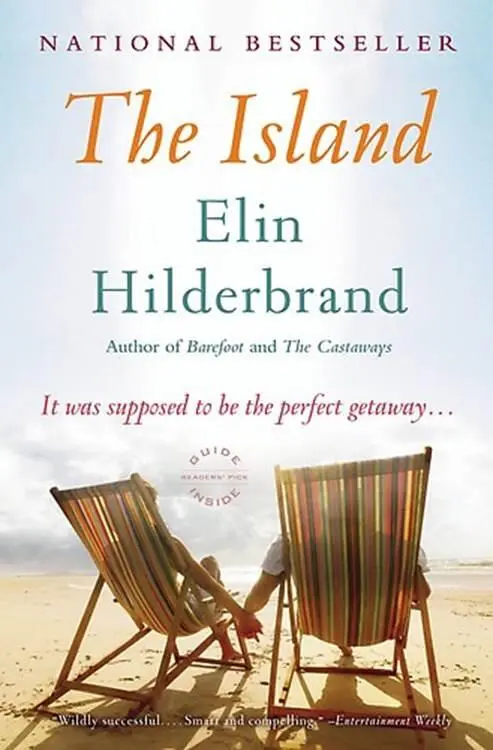
- Название:The Island
- Автор:
- Жанр:
- Год:неизвестен
- ISBN:нет данных
- Рейтинг книги:3 / 5. Голосов: 1
-
Избранное:Добавить в избранное
- Отзывы:
-
Ваша оценка:
The Island: краткое содержание, описание и аннотация
Предлагаем к чтению аннотацию, описание, краткое содержание или предисловие (зависит от того, что написал сам автор книги «The Island»). Если вы не нашли необходимую информацию о книге — напишите в комментариях, мы постараемся отыскать её.
It's only the first hint of what will be a summer of upheavals and revelations. Before the dust has even begun to settle, far worse news arrives, sending Chess into a tailspin of despair. Reluctantly taking a break from the first new romance she's embarked on since the recent end of her 30-year marriage, Birdie circles the wagons and enlists the help of her younger daughter Tate and her own sister India. Soon all four are headed for beautiful, rustic Tuckernuck Island, off the coast of Nantucket, where their family has summered for generations. No phones, no television, no grocery store – a place without distractions where they can escape their troubles.
But throw sisters, daughters, ex-lovers, and long-kept secrets onto a remote island, and what might sound like a peaceful getaway becomes much more. Before summer has ended, dramatic truths are uncovered, old loves are rekindled, and new loves make themselves known. It's a summertime story only Elin Hilderbrand can tell, filled with the heartache, laughter, and surprises that have made her page-turning, bestselling novels as much a part of summer as a long afternoon on a sunny beach.
The Island — читать онлайн бесплатно полную книгу (весь текст) целиком
Ниже представлен текст книги, разбитый по страницам. Система сохранения места последней прочитанной страницы, позволяет с удобством читать онлайн бесплатно книгу «The Island», без необходимости каждый раз заново искать на чём Вы остановились. Поставьте закладку, и сможете в любой момент перейти на страницу, на которой закончили чтение.
Интервал:
Закладка:
“Yep,” Tate said.
“Because the undertow is bad there,” Birdie said.
“It’s a pond, Mom,” Tate said.
Chess said nothing, but Tate didn’t care.
Barrett had asked Chess on a date, but Tate wouldn’t think about it.
The Scout was a magic vehicle; it could deliver her to a different frame of mind. Tate drove the dirt roads very slowly, because she enjoyed the ride and because someone from the homeowners’ association would complain about any vehicle topping eight miles per hour. Tate parked out at North Pond and then hiked to the end of Bigelow Point. The sand was golden and granular, and even on the ocean side, the water was clear to the bottom and as warm as bathwater. Tate spread out her towel and put in her earbuds. She listened to “Tenth Avenue Freeze-Out,” “For You,” “Viva Las Vegas,” “Atlantic City,” “Pink Cadillac,” and “The Promised Land.” There wasn’t another soul for miles. It was liberating, being so alone. Tate went for a swim on the ocean side; she swam a couple of hundred yards, then a couple of hundred yards farther. She was a quarter mile out; she could see the entire west coast of the island. The water was calm and Tate was tempted to go even farther. But there were sharks out here. Well, there was an occasional shark, one sighted every forty years or so. As Tate treaded water, her legs felt tingly and vulnerable. She was angry, yes, and she was jealous. She loved Barrett, but Barrett loved Chess. Still, Tate didn’t want to get eaten by a shark. She loved life too much. She loved Bruce Springsteen and her mother’s cooking. She loved running on the beach and driving the Scout. She loved sleeping in the hot attic and she loved her sister. Yes, she did; it was undeniable. The bitch crawled into bed with her every night, and every morning Tate woke up happy to find here there.
She swam back to shore.
She read the first few pages of Cider House Rules, but then she tired of it. She had never been a great reader; she had never been able to concentrate and think about what the words meant and what subtext might be lurking between the lines. Reading, for Tate, was too much work. Chess thought this was a flaw in her personality. But Tate hadn’t had any of the good high school English teachers, and Chess had had them all. Chess read all the time. She owned thousands of books-her “library,” she called it-she read the fiction in the New Yorker and the Atlantic Monthly. She had poems taped to her bathroom mirror in her apartment in New York. She was that kind of person, but Tate wasn’t. Tate liked computers, she liked flashing screens, information made clear and interesting with pictures. Click on this link and the screen changed, click on that link and you were somewhere completely new. The Internet was alive, it was an animal that Tate had trained, it was a planet where she had learned the terrain. The world was at her fingertips. Who needed books?
She used Cider House Rules as a pillow.
But she wasn’t tired, and lying in the sun gave her too much time to think. She didn’t want to think.
Barrett had asked Chess out on a date. It looked like Chess had said no. But she hadn’t said no out of loyalty to her sister. She’d said no because she didn’t feel like going out with Barrett and having fun. Fun was beyond her.
Tate pulled out the picnic Birdie had packed her: a mozzarella and tomato sandwich with pesto that had grown warm and melty in the sun, a bag of potato chips, a plum, a Tupperware of raspberries and blueberries, a bottle of lemonade, a brownie. Tate thought about how much she loved her mother and how perfect it would be if Birdie agreed to come live with her. Even for just a month or two in the winter. Charlotte never got really cold, not like the Northeast. It rarely snowed. Tate’s condo complex kept the outdoor pool heated; her mother could swim laps in January. But Tate was never home; she was always on the road. Her mother would grow bored in Charlotte; she would have no friends and little to do. Tate’s apartment didn’t have a garden. It barely had furniture; Tate owned a fifty-two-inch flat-screen TV and a queen-size futon that sat on the floor in front of the TV. Tate couldn’t imagine Birdie spending one night in the condo in Charlotte in its current condition. Birdie and Grant had come to Charlotte once, a couple of years earlier, when Tate first moved there. Tate’s parents had stayed in a Marriott and the three of them had eaten dinner at a steak house whose name Tate couldn’t remember. Tate’s connection to Charlotte was tenuous. Maybe she should move someplace else. Las Vegas appealed-all those flashing lights.
Tate needed to get a life.
She needed a boyfriend.
Barrett!
She didn’t want to think about it.
After lunch she swam in the pond, ignoring common wisdom to wait an hour for her food to digest. She was floating on her back when she saw something move in her peripheral vision. She stood up-the water was chest deep-and squinted. It was another person trekking out to Bigelow Point. Tate recognized the blue terry-cloth cover-up and the floppy white hat that had belonged to her grandfather.
It was Birdie!
Tate waved. She was relieved. She had wanted company, though she was too proud to admit it to herself. Spending all day at the beach alone was beyond her. Her mother realized this and had come to the rescue. She was such a good mother.
Birdie didn’t wave back. Her face held an expression that Tate couldn’t place, though one thing was for sure: she didn’t look happy. She picked her way out onto the slender sandbar that jutted into the water.
Tate called out, “Mom! I’m over here!” Surely her mother had seen her? She didn’t look over. “Mom!” Tate squinted. That was her mother, right? It was her mother’s blue cover-up and her grandfather’s floppy white hat, which he used to wear when he took Tate and Chess crabbing in the flat-bottomed rowboat.
It was her mother. And now Tate noticed that she was on the phone. That couldn’t be right. But yes, Birdie was on the phone. She was talking to someone. She was gesturing. The phone call was brief. Two minutes, maybe less. She folded up her phone and slipped it into the pocket of her cover-up.
Tate waited. Her mother gazed out at the ocean for a moment, then took a heaving breath and walked toward the pond. Tate swam to shore.
Birdie approached without a word or a smile. What was wrong? When she was close enough to speak to, Tate found she didn’t know what to say. And rather than say something stupid, she was quiet. She waited.
Together they walked to Tate’s towel and sat down. Birdie said, “I’m sorry. I know you wanted to be alone today.”
“Actually,” Tate said, “I was dying for company.”
“I was just on the phone with Hank,” Birdie said.
“Who’s Hank?” Tate asked.
“He’s a man I’m dating,” Birdie said.
“Really?” Tate said. She felt a sharp, clean slice through her gut. She had held out hope that since neither of her parents were seeing other people, they might someday reunite. She knew it was juvenile, wanting them back together, but that was how she felt.
“Really,” Birdie said.
“Why have I never heard of him?” Tate said.
“He hasn’t been around very long,” Birdie said. “I met him at the end of April. I met him at the same time that your sister broke her engagement. So there have been a lot of distractions. And I’m not sure how serious it is.”
“Are you in love?” Tate said, praying the answer was no.
“I’m in love,” Birdie said. “At least, that’s what I’m calling it in my head. He is not in love with me, however. I thought he was, he said he was, but our conversations since we’ve been here tell me otherwise. He sounds positively uninterested.”
Читать дальшеИнтервал:
Закладка:
Похожие книги на «The Island»
Представляем Вашему вниманию похожие книги на «The Island» списком для выбора. Мы отобрали схожую по названию и смыслу литературу в надежде предоставить читателям больше вариантов отыскать новые, интересные, ещё непрочитанные произведения.


Обсуждение, отзывы о книге «The Island» и просто собственные мнения читателей. Оставьте ваши комментарии, напишите, что Вы думаете о произведении, его смысле или главных героях. Укажите что конкретно понравилось, а что нет, и почему Вы так считаете.