Elin Hilderbrand - The Island
Здесь есть возможность читать онлайн «Elin Hilderbrand - The Island» весь текст электронной книги совершенно бесплатно (целиком полную версию без сокращений). В некоторых случаях можно слушать аудио, скачать через торрент в формате fb2 и присутствует краткое содержание. Жанр: Современная проза, на английском языке. Описание произведения, (предисловие) а так же отзывы посетителей доступны на портале библиотеки ЛибКат.
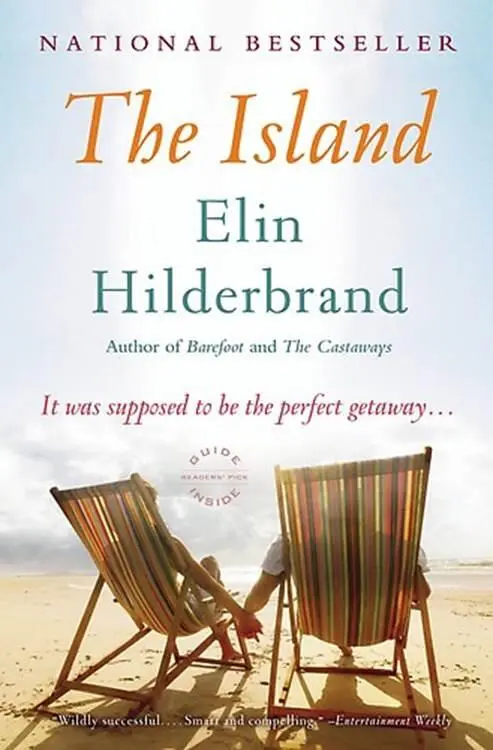
- Название:The Island
- Автор:
- Жанр:
- Год:неизвестен
- ISBN:нет данных
- Рейтинг книги:3 / 5. Голосов: 1
-
Избранное:Добавить в избранное
- Отзывы:
-
Ваша оценка:
The Island: краткое содержание, описание и аннотация
Предлагаем к чтению аннотацию, описание, краткое содержание или предисловие (зависит от того, что написал сам автор книги «The Island»). Если вы не нашли необходимую информацию о книге — напишите в комментариях, мы постараемся отыскать её.
It's only the first hint of what will be a summer of upheavals and revelations. Before the dust has even begun to settle, far worse news arrives, sending Chess into a tailspin of despair. Reluctantly taking a break from the first new romance she's embarked on since the recent end of her 30-year marriage, Birdie circles the wagons and enlists the help of her younger daughter Tate and her own sister India. Soon all four are headed for beautiful, rustic Tuckernuck Island, off the coast of Nantucket, where their family has summered for generations. No phones, no television, no grocery store – a place without distractions where they can escape their troubles.
But throw sisters, daughters, ex-lovers, and long-kept secrets onto a remote island, and what might sound like a peaceful getaway becomes much more. Before summer has ended, dramatic truths are uncovered, old loves are rekindled, and new loves make themselves known. It's a summertime story only Elin Hilderbrand can tell, filled with the heartache, laughter, and surprises that have made her page-turning, bestselling novels as much a part of summer as a long afternoon on a sunny beach.
The Island — читать онлайн бесплатно полную книгу (весь текст) целиком
Ниже представлен текст книги, разбитый по страницам. Система сохранения места последней прочитанной страницы, позволяет с удобством читать онлайн бесплатно книгу «The Island», без необходимости каждый раз заново искать на чём Вы остановились. Поставьте закладку, и сможете в любой момент перейти на страницу, на которой закончили чтение.
Интервал:
Закладка:
Uninterested, Tate thought. Like Barrett.
“Hank is married,” Birdie said.
“Mother!” Tate said. She tried to sound shocked, though she wasn’t at all. She knew how the world worked; she knew that betrayals were as common as anthills.
“His wife has Alzheimer’s,” Birdie said. “She’s in a facility. She’ll stay in the facility until she dies.”
“Oh,” Tate said.
“So here’s the thing I don’t understand, still, at my age,” Birdie said. “In the two years between the time your father and I split and the time I met Hank, I was fine. I was reasonably happy, I had hobbies and interests-my gardening, my reading, the house, you kids, my friends. Then I met Hank. And he likes to do things-go out for dinner, go to the theater, spend the night in nice hotels, go dancing. God, it was intoxicating to have someone to do things with. You have no idea. I’d always been alone, throughout my marriage, alone, alone. The problem is that my happiness, now, depends on Hank.” Birdie clenched her fists. “It’s not fair that someone should be able to affect me this way! But I don’t want to go back to how things were before I met him. I was lonely. Then, with Hank, I was not lonely. And now, without Hank, I’m even lonelier than I was before.”
Tate watched her mother. She wasn’t happy to hear about Hank, but she understood. She felt the same way. She had been in love with Barrett Lee either since she was seventeen or for the past six days-but either way, it wasn’t fair.
“I don’t understand why he won’t talk to me,” Birdie said. “I don’t understand why he’s pulling away. Just now I called and he was with his three-year-old granddaughter at the farm at Stew Leonard’s. I want him to tell me that he misses me and he loves me, and all he wants to tell me is that it’s ninety-two degrees in Connecticut and the cow’s name is Calliope.”
“You got him at a bad time,” Tate said.
“It’s been a bad time every time I’ve called.”
“Have you called him every day?”
“Every day since the Fourth.”
Tate had noticed that Birdie wandered off around this time each day, but she figured her mother was on some typical Birdie mission: picking wildflowers for the dinner table, or hunting down chives for the salad.
Tate said, “If it makes you feel any better, I’m in love with Barrett Lee.”
Birdie gasped. “You are? ”
“Oh, come on, Mom,” Tate said. “Tell me it’s not obvious. I’ve loved him forever. I’ve loved him since I was a child.”
“You have?” Birdie said. “I always thought it was Chess who was interested in Barrett.”
“Of course you did,” Tate said. “Chess always gets to play the romantic lead. Why is that?”
“Oh, Tate-”
“No, I’m curious. Why is she always the one who gets to fall in love and have relationships, and never me?”
“It will be you, soon enough,” Birdie said.
“I’m thirty years old,” Tate said. “How much longer do I have to wait?”
“I didn’t know you were in love with Barrett Lee,” Birdie said. “I’m sorry. It helps to know now. I’ve been trying to throw him and Chess together.”
“Can you stop?” Tate said. “Please?”
“It’s not working anyway,” Birdie said.
“He asked me about Chess this morning, and then he asked her out-I saw them talking by the Scout-but I think she said no. Did she mention it?”
“Not a word,” Birdie said. “You’ll be glad if she said no?”
“It doesn’t change the fact that he wanted to ask her.”
“Love is perfectly awful,” Birdie said. “I’d forgotten how awful it was. I don’t remember feeling like this with your father. Grant and I found each other, and we knew. There wasn’t any game playing. We joined forces and we moved through life-he worked, we bought the house, I had you and Chess. Then I lost those two pregnancies right in a row, which was upsetting, but I recovered. Your father was free to worry about making money and playing golf and I could worry about returning the library books on time and getting you girls to dance class. I never remember feeling this addled. Loving your father was frustrating, but it wasn’t painful.”
“Until the end?” Tate said.
“It wasn’t even painful at the end,” Birdie said. “I just ran out of rope. I didn’t want to stay with your dad anymore. I wasn’t getting anything out of the marriage.”
Tate nodded. This felt like a conversation she should have had with her mother two years ago, but it had never happened. Tate hadn’t wanted to know what went wrong; she just wanted them to fix it.
“Grant was my big relationship. He was the co-president of the corporation of our life. But what I realized when I met Hank”-here, Birdie rested her chin on her tented knees-“was that there might be a chance to have another kind of relationship. A dessert, if you will. Hank already has his family, and I have mine; Hank is finished with his career. We both have money. All that remains is possibility: ten, twenty, thirty years to enjoy life with someone. I never got to enjoy life with your father because we were so damn busy. Hank likes all the same things that I like-he cooks, he gardens, he enjoys the same music and the same wine. And that is what makes my love for him so terrible. I don’t want to gallivant about with just anyone. It has to be Hank. Before I came here, we were inseparable. I cried when we parted, and he cried, too. But now… I’m losing him.” When she looked at Tate, her eyes were watery. “Oh, honey. I feel like a girl.”
“That’s okay,” Tate said. “That’s good, Mom.” Tate did think it was good. Her mother was in love, she was feeling things. Her mother was a woman, a human being: Had Tate ever really considered this? Does anyone think this way about her own mother-that she’s a person with desires and longings and tender, aching spots? Tate had always fiercely loved her mother, but had she ever known her?
Tate walked to the waterline. Birdie followed. Tate picked up a rock and threw it the way she’d seen Chess do.
“Barrett Lee,” she said.
Birdie bent down and picked up a rock the size and shape of an egg. She threw it, and it plunked a few yards offshore.
“Hank,” she said.
Were they getting rid of the men? Tate wondered. Or beckoning them?
Birdie said, “I should have thrown my phone.”
Birdie headed back to the house; she didn’t want Chess and India to worry, she said. Neither of them knew where she was.
“Your secret is safe with me,” Tate said.
“And yours with me,” Birdie said. “If it makes you feel any better, I had a terrific crush on Chuck Lee when I was a girl.”
“On Chuck?” Tate said. “Really? You did?”
“And so did India,” Birdie said. “It’s like everything cycles through: Tate women with crushes on Lee men, generation after generation.”
After Birdie was gone, Tate lay on her towel in the sun. Her mother was in love with Hank. This felt like something she and Chess could whisper about in the dark nighttime attic-but Tate didn’t want to share her mother’s confidence. As Tate drifted off to sleep, she thought back to when her mother had lost those two pregnancies. She remembered her mother in the hospital at least once; what she remembered was that their father had given them chocolate ice cream for dinner, and when Tate told her mother, in the hospital, that Daddy had given them chocolate ice cream for dinner, her mother had cried. Tate hadn’t eaten chocolate ice cream since. Tate had been pretty young, four or five, and she didn’t remember anyone explaining what had happened, although perhaps her father or Aunt India had tried, because it was right around that time that Tate began to pray fervently for another brother or sister. She had even asked Santa to bring one on Christmas Eve. And then, when no new sibling appeared, Tate invented one-she alternated between a brother named Jaysen (spelled just that way) and a sister named Molly. Tate marveled: she hadn’t thought about Jaysen or Molly in a long, long time. The important thing, Tate remembered, was that Jaysen and/or Molly was her very best friend, devoted solely to her. The Jaysen and Molly of Tate’s imagination didn’t even know Chess existed.
Читать дальшеИнтервал:
Закладка:
Похожие книги на «The Island»
Представляем Вашему вниманию похожие книги на «The Island» списком для выбора. Мы отобрали схожую по названию и смыслу литературу в надежде предоставить читателям больше вариантов отыскать новые, интересные, ещё непрочитанные произведения.


Обсуждение, отзывы о книге «The Island» и просто собственные мнения читателей. Оставьте ваши комментарии, напишите, что Вы думаете о произведении, его смысле или главных героях. Укажите что конкретно понравилось, а что нет, и почему Вы так считаете.