Elin Hilderbrand - The Island
Здесь есть возможность читать онлайн «Elin Hilderbrand - The Island» весь текст электронной книги совершенно бесплатно (целиком полную версию без сокращений). В некоторых случаях можно слушать аудио, скачать через торрент в формате fb2 и присутствует краткое содержание. Жанр: Современная проза, на английском языке. Описание произведения, (предисловие) а так же отзывы посетителей доступны на портале библиотеки ЛибКат.
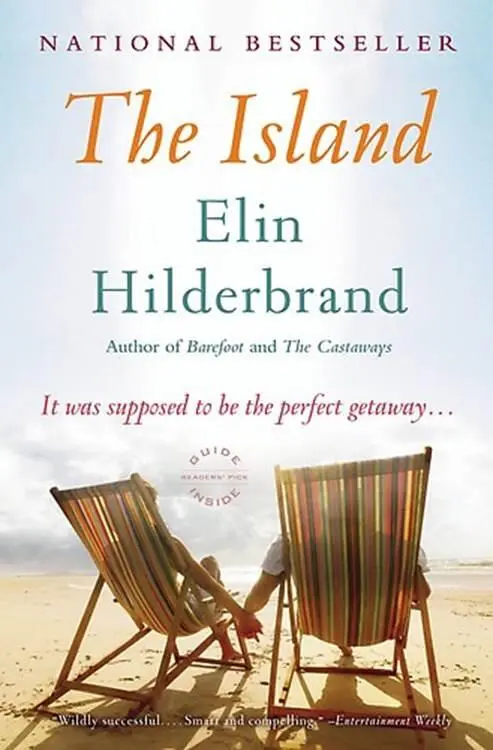
- Название:The Island
- Автор:
- Жанр:
- Год:неизвестен
- ISBN:нет данных
- Рейтинг книги:3 / 5. Голосов: 1
-
Избранное:Добавить в избранное
- Отзывы:
-
Ваша оценка:
The Island: краткое содержание, описание и аннотация
Предлагаем к чтению аннотацию, описание, краткое содержание или предисловие (зависит от того, что написал сам автор книги «The Island»). Если вы не нашли необходимую информацию о книге — напишите в комментариях, мы постараемся отыскать её.
It's only the first hint of what will be a summer of upheavals and revelations. Before the dust has even begun to settle, far worse news arrives, sending Chess into a tailspin of despair. Reluctantly taking a break from the first new romance she's embarked on since the recent end of her 30-year marriage, Birdie circles the wagons and enlists the help of her younger daughter Tate and her own sister India. Soon all four are headed for beautiful, rustic Tuckernuck Island, off the coast of Nantucket, where their family has summered for generations. No phones, no television, no grocery store – a place without distractions where they can escape their troubles.
But throw sisters, daughters, ex-lovers, and long-kept secrets onto a remote island, and what might sound like a peaceful getaway becomes much more. Before summer has ended, dramatic truths are uncovered, old loves are rekindled, and new loves make themselves known. It's a summertime story only Elin Hilderbrand can tell, filled with the heartache, laughter, and surprises that have made her page-turning, bestselling novels as much a part of summer as a long afternoon on a sunny beach.
The Island — читать онлайн бесплатно полную книгу (весь текст) целиком
Ниже представлен текст книги, разбитый по страницам. Система сохранения места последней прочитанной страницы, позволяет с удобством читать онлайн бесплатно книгу «The Island», без необходимости каждый раз заново искать на чём Вы остановились. Поставьте закладку, и сможете в любой момент перейти на страницу, на которой закончили чтение.
Интервал:
Закладка:
She said, “So how goes it on this fine day, Barrett Lee?”
He said, “Oh, you know.”
“No, I don’t know,” Tate said. “What is your life like over there? What do you do? Aside from getting my mother her beach-plum jam, I mean.”
“Well, last night I went fishing with my old man,” Barrett said.
“How is Chuck?” Tate said. “I can remember him from when I was a little girl. I thought he owned this island. I thought he was its president.”
“Chuck Lee, president of Tuckernuck. He’ll get a kick out of that.”
“He’s okay? Birdie said he had a stroke.”
“He had a mild stroke. His left arm is affected and his speech is slow, but he gets around a little bit still-one outing a day, the post office or his Rotary lunch. He can’t golf anymore, and taking him fishing is tricky, but I do it. He loves being out on the water. I cast the line and he holds it, and if he gets a bite, I reel it in, and he snaps the line.”
Barrett was a saint, Tate thought. But to say so might embarrass him. “So did you catch anything?”
“Three stripers, one keeper.”
“Are you going to eat it?”
“Tonight, maybe,” Barrett said. “Course, my night went downhill from there. I have one client who is very needy. Her husband is in Manhattan all week, so she’s in the house alone. She heard a noise that she thought was an intruder, so the police came, and they heard the noise, but it turned out to be her pipes knocking. So she called me.”
“Are you a plumber?” Tate asked.
“I’m a little of everything,” Barrett said. “I fixed it.”
“What a pain, though, to have your night ruined.”
“Yeah,” Barrett said. “This particular woman has a problem with boundaries.” He was sitting next to Tate; their arms were practically touching. Tate had dozens of questions. What do you do aside from working and fishing? Do you ever get to do fun stuff? Do you ever get to go on dates? As Tate was debating which question to ask, Barrett said, “So what’s the deal with Chess?”
It was like the sting of the cold shower. It was her seventeenth summer all over again.
“The deal?” Tate said.
“Yeah. Your mom told me the fiancé or the ex-fiancé died. And she’s destroyed. Is that why she shaved her head?”
“That would be the logical conclusion,” Tate said. “Although who knows?”
“It’s none of my business,” Barrett said. “But God, she used to be so pretty. Her hair… and she used to be so together. Mature, you know, and cool.”
“I’d love to fill you in,” Tate said, “but she hasn’t even told me how she’s feeling. Not really. So if you want further details, you’ll have to ask Chess yourself.”
Barrett said, “Okay, fair enough.” He stood up, then turned back. “I just get the feeling she doesn’t like me very much.”
“She doesn’t like anyone very much these days,” Tate said.
Barrett looked skeptical.
“Honestly. That’s the best I can do,” Tate said. “She’s in a bad place right now. And that’s why we’re all here.”
Tate did her sit-ups from the tree branch in a haze of sickly green jealousy. When Birdie asked if Tate was all right, she said, “Uh-huh,” and stormed for the shower. The cold water felt good, but it didn’t cool her down. Birdie had made a skillet of scrambled eggs with cheddar and a plate of crispy bacon, Tate’s favorite breakfast, and yet Tate breezed by her darling mother and the beautiful breakfast. She squeezed past India on the stairs when the customary thing to do was to wait at the bottom for the person coming down to descend. The staircase was narrow and could only handle single file. Tate didn’t say good morning to her aunt. When India got to the bottom of the stairs, Tate heard her say to Birdie, “Is she all right?”
Tate stopped in the bathroom for deodorant and lotion. And there, out the bathroom window, she saw Chess and Barrett leaning against the front of the Scout. They were facing the water, not looking at each other. There was no reason for them to be out by the Scout except that the Scout was on the far side of the house, out of view and earshot of anyone in the kitchen or eating at the picnic table. Tate knew she shouldn’t, but she spied mercilessly. The bathroom window was open and she could hear their voices, but she couldn’t quite make out what they were saying.
Then Barrett turned to face Chess and he said, “You’re sure?”
She said something back, but the words were lost to the wind and the ocean. Barrett walked away.
He’d asked her out.
Tate scowled at herself in the dingy mirror. It wasn’t fair. Chess had won again, and the thing that pissed Tate off and demoralized her at the same time was that Chess wasn’t trying. She looked like Telly Savalas, she was bald, for God’s sake, and yet Barrett was still attracted to her. Meanwhile, Tate was athletic and smiling and happy and a gung ho positive life force. Tate weighed 111 pounds, she was tan, and she had straight white teeth. Tate was gainfully employed in the world economy’s leading industry. This summer, Tate was the better choice. Could he not see that?
Is she all right?
Yes, Aunt India, I’m fine, Tate thought as she stepped into her bikini. Except for where my sister is concerned.
When she descended to the kitchen with her backpack (containing lotion, her iPod-which she had not listened to since she’d arrived-two towels, and the Tuckernuck house copy of John Irving’s Cider House Rules, which Tate had read already but would happily read again because she knew she liked it), Birdie, Aunt India, and Chess were all sitting around the “dining room table,” ostensibly reading the newspaper. But Tate could tell they were waiting for her. She decided to pounce on them before they could pounce on her.
“Nobody needs the Scout, right?” she said. “I’m going to take it to North Pond and hang out there today.”
“I’ll go with you,” India said. “I haven’t gone anywhere yet, my bones are so lazy.”
“I’d like to go alone,” Tate said. They all stared at her. “I need some me-myself time.”
Birdie said, “Tate, is something the matter?”
She didn’t like being put on the spot like this. “Can I plead the Fifth on that?”
Birdie said, “By all means. Let’s all plead the Fifth on everything while we’re here and have a very quiet and unproductive month. And then when we get back to the mainland, we’ll be seething with all the things we’ve kept inside.” Tate was taken aback. She looked at Chess, who had her forehead in her hands.
Tate said, “It’s not a big deal, Mom. Would you mind packing me a picnic?”
Chess made a kind of snorting noise, perhaps indicating that she found the request for a picnic audacious, because their mother was neither Tate’s personal chef nor her slave. (They were sisters; Tate could read her mind to the word.) But Tate didn’t take the bait.
Birdie said, “I will, if you’ll apologize to your aunt about being rude on the stairs.”
Tate looked at India. “I’m sorry,” she said.
India waved a hand. “Accepted.”
When Birdie stood up, Tate sat down in her chair, and Birdie brought her a plate of eggs and the brittle bacon and a glass of fresh-squeezed juice and a buttery English muffin, and then she clattered around in the kitchen making a picnic for Tate. Chess rested her face on the table, and India read the paper and smoked a cigarette. Tate was getting used to the smell.
She said, “I hope you’re not offended that I want to go alone?”
India said, “Heavens, no. I can go tomorrow, or the next day, or the next day. Or the day after that.”
Birdie said, “Are you absolutely certain that you want to go to North Pond?”
Читать дальшеИнтервал:
Закладка:
Похожие книги на «The Island»
Представляем Вашему вниманию похожие книги на «The Island» списком для выбора. Мы отобрали схожую по названию и смыслу литературу в надежде предоставить читателям больше вариантов отыскать новые, интересные, ещё непрочитанные произведения.


Обсуждение, отзывы о книге «The Island» и просто собственные мнения читателей. Оставьте ваши комментарии, напишите, что Вы думаете о произведении, его смысле или главных героях. Укажите что конкретно понравилось, а что нет, и почему Вы так считаете.