Elin Hilderbrand - The Island
Здесь есть возможность читать онлайн «Elin Hilderbrand - The Island» весь текст электронной книги совершенно бесплатно (целиком полную версию без сокращений). В некоторых случаях можно слушать аудио, скачать через торрент в формате fb2 и присутствует краткое содержание. Жанр: Современная проза, на английском языке. Описание произведения, (предисловие) а так же отзывы посетителей доступны на портале библиотеки ЛибКат.
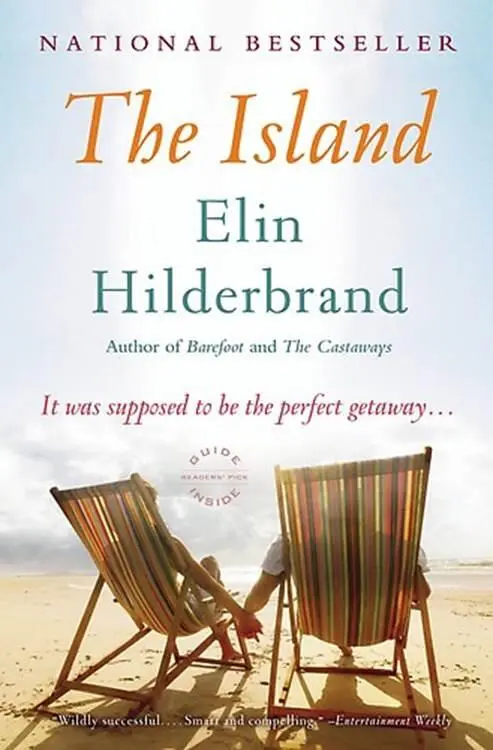
- Название:The Island
- Автор:
- Жанр:
- Год:неизвестен
- ISBN:нет данных
- Рейтинг книги:3 / 5. Голосов: 1
-
Избранное:Добавить в избранное
- Отзывы:
-
Ваша оценка:
The Island: краткое содержание, описание и аннотация
Предлагаем к чтению аннотацию, описание, краткое содержание или предисловие (зависит от того, что написал сам автор книги «The Island»). Если вы не нашли необходимую информацию о книге — напишите в комментариях, мы постараемся отыскать её.
It's only the first hint of what will be a summer of upheavals and revelations. Before the dust has even begun to settle, far worse news arrives, sending Chess into a tailspin of despair. Reluctantly taking a break from the first new romance she's embarked on since the recent end of her 30-year marriage, Birdie circles the wagons and enlists the help of her younger daughter Tate and her own sister India. Soon all four are headed for beautiful, rustic Tuckernuck Island, off the coast of Nantucket, where their family has summered for generations. No phones, no television, no grocery store – a place without distractions where they can escape their troubles.
But throw sisters, daughters, ex-lovers, and long-kept secrets onto a remote island, and what might sound like a peaceful getaway becomes much more. Before summer has ended, dramatic truths are uncovered, old loves are rekindled, and new loves make themselves known. It's a summertime story only Elin Hilderbrand can tell, filled with the heartache, laughter, and surprises that have made her page-turning, bestselling novels as much a part of summer as a long afternoon on a sunny beach.
The Island — читать онлайн бесплатно полную книгу (весь текст) целиком
Ниже представлен текст книги, разбитый по страницам. Система сохранения места последней прочитанной страницы, позволяет с удобством читать онлайн бесплатно книгу «The Island», без необходимости каждый раз заново искать на чём Вы остановились. Поставьте закладку, и сможете в любой момент перейти на страницу, на которой закончили чтение.
Интервал:
Закладка:
Birdie didn’t resent her role as mother, even when she was mothering her own sister. (Although this did occasionally give her pause. India was a mother, too, right? She had raised three boys and in less than two months would become a grandmother, and yet her maternal instincts were nonexistent. Perhaps she lost them when she went back to work in the fabulous Philadelphia art world, or when Bill died and she had enough money to hire people to do everything for her.) Birdie would say, however, that she was tired of being a mother, just as she had tired, three years earlier, of being a wife. Birdie wanted to be a person, the way India was a person. India was important, she had a career. Birdie didn’t have a career, but she could still be a person, right? She was trying. She had recently (four days earlier) taken up smoking, a fact that she was sure shocked and appalled her daughters (though neither of them had mentioned it) because they hadn’t known Birdie when Birdie was a smoker. Birdie had started smoking at the age of sixteen for one reason only: Chuck Lee smoked. Chuck Lee, who had been twenty-four to Birdie’s sixteen, smoked Newports aggressively and without thought. Birdie remembered being rendered speechless when she saw Chuck Lee flick a butt into the clear water that surrounded Tuckernuck, the water he was the guardian of. But instead of being disenchanted with Chuck for polluting a pristine ecological system, Birdie assumed that Chuck Lee was the captain of Tuckernuck’s waters and that therefore he was allowed to do as he wished upon them. Still, on more than one occasion, she had leaned over the side of the boat and plucked a soggy, bloated butt out of the water and stuffed it into the pocket of her shorts. Chuck caught her at this once and shook his head.
There was one occasion the summer Birdie was sixteen and India fourteen when Chuck Lee had delivered them to the island of Nantucket without their parents. Birdie and India had some school friends who had invited them over to Nantucket for croquet and lunch, and it was Chuck’s job to ferry the girls back and forth. Birdie had been far more excited about the time alone with Chuck in the boat than she was about either croquet or seeing her friends, and she knew India was, too. No sooner had the white crescent of their beach vanished than Chuck offered them each a cigarette. The gesture had been nothing but gallant back then; these days, it might have landed him in jail.
“Either of you smoke?” He held out the crumpled pack of Newports.
India accepted first, while Birdie stared on, as gape-mouthed as a bluefish. Chuck invited India back behind the windscreen so he could light her up with a match. India inhaled dramatically, then blew a stream of smoke out of the side of her mouth like a fifty-year-old truck stop waitress. Birdie realized in that instant: India had smoked before. Probably behind the public middle school with her miscreant friends. It was a good thing their parents were sending her to Miss Porter’s, Birdie thought. They didn’t allow so much as bad grammar at Miss Porter’s.
Chuck then looked to Birdie. He offered the crumpled pack. Birdie had never smoked in her life; she was afraid of choking or coughing or otherwise demonstrating her naïveté. But she couldn’t let herself be outdone by India, who was still weeks shy of her fourteenth birthday. Birdie accepted a cigarette and imitated India as best she could, though the cigarette felt foreign in her hand. Chuck might as well have handed her a baton and told her to conduct the orchestra. She inhaled shallowly; she blew smoke right into Chuck’s face.
Chuck indicated that the girls should take their cigarettes and sit up on the bow. They did. India said, “You have to inhale.”
“Shut up,” Birdie said. She sucked deeply on the cigarette, then sputtered out a terrific cough. India giggled. Birdie wanted to throw her overboard. She glanced back at Chuck. His eyes were over the girls’ heads, on the intricacies of Madaket Harbor. He didn’t notice Birdie breathing fire. She inhaled again. It was better.
Birdie had smoked the following six summers (only when Chuck offered her a Newport, out of view of her parents), and then she smoked more seriously the year she worked at Christie’s. Then she met Grant. Grant despised cigarettes; his father had smoked two packs a day and died, gruesomely, of emphysema. So Birdie gave up smoking for Grant, and in quitting she had probably saved her own life. However, in retrospect, it felt like one more thing Birdie had had to cede to Grant, along with her career and her individual wants and desires. She had liked smoking and she was glad to be back at it, everyone else be damned.
The other thing that Birdie did to assert her personhood was against the Tuckernuck rules: she used her cell phone. If she was feeling energetic, she walked to Bigelow Point, though one day, after too much wine the night before, she drove the Scout. As Barrett had promised, if she took off her flip-flops and walked all the way out to where the water lapped at her ankles, she could get a signal. She could dial a number and the phone would ring and Hank would answer, and when Birdie spoke, he could hear her.
It was astonishing to Birdie from the moment she pulled onto I-95 at Exit 15 how much she missed Hank. Her missing him was like a sickness. Her heart ached; it was difficult to focus. India would be talking about a certain artist or about an Italian film she’d seen, and Birdie would be looking into India’s eyes, nodding, but not hearing a word. She could think only of Hank. Hank on his knees in her garden, throwing dirt-clumped weeds in the bucket, Hank asleep in the hotel bed. (Unlike Grant, who snored, Hank slept silently. When Birdie watched him, she was filled with the desire to touch him, kiss him, wake him up!) He was everything she wanted in a man. Birdie had been guilty of thinking, as they lay in bed after making love, that she wished she’d married Hank when she was young instead of Grant. This felt true but probably wasn’t. Would she have been happy with a young Hank, who started out as a history teacher at the Fleming-Casper School before becoming headmaster? Would she have risen to the responsibilities of being the headmaster’s wife-having to at once represent the elitist values of “the school” while at the same time kowtowing to the parents? Caroline, Hank’s wife, had done this brilliantly, but she had the advantage of personal wealth and of sitting on two other boards during her adult life (the Guggenheim and the New-York Historical Society), so that Caroline’s involvement at the Fleming-Casper School was, to her, just one more philanthropic duty. Birdie and Hank would have been an altogether different couple. They would have been forced to live someplace like Stuyvesant Town, in a rent-controlled apartment, or in Hoboken, or on Long Island. Their children would have gone to Fleming-Casper on scholarship rather than paying full tuition as Hank and Caroline’s children had. Birdie and Hank’s union, while potentially lovely, would have been hobbled by economics. They might have gotten divorced; Birdie might have been dreadfully unhappy.
But now Hank was retired and very comfortable. His children would inherit Caroline’s money, but he would keep the house in Silvermine and the four-bedroom prewar apartment on East Eighty-second Street. He was at a place in his life where he knew what made him happy: food and wine, literature, painting, film, travel, the politics of President Obama, music, gardening. These were the exact things that made Birdie happy. And he was so cute, with his hair and his glasses and his smile. He chewed a certain kind of fruit gum that she liked. He was a wonderful lover. They were not in their thirties or even their forties anymore, but that didn’t matter because they had chemistry.
Читать дальшеИнтервал:
Закладка:
Похожие книги на «The Island»
Представляем Вашему вниманию похожие книги на «The Island» списком для выбора. Мы отобрали схожую по названию и смыслу литературу в надежде предоставить читателям больше вариантов отыскать новые, интересные, ещё непрочитанные произведения.





Обсуждение, отзывы о книге «The Island» и просто собственные мнения читателей. Оставьте ваши комментарии, напишите, что Вы думаете о произведении, его смысле или главных героях. Укажите что конкретно понравилось, а что нет, и почему Вы так считаете.