Elin Hilderbrand - The Island
Здесь есть возможность читать онлайн «Elin Hilderbrand - The Island» весь текст электронной книги совершенно бесплатно (целиком полную версию без сокращений). В некоторых случаях можно слушать аудио, скачать через торрент в формате fb2 и присутствует краткое содержание. Жанр: Современная проза, на английском языке. Описание произведения, (предисловие) а так же отзывы посетителей доступны на портале библиотеки ЛибКат.
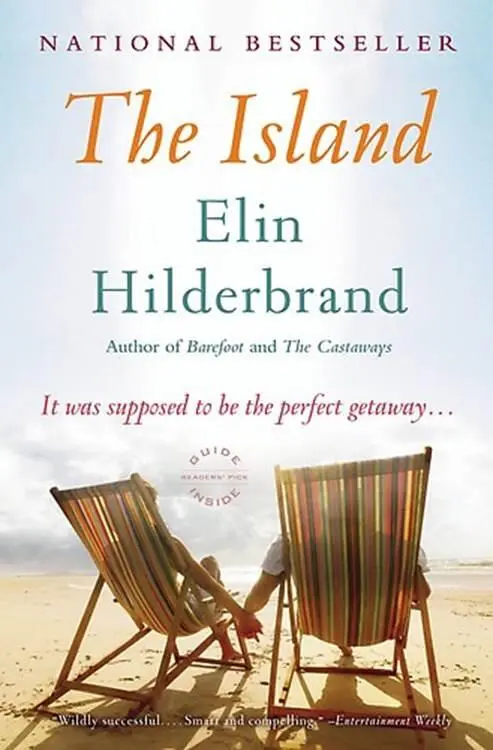
- Название:The Island
- Автор:
- Жанр:
- Год:неизвестен
- ISBN:нет данных
- Рейтинг книги:3 / 5. Голосов: 1
-
Избранное:Добавить в избранное
- Отзывы:
-
Ваша оценка:
The Island: краткое содержание, описание и аннотация
Предлагаем к чтению аннотацию, описание, краткое содержание или предисловие (зависит от того, что написал сам автор книги «The Island»). Если вы не нашли необходимую информацию о книге — напишите в комментариях, мы постараемся отыскать её.
It's only the first hint of what will be a summer of upheavals and revelations. Before the dust has even begun to settle, far worse news arrives, sending Chess into a tailspin of despair. Reluctantly taking a break from the first new romance she's embarked on since the recent end of her 30-year marriage, Birdie circles the wagons and enlists the help of her younger daughter Tate and her own sister India. Soon all four are headed for beautiful, rustic Tuckernuck Island, off the coast of Nantucket, where their family has summered for generations. No phones, no television, no grocery store – a place without distractions where they can escape their troubles.
But throw sisters, daughters, ex-lovers, and long-kept secrets onto a remote island, and what might sound like a peaceful getaway becomes much more. Before summer has ended, dramatic truths are uncovered, old loves are rekindled, and new loves make themselves known. It's a summertime story only Elin Hilderbrand can tell, filled with the heartache, laughter, and surprises that have made her page-turning, bestselling novels as much a part of summer as a long afternoon on a sunny beach.
The Island — читать онлайн бесплатно полную книгу (весь текст) целиком
Ниже представлен текст книги, разбитый по страницам. Система сохранения места последней прочитанной страницы, позволяет с удобством читать онлайн бесплатно книгу «The Island», без необходимости каждый раз заново искать на чём Вы остановились. Поставьте закладку, и сможете в любой момент перейти на страницу, на которой закончили чтение.
Интервал:
Закладка:
He left, hauling two bags of trash and their laundry and the list for the next day, and the others watched him go. Aunt India, as part of her own routine, gave a wolf whistle, which made Tate swear under her breath and Birdie shake her head with a delighted smile. “Honestly, India.”
And India said, “He’d better get used to it.”
As happy hour waned, Birdie started on dinner. If Birdie had said it once, she’d said it a hundred times: “Chess is the real cook in the family. Are you sure you don’t want to cook, Chess?” Chess declined. Cooking, just like everything else, had lost its allure. She remembered the hours of planning and preparation she used to put into dinner parties-she had made her own pasta from scratch, her own sauces, her own bread. For herself and Michael on a weeknight, she’d whipped up chicken piccata, a Thai laksa, an elaborate Indian curry with eight garnishes. Why had she gone to all that trouble? She couldn’t imagine.
Birdie was a good cook, and the meals were simple. She grilled steaks or chicken or fish, she boiled corn on the camp stove, she prepared a lettuce salad or cucumbers marinated in tarragon vinegar, and she served the rolls that Barrett brought from the bakery each morning. India usually pitched in to help, and sometimes Tate, too, while Chess sat and drank her wine.
I am a parasite, she thought. But she didn’t lift a finger.
Between dinner and dessert, Tate and Chess got into the Scout and drove out to North Pond to watch the sun set. They took their plastic cups filled with more wine-really, by this time, Chess was too drunk to drive and Tate probably, too. But that was the beauty of Tuckernuck: there was no one else on the road. They only had to watch out for deer. The car radio picked up an alternative station out of Brown University, so they were able to listen to music. The sunset itself was an otherworldly event. In New York the sun came up and went down, and between all the people and the cabs and the Korean delis and the stock market, no one seemed to notice. Which was too bad. Of course, it was far superior to watch the sun sink into the ocean than it was to watch it set over Fort Lee, New Jersey. It gave Chess peace, perhaps her only real peace of the day, once the sun was gone, extinguished like a candle. She had survived another day.
When they got back to the house, Birdie served them blueberry pie, which Barrett had bought at Bartlett Farm, topped with whipped cream from a can. After dessert, they all retreated to the screened-in porch, which allowed them to feel like they were outside, while at the same time keeping them safe from bugs. There was a card table on the porch, and some new wicker furniture with comfy cushions that Birdie had purchased-the old wicker furniture had disintegrated and the old cushions had been as inviting as stale slices of bread. Tate wanted to play gin rummy, but Chess couldn’t focus. (She closed her eyes and saw Nick bathed in the green light of the poker table, cards fanned in his hand.) Birdie was working on a needlepoint Christmas stocking for India’s soon-to-be grandson, William Burroughs Bishop III, who would be called Tripp. India indulged Tate in rummy for half an hour, and then she took what she called “me-myself time,” which she spent smoking one last cigarette and reading in her bedroom. Chess tried to read on the porch, though it was difficult to concentrate with Tate swearing over the lie of the cards (after India retired, she played solitaire). Chess would not go up to the attic without Tate because she was afraid of the bats. Chess hadn’t seen any bats yet and Birdie had made a point of mentioning that Barrett had somehow gotten rid of the bats in the attic. But Chess was afraid nonetheless.
She and Tate went upstairs together, they brushed their teeth and peed in front of each other, saving the poor toilet a flush, and then they each climbed into bed. Chess had a flashlight, and a LightWedge for reading, but once she was in bed, she lay there, feeling the dark. Twice that day, Tate had tried to initiate conversations with Chess about “all that had happened” with Michael Morgan, but Chess wouldn’t speak on the topic. I don’t want to talk about it. Now, under the blanket of complete darkness, Chess thought she might be able to share at least part of the story; she could start at the beginning, like she had in her journal, and see how far she got. As Chess arranged the thoughts and words in her mind, Tate, who had had a full and exhausting day, fell fast asleep.
Chess lay awake, thinking that this darkness, the absolute black, was what Michael was experiencing now. Michael had been warm and whole, he had been able to cradle a lacrosse ball and jog around the Reservoir, he could look you in the eye and shake your hand-but now he was dead and gone. There was no greater inequality than that between the living and the dead. It took Chess’s breath away, thinking about it. It terrified her more than the proximity of any bat could, until she could stand it no longer and she climbed into bed with Tate. It was the most basic comfort: her sister’s body, warm and breathing, keeping her safe.
On the third day, Chess was too miserable to write. She threw the notebook across the room.
The fourth day was the Fourth of July. The routine remained the same except Birdie put blueberries and strawberries in the pancakes and she wore a silk scarf printed with American flags around her neck, despite the fact that such a scarf was too fancy for Tuckernuck. Tate and India teased her about being a holiday junkie. Birdie wore the flag-printed scarf with the same enthusiasm that she wore her embroidered Christmas sweaters. Chess didn’t weigh in one way or the other.
There was a distraction during the ho-hum-reading-and-needlepoint-and-solitaire hour on the screened-in porch, and that was fireworks. On Nantucket, the town shot fireworks off the north shore and they were visible from the east coast of Tuckernuck: big, bright pyrotechnic posies, overlapping and unfolding. Chess heard the crackle. She wasn’t a huge fan of fireworks, but they seemed beautiful and important because she was alive and she could see them and Michael was dead and he couldn’t. His body was cold ash in a mahogany box.
Barrett didn’t come because of the holiday. Tate was in a pissy mood. She said it was because she was getting her period. She sang “Independence Day” by Bruce Springsteen at lunch, but she was painfully off-key.
BIRDIE
She had her role: she was the mother. She was the girls’ mother, of course, which was both gratifying and frustrating (gratifying in regard to Tate, who appreciated every little thing Birdie did for her, and frustrating in regard to Chess, who didn’t notice anything Birdie did because she was so miserable). She was also India’s mother. She made India’s breakfast, she did India’s breakfast dishes, she washed India’s cotton Hanro underwear and hung it on the clothesline, she made the sandwiches that India liked, mirroring the ones served in the gourmet cafeteria at PAFA (goat cheese with red pepper, prosciutto with herb butter), she cut the corn off the cob for India, as she used to those summers when the kids had braces, because something was the matter with India’s bridgework. She did all the thankless tasks around the house-wiping the counters, brushing crumbs from the sofa cushions, trimming the wicks of the citronella candles, cleaning the toilet, and wiping toothpaste sludge from the sink. She kept the list for Barrett and made sure they had enough of everything. Really, there was nothing worse than running out of something on Tuckernuck-because, unlike on the mainland, one couldn’t just run to Cumberland Farms or Target to get more. In past summers, there had been days when Nantucket was fogged in and the planes didn’t fly and Grant hadn’t been able to get his Wall Street Journal -that was bad. They ran out of calamine lotion but only discovered it when Tate got stung by a wasp. They had run out of butter for the corn on the cob; they had run out of bread and English muffins and had to eat peanut butter straight from the jar. The Scout had run out of gas half a mile from the house when India and Bill were using it for one of their midnight sex jaunts. They ran out of toilet paper and had to use pages of the Wall Street Journal. They ran out of Kleenex and had to blow their noses on rags torn from old sheets. These were minor inconveniences and they had all turned into good stories, but it was Birdie’s responsibility as mother to make sure they had enough of everything at all times.
Читать дальшеИнтервал:
Закладка:
Похожие книги на «The Island»
Представляем Вашему вниманию похожие книги на «The Island» списком для выбора. Мы отобрали схожую по названию и смыслу литературу в надежде предоставить читателям больше вариантов отыскать новые, интересные, ещё непрочитанные произведения.


Обсуждение, отзывы о книге «The Island» и просто собственные мнения читателей. Оставьте ваши комментарии, напишите, что Вы думаете о произведении, его смысле или главных героях. Укажите что конкретно понравилось, а что нет, и почему Вы так считаете.