Elin Hilderbrand - The Island
Здесь есть возможность читать онлайн «Elin Hilderbrand - The Island» весь текст электронной книги совершенно бесплатно (целиком полную версию без сокращений). В некоторых случаях можно слушать аудио, скачать через торрент в формате fb2 и присутствует краткое содержание. Жанр: Современная проза, на английском языке. Описание произведения, (предисловие) а так же отзывы посетителей доступны на портале библиотеки ЛибКат.
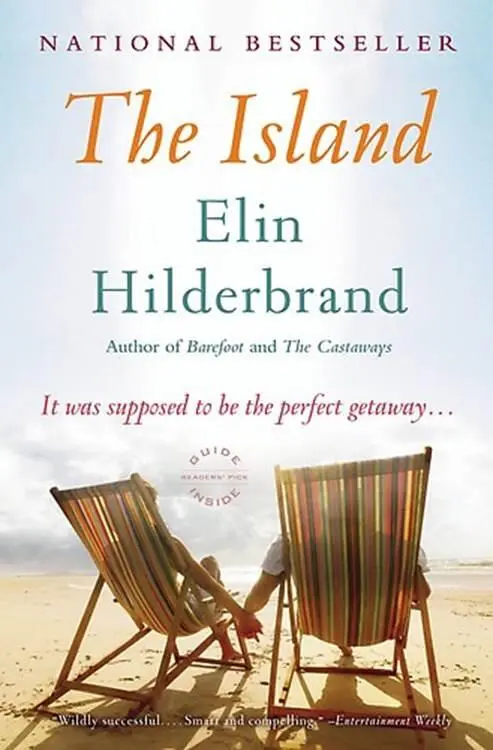
- Название:The Island
- Автор:
- Жанр:
- Год:неизвестен
- ISBN:нет данных
- Рейтинг книги:3 / 5. Голосов: 1
-
Избранное:Добавить в избранное
- Отзывы:
-
Ваша оценка:
The Island: краткое содержание, описание и аннотация
Предлагаем к чтению аннотацию, описание, краткое содержание или предисловие (зависит от того, что написал сам автор книги «The Island»). Если вы не нашли необходимую информацию о книге — напишите в комментариях, мы постараемся отыскать её.
It's only the first hint of what will be a summer of upheavals and revelations. Before the dust has even begun to settle, far worse news arrives, sending Chess into a tailspin of despair. Reluctantly taking a break from the first new romance she's embarked on since the recent end of her 30-year marriage, Birdie circles the wagons and enlists the help of her younger daughter Tate and her own sister India. Soon all four are headed for beautiful, rustic Tuckernuck Island, off the coast of Nantucket, where their family has summered for generations. No phones, no television, no grocery store – a place without distractions where they can escape their troubles.
But throw sisters, daughters, ex-lovers, and long-kept secrets onto a remote island, and what might sound like a peaceful getaway becomes much more. Before summer has ended, dramatic truths are uncovered, old loves are rekindled, and new loves make themselves known. It's a summertime story only Elin Hilderbrand can tell, filled with the heartache, laughter, and surprises that have made her page-turning, bestselling novels as much a part of summer as a long afternoon on a sunny beach.
The Island — читать онлайн бесплатно полную книгу (весь текст) целиком
Ниже представлен текст книги, разбитый по страницам. Система сохранения места последней прочитанной страницы, позволяет с удобством читать онлайн бесплатно книгу «The Island», без необходимости каждый раз заново искать на чём Вы остановились. Поставьте закладку, и сможете в любой момент перейти на страницу, на которой закончили чтение.
Интервал:
Закладка:
“That sounds like Grant,” India said.
“It was Grant, is Grant. But it hurt. He loved us, but he didn’t like us.”
“You know that’s not true…”
“He liked us but he didn’t want to be with us,” Birdie said. “So that was the precursor to ‘the moment.’ ‘The moment’ came a few weeks later.”
“What happened?” India asked.
“It was a beautiful autumn Sunday. Grant had golfed all day Saturday, and our agreement was, only one day of the weekend could be devoted to golf. So on Sunday, he was mine, right?”
“Right,” India said.
“So we woke up and we… made love.”
“How was that?” India asked.
“Oh, it was fine, ” Birdie said. Here, Birdie blew a stream of smoke out the window. It was weird watching her smoke. It was like watching President Obama smoke. Or the pope smoke. “But it wasn’t like I was hearing ‘Unchained Melody’ play in my head. I’d been married to the man thirty years. I was hoping for some other kind of connection, something deeper. I wanted to do things with Grant. I wanted to be his friend.”
“Gotcha,” India said.
“He wouldn’t go to church with me because he said he didn’t feel like it… the only thing he worships, as you and I know, is money. Okay, fine, to each his own, but then I asked if he would go to brunch with me after church. I was talking about a nice brunch at the Silvermine Tavern, with mimosas and Bloody Marys. Since when has Grant ever turned down alcohol? But he said no, he didn’t want to eat a big brunch and he didn’t want to drink because he had plans to go jogging with Joe Price at two o’clock. And that was it. The moment.”
“It was?” India said.
“Grant had never jogged in his life. But on that Sunday, he was going jogging with Joe Price. Because he would accept any offer to avoid spending time with me.”
India exhaled and picked a fleck of tobacco from her tongue. What could she say? Birdie was probably right. Grant was a guy’s guy. He excelled at the manly. He wrote the handbook.
“I didn’t want to do it. I spent a lot of time thinking about the Campbells and the Olivers and the Martinellis and the Alquins and all our other friends who had weathered the first storm of divorce that came through when we were all in our late thirties. We were the survivors, we thought. We had skirted stepchildren and alimony payments. We were proud of that; I was proud of that. I was proud to still be married. But the only thing I was holding on to, I realized, was my own misery. So before he could even tie up his running shoes, I asked Grant to move out. And he said, ‘Are you sure, Bird?’ As nice as can be, but in a way that let me know the marriage wasn’t something he valued enough to fight for. And I said, ‘I’m sure.’ And he was gone-not that night, but a couple of nights later.”
“Did it feel weird?” India asked. “Watching him move his stuff out?”
Birdie tapped ash into the clam shell that India was using as an ashtray. “What was weird was that he had so little to take. What was there? His suits, his toothbrush, his bathrobe and slippers. His humidor. His tennis racquets and his two sets of golf clubs. A few pictures of the kids, but these I suggested. He took the flat-screen TV and his really good scotch from the liquor cabinet. He made only one trip and all of it fit into the Jaguar. And that was it.”
“That was it,” India said. God, Bill had had so much stuff. His studio was filled with sketchbooks, clay, rolls of copper wire, copper sheeting, canvases, paints, color palettes stolen from the hardware store, and half-finished studies for sculptures. He had hundreds of CDs-from Mozart to the Beatles to the Cure. He loved music; he always wanted to know what the boys were listening to. He had the things he bought in other countries-a Tibetan prayer shawl, a flute from India, masks and blowguns and kris knives, a tea set from China. He had other artists’ sculptures and other artists’ paintings. He had his own set of chef’s knives and his special Indian spices ordered from Harrod’s. He had a library filled with books. Thousands and thousands of books. If India had asked Bill to leave, it would have taken him months to gather his shit. As it was, after he died, India kept it all. This was her attorney’s suggestion. Do not throw away anything that personally belonged to Bill Bishop. Someday, down the road, they could talk about donations. Or about a foundation. Or about turning the house into a museum.
“A regular person would have walked through the house and not noticed anything missing,” Birdie said. “And that spoke volumes. Grant had never been vested in our home life. His life was elsewhere-at the office, on the golf course. He was more at home at Gallagher’s than he was at our house. So when he left, what I felt was regret that I hadn’t asked him to leave earlier.”
“Really?” India said.
“Really,” Birdie said. She stubbed out her cigarette, then reached for another, and India scrambled to light it for her. “I wasted my life with him.”
“You didn’t waste your life,” India said. “You have two beautiful children.”
“And what else?”
“A lovely home.”
“Don’t you think I expected more from myself than that?” Birdie asked. “We were educated. I went to Wellesley, for God’s sake. I expected great things from myself.”
“You did great things.”
“I won the women’s member-guest in 1990,” Birdie said. “A golf tournament. Golf, which I despise, which I took up solely to spend time with Grant, who didn’t like to play with me anyway, because I wasn’t good enough. I won that tournament just to spite him. I started a book group, the first of its kind in Fairfield County, because I wanted to read really good contemporary literature and talk about it, and what happened? It devolved into being just like everybody else’s book group-drinking Kendall-Jackson chardonnay and reading The Secret Life of Bees. ”
“You raised the girls,” India said.
“The girls are the girls,” Birdie said. “I’m not going to take credit for the girls.”
India said, “You’re a wonderful person, Birdie. You’re being too hard on yourself.”
Birdie said, “I look at Chess and I feel so jealous. ”
“Jealous of Chess?” India said. “The girl is miserable.”
“Miserable now,” Birdie said. “But happier in the long run. She stood up for herself. She stood up for her life. What if I had done that? What if I had fended off Grant Cousins and all his money and focused on myself? I could have been an expert in fine carpets.”
India lit herself another cigarette. “That’s right, you always liked carpets.”
“The language in carpets is fascinating,” Birdie said. “I used to know a little about it. Now-well, it’s like trigonometry. I’ve forgotten it all.”
“You’re a wonderful gardener,” India said.
“See? I could have been a landscape architect. I could have made a fortune in New Canaan alone. I could own my own business. I could be a landscaping mogul. ”
“You’re talking like you’re all washed up,” India said. “You can still do it.”
Birdie stood up from the bed and looked out the window. India’s window looked northwest, toward North Pond and Muskeget. “I want to go home,” she said.
“You do? ” India said.
“Yes,” Birdie said.
When Birdie first walked into the room, India had been wondering how to tell her that she would be leaving on Wednesday. But over the course of the conversation, she realized she was enjoying herself, and she was connecting with her sister, which was far superior to dealing with the potential bullshit transpiring in the cauldron that was Center City, Philadelphia, in July. (Independence Mall on July Fourth, mobbed with tourists from Kansas and Bulgaria: India shuddered.) And now, just as India had pretty much decided to stay put, Birdie announced that she wanted to leave?
Читать дальшеИнтервал:
Закладка:
Похожие книги на «The Island»
Представляем Вашему вниманию похожие книги на «The Island» списком для выбора. Мы отобрали схожую по названию и смыслу литературу в надежде предоставить читателям больше вариантов отыскать новые, интересные, ещё непрочитанные произведения.



Обсуждение, отзывы о книге «The Island» и просто собственные мнения читателей. Оставьте ваши комментарии, напишите, что Вы думаете о произведении, его смысле или главных героях. Укажите что конкретно понравилось, а что нет, и почему Вы так считаете.