Elin Hilderbrand - The Island
Здесь есть возможность читать онлайн «Elin Hilderbrand - The Island» весь текст электронной книги совершенно бесплатно (целиком полную версию без сокращений). В некоторых случаях можно слушать аудио, скачать через торрент в формате fb2 и присутствует краткое содержание. Жанр: Современная проза, на английском языке. Описание произведения, (предисловие) а так же отзывы посетителей доступны на портале библиотеки ЛибКат.
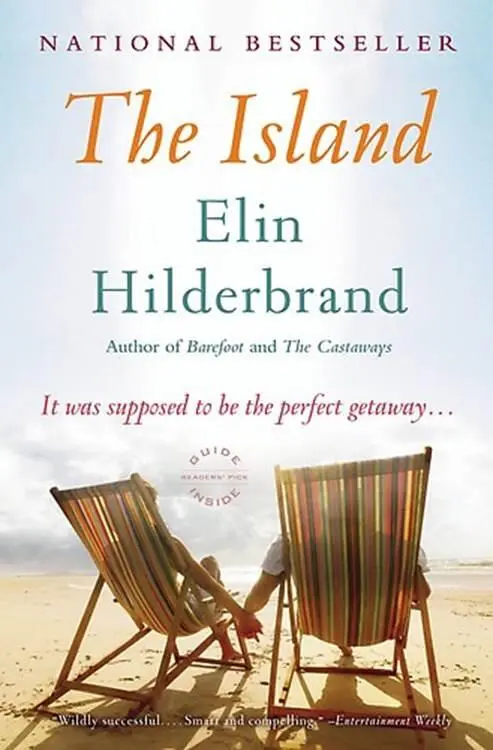
- Название:The Island
- Автор:
- Жанр:
- Год:неизвестен
- ISBN:нет данных
- Рейтинг книги:3 / 5. Голосов: 1
-
Избранное:Добавить в избранное
- Отзывы:
-
Ваша оценка:
The Island: краткое содержание, описание и аннотация
Предлагаем к чтению аннотацию, описание, краткое содержание или предисловие (зависит от того, что написал сам автор книги «The Island»). Если вы не нашли необходимую информацию о книге — напишите в комментариях, мы постараемся отыскать её.
It's only the first hint of what will be a summer of upheavals and revelations. Before the dust has even begun to settle, far worse news arrives, sending Chess into a tailspin of despair. Reluctantly taking a break from the first new romance she's embarked on since the recent end of her 30-year marriage, Birdie circles the wagons and enlists the help of her younger daughter Tate and her own sister India. Soon all four are headed for beautiful, rustic Tuckernuck Island, off the coast of Nantucket, where their family has summered for generations. No phones, no television, no grocery store – a place without distractions where they can escape their troubles.
But throw sisters, daughters, ex-lovers, and long-kept secrets onto a remote island, and what might sound like a peaceful getaway becomes much more. Before summer has ended, dramatic truths are uncovered, old loves are rekindled, and new loves make themselves known. It's a summertime story only Elin Hilderbrand can tell, filled with the heartache, laughter, and surprises that have made her page-turning, bestselling novels as much a part of summer as a long afternoon on a sunny beach.
The Island — читать онлайн бесплатно полную книгу (весь текст) целиком
Ниже представлен текст книги, разбитый по страницам. Система сохранения места последней прочитанной страницы, позволяет с удобством читать онлайн бесплатно книгу «The Island», без необходимости каждый раз заново искать на чём Вы остановились. Поставьте закладку, и сможете в любой момент перейти на страницу, на которой закончили чтение.
Интервал:
Закладка:
Tate was also quieted by the way India was looking down on the three of them, by the way she seemed to see exactly what was happening. She was connecting the dots to make… a love triangle.
Tate was angry now. She announced, in a loud voice, that she was going to shower.
Chess and Barrett both looked up at her. She smiled. She said, “Chess, would you be a doll and get me one of those yummy new towels that Birdie bought?”
Chess said, “Okay, in a minute.”
Tate said, “Please? I’m a dirt sandwich. I need to hop in right now. ” She strode over to the outdoor shower and enclosed herself inside. The outdoor shower had the same picket walls with eighth-inch gaps between each board, and a slatted “floor,” which was a pallet set in the grass. The showerhead and knobs were frosted with mineral deposits. Tate turned on the water, and out came a fine spray of cold.
“Whoo-hoooo!” she screamed. “It’s freezing!”
Barrett said, “Ah, the joys of Tuckernuck living.”
Tate could see him pivot on the bench of the picnic table, looking her way now. Imagining her nude and wet? Could he see the shape of her through the gaps in the wood? Had she done it? Had she trumped Chess?
Chess reappeared and flipped one of the fluffy new polka-dot towels over the side of the shower. “There.”
“Thanks, lovey!” Tate said. “How about shampoo? Or a sliver of Irish Spring? There’s nothing in here.”
“Forget it,” Chess said. “Birdie might be your slave, but I’m not.” She picked up her plate and headed for the kitchen.
“You barely touched your food,” Barrett said.
“I need soap!” Tate cried out, but no one was listening.
Chess said, “I don’t have much of an appetite these days.”
Barrett said, “Yeah, I know what that’s like.”
Chess nodded once, curtly, then disappeared into the house. Barrett looked after her. He opened his mouth to speak, then closed it again. He worked on his plate of pancakes. He had forgotten about Tate in the shower.
Tate leaned her head back and let the water flow over her face. Barrett was a lost cause. But Tate loved him. She couldn’t make herself stop.
She emerged from the shower wrapped in the towel, her hair wet and sleek. At that second, Chess emerged from the house with a bar of soap.
“Here you go,” she said.
“I’m done,” Tate said. She sat down at the picnic table next to Barrett.
“Aren’t you going to put clothes on?” Chess asked.
“Aren’t you?” Tate asked.
They glared at each other.
Barrett stood up with his syrup-smeared plate. “Those were good pancakes,” he said. “Do either of you ladies need anything from the big island?”
Tate smelled smoke again. She looked up. Aunt India waved.
INDIA
Bill was everywhere on this island. She heard his voice, smelled the smoke from his cigarettes and the lime from his gin and tonic. She saw him from behind on the beach-his hair dark as it used to be before it thinned and grayed, his back and arms strong enough to carry one or another of the boys piggyback. She could even picture his bathing suit-fluorescent orange trunks. Those trunks had been loud. Jesus, Bill, turn down your bathing suit! I can’t hear myself think!
He had been happy here, on Tuckernuck, for the two weeks that they stayed each summer. He, unlike Grant, had loved being unplugged. No dealers calling, no deadlines looming, no pressure to be a great artist. Here, he was a father. He built the bonfires, he whittled the marshmallow sticks, he told the ghost stories (always with ridiculous, goofy endings so the kids wouldn’t go to bed scared). He organized footraces and gin rummy tournaments and nature walks. He gave driving lessons in the Scout. He collected shells and driftwood and beach glass and made things from them (because he couldn’t stop being an artist). He had made the sculpture they called “Roger” for India the day after a terrible fight. The fight had emerged from India’s happiness rather than from her unhappiness. This was right when Bill’s sickness began to present itself in a way that she could no longer ignore. On Tuckernuck, Bill was relaxed and unfettered. He was able to laugh and to be her lover. They made love on the squishy mattress (filled with jelly, they used to joke), they made love out of doors-on the beach, in the Scout, at the end of the dirt road, and once, recklessly, in the old schoolhouse. Why couldn’t Bill be like this at home? India had asked. She was crying. She was so happy here, right now, like this! And at home, in their real life, things were miserable.
At home, in their real life, Bill would work in fits and bursts. He went for days without sleeping and eating. He stayed out back in his studio, and India would bring him cigarettes and bottles of Bombay Sapphire, which he drank straight over ice. He had hired a fabricator out in Santa Fe to construct his larger pieces; the pain with the larger pieces was the sketch-first the overall effect, and then the excruciating detail-and the measurements had to be exact. Bill was a perfectionist-all great artists, all great people were-but perfection could only be judged in his eyes. Something that looked gorgeous to India would look not quite right to Bill. He would swear at the top of his lungs, throw things and break things; even from his closed-up studio a hundred yards away, the boys would hear him. India tried to intervene, but he wouldn’t allow it. He was his own slave driver.
That was Manic Bill, a real monster, someone to be feared and avoided like a hurricane. Please use all evacuation routes.
Manic Bill was always shadowed by Depressive Bill, who was even more unwelcome. Depressive Bill was sad and pathetic. He didn’t work, couldn’t work, couldn’t take a phone call or eat a sandwich or get an erection or, many times, rise from bed except, thankfully, to go to the bathroom. The very first depressive episode came at a convergence of events in 1985: The New Orleans Times-Picayune published a scathing review of a sculpture of Bill’s that had recently been installed in City Park. The paper called it “hideous and inorganic” and lambasted the city council for spending two hundred thousand dollars of the taxpayers’ money on “a grotesque misstep by an otherwise laudable artist.” Although the review was bad, it had been published in New Orleans, so no one Bill and India knew personally would see it, but then the Philadelphia Inquirer got hold of the review and ran a feature piece about what happened when great artists put out “bad product,” and named Bill and the New Orleans piece specifically. At the same time, Bill contracted bronchitis, which turned into pneumonia. He was bedridden for days, then weeks. He was dirty and bearded. India took to sleeping in the guest room. She was a decent nursemaid, she thought. She brought him homemade Italian wedding soup and focaccia from his favorite deli on South Street, she made sticky date pudding from his British mother’s recipe. She brought him his antibiotics every four hours and kept his water glass fresh and filled with ice. She borrowed books from the library and read them at his bedside. He got better physically; the fluid cleared from his lungs. But he didn’t get better mentally. He stayed in bed. He missed the kids’ soccer games; he missed a benefit at MOMA where he was being honored. One night, India heard a noise coming from their bedroom, and when she opened the door, she found Bill sobbing. She sat on the side of the bed and smoothed his hair and contemplated leaving him.
Then, his favorite hockey player, Pelle Lindbergh, was killed in a car crash, and somehow this provided the impetus Bill needed to get out of bed. He wasn’t saddened by Lindbergh’s death; he was angry. Goddamned waste of talent. He was back in the studio, returning phone calls, sketching a new commission for a private garden in Princeton, New Jersey.
Читать дальшеИнтервал:
Закладка:
Похожие книги на «The Island»
Представляем Вашему вниманию похожие книги на «The Island» списком для выбора. Мы отобрали схожую по названию и смыслу литературу в надежде предоставить читателям больше вариантов отыскать новые, интересные, ещё непрочитанные произведения.





Обсуждение, отзывы о книге «The Island» и просто собственные мнения читателей. Оставьте ваши комментарии, напишите, что Вы думаете о произведении, его смысле или главных героях. Укажите что конкретно понравилось, а что нет, и почему Вы так считаете.