Elin Hilderbrand - The Island
Здесь есть возможность читать онлайн «Elin Hilderbrand - The Island» весь текст электронной книги совершенно бесплатно (целиком полную версию без сокращений). В некоторых случаях можно слушать аудио, скачать через торрент в формате fb2 и присутствует краткое содержание. Жанр: Современная проза, на английском языке. Описание произведения, (предисловие) а так же отзывы посетителей доступны на портале библиотеки ЛибКат.
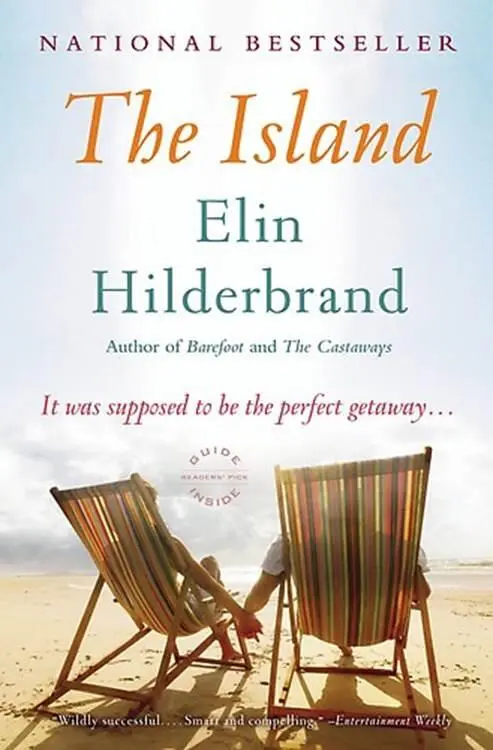
- Название:The Island
- Автор:
- Жанр:
- Год:неизвестен
- ISBN:нет данных
- Рейтинг книги:3 / 5. Голосов: 1
-
Избранное:Добавить в избранное
- Отзывы:
-
Ваша оценка:
The Island: краткое содержание, описание и аннотация
Предлагаем к чтению аннотацию, описание, краткое содержание или предисловие (зависит от того, что написал сам автор книги «The Island»). Если вы не нашли необходимую информацию о книге — напишите в комментариях, мы постараемся отыскать её.
It's only the first hint of what will be a summer of upheavals and revelations. Before the dust has even begun to settle, far worse news arrives, sending Chess into a tailspin of despair. Reluctantly taking a break from the first new romance she's embarked on since the recent end of her 30-year marriage, Birdie circles the wagons and enlists the help of her younger daughter Tate and her own sister India. Soon all four are headed for beautiful, rustic Tuckernuck Island, off the coast of Nantucket, where their family has summered for generations. No phones, no television, no grocery store – a place without distractions where they can escape their troubles.
But throw sisters, daughters, ex-lovers, and long-kept secrets onto a remote island, and what might sound like a peaceful getaway becomes much more. Before summer has ended, dramatic truths are uncovered, old loves are rekindled, and new loves make themselves known. It's a summertime story only Elin Hilderbrand can tell, filled with the heartache, laughter, and surprises that have made her page-turning, bestselling novels as much a part of summer as a long afternoon on a sunny beach.
The Island — читать онлайн бесплатно полную книгу (весь текст) целиком
Ниже представлен текст книги, разбитый по страницам. Система сохранения места последней прочитанной страницы, позволяет с удобством читать онлайн бесплатно книгу «The Island», без необходимости каждый раз заново искать на чём Вы остановились. Поставьте закладку, и сможете в любой момент перейти на страницу, на которой закончили чтение.
Интервал:
Закладка:
But the answer was no, Tate had never been in love. She had never even been close. She had had a boyfriend in high school named Lincoln Brown. Lincoln Brown was the only black student in Tate’s graduating class. He was handsome, he was the cleanup batter for the baseball team, he was, like Tate, a computer whiz. Tate had loved Linc, yes, she had, but it was a brotherly love, it was a protective love, it was a proud love. (She was proud that Linc was black and she was white, she was proud that her parents didn’t care either way, she was proud to call a person who was so utterly fabulous her boyfriend.) She lost her virginity to Lincoln Brown and liked it. But she was not in love with Lincoln Brown. He was not her heart’s one desire.
There had been other guys in college-Tate’s taste ran to nerdy computer geeks and funny, outspoken fraternity guys-but these guys were for sex and goofing around only. She had not fallen in love with any of them.
She hadn’t fallen in love as an adult. Sometimes a man at Company X would hit on Tate as she was trying to work, and she would look up from the screen at so-and-so’s bland pudding face, his Van Heusen shirt and Charter Club tie and pleated-front pants, and she would think, Are you kidding me? I’m trying to fix your system here.
No, she had never been in love. But last night she had been too tired to say so. Plus, with Chess in her current condition, Tate feared it would sound like she was bragging.
At the end of her run, Tate raced up the beach stairs, pumping her arms like Rocky, expecting to find her mother and her sister sitting at the picnic table ready to indulge her in some applause-but the house was quiet. Tate, breathless, entered the kitchen. Her mother was juicing a crate of oranges by hand. Tate was so thirsty that she drank straight from the pitcher. Gross, she knew, and uncouth. If her aunt or Chess had been around, she would have exercised restraint, but being with her mother was like being with herself. Birdie didn’t scold and she didn’t sigh.
She said, “Isn’t it good?”
Tate needed a mother to squeeze her orange juice fresh each morning.
“Water?” Tate said.
Birdie pulled a bottle of water from the dinky fridge. “It’s been in there overnight and it’s still not cold,” she said. “Sorry. Barrett is bringing ice in a cooler today.”
Tate inhaled the water. She burped enthusiastically. The pancake batter was foaming in the blue ceramic bowl. “Everyone else asleep?”
“Asleep.”
Tate nodded as an unspoken understanding passed between her and her mother. It was nearly nine o’clock! How could anyone still be sleeping? Life was far superior when you enjoyed the top of the day.
She said, “I’m going outside to do my sit-ups.”
Birdie smiled. “Be careful.”
Tate hung by the knees from the longest, sturdiest branch of their one tree. She had visualized herself doing this back when she was in her air-conditioned state-of-the-art fitness center in Charlotte, but she’d really had no idea if the branch she was thinking of was going to be strong enough or high enough off the ground to make sit-ups feasible. She was delighted to find the branch was ideal. She pulled herself up once, up twice. Her abs were screaming in protest after five ups, and the juice and water churned in her stomach. After ten ups, the backs of her knees were sore from the abrading bark. She couldn’t do 150 sit-ups. She could maybe, with fortitude, do 25. But at 25, it was easier. She did 30, 32.
Then she heard a voice say, “Wow.”
She dropped back down to hang by her knees. Even upside-down, he was beautiful. Damn it. Her thighs were weak; her heart was encroaching on her throat. She grabbed the branch with both hands, inverted into a skin-the-cat, and hit the ground with a thud.
“Morning,” she said.
“I’m impressed,” Barrett said. He was staring at her in a way that made her sizzle. She worked out in a fitness center where the walls were made of mirrors; she knew how she looked. Sweaty, red faced, lank haired, bug eyed. And she smelled worse than that. But Barrett’s expression was bright and interested, she thought. She had him captive.
But quick, what to do with him?
“I ran around the island,” she said. Okay, that was bad. That sounded like bragging.
“The whole thing?” he said. “Really?”
She was out of breath. It was hard to sound adorable and fetching when she was panting like a Saint Bernard. “What you got there?” she asked. Though she knew it was a cooler filled with ice.
He said, “A cooler filled with ice.”
She said, “Can I lie down in it?”
He laughed and said, “You’d better not. It’s for your mother’s wine.”
They were both laughing. Barrett was wearing a darker pair of khaki shorts with blue gingham boxers peeking out from the bottom, and he wore a red T-shirt with a logo for Cisco beer. He wore a visor and flip-flops; his sunglasses hung around his neck by a blue foam strap. Every detail of Barrett Lee was endlessly fascinating. And now Tate knew that his wife had died. Tate found this romantic in some inexplicable way. And he had two little boys. He was a father. Was there anything sexier? When he turned toward the house, Tate stared at him. She had twenty-nine days left. Would she kiss him? Would she sleep with him? It seemed impossible, but what if the answer were yes?
What if the answer were yes?
“Good morning.” At that very second, Chess stepped out of the house wearing a white eyelet nightie and the blue crocheted cap. Barrett’s color heightened, and when he spoke, his voice was husky.
“Hey, Chess. How goes it?”
Chess was holding two plates of blueberry pancakes.
“One of these is for you,” she said.
“For me?” Barrett said.
“Birdie insists,” Chess said.
“Okay,” Barrett said. “Let me set this down.”
Tate watched in horror as Barrett hurriedly placed the cooler in the shade of the house and settled at the picnic table with Chess. What was Birdie thinking? Birdie was supposed to be on Tate’s team, the early riser team. But she had made pancakes for Barrett and Chess? This was wrong. This was, day one, off on the wrong foot. Chess had taken a seat at the far end of the picnic table from Barrett and on the opposite side. If it were Tate, she would have sat right next to him; she would have fed him his pancakes. Barrett asked Chess what she did for a living.
Chess said, “Well, I was the food editor at Glamorous Home, but I quit.”
“Did you do any writing?” Barrett asked. “I remember back when you were at Colchester, you said you wanted to write.”
He remembered that from thirteen years ago? Tate tried not to panic. Barrett Lee was the person from Tate’s past who evoked the deepest and most poignant longing-but what if that person, for Barrett, was Chess? What if even as Barrett got married and had children, he had been thinking of Chess, wondering about her, pining for her? What if, in the nights after his wife passed away and he was left a lonely widower, he had thought of Mary Francesca Cousins, the Tuckernuck two-week-a-summer girl with the beautiful body and the grouchy father and the big, thick novels? What if when Birdie called him up in the spring to say, Fix up the house, Chess and I are coming, his heart had leaped with anticipation, just the way Tate’s heart had leaped when Birdie said the name “Barrett Lee”? What if Barrett Lee’s feelings mirrored Tate’s own except that they were for the wrong sister?
She watched them eat. She didn’t know what to do. She smelled smoke and looked up and saw India framed in the upstairs window like a picture on an Advent calendar. She was holding a cigarette. It was a momentarily distracting thought: India still smoked. (Tate remembered India and Uncle Bill smoking when she and Chess were children. They smoked in an elegant way; it went with the fact that they vacationed in Majorca and went to parties in Soho lofts and knew famous people like Roy Lichtenstein and Liza Minnelli.) But now India was smoking inside the Tuckernuck house, which was a pile of tinder and which would absorb the smell of her cigarettes and hold on to it for the next seventy-five years. Birdie was going to have an aneurysm. Tate nearly shouted this up to India, but India wouldn’t give a shit.
Читать дальшеИнтервал:
Закладка:
Похожие книги на «The Island»
Представляем Вашему вниманию похожие книги на «The Island» списком для выбора. Мы отобрали схожую по названию и смыслу литературу в надежде предоставить читателям больше вариантов отыскать новые, интересные, ещё непрочитанные произведения.


Обсуждение, отзывы о книге «The Island» и просто собственные мнения читателей. Оставьте ваши комментарии, напишите, что Вы думаете о произведении, его смысле или главных героях. Укажите что конкретно понравилось, а что нет, и почему Вы так считаете.