Elin Hilderbrand - The Island
Здесь есть возможность читать онлайн «Elin Hilderbrand - The Island» весь текст электронной книги совершенно бесплатно (целиком полную версию без сокращений). В некоторых случаях можно слушать аудио, скачать через торрент в формате fb2 и присутствует краткое содержание. Жанр: Современная проза, на английском языке. Описание произведения, (предисловие) а так же отзывы посетителей доступны на портале библиотеки ЛибКат.
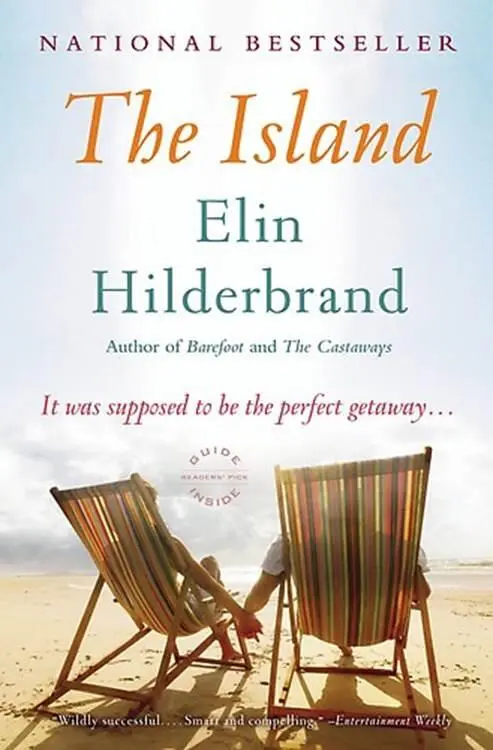
- Название:The Island
- Автор:
- Жанр:
- Год:неизвестен
- ISBN:нет данных
- Рейтинг книги:3 / 5. Голосов: 1
-
Избранное:Добавить в избранное
- Отзывы:
-
Ваша оценка:
The Island: краткое содержание, описание и аннотация
Предлагаем к чтению аннотацию, описание, краткое содержание или предисловие (зависит от того, что написал сам автор книги «The Island»). Если вы не нашли необходимую информацию о книге — напишите в комментариях, мы постараемся отыскать её.
It's only the first hint of what will be a summer of upheavals and revelations. Before the dust has even begun to settle, far worse news arrives, sending Chess into a tailspin of despair. Reluctantly taking a break from the first new romance she's embarked on since the recent end of her 30-year marriage, Birdie circles the wagons and enlists the help of her younger daughter Tate and her own sister India. Soon all four are headed for beautiful, rustic Tuckernuck Island, off the coast of Nantucket, where their family has summered for generations. No phones, no television, no grocery store – a place without distractions where they can escape their troubles.
But throw sisters, daughters, ex-lovers, and long-kept secrets onto a remote island, and what might sound like a peaceful getaway becomes much more. Before summer has ended, dramatic truths are uncovered, old loves are rekindled, and new loves make themselves known. It's a summertime story only Elin Hilderbrand can tell, filled with the heartache, laughter, and surprises that have made her page-turning, bestselling novels as much a part of summer as a long afternoon on a sunny beach.
The Island — читать онлайн бесплатно полную книгу (весь текст) целиком
Ниже представлен текст книги, разбитый по страницам. Система сохранения места последней прочитанной страницы, позволяет с удобством читать онлайн бесплатно книгу «The Island», без необходимости каждый раз заново искать на чём Вы остановились. Поставьте закладку, и сможете в любой момент перейти на страницу, на которой закончили чтение.
Интервал:
Закладка:
Chess pulled back the flap of her suitcase to reveal her entire summer wardrobe, neatly folded.
Tate said, “Jesus, you brought a lot of stuff.”
Chess said, “Fuck you.”
Tate looked at her wrist, where she wore a chunky black plastic running watch with so many knobs and dials she could probably use it to land the space shuttle. “That didn’t take long.”
“Sorry,” Chess said.
“You don’t sound sorry. You sound angry.”
“Angry, yes,” Chess said. “My anger is general and not specific to you.”
“But you’re taking it out on me because you can,” Tate said. “Because I’m the one in the room with you. Because I’m your sister and I love you unconditionally and you can say whatever you want to me and I will accept it and forgive you.” Tate stood up and peeled off her wet bathing suit top. “That’s fine. That’s what I’m here for. To be a place where you vent your general anger.” Tate shucked off her bikini bottoms. How long since they had been naked in front of each other? Tate’s body was sleek and muscular. She reminded Chess of a gazelle or an impala. All that contained energy and power. “I’m here for you. If you want to fight, we can fight. If you want to talk about it, we can talk about it. But you cannot alienate me. I love you with hair and without hair. You are my-”
“Only sister,” Chess said.
Tate put on shorts and a T-shirt. “I’m going for a walk,” she said. “Would you like to come?”
“No,” Chess said.
She left, and Chess was glad. Along with anger, she was hosting a hundred other emotions like unwanted party guests-among them sadness, despair, self-pity, guilt, and jealousy. The jealousy had arrived at the moment it became clear that Tate was happy. Tate had every reason to be happy. Tate ran her own extremely successful business; she was, in all ways, her own boss. And she was beautiful now. But Tate’s happiness came from somewhere else; it came from the elusive place that happiness comes from. She could afford to be kind because she wasn’t the one who was hurting.
Chess had never once, in her thirty-two years, been jealous of Tate. It had always been the other way around; that was the direction the river flowed. Chess did everything first; she did everything better. She was pretty and smart and accomplished in a way that caused Tate to give up without even trying. Chess was engaged to be married while Tate had yet to date anyone more than three times since graduating from college. Chess was the bride, Tate the bridesmaid.
The neatly packed suitcase mocked her. Chess shoved the suitcase across the dusty wooden floor to the ancient dresser that had traditionally been hers. Inside, the shelf paper was dried out and curling at the edges; there were mouse droppings that made Chess sigh. This, however, was life in the Tuckernuck house. Everything was just as she remembered it from thirteen years earlier, just as it had been for decades before that. Tate had called the Tuckernuck house “home,” and Chess knew what Tate meant. Every inch of the place was familiar and sturdy and unchanged. Chess knew exactly where she was. Why, then, did she feel so lost?
BIRDIE
When Barrett arrived back with the eight bags of groceries, he caught Birdie fiddling with her cell phone at the dining room table. She was so surprised when she saw him that she gasped and then clutched the phone to her chest. If she had been fast enough, she would have slipped it into her bra.
“Whoa, sorry,” he said. “Didn’t mean to startle you.”
She didn’t even try to collect herself. She was frazzled, it was hot, they had risen at six that morning, and Birdie had done all the driving. It was nearly five o’clock now and she was beat.
“Is there wine in one of those bags?” she asked.
“The wine is still on the boat,” Barrett said. “I’ll go get it now.”
“Would you?” Birdie said.
“For you, madame, anything.” Barrett smiled at her and she felt herself flush, more out of shame than anything else. Barrett Lee had been back and forth between Nantucket and Tuckernuck dozens of times this week on their behalf, and then Birdie discovered that the poor boy had lost his wife and had two small children at home to raise on his own, and yet he managed to be charming and upbeat. Birdie needed to pull herself together.
When Barrett left to get the wine, Birdie found his check. The repairs to the house had cost $58,600. Birdie had donned her linen suit and driven to the city to Grant’s office to present him with the bills. Since Michael Morgan’s death, Grant had called the house every day-to talk to Chess, to check in with Birdie about Chess. He had gone with Chess and Birdie to the funeral, and he had paid an exorbitant hourly fee for Chess to see a psychiatrist each day. Dr. Burns thought Tuckernuck was a good idea, and hence the repairs to the house were validated. If Chess needed Tuckernuck, then Tuckernuck would have to be fixed up. Right? Birdie wasn’t sure Grant would see it that way; she was confronting him in person to plead her case.
Grant’s office was painted oxblood red. Birdie had picked the color herself nearly two decades earlier when Grant became managing partner. She had picked out all of the appointments in his office; it was amazing, two years after their divorce, how nothing had changed. There were still the photographs of her and the children, and there were still the golf landscapes-Pebble Beach, Pinehurst, Amen Corner at Augusta.
Birdie handed Grant the bills. She felt like a sixteen-year-old. “I’m sorry it was so expensive,” she said.
Grant looked over the bills, then tossed them in his in-box, which meant he would pay them. “Don’t you get it by now, Bird?” he said. “It’s just money.”
Birdie placed the check before her on the dining room table. Barrett appeared with the wine; the bottles clinked against one another. Birdie fetched a corkscrew and two glasses.
“You’ll join me?” Birdie said.
“I’ll let you enjoy your family,” Barrett said.
“Please?” Birdie said. “Everyone else has scattered.”
Barrett paused. His eyes swept over her and perhaps took in the check on the table.
“Okay,” he said. “I’ll sit for a minute.”
“Good,” Birdie said.
“Let me,” Barrett said, and he took the wine and corkscrew from her. He opened the bottle like a professional. “I waited tables at the Boarding House for a few summers there. Got pretty good at this.”
“I see,” Birdie said.
He poured two glasses of the Sancerre. “This isn’t as cold as you’d like it, probably. And you know the fridge isn’t exactly a Sub-Zero. I’ll bring ice tomorrow in a good cooler. And I’ll bring gas for the Scout. It still runs. I started her up last week.”
“Amazing,” Birdie said. “You know, I got the Scout stuck out on Bigelow Point when I was pregnant with Tate. Chess was just a baby. She was crying while Grant tried to dig the tires out with a plastic bucket and the tide was coming in. I thought we were going to sink the car for sure, but Grant dug and pushed and we must have had a little help from above, because we got it out of there. I remember that like it was yesterday.”
Barrett smiled. Was she boring him?
“Here’s a check for the house,” she said. “And we agreed on seven hundred and fifty dollars a week for you while we’re here, plus expenses, plus gas for your boat. I know it isn’t cheap.”
“That’s more than fair,” Barrett said.
“And you’ll come every morning and every afternoon?”
“I will,” Barrett said.
“It’ll be all the usual stuff,” Birdie said. “Groceries, newspaper, gas, ice, trash, firewood, laundry back and forth to Holdgate’s, plunge the backed-up toilet…”
Читать дальшеИнтервал:
Закладка:
Похожие книги на «The Island»
Представляем Вашему вниманию похожие книги на «The Island» списком для выбора. Мы отобрали схожую по названию и смыслу литературу в надежде предоставить читателям больше вариантов отыскать новые, интересные, ещё непрочитанные произведения.





Обсуждение, отзывы о книге «The Island» и просто собственные мнения читателей. Оставьте ваши комментарии, напишите, что Вы думаете о произведении, его смысле или главных героях. Укажите что конкретно понравилось, а что нет, и почему Вы так считаете.