Elin Hilderbrand - The Island
Здесь есть возможность читать онлайн «Elin Hilderbrand - The Island» весь текст электронной книги совершенно бесплатно (целиком полную версию без сокращений). В некоторых случаях можно слушать аудио, скачать через торрент в формате fb2 и присутствует краткое содержание. Жанр: Современная проза, на английском языке. Описание произведения, (предисловие) а так же отзывы посетителей доступны на портале библиотеки ЛибКат.
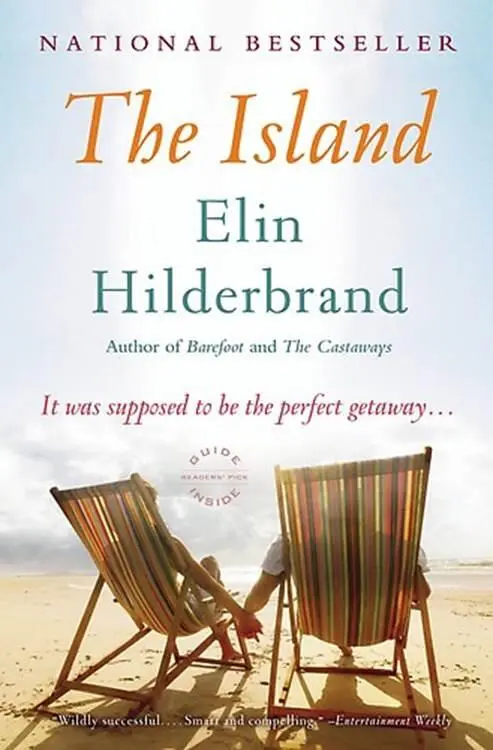
- Название:The Island
- Автор:
- Жанр:
- Год:неизвестен
- ISBN:нет данных
- Рейтинг книги:3 / 5. Голосов: 1
-
Избранное:Добавить в избранное
- Отзывы:
-
Ваша оценка:
The Island: краткое содержание, описание и аннотация
Предлагаем к чтению аннотацию, описание, краткое содержание или предисловие (зависит от того, что написал сам автор книги «The Island»). Если вы не нашли необходимую информацию о книге — напишите в комментариях, мы постараемся отыскать её.
It's only the first hint of what will be a summer of upheavals and revelations. Before the dust has even begun to settle, far worse news arrives, sending Chess into a tailspin of despair. Reluctantly taking a break from the first new romance she's embarked on since the recent end of her 30-year marriage, Birdie circles the wagons and enlists the help of her younger daughter Tate and her own sister India. Soon all four are headed for beautiful, rustic Tuckernuck Island, off the coast of Nantucket, where their family has summered for generations. No phones, no television, no grocery store – a place without distractions where they can escape their troubles.
But throw sisters, daughters, ex-lovers, and long-kept secrets onto a remote island, and what might sound like a peaceful getaway becomes much more. Before summer has ended, dramatic truths are uncovered, old loves are rekindled, and new loves make themselves known. It's a summertime story only Elin Hilderbrand can tell, filled with the heartache, laughter, and surprises that have made her page-turning, bestselling novels as much a part of summer as a long afternoon on a sunny beach.
The Island — читать онлайн бесплатно полную книгу (весь текст) целиком
Ниже представлен текст книги, разбитый по страницам. Система сохранения места последней прочитанной страницы, позволяет с удобством читать онлайн бесплатно книгу «The Island», без необходимости каждый раз заново искать на чём Вы остановились. Поставьте закладку, и сможете в любой момент перейти на страницу, на которой закончили чтение.
Интервал:
Закладка:
Her routine included rising late, picking at breakfast, writing down the pain, and indulging in some negative self-image.
To the beach, Chess wore her ill-fitting bikini, her stretched-out Diplomatic Immunity T-shirt, her army-surplus shorts, and her blue crocheted cap. She carried a towel, a book, and a bottle of water. She had decided she would read only the classics while on Tuckernuck, and so the two books she had brought were War and Peace and Vanity Fair. She had thought that because the books were set in olden times, the characters would have quaint, outdated problems. She started with War and Peace. She slogged through the war scenes, and she identified way too closely with the affairs of the heart suffered by Natasha. Reading War and Peace was alternately dull and painful. She should have brought something light and funny, but Chess didn’t like light and funny books; she liked deep and meaningful books, which, now, her psyche couldn’t handle.
As it turned out, this hardly mattered because after five or possibly ten minutes of reading, Tate interrupted her. “Jesus, Chess, all you do is read.” And Chess put her book down because Tate needed lotion rubbed into her back or Tate wanted to swim or Tate wanted to throw the Frisbee or Tate wanted to take a walk to see if she could identify any of the shorebirds from the book she was “reading,” which was the same flora and fauna guide she’d picked off the shelf the minute they arrived at the house. Being at the beach with Tate was like being at the beach with a five-year-old boy. She couldn’t sit still, she couldn’t be quiet. She wanted conversation, movement, activity. Chess was grateful when Birdie and India made their way down the steps with their upright chairs, carrying a small cooler with lunch, and a thermos of iced tea. Birdie and India wore one-piece suits and they both looked better than Chess looked in her bikini. Birdie and India now smoked like flappers, a discovery that had initially shocked Chess, then comforted her, because it was a self-destructive behavior that she had not indulged in (yet). Between cigarettes and smearing chunks of baguette with camembert, Birdie and India took turns entertaining Tate. They walked with her, they swam with her, and Aunt India even played Frisbee with her, throwing and catching quite adeptly with one hand while holding a cigarette in the other. This allowed Chess to stand at the water’s edge and throw rocks in the water, a symbolic exercise meant to lighten her load. Get rid of the heavy stuff, Robin had told her. At first, Chess assigned the rocks names: grief, guilt, eulogy, harness. And then she would throw the rock as far as she could. The act of throwing was therapeutic in and of itself; three dozen rocks left her exhausted. Aunt India started referring to this as Chess’s “shot-put practice,” but Chess was pretty sure India understood. Afterward, Chess would fall asleep in the sun.
Routine included five or ten minutes of tortured reading of classics, reluctant beach activity forced upon her by sister suffering from ADD, picking at prosciutto and butter sandwich wrapped in wax paper, “shot-put practice,” and nap.
They left the beach at three thirty, at which point they all took “showers.” Chess couldn’t abide the freezing cold water, and the soap didn’t adequately lather in it anyway, so all she got was a cursory rinse. Thankfully, she didn’t have to worry about her hair. After showering, Tate convinced Chess to take a “nature walk,” which ended up being a three-mile tramp across Tuckernuck on the dirt-and-gravel road. It was hot, there were mosquitoes and horseflies, and if she took one step off the path into the brush, she was standing in poison ivy, to which she was grossly allergic. Why did Tate insist on this hike when she had already run five miles that morning? There was no nature to be seen other than seagulls, which were as prevalent as rats in the Bastille sewer, and red-tailed hawks, one of which dive-bombed into the scrub a few yards in front of them and came up with a wriggling field mouse. Tate found this display thrilling, whereas Chess found it sad and disturbing. They walked past all the houses they recalled from childhood, including the “scary house,” which had been owned, in their grandparents’ day and maybe before, by Adeliza Coffin. Adeliza, the girls had been told, used to stand in front of her house with a shotgun, to scare off interlopers. She and her husband, Albert, were buried right there in the front yard; their gravestones jutted crookedly out of the ground like buckteeth. Out of habit, Tate and Chess hurried past the scary house with just a quick glance.
For the most part, the citizens of Tuckernuck were hearty, salty, happy-looking people, whose families had all owned their houses for two hundred years and who were all somehow distantly related.
“Life is good!” a gentleman wearing a tattered fishing hat called out to them.
And Tate, the ambassador, eagerly called back, “Life is good!”
“Life is good” was the accepted Tuckernuck greeting. It was a password. By calling out, “Life is good!” Tate was announcing that they belonged there, despite their thirteen-year absence.
The best part of Chess’s day was arriving home from the nature walk feeling sweaty and spent and sitting down at the picnic table with Birdie and Aunt India for a glass of wine. It was, officially, happy hour, Chess’s favorite time of day. This had always been the case, but it was especially true now. What did this say about her? Tate preferred the morning, as did their mother, when the day was new and filled with possibility. Chess, however, liked it when the day was done, morning and afternoon survived, and as her reward, she could sit down and have a glass of wine-which, because she’d eaten next to nothing, went straight to her head. Birdie set out dishes of Marcona almonds and smoked bluefish pâté with rosemary crackers, and although Chess had not had an appetite all day, she ate these snacks. This “happy hour” was only compromised when Barrett Lee joined them.
Barrett Lee made Chess uncomfortable, and not only because he was a member of the male species and as such was someone she should stay away from. She was uneasy around him because of their past, which included one ill-fated date here on Tuckernuck and one even more ill-fated road trip that Barrett Lee had taken the following autumn. Chess had treated him as badly as she had treated anyone in her life, Michael Morgan included. And even though Barrett had been nothing but friendly and kind since she arrived, she suspected it was an act. She had hurt him, and men didn’t forget things like that. Or maybe they did. Maybe Barrett had forgiven her; his life had certainly held bigger challenges than rejection by a recalcitrant college girl.
Chess had been surprised to hear that Barrett had lost his wife. In everyone else’s eyes, this made Barrett Lee a hero and a saint. Birdie and India treated him with kid gloves. And Tate, well, Tate wore her heart on her sleeve; it was easy to see how Tate felt. Chess wasn’t sure that losing someone you loved made you a hero or a saint. It turned you into a figure of pity; rising above the pity was what made you admirable. Barrett had risen above the pity. He had kids; he had to get on with it.
Chess had always known that Barrett was a worthy person. She knew his compass pointed true north; she knew he was made of finer stuff than she was. And that, perhaps, was what made Chess uncomfortable in Barrett’s presence.
Barrett only stayed for one beer. Tate and Birdie and India leaned toward him and asked the appropriate questions to keep Barrett talking. As six o’clock approached, the sun achieved a mellow slant and Barrett said, “Well, I should shove off. I have little mouths to feed.”
Читать дальшеИнтервал:
Закладка:
Похожие книги на «The Island»
Представляем Вашему вниманию похожие книги на «The Island» списком для выбора. Мы отобрали схожую по названию и смыслу литературу в надежде предоставить читателям больше вариантов отыскать новые, интересные, ещё непрочитанные произведения.



Обсуждение, отзывы о книге «The Island» и просто собственные мнения читателей. Оставьте ваши комментарии, напишите, что Вы думаете о произведении, его смысле или главных героях. Укажите что конкретно понравилось, а что нет, и почему Вы так считаете.