Павел Хюлле - Cold Sea Stories
Здесь есть возможность читать онлайн «Павел Хюлле - Cold Sea Stories» весь текст электронной книги совершенно бесплатно (целиком полную версию без сокращений). В некоторых случаях можно слушать аудио, скачать через торрент в формате fb2 и присутствует краткое содержание. Город: London, Год выпуска: 2012, ISBN: 2012, Издательство: Comma Press, Жанр: Современная проза, на английском языке. Описание произведения, (предисловие) а так же отзывы посетителей доступны на портале библиотеки ЛибКат.
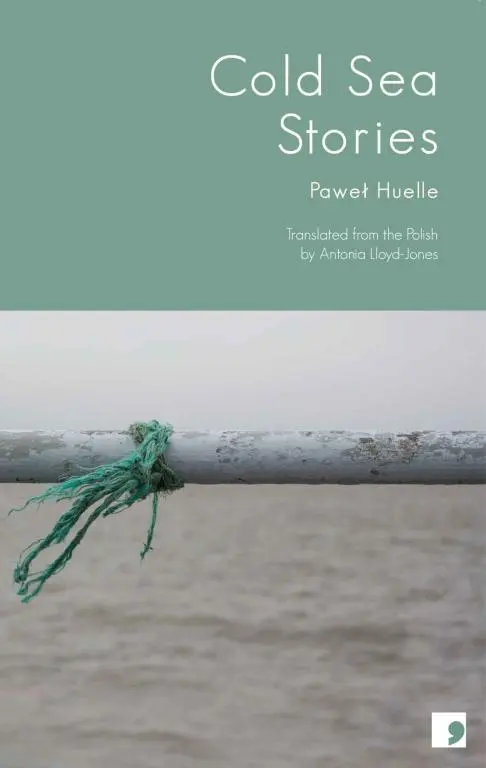
- Название:Cold Sea Stories
- Автор:
- Издательство:Comma Press
- Жанр:
- Год:2012
- Город:London
- ISBN:978-1-905-58339-3
- Рейтинг книги:3 / 5. Голосов: 1
-
Избранное:Добавить в избранное
- Отзывы:
-
Ваша оценка:
Cold Sea Stories: краткое содержание, описание и аннотация
Предлагаем к чтению аннотацию, описание, краткое содержание или предисловие (зависит от того, что написал сам автор книги «Cold Sea Stories»). Если вы не нашли необходимую информацию о книге — напишите в комментариях, мы постараемся отыскать её.
A shepherd watches, unseen, as a strange figure disembarks from a pirate ship anchored in the cove below, to bury a chest on the beach that later proves empty…
A prisoner in a Berber dungeon recounts his life’s story – the failed pursuit of the world’s very first language – by scrawling in the sand on his cell floor…
The characters in Paweł Huelle’s mesmerising stories find themselves, willingly or not, at the heart of epic narratives; legends and histories that stretch far beyond the limits of their own lives. Against the backdrop of the Baltic coast, mythology and meteorology mix with the inexorable tide of political change: Kashubian folklore, Chinese mysticism and mediaeval scholarship butt up against the war in Chechnya, 9-11, and the struggle for Polish independence.
Central to Huelle’s imagery is the vision of the refugee – be it the Chechen woman carrying her newborn child across the Polish border (her face emblazoned on every TV screen), the survivor of the Gulag re-appearing on his friends’ doorstep, years after being presumed dead, or the stranger who befriends the sole resident of a ghostly Mennonite village in the final days of the Second World War. Each refugee carries a clue, it seems, or is in possession or pursuit of some mysterious text or book, knowing that only it – like the Chinese ‘Book of Changes’ – can decode their story. What we do with this text, this clue, Huelle seems to say, is up to us.
Independent Foreign Fiction Prize Nominee for Longlist (2013)
Cold Sea Stories — читать онлайн бесплатно полную книгу (весь текст) целиком
Ниже представлен текст книги, разбитый по страницам. Система сохранения места последней прочитанной страницы, позволяет с удобством читать онлайн бесплатно книгу «Cold Sea Stories», без необходимости каждый раз заново искать на чём Вы остановились. Поставьте закладку, и сможете в любой момент перейти на страницу, на которой закончили чтение.
Интервал:
Закладка:
‘My God, like the Pope.’
‘There’s not much I can do about it.’
This time they both burst out laughing.
‘I’m here to collect something that belonged to my father.’
‘Was he an émigré?’
‘He was on a work placement. Long ago.’
‘You must think I’m a madwoman. Were you eavesdropping?’
‘Yes.’
‘Why?’
‘I wanted to hear you singing again.’
‘Did you like it?’
‘Very much.’
‘Do you know what it was?’
‘The Magnificat .’
‘For Luigi. I am a madwoman. I don’t love him anymore, but I still pursue him. Bishop Luigi. Do you see?’
‘Not entirely. Is he a Catholic bishop?’
‘The youngest one at the Vatican. He was promoted thanks to his uncle who is a cardinal. The old Roman family of the princes of Conti. I’m a Roman too, but so what? He dropped me like an old shirt. Can you imagine it? Purely because I fell pregnant he ran away in terror to the seminary. It was just after high-school graduation. I thought it would pass, he’d get bored, but no – he stuck it out and became a priest. And straight after that a bishop! Men are such monsters! I’m thinking of Italian men, but in your country, in Poland, you’re probably just the same, right?’
‘Even worse.’
She wasn’t sure if he was joking. But when she saw his smiling face, she immediately added: ‘No men are worse than the Italians.’
And straight after that confession, as if urged on by some inner compulsion, she quickly began to tell her story.
‘I promised myself I would never let him get away with it. Even if he becomes a cardinal. At every church he enters for his apostolic visitations he must reckon with danger! In Milan – that was the first time – he almost fainted when he saw me in a side alcove by the altar. I always disguise myself as a statue. Baroque, Renaissance, Gothic – it’s all everyday fare for me. He recognised my face and went pale. Perhaps he thought he was seeing things? He was so horrified he furtively looked up from the pages of the Bible a few times, as if trying to break my spell. But there I stood, stock still – a Madonna carrying a child wrapped in cloth. When Vanessa started crying,’ she rambled, ‘I put her down at my feet and began to sing the Magnificat for Luigi. I threw off my robes as I did so, until they dragged me out of there. You get the idea?’
He nodded understandingly and poured more champagne.
‘Do you often do that?’
‘Every time Luigi is on a visitation. Padua, Verona, Pesaro, Einsiedeln, Freiburg, Munich, Regensburg. I can’t even remember all the places anymore. I’ve had three sentences already. I served two of them. They wanted to give me money. I declared that I shall only stop when my love dies out.’
‘Just now you said it had.’
‘Yes, but I can’t get out of the habit. When I see that same horror and astonishment in his eyes at the fact that I have succeeded once again, I feel as if I’ve grown wings. Luigi stupido ! I always shout that as they cart me off to the police car.’
‘And tomorrow?’
‘Tomorrow Luigi is to say mass at the Liebfrauenkirche. I’ll be disguised as an old woman. And underneath I’ll have my Madonna’s robes. Before they arrest me I’ll have time to sing the opening bars of the Magnificat and throw off my clothes.’
‘Do you bare yourself completely?’
‘Yes. Only then do my performances have meaning.’
‘May I come along tomorrow?’
‘Of course,’ she laughed loud, ‘the performance is free, especially for Poles!’
They heard a noise coming from the hotel corridor. Several drunken voices were shouting over each other in Russian. Luggage banged against the door of the room.
‘You’re very patient,’ she said, putting down her glass. ‘You didn’t interrupt me once. And you don’t talk about yourself. But men love to do that. When we were together, Luigi used to spend hours expatiating on the sufferings of his soul. I don’t know anything about you.’
‘I have spent my life in a different world,’ he said slowly, as if having trouble finding the right words, ‘and it wasn’t at all interesting.’
‘There is always a story to be told,’ she said, looking him straight in the eyes, ‘even if a person spends his whole life sitting in one room staring out of the same window all the time.’
‘We thought we were fighting for something,’ he replied after a pause. ‘But in fact we were totally dependent on our jailers. Even when they were gone we could talk about nothing else. Can you understand that?’
‘Perfectly.’
But when a little later he said: ‘Thank you very much,’ and disappeared into the wall, closing the cupboard door carefully behind him, he wasn’t at all sure if she had really understood him. Some fifteen years after the regime collapsed, people in his country were still very keen to talk about who had informed on whom and who was, or was not, a secret agent for the political police.
A few months after his arrest, their father had suddenly appeared in the courtyard. He was walking at a slow, lumbering pace, bowing his head as if afraid of being hit. Zielonka had blocked his way and screamed: ‘Well, how was it there, Mr Engineer? Did they teach you some respect?’
Their father went past him and entered the staircase in complete silence, which later on, in the flat, once he had taken a shower and eaten supper, weighed upon the entire family. Immersed in his own thoughts as if in a labyrinth, he refused to answer any of their mother’s questions.
At the time he was sure his father did not want to talk in front of him and his brother, and was keeping silent – as had often happened in the past – just because of the children. But once they were lying in their beds, listening to every sound from their parents’ room, the only thing they could hear was their mother, calling louder and louder: ‘Why won’t you tell me anything? Say something, for goodness sake! Talk to me!’ Then they heard his loud snoring, which seemed funny to them, as he had never suffered from that affliction before. Meanwhile their mother got up several times and clattered about in the kitchen, looking for pills and pouring herself water. Their father’s silence went on for several weeks, during which he took his meals apathetically and lay on the sofa bed, staring at the ceiling. He didn’t read any newspapers or books, and didn’t even listen to the radio. Finally he got up, drank a cup of raspberry tea and left the flat in nothing but a jacket – the very one he had brought back from Zurich. Its woollen, slightly too baggy tails flapped in the wind beneath the spreading crown of that great oak at the foot of the defunct railway line embankment, from which their father hanged himself.
Grandmother Maria discreetly sent them money, their mother found an office job at the municipal sewage company, and the silence in their flat seemed to linger on, like an invisible tent pitched above them.
He no longer enjoyed playing games with his brother. The Märklin electric railway set reminded them too much of their father. Whereas at night, once everyone was asleep, he would slip out of the house and down to the old railway embankment, where the Great Conductor would be waiting for him with his block of tickets and a shiny puncher for making holes in them. In his hands he held a thick, bulky book. It was the universal timetable for all possible railway lines. He admired the Great Conductor’s subtle, almost alchemic art of finding connections, transfers and return concession fares: under his finger and his gaze the dumb list of figures and symbols suddenly came to life, like the promise of a great journey which was actually fulfilled as soon as – after a short discussion – they had boarded the rather antiquated carriage smelling of soot, steam and the old plush covers of the first-class seats. He would come home before dawn, quickly get into bed and fall asleep almost immediately, then dream of the memorised landscapes, deserts, mountains, cities, river bends and waterfalls.
Читать дальшеИнтервал:
Закладка:
Похожие книги на «Cold Sea Stories»
Представляем Вашему вниманию похожие книги на «Cold Sea Stories» списком для выбора. Мы отобрали схожую по названию и смыслу литературу в надежде предоставить читателям больше вариантов отыскать новые, интересные, ещё непрочитанные произведения.



Обсуждение, отзывы о книге «Cold Sea Stories» и просто собственные мнения читателей. Оставьте ваши комментарии, напишите, что Вы думаете о произведении, его смысле или главных героях. Укажите что конкретно понравилось, а что нет, и почему Вы так считаете.