Павел Хюлле - Cold Sea Stories
Здесь есть возможность читать онлайн «Павел Хюлле - Cold Sea Stories» весь текст электронной книги совершенно бесплатно (целиком полную версию без сокращений). В некоторых случаях можно слушать аудио, скачать через торрент в формате fb2 и присутствует краткое содержание. Город: London, Год выпуска: 2012, ISBN: 2012, Издательство: Comma Press, Жанр: Современная проза, на английском языке. Описание произведения, (предисловие) а так же отзывы посетителей доступны на портале библиотеки ЛибКат.
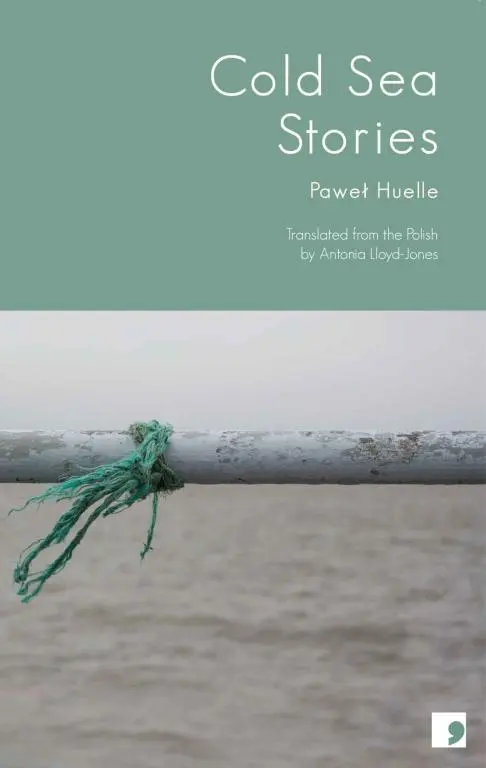
- Название:Cold Sea Stories
- Автор:
- Издательство:Comma Press
- Жанр:
- Год:2012
- Город:London
- ISBN:978-1-905-58339-3
- Рейтинг книги:3 / 5. Голосов: 1
-
Избранное:Добавить в избранное
- Отзывы:
-
Ваша оценка:
Cold Sea Stories: краткое содержание, описание и аннотация
Предлагаем к чтению аннотацию, описание, краткое содержание или предисловие (зависит от того, что написал сам автор книги «Cold Sea Stories»). Если вы не нашли необходимую информацию о книге — напишите в комментариях, мы постараемся отыскать её.
A shepherd watches, unseen, as a strange figure disembarks from a pirate ship anchored in the cove below, to bury a chest on the beach that later proves empty…
A prisoner in a Berber dungeon recounts his life’s story – the failed pursuit of the world’s very first language – by scrawling in the sand on his cell floor…
The characters in Paweł Huelle’s mesmerising stories find themselves, willingly or not, at the heart of epic narratives; legends and histories that stretch far beyond the limits of their own lives. Against the backdrop of the Baltic coast, mythology and meteorology mix with the inexorable tide of political change: Kashubian folklore, Chinese mysticism and mediaeval scholarship butt up against the war in Chechnya, 9-11, and the struggle for Polish independence.
Central to Huelle’s imagery is the vision of the refugee – be it the Chechen woman carrying her newborn child across the Polish border (her face emblazoned on every TV screen), the survivor of the Gulag re-appearing on his friends’ doorstep, years after being presumed dead, or the stranger who befriends the sole resident of a ghostly Mennonite village in the final days of the Second World War. Each refugee carries a clue, it seems, or is in possession or pursuit of some mysterious text or book, knowing that only it – like the Chinese ‘Book of Changes’ – can decode their story. What we do with this text, this clue, Huelle seems to say, is up to us.
Independent Foreign Fiction Prize Nominee for Longlist (2013)
Cold Sea Stories — читать онлайн бесплатно полную книгу (весь текст) целиком
Ниже представлен текст книги, разбитый по страницам. Система сохранения места последней прочитанной страницы, позволяет с удобством читать онлайн бесплатно книгу «Cold Sea Stories», без необходимости каждый раз заново искать на чём Вы остановились. Поставьте закладку, и сможете в любой момент перейти на страницу, на которой закончили чтение.
Интервал:
Закладка:
Cautiously, to be sure not to damage anything, they laid out the complicated system of tracks under their father’s watchful eye: long straight pieces, bends, points, signals, as well as mountain tunnels, station buildings and viaducts. When they finally switched on the transformer and the goods train with the steam locomotive set off on its first run, while at the same time, from the same station, the international express marked Geneva-Ostend moved off in the other direction, their delight was boundless.
The Märklin models were made to perfection. Examined under a magnifying glass, the buffers, the little ladder, the springs, wheels or headlamps were like perfect prototypes for real train parts. They were especially thrilled by the express train’s central sleeping car. Through one little window with the curtains open, they could see an unfolded bed, a night lamp on a little table, and a lady and a gentleman drinking tea at it. They were wearing patterned dressing-gowns and evidently belonged to a different, better world.
Both trains sped up and slowed down in response to a turn of the transformer knob. On the sharp bends they had to slow down to at least second gear, otherwise the trains fell off the tracks.
‘Seven more circuits to Paris,’ said Grandmother Maria.
They believed her. Before the war, before Poland was cut off from Europe by the Iron Curtain, she had travelled a lot.
‘And what about to Ostend?’ he and his brother asked simultaneously.
‘Twice as many times, but don’t go speeding onto the beach!’
As they leaned over the little coaches and changed the points at the right moments, holding back now one, now the other train at the signal, they hardly took any notice of the adults’ conversation.
‘Now perhaps they’ll let people go abroad,’ said Grandmother Maria.
‘A three-month placement doesn’t make a spring. Of course I’m pleased,’ replied his father, ‘I couldn’t have dreamed of such a thing only a couple of years ago. The moustachioed monster had us locked in a cage.’
‘With the whole world’s consent,’ added his mother, ‘don’t forget.’
‘It was strange,’ he said, ignoring her remark, ‘as I walked along Bahnhofstrasse in Zurich, apart from trolleybuses I saw nothing but signs announcing banks. And in the canteen at Zulzer’s, where I was employed, the workers ate the same dinner as the managers. Can you imagine that here? The shipyard manager eating with a welder? Unmöglich! ’ [2] ‘Impossible’ [German].
‘There it’s möglich , here it’s unmöglich ,’ replied Grandmother Maria.
The boys associated the moustachioed monster with Antoni Zielonka, the caretaker at their apartment house. He smelled of shag, spirits and sweat. He was always insulting them for being intelligentsia. He especially hated their father, whose bow he never deigned to return.
‘You’re only fit for the camps,’ he would occasionally shout, shaking his fist at their windows. ‘Off to Solovki with you! You should be exterminated!’
So they packed Zielonka the janitor into the refrigerator car and transported him to Siberia. Twenty-four circuits.
‘Maybe even further?’ asked his brother.
‘What do you mean?’ he replied. ‘We’ve got to get home, haven’t we?’
Their father showed them how to disconnect the tracks without damaging the joints. The coaches were put away in special slots in their boxes.
‘Look after it,’ he said, ‘an opportunity like this one might not come along a second time.’
Now as he looked at the display, almost forty years on, he remembered that very remark. It was prophetic: his father had never been given another passport after that, and had never brought back such a wonderful toy from any distant journey; the Swiss electric railway beat the East German Piko trains, the Soviet young engineer’s set, the Czech little doctor’s set and the Polish model aeroplane kits into the ground.
As he walked across the square towards the hotel, he remembered another thing too: at the time, as well as the railway set, their father had presented them with a fat tome in a soft, black shiny cover, similar in shape to a school exercise book. It was the catalogue for Franz Carl Weber’s store, the only one in the world that sold nothing but toys. On autumn and winter nights in particular, when for economic reasons or because of anti-aircraft exercises the lights were switched off all over town, he and his brother would sit at the kitchen table over a candle stump, slowly and reverently turning the thin pages.
They had no doubt that this book comprised a list of all the toys in the world. The black-and-white photographs of them, with short descriptions, filled three hundred and sixty-four pages. With great appreciation, first they examined the cranes, diggers, lorries and bulldozers, then moved on to a more interesting section: passenger limousines. Here particular emotions were stirred by the Opel Kapitän, and utter delight by the Porsche sports model. Yet the most important bit of The Book, as they pored over it in adoration by candlelight, was the world of railways.
Steam trains, electric trains, diesel locomotives, dozens of varieties of passenger coaches, special mountain rolling stock, and all possible configurations of goods trains filled their imagination, not just with the clatter of wheels, the lights of signals and the whistle of locomotives. Over this entire world of stations, timetables, signal boxes, tunnels and viaducts there floated a veil of mystery. They did not realise at the time that it was a yearning for a distant journey that would change their lives. As they pored over the mail-order catalogue from Franz Carl Weber’s toy store, they sensed that one day they would simply set off into the great wide world, and that what they were doing now, leaning over the printed pages in the flickering candlelight, was merely preparation.
When he got back to the hotel, he was greeted at the reception desk by two gentlemen who looked like twins and introduced themselves as Hugin and Munin – the former was Peter, the latter Paul, as they informed him in the bar, where the three men sat down together.
He was unable to conceal his surprise when Hugin put a photograph on the table, taken a few hours earlier at the main station, and Munin claimed in a confident tone, ‘We know you had never met her before, but she may have revealed something to you.’
‘She said nothing remarkable,’ he muttered reluctantly, as he gazed at the photograph, in which he was handing his beautiful fellow passenger her case, ‘and anyway, what is this about? Am I being accused of something?’
‘You soon may be,’ said Munin gruffly.
Before he had a chance to react to this incredible impudence, Hugin whispered almost ingratiatingly: ‘If we ask for your discreet cooperation, it is because this woman’ – he tapped a finger on the photograph – ‘is a particularly dangerous terrorist.’ Hugin gave a friendly smile, at which Munin immediately hissed: ‘There’s no joking, any detail might be important to us. Did she talk to anyone on her mobile phone? Did she send any text messages?’
He looked at Munin, then at Hugin with sincere doubt.
‘If she really is a terrorist, there can be no texts or conversations you aren’t already aware of. Why are you questioning me?’
‘She is a terrorist in a special sense of the word,’ said Munin.
‘A very special one,’ added Hugin.
‘She might have confided something,’ Munin continued, ‘which in your view is not of the least significance, but as we have known her for years, we are perfectly aware that in a conversation with a stranger she can sometimes say something about her plans.’
‘Unwittingly,’ put in Hugin.
Читать дальшеИнтервал:
Закладка:
Похожие книги на «Cold Sea Stories»
Представляем Вашему вниманию похожие книги на «Cold Sea Stories» списком для выбора. Мы отобрали схожую по названию и смыслу литературу в надежде предоставить читателям больше вариантов отыскать новые, интересные, ещё непрочитанные произведения.




Обсуждение, отзывы о книге «Cold Sea Stories» и просто собственные мнения читателей. Оставьте ваши комментарии, напишите, что Вы думаете о произведении, его смысле или главных героях. Укажите что конкретно понравилось, а что нет, и почему Вы так считаете.