Павел Хюлле - Cold Sea Stories
Здесь есть возможность читать онлайн «Павел Хюлле - Cold Sea Stories» весь текст электронной книги совершенно бесплатно (целиком полную версию без сокращений). В некоторых случаях можно слушать аудио, скачать через торрент в формате fb2 и присутствует краткое содержание. Город: London, Год выпуска: 2012, ISBN: 2012, Издательство: Comma Press, Жанр: Современная проза, на английском языке. Описание произведения, (предисловие) а так же отзывы посетителей доступны на портале библиотеки ЛибКат.
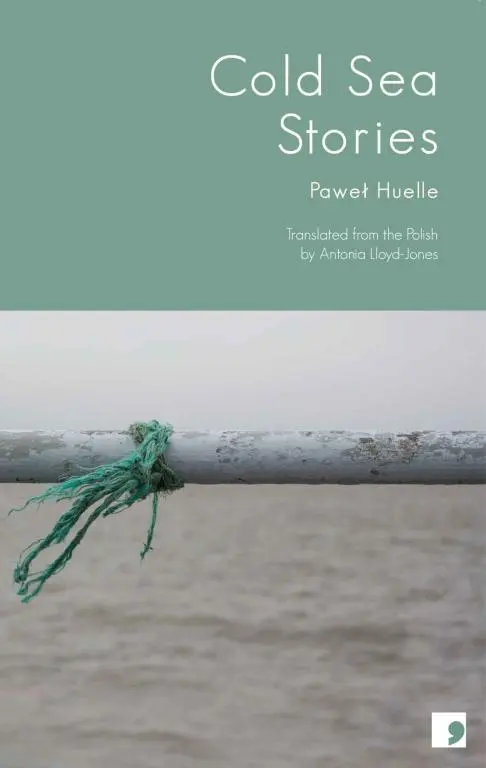
- Название:Cold Sea Stories
- Автор:
- Издательство:Comma Press
- Жанр:
- Год:2012
- Город:London
- ISBN:978-1-905-58339-3
- Рейтинг книги:3 / 5. Голосов: 1
-
Избранное:Добавить в избранное
- Отзывы:
-
Ваша оценка:
Cold Sea Stories: краткое содержание, описание и аннотация
Предлагаем к чтению аннотацию, описание, краткое содержание или предисловие (зависит от того, что написал сам автор книги «Cold Sea Stories»). Если вы не нашли необходимую информацию о книге — напишите в комментариях, мы постараемся отыскать её.
A shepherd watches, unseen, as a strange figure disembarks from a pirate ship anchored in the cove below, to bury a chest on the beach that later proves empty…
A prisoner in a Berber dungeon recounts his life’s story – the failed pursuit of the world’s very first language – by scrawling in the sand on his cell floor…
The characters in Paweł Huelle’s mesmerising stories find themselves, willingly or not, at the heart of epic narratives; legends and histories that stretch far beyond the limits of their own lives. Against the backdrop of the Baltic coast, mythology and meteorology mix with the inexorable tide of political change: Kashubian folklore, Chinese mysticism and mediaeval scholarship butt up against the war in Chechnya, 9-11, and the struggle for Polish independence.
Central to Huelle’s imagery is the vision of the refugee – be it the Chechen woman carrying her newborn child across the Polish border (her face emblazoned on every TV screen), the survivor of the Gulag re-appearing on his friends’ doorstep, years after being presumed dead, or the stranger who befriends the sole resident of a ghostly Mennonite village in the final days of the Second World War. Each refugee carries a clue, it seems, or is in possession or pursuit of some mysterious text or book, knowing that only it – like the Chinese ‘Book of Changes’ – can decode their story. What we do with this text, this clue, Huelle seems to say, is up to us.
Independent Foreign Fiction Prize Nominee for Longlist (2013)
Cold Sea Stories — читать онлайн бесплатно полную книгу (весь текст) целиком
Ниже представлен текст книги, разбитый по страницам. Система сохранения места последней прочитанной страницы, позволяет с удобством читать онлайн бесплатно книгу «Cold Sea Stories», без необходимости каждый раз заново искать на чём Вы остановились. Поставьте закладку, и сможете в любой момент перейти на страницу, на которой закончили чтение.
Интервал:
Закладка:
‘Exactly,’ agreed Munin. ‘For instance that tomorrow she would be performing. Didn’t she say anything like that?’
‘No. She just asked how to get to the hotel. Can you please explain what this is about?’
‘Not just yet,’ said the plainly disappointed Munin. ‘But in any case, we would be grateful for your discretion. For understandable reasons.’
‘If she were to accost you in the corridor, let’s say, or at breakfast in the restaurant,’ said Munin, handing him a business card on which there was nothing but a phone number, ‘if she were to say anything at all, please call, alright?’
‘But you are not from the police,’ he stated confidently, ‘are you? What strange machinations. Perhaps I should actually call the police? I am a foreigner here and I came on business. I don’t want any trouble.’
After saying this, he stood up and headed for the lift without looking behind him. On the third floor, as he was walking down the corridor to his room, he saw the stranger. She was walking towards him, dressed in a blue coat and a lovely, old-fashioned pillbox hat.
‘Excuse me,’ he said almost in a whisper. ‘Please be careful. I was stopped downstairs by two fellows, I think they’re detectives. They questioned me. At the station, as I was handing you your case, they took our picture.’
‘Really?’ She did not look surprised. ‘And what did you tell them?’
‘Nothing. I told them to get off my back. After all, I don’t know you in the least.’
‘Thank you,’ she said, ‘it’s very kind of you. Please don’t let it bother you. They probably said I’m a terrorist.’
‘Yes, how did you guess?’
‘Because I know them. Luigi hired them. I wonder how they introduced themselves?’
‘Hugin and Munin, Peter and Paul, or maybe vice versa.’
She giggled. As she walked off to the lift, she waved to him and loudly added: ‘You can sleep in peace. I don’t plant bombs!’
Standing behind the open drapes he saw the stranger through the window, getting into a taxi in the hotel forecourt. Moments later, Herr Hugin and Herr Munin were piling into the next one. Only now did he notice that he could see the neon sign for Franz Carl Weber’s toy store from this window. He decided that tomorrow, on his way back from the Rossets’ office, he would drop in there and inspect the model trains. He wouldn’t buy anything – his son was already over twenty – but he would certainly ask for a catalogue.
It would be an extraordinary thing, he thought, if at one of the counters I were to find an express train set, just the same as the one my brother and I drove so many times from Geneva to Ostend, though it was rather unlikely: since that era, long ago, everything had undergone radical changes, including the outside appearance of passenger and sleeping cars.
He was the sort of person on whom travel fatigue and new impressions do not have a soporific effect, but quite the opposite, and now, in a state of extreme tension, he could not get to sleep. After a shower, as he lay on his back in the comfortable bed, idiotic thoughts kept coming into his head. For instance, if Sebastian Rosset were to throw up his hands tomorrow and say that unfortunately he wasn’t going to pay him the money because some scrap of paper was missing, would he stay here a couple more days, or leave Zurich and Switzerland at once? Or if Herr Hugin and Herr Munin were to force their way into his room right now and subject him to elaborate tortures in the bathroom, for how long would he protect the stranger from the other side of the wall by concocting some ad hoc fibs?
Her scent was strong, but also had something very subtle about it, which reminded him of Grandmother Maria’s garden in the south of Poland. On August days, intense with light and heat, the odour of some plants, especially the flowers, hung around the solid block of the house like an invisible cloud, and towards evening, when its sun-warmed stonework began to return the warmth to its surroundings, those invisible waves of strong fragrance would float into the sitting room through the open windows, the large doors onto the veranda and the glass walls of the conservatory almost fully unfolded. That was why, as he now realised, his fellow passenger had instantly seemed close to him. However, although he very much wanted to, he couldn’t remember the actual name and species of flowers whose scent was the main ingredient of her perfume. Phlox? Wild rose? Carnation? Definitely not lily-of-the-valley, because those flowers bloom in spring, and he was only ever at the house in the south in summer, during the school holidays.
Briefly, under his closed eyelids he saw her figure amid a broad strip of irises. She had a sari flung about her. Just then in the garden an oriole began to sing, and turning towards the bird, the stranger let the floaty white fabric fall to the lawn.
He lit a cigarette and extracted a small bottle of claret from the mini-bar. If her naked body looked like that in reality, he thought, as he went back to bed with a glass of wine, she is quite simply beautiful. Extremely beautiful.
But he did not want to surrender his imagination to the mercy of unrealistic sexual desires. He tried to think about anything else. It wasn’t easy. For a while longer her face, reflected in the train carriage window, continued to tempt him with the shape of her brightly painted lips. Only a little later did he manage to summon up a different image from his memory: he and his brother were sitting on the floor of their small bedroom, amid railway tracks, stations and junctions. His brother opened the world atlas on his knees and announced: ‘Chile, highest railway line in the world. Thirty-six tunnels, fifty-three viaducts. Let’s go across the Andes! All aboooard, we’re off!’
With the aid of a compass and ruler they calculated the length of the route, and then painstakingly divided it into the number of circuits. They already had Africa under their belts, numerous journeys to Istanbul, the Trans-Siberian line from tsarist times, the route from London to Edinburgh, and also a long journey across the prairies on the United Pacific line.
They would ask each other questions on their knowledge of the routes: Next city? Regional capital? The river we’re just about to cross? Name of the lake? Highest peak in the mountain range?
For hours on end they were utterly absorbed. Sometimes their father would quietly enter the room and watch their journeys for ages without being noticed. Then he would gently say: ‘Time for bed, you can travel onwards tomorrow.’
Sometimes they awoke at night, and in silent agreement, without a word they would lay out the tracks, to ride across the Asian jungle or the African savannah by the light of a few well-positioned candles. Wild animals would come up to the tracks, and the brilliance of the speeding express would be reflected in their eyes. The boys were happy, though they only understood that years later.
When several men in long overcoats took their father from the flat late one evening, the moon was shining over the woods and above the roof of their house at the edge of the suburbs.
Their mother left them on their own. She had to go to the neighbour’s house, where there was a phone. They did not set out the tracks, but lay in their beds, paralysed by fear, until sleep came. Awoken in the middle of the night, he heard his brother’s regular breathing and saw the pale light of the moon breaking through the thin curtain. Quietly he went into the hall and put on his shoes, sweater and jacket. A light was still on in the janitor’s flat on the ground floor, and through the exposed window he caught sight of that guardian of the proletariat, leaning over a newspaper. He was dozing with his elbows propped on the kitchen table, when his wife came in from the living room. The ugly, wrinkled woman flicked a dishcloth at the janitor’s egg-shaped, bald head to punish him for some offence or other. He shooed her away like a fly, then finally got up, straightened his string vest, seized his wife by the throat and picked her up like a rag doll before disappearing into the depths of the flat. Perhaps he would have remained at their window a little longer, amazed at the sight of these people tormented by hatred, but the whistle of a locomotive summoned him away from the courtyard, a sound he had never heard here before.
Читать дальшеИнтервал:
Закладка:
Похожие книги на «Cold Sea Stories»
Представляем Вашему вниманию похожие книги на «Cold Sea Stories» списком для выбора. Мы отобрали схожую по названию и смыслу литературу в надежде предоставить читателям больше вариантов отыскать новые, интересные, ещё непрочитанные произведения.







Обсуждение, отзывы о книге «Cold Sea Stories» и просто собственные мнения читателей. Оставьте ваши комментарии, напишите, что Вы думаете о произведении, его смысле или главных героях. Укажите что конкретно понравилось, а что нет, и почему Вы так считаете.