Павел Хюлле - Cold Sea Stories
Здесь есть возможность читать онлайн «Павел Хюлле - Cold Sea Stories» весь текст электронной книги совершенно бесплатно (целиком полную версию без сокращений). В некоторых случаях можно слушать аудио, скачать через торрент в формате fb2 и присутствует краткое содержание. Город: London, Год выпуска: 2012, ISBN: 2012, Издательство: Comma Press, Жанр: Современная проза, на английском языке. Описание произведения, (предисловие) а так же отзывы посетителей доступны на портале библиотеки ЛибКат.
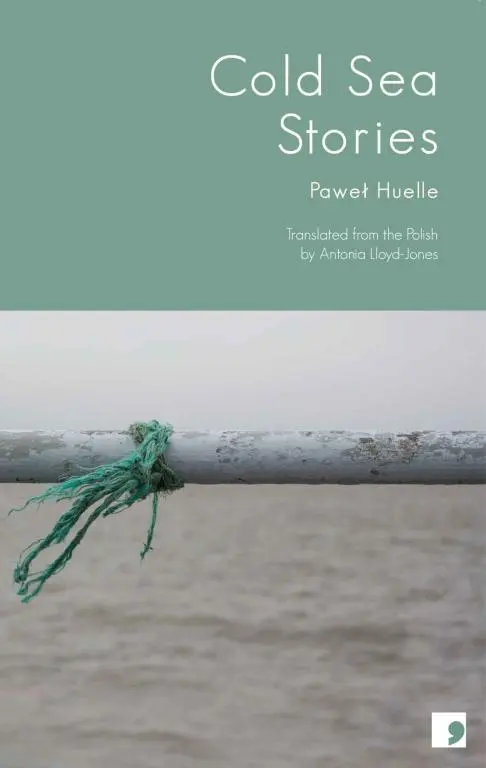
- Название:Cold Sea Stories
- Автор:
- Издательство:Comma Press
- Жанр:
- Год:2012
- Город:London
- ISBN:978-1-905-58339-3
- Рейтинг книги:3 / 5. Голосов: 1
-
Избранное:Добавить в избранное
- Отзывы:
-
Ваша оценка:
Cold Sea Stories: краткое содержание, описание и аннотация
Предлагаем к чтению аннотацию, описание, краткое содержание или предисловие (зависит от того, что написал сам автор книги «Cold Sea Stories»). Если вы не нашли необходимую информацию о книге — напишите в комментариях, мы постараемся отыскать её.
A shepherd watches, unseen, as a strange figure disembarks from a pirate ship anchored in the cove below, to bury a chest on the beach that later proves empty…
A prisoner in a Berber dungeon recounts his life’s story – the failed pursuit of the world’s very first language – by scrawling in the sand on his cell floor…
The characters in Paweł Huelle’s mesmerising stories find themselves, willingly or not, at the heart of epic narratives; legends and histories that stretch far beyond the limits of their own lives. Against the backdrop of the Baltic coast, mythology and meteorology mix with the inexorable tide of political change: Kashubian folklore, Chinese mysticism and mediaeval scholarship butt up against the war in Chechnya, 9-11, and the struggle for Polish independence.
Central to Huelle’s imagery is the vision of the refugee – be it the Chechen woman carrying her newborn child across the Polish border (her face emblazoned on every TV screen), the survivor of the Gulag re-appearing on his friends’ doorstep, years after being presumed dead, or the stranger who befriends the sole resident of a ghostly Mennonite village in the final days of the Second World War. Each refugee carries a clue, it seems, or is in possession or pursuit of some mysterious text or book, knowing that only it – like the Chinese ‘Book of Changes’ – can decode their story. What we do with this text, this clue, Huelle seems to say, is up to us.
Independent Foreign Fiction Prize Nominee for Longlist (2013)
Cold Sea Stories — читать онлайн бесплатно полную книгу (весь текст) целиком
Ниже представлен текст книги, разбитый по страницам. Система сохранения места последней прочитанной страницы, позволяет с удобством читать онлайн бесплатно книгу «Cold Sea Stories», без необходимости каждый раз заново искать на чём Вы остановились. Поставьте закладку, и сможете в любой момент перейти на страницу, на которой закончили чтение.
Интервал:
Закладка:
Their house stood not far from a defunct railway line. The bridges blown up by the Germans, which he and his brother used to climb as if they were rocks, the sleepers overgrown with moss and the tracks gone rusty amid the ferns had always attracted him with hypnotic force, and yet now, as he clambered up the steep slope of the embankment, he felt genuine fear. He wasn’t dreaming, though what he was seeing was totally unreal. Coupled onto a locomotive, which was puffing out steam, was a single carriage with a row of doors along its entire length.
‘Are you getting on board?’ said a low-pitched voice right beside him. ‘We’re off in a minute.’
At the sight of the uniformed conductor, holding a torch in one hand and a block of tickets in the other, he mustered his courage.
‘Where are you going?’ he asked.
‘Wherever you like. This is your train.’
‘But how will I get home?’
‘On a circuit you always end up at home again.’
He let himself be persuaded. Once he was sitting on a hard, wooden bench, he saw the conductor jumping onto the carriage steps: he gave a signal with the torch and put to his lips the whistle that was hanging round his neck. They moved off with a slight jerk, but the carriage rolled along smoothly for the next few metres, picking up speed. He didn’t even notice when they drove into a tunnel. On the other side it was already day. The flood of bright light made him squint, but once his eyes had got used to it and finally took in their surroundings, he almost cried out in delight. They were travelling along a sandy riverbank, across meadows and scattered copses. Here and there sheep, horses and cows were grazing. Over the water, on the other side, rose a chain of majestic mountains. There were eye-catching villages and towns lying in the valleys, with stone churchtowers, a patchwork of red roofs, and avenues of trees. The vineyards and orchards were full of lively activity as people with baskets on their backs busied themselves among the greenery like hard-working beetles. Cargo ships were sailing up and down the river. A little girl waved to them from the deck. Far away, on some of the peaks, fortified castles lurked below the snow line. He had once seen a similar landscape on an old postcard.
‘Is that the Rhine?’ he asked the conductor.
‘No,’ he replied, looking up from the book he was browsing, ‘it’s the river of all rivers.’
‘I don’t understand that. Please can you explain?’
‘One day you will. Today I’ll just tell you this: each thing in this world has its prototype. Take my whistle, for example: there are millions of whistles – ones for scouts, for sportsmen, policemen, or ones like mine, for conductors. You see?’
He nodded.
‘They’re similar to each other, yet different. But all of them without exception must have had their original model. This is one of them. It contains the features of all the others.’
‘Do you mean a blueprint?’
‘More or less.’
‘So this river…?’
‘Is the model for all the other rivers in existence.’
‘But on our river there are no mountains or vineyards!’
‘That’s right, but look at the riverbank. Sand and meadows. Even some willow trees. Doesn’t that remind you of something?’
Indeed it did. But it was a difficult conversation, and he didn’t ask any more questions, for fear of hearing some even more difficult answers. He pressed his face to the window, beyond which, on the other side of the water, there were no more mountains, just a vast wilderness as far as the eye could see. Here and there he could make out riverside clearings where, amid log cabins, people were moving about by campfires. He also saw canoes dug out of tree trunks, with men dressed in skins catching fish from them. After an indeterminate time the landscape had changed beyond all recognition. Now they were travelling along the vast flood basin of a boundless plain, flat as a table. At the mouth of the river where it entered the sea, the train turned a corner and glided right along the beach, passing widespread dunes. Then they drove into a tunnel, after which the locomotive began to brake.
‘You see?’ said the conductor. ‘We’re back at our starting point. Run off home.’
‘Will you take me on another journey one day, sir?’
‘It’s impossible to predict,’ he replied, opening the door for him, ‘but be prepared.’
When he got back to the flat, there was a light on in his parents’ room. His mother was not asleep. He could hear her anxious footsteps as she paced a short distance to and fro. As he nodded off, there, before his eyes, he could still see far-reaching views of the river, which made him feel thrilled and threatened all at once. And now, lying in his hotel bed, he would have fallen asleep under the spell of that memory, if not for a loud noise from the other side of the wall.
The stranger had returned to her room and was talking to someone non-stop, in a very strident voice. A chair scraped as it was shifted. He could not resist the temptation, and as before, he put his ear to the back door inside the wardrobe. He found it astonishing that the someone – whoever it was – never responded at all, while the room’s occupant let loose more and more words by the minute. Until finally he heard an answer: a male baritone made a short, abrupt remark in Italian, at which the woman burst into laughter, and then shouted – now he could hear it clearly – ‘ Stupido Luigi! Stupido Luigi! ’
As he pressed against the door even harder, he lost his balance and grabbed an old brass doorknob. Although he didn’t turn it a millimetre left or right, the door gave way and he fell headlong onto the floor of the other people’s room. He lay there for a few seconds, weighing up the seriousness of his position: he was in pyjamas, his bare feet were still stuck in the wardrobe by the tips of his toes, and his head was all but touching his neighbour’s feet, clad in court shoes.
‘I’m extremely sorry,’ he said, getting up, ‘I was just hanging my suit in the wardrobe, I leaned against the wall, and it’s a door! And it’s not locked either! How embarrassing! I really am extremely sorry.’
As he said this, he approached the door, and as proof of his veracity, extracted from behind it his jacket, which was hanging on the rail.
‘Here it is!’
There was no man in her room.
She eyed him closely, and then finally replied, in the same baritone he had heard a little earlier: ‘Please put that in its place! Do you always step inside the wardrobe to hang up your suit?’
And then, in her own voice, she added: ‘Really, what are the hotels in this city coming to?’
And laughed out loud.
He bowed, said ‘I’m sorry’ once again, and was about to go back into his room through the wardrobe when she said: ‘How about a glass of champagne? My name is Teresa. What’s yours?’
‘Piotr.’
‘That’s not very original either.’
While she went to fetch some glasses, he returned to his room, pulled on his trousers, put shoes on his bare feet and threw a jacket over his pyjama top. He took a small bottle of sparkling wine from the mini-bar.
‘It’s all because of Luigi,’ she said as they clinked glasses and sat down. ‘What a bastard he is. He ruined my life and he’s still setting detectives and the police on me! Can you imagine? The police! In Mainz I spent three days in custody. they wouldn;t even let me go to church!'
Her English was much better than his, though occasionally she dropped a complete Italian word into her sentence.
‘I’ll be after him as soon as he emerges from his lair! What about you? You probably haven’t come here for the skiing. Are you a Czech?’
‘No, a Pole.’
Читать дальшеИнтервал:
Закладка:
Похожие книги на «Cold Sea Stories»
Представляем Вашему вниманию похожие книги на «Cold Sea Stories» списком для выбора. Мы отобрали схожую по названию и смыслу литературу в надежде предоставить читателям больше вариантов отыскать новые, интересные, ещё непрочитанные произведения.





Обсуждение, отзывы о книге «Cold Sea Stories» и просто собственные мнения читателей. Оставьте ваши комментарии, напишите, что Вы думаете о произведении, его смысле или главных героях. Укажите что конкретно понравилось, а что нет, и почему Вы так считаете.