Павел Хюлле - Cold Sea Stories
Здесь есть возможность читать онлайн «Павел Хюлле - Cold Sea Stories» весь текст электронной книги совершенно бесплатно (целиком полную версию без сокращений). В некоторых случаях можно слушать аудио, скачать через торрент в формате fb2 и присутствует краткое содержание. Город: London, Год выпуска: 2012, ISBN: 2012, Издательство: Comma Press, Жанр: Современная проза, на английском языке. Описание произведения, (предисловие) а так же отзывы посетителей доступны на портале библиотеки ЛибКат.
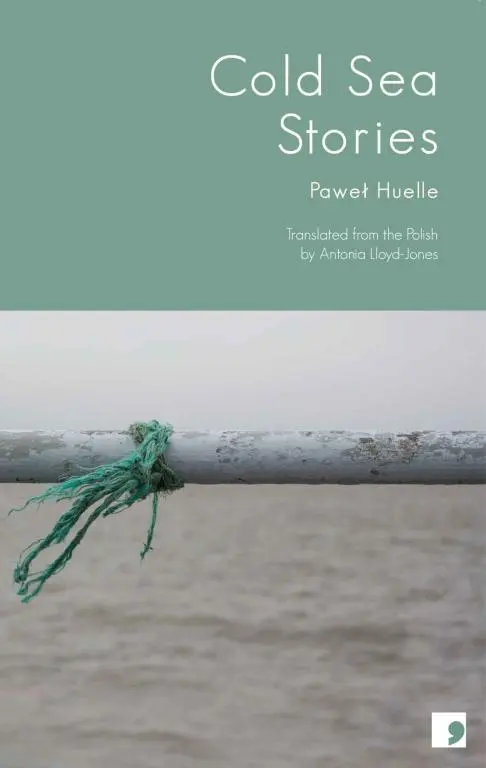
- Название:Cold Sea Stories
- Автор:
- Издательство:Comma Press
- Жанр:
- Год:2012
- Город:London
- ISBN:978-1-905-58339-3
- Рейтинг книги:3 / 5. Голосов: 1
-
Избранное:Добавить в избранное
- Отзывы:
-
Ваша оценка:
Cold Sea Stories: краткое содержание, описание и аннотация
Предлагаем к чтению аннотацию, описание, краткое содержание или предисловие (зависит от того, что написал сам автор книги «Cold Sea Stories»). Если вы не нашли необходимую информацию о книге — напишите в комментариях, мы постараемся отыскать её.
A shepherd watches, unseen, as a strange figure disembarks from a pirate ship anchored in the cove below, to bury a chest on the beach that later proves empty…
A prisoner in a Berber dungeon recounts his life’s story – the failed pursuit of the world’s very first language – by scrawling in the sand on his cell floor…
The characters in Paweł Huelle’s mesmerising stories find themselves, willingly or not, at the heart of epic narratives; legends and histories that stretch far beyond the limits of their own lives. Against the backdrop of the Baltic coast, mythology and meteorology mix with the inexorable tide of political change: Kashubian folklore, Chinese mysticism and mediaeval scholarship butt up against the war in Chechnya, 9-11, and the struggle for Polish independence.
Central to Huelle’s imagery is the vision of the refugee – be it the Chechen woman carrying her newborn child across the Polish border (her face emblazoned on every TV screen), the survivor of the Gulag re-appearing on his friends’ doorstep, years after being presumed dead, or the stranger who befriends the sole resident of a ghostly Mennonite village in the final days of the Second World War. Each refugee carries a clue, it seems, or is in possession or pursuit of some mysterious text or book, knowing that only it – like the Chinese ‘Book of Changes’ – can decode their story. What we do with this text, this clue, Huelle seems to say, is up to us.
Independent Foreign Fiction Prize Nominee for Longlist (2013)
Cold Sea Stories — читать онлайн бесплатно полную книгу (весь текст) целиком
Ниже представлен текст книги, разбитый по страницам. Система сохранения места последней прочитанной страницы, позволяет с удобством читать онлайн бесплатно книгу «Cold Sea Stories», без необходимости каждый раз заново искать на чём Вы остановились. Поставьте закладку, и сможете в любой момент перейти на страницу, на которой закончили чтение.
Интервал:
Закладка:
‘May I help you?’ she asked.
‘I’m looking for trains, Märklin models. The kind powered by electricity. Have you got anything like that?’
‘Please go to the far end of the floor. There should be something on the left hand side, by the window.’
But it wasn’t quite so obvious at all. For a few minutes he searched for the right department, until finally, behind yet another pyramid of remote-controlled racing cars, he found a dusty display case, in which there was a short track laid out in a figure of eight. On it stood a locomotive with three little carriages. For some time he inspected the exotic train. The model locomotive represented a type of steam engine from the late 1950s, still manufactured in those days in Germany. Each of the carriages belonged to a completely different decade. Here a flatcar from the 1920s kept company with an entirely modern refrigerator car and an old-fashioned passenger coach with a long row of little doors down both sides.
‘Would you like to buy it?’ he heard the sales assistant say behind him.
‘Are there any other models?’ he asked in a hopeful tone.
‘That’s the last one. Trains aren’t fashionable these days.’
‘No. I was thinking of the Geneva to Biarritz express or something like it.’
‘In that case you should look on the internet. There are collectors who have their own special sites. Do you want an address?’
‘No thank you,’ he replied. ‘Maybe next time.’
As he was leaving Franz Carl Weber’s toy store, he didn’t even look behind him to say goodbye to the rather old-fashioned letters on the shop sign, which had, after all, brought a few moments of real happiness into his childhood on the cold sea coast. Suddenly he started thinking about his father: had he made the purchase after winning on the lottery, or had the present been the fruit of profound and numerous sacrifices on his part? As far as he still remembered anything, his father’s character would be more indicative of the second possibility. If he could imagine it, the decision to buy a ticket had probably occurred to him earlier, in the first few days of his stay, as he read an advertisement for the lottery in the window of one of the tobacco shops, but with an extremely modest sum of money at his disposal, with every last penny accounted for, he must have thought he might take a gamble shortly before leaving, and then only if he turned out to have a little change left. It must have been just like that: he had counted every franc so that he would have enough for the Märklin carriages, both locomotives, a good supply of track, and also the points and signals. If he had bought a lottery ticket earlier, this purchase would have been improbable, or in any case much more modest. After all, he couldn’t possibly have assumed he would win anything, and only then buy them this unusual present.
As he waited a dreadfully long time for the sluggish waiter at the hotel restaurant, he tried to imagine his father’s tall, slightly stooping figure entering Franz Carl Weber’s toy store, only about forty metres away from here. First he must have taken in the sight of dozens of trains speeding around several enormous model landscapes that filled the greater part of the ground floor. Then, after lengthy observations and calculations, with the catalogue in hand, he must have eventually chosen suitable models and asked for them to be shown to him properly, until finally there came the packing stage and a visit to the cash register – which in those days was still mechanical, with a crank handle, making that part of the store look like a shop out of Dickens.
His father is very pleased, even though sleet has been falling on Bahnhofstrasse for several minutes and a bitterly cold wind is blowing. He presses his hat more firmly onto his head, turns up the collar of his old raincoat, carefully knots his scarf and sets off in the direction of the station with two enormous packages under his left and right arms. But moments later, literally after only fifteen metres, he turns around and goes back past the liveried doorman and into the toy shop again. ‘What’s the matter?’ asks the senior sales assistant. ‘Is there something wrong?’
‘Not at all, everything’s fine,’ replies his father, putting his parcels down on a counter top. ‘I just wanted to ask for your mail-order catalogue, because you see, it occurred to me that I might order something else, from home, from Poland.’
‘Of course,’ says the senior sales assistant, handing him a fat book in soft, shiny covers, similar in shape to a school exercise book. ‘It costs fifty francs,’ he says, and watches the customer open his coin purse and count out the requested sum in twenty and ten centime coins; he is exactly five centimes short, so the senior sales assistant waits calmly. Meanwhile a train ticket falls out of the purse, the receipt for the toys bought a little earlier, a dry cleaning ticket for a jacket, but not the missing five centimes – because his father simply hasn’t got it. The banknote lying at the bottom of his wallet is absolutely not to be touched: it must last him for the final two days.
‘What kind of a salesman am I?’ says the senior sales assistant, picking up the company receipt from the floor and handing it to his father. ‘Anyone who makes a purchase worth more than fifty francs receives the catalogue for free. Here you are, sir,’ he says, handing him the book, ‘you spent several times that sum,’ and helps him to pick up his parcels from the counter. ‘Happy Christmas!’
‘Happy Christmas,’ replies his father, and heads towards the station at a faster pace than before, because the train to Winterthur is leaving from platform two in just under fifteen minutes – Happy Christmas – he repeats to himself now, under his breath, in Polish, as he buys a lottery ticket at the station tobacco shop, splitting that final banknote in the process, which he should only have split the next day – Happy Christmas.
As the Alps pass by outside the carriage windows, invisible in the darkness, he feels quiet satisfaction. By denying himself every third lunch and every fourth supper, as well as small treats like hot chocolate or a trip to the cinema, from his modest allowance he set aside enough for two magnificent trains and ten complete tracks. Exactly enough for the boys to be able to encompass their entire bedroom with them, including a route under the old wardrobe and behind the chest-of-drawers. The next day, when he picks up a newspaper at the hotel reception and reads the number of the lucky winning ticket, he cannot believe his own eyes. He has just enough cash to buy a one-way ticket to Zurich and reach the legal firm, which – as he has read in the very same newspaper – provides services for ‘foreign clients and complicated financial matters’. Henri Rosset confers with him at length in his office, until finally, after signing several agreements and letters of authorisation, he pays him 100 francs – on account, a sum guaranteed by the lottery win.
‘Perhaps you need more?’ he asks at the end.
‘Absolutely not,’ replies his father. ‘In my country that means serious trouble.’
The solitary dinner dragged on for an unbearably long time. Over coffee he looked at his watch: it was already almost half past three, and mass at the Liebfrauenkirche was due to begin at six. In his room he pored over a map of the city. The church was situated at number 9 Zehnderweg, and thus not so far from the hotel and even nearer to the station – on the other side of the river. Only now, as the emotions fell away from him, did he feel how very tired he was; for that precise reason he did not take a short nap, but after a quick shower and a change of shirt, set off past the luxury shop-window displays of Bahnhofstrasse. But the jeweller’s baubles, the most expensive watches in the world and the fur coats imported from Siberia did not interest him at all. He went into an antiquarian bookshop and briefly looked through some old, seventeenth-century maps. On one of them, by Jean Bleu, he saw his home city, the bay, and the long, sandy peninsula which the sailors had called ‘Hell’ since mediaeval times.
Читать дальшеИнтервал:
Закладка:
Похожие книги на «Cold Sea Stories»
Представляем Вашему вниманию похожие книги на «Cold Sea Stories» списком для выбора. Мы отобрали схожую по названию и смыслу литературу в надежде предоставить читателям больше вариантов отыскать новые, интересные, ещё непрочитанные произведения.





Обсуждение, отзывы о книге «Cold Sea Stories» и просто собственные мнения читателей. Оставьте ваши комментарии, напишите, что Вы думаете о произведении, его смысле или главных героях. Укажите что конкретно понравилось, а что нет, и почему Вы так считаете.