Павел Хюлле - Cold Sea Stories
Здесь есть возможность читать онлайн «Павел Хюлле - Cold Sea Stories» весь текст электронной книги совершенно бесплатно (целиком полную версию без сокращений). В некоторых случаях можно слушать аудио, скачать через торрент в формате fb2 и присутствует краткое содержание. Город: London, Год выпуска: 2012, ISBN: 2012, Издательство: Comma Press, Жанр: Современная проза, на английском языке. Описание произведения, (предисловие) а так же отзывы посетителей доступны на портале библиотеки ЛибКат.
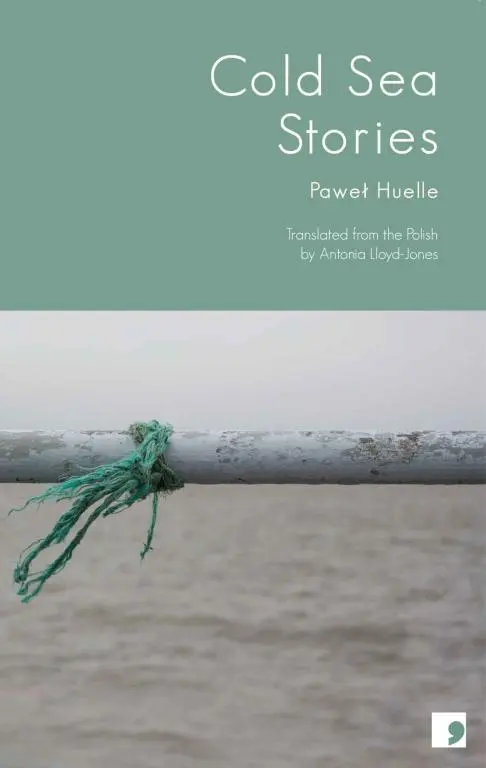
- Название:Cold Sea Stories
- Автор:
- Издательство:Comma Press
- Жанр:
- Год:2012
- Город:London
- ISBN:978-1-905-58339-3
- Рейтинг книги:3 / 5. Голосов: 1
-
Избранное:Добавить в избранное
- Отзывы:
-
Ваша оценка:
Cold Sea Stories: краткое содержание, описание и аннотация
Предлагаем к чтению аннотацию, описание, краткое содержание или предисловие (зависит от того, что написал сам автор книги «Cold Sea Stories»). Если вы не нашли необходимую информацию о книге — напишите в комментариях, мы постараемся отыскать её.
A shepherd watches, unseen, as a strange figure disembarks from a pirate ship anchored in the cove below, to bury a chest on the beach that later proves empty…
A prisoner in a Berber dungeon recounts his life’s story – the failed pursuit of the world’s very first language – by scrawling in the sand on his cell floor…
The characters in Paweł Huelle’s mesmerising stories find themselves, willingly or not, at the heart of epic narratives; legends and histories that stretch far beyond the limits of their own lives. Against the backdrop of the Baltic coast, mythology and meteorology mix with the inexorable tide of political change: Kashubian folklore, Chinese mysticism and mediaeval scholarship butt up against the war in Chechnya, 9-11, and the struggle for Polish independence.
Central to Huelle’s imagery is the vision of the refugee – be it the Chechen woman carrying her newborn child across the Polish border (her face emblazoned on every TV screen), the survivor of the Gulag re-appearing on his friends’ doorstep, years after being presumed dead, or the stranger who befriends the sole resident of a ghostly Mennonite village in the final days of the Second World War. Each refugee carries a clue, it seems, or is in possession or pursuit of some mysterious text or book, knowing that only it – like the Chinese ‘Book of Changes’ – can decode their story. What we do with this text, this clue, Huelle seems to say, is up to us.
Independent Foreign Fiction Prize Nominee for Longlist (2013)
Cold Sea Stories — читать онлайн бесплатно полную книгу (весь текст) целиком
Ниже представлен текст книги, разбитый по страницам. Система сохранения места последней прочитанной страницы, позволяет с удобством читать онлайн бесплатно книгу «Cold Sea Stories», без необходимости каждый раз заново искать на чём Вы остановились. Поставьте закладку, и сможете в любой момент перейти на страницу, на которой закончили чтение.
Интервал:
Закладка:
‘I don’t have to go home tomorrow,’ he thought. ‘I don’t really have to do anything.’
He didn’t buy the map, though at the start, when he first examined it, that had been his intention. On the bridge he remembered the visit he and his mother had paid to the parish office before his father’s funeral.
‘Please, please, Father, I beg you,’ his mother had almost burst into tears, ‘if only for the children’s sakes!’
The curate was young and clearly sympathised with them, but he had his orders.
‘There’s nothing I can do for you. Canonical law is quite clear about these situations. We do not refuse to say mass for the unfortunate soul, but a funeral service conducted by a priest is out of the question. Please understand us. After all, it was suicide,’ he lowered his voice, ‘plainly, without any doubt.’
Only many years later had he found out from his mother that the older, retired priest, whom no one knew in their parish, and who had appeared at the cemetery at the very last moment, driving up to the gate on an extremely dilapidated moped, had been his father’s commander in the underground youth resistance movement during the war. He himself had never mentioned his wartime activities. As he was nearing the church, on Zehnderweg already, he saw himself in that cramped, cluttered flat, examining and sorting his parents’ papers. His brother hadn’t come back from America for their mother’s funeral. He had had to take care of everything on his own, but the worst thing was all that tidying, which took him several weeks to deal with. What tired him the most were the photographs of people he could never know anything about anymore. In one of the boxes he found a large, grey envelope. It was lying at the very bottom, stuck down and unidentified. It contained documents issued by the legal firm in Zurich. There was nothing in them to say how much money his father had deposited, and he could only confirm that Henri & François Rosset will make every effort to increase the values entrusted to them , and that these may only be acquired upon the application of the interested party in person, those authorised by him or his legally defined heirs . For several years he had corresponded with his brother on this topic – gently and cautiously. His brother had promised to take care of it, and even to fly to Zurich, but in fact he had never intended to lift a finger to deal with the matter, which he regarded as some obsolete whim not worth the expense. When they finally opened the borders, his brother was no longer alive. For the next few years, as he set up his own company and threw himself into a whirl of rather bad business ventures, the envelope lay in his desk among his school certificates and his diploma from the polytechnic. He found the legal firm’s email address on the internet, and after one short message, to his astonishment, he got the answer that on the matter in question he must appear in person, equipped with the relevant documents . There followed a list.
He was expecting trouble, legal loopholes, expressions of doubt, and for the whole process to be strung out into infinity, but now here he was, entering the Liebfrauenkirche edifice as someone who had inherited an extraordinarily large fortune. It was a strange feeling: in the city from which Lenin had left for Saint Petersburg in a sealed carriage, the city where the Dadaists had proclaimed their manifesto, and much earlier Zwingli had issued his, here in this city he had received a win on the lottery, which his father had once happened to play.
The mass was preceded by an announcement read out by the priest from a sheet of paper: the bishop they had been expecting, Luigi Conti, had not come, laid low by sudden and severe flu. He sent the congregation his blessing, which – along with a specially composed pastoral prayer – would be read out after the Eucharist. He walked along a side nave to the altar, and then went back towards the choir, casting discreet glances in search of Teresa. But he could not see her anywhere, nor anyone whom she could be cunningly impersonating.
‘What could be sadder than a cancelled performance in a foreign city?’ he thought as he left the church.
If his neighbour had gone back to the hotel, he might call her from the reception and invite her to supper. But at once he imagined Herr Hugin or Herr Munin disguised as the receptionist. Ultimately, considering the unusual friendship they had formed, he could also press ahead and knock at her door as he came down the corridor, and then suggest an outing to the city. Unless she had decided to leave at once, as the performance had not come off. Convinced that was probably what she had done, he stopped a taxi and told the driver to take him to Spiegelgasse, to the restaurant which was once home to the famous Cabaret Voltaire. Once there, he ordered a salad and some wine, but he did not enjoy the meal: surrounded by a raucous crowd of people, he spent the entire time gazing at the couple opposite – the young man was wearing a pointed Bolshevik cap with a red star and a collarless brown Russian shirt draped over his trousers, and his girlfriend was dressed in the leather jacket of a People’s Commissar. For a while he even wondered whether to address them in Russian, but he dropped the idea and left the noisy place with relief.
He went back to the hotel on foot, only once checking the route on his city map. At the reception, as he paid his bill, he noticed that the key to room 304 was not in its pigeonhole. Back in his room, he put his ear to the door inside the wardrobe and heard her footsteps. She was pacing to and fro, clearly upset. Should he knock on her door to tell her he had been at the church? He didn’t really have anything else to communicate: he was leaving the next day at about noon.
He stepped back out of the wardrobe and switched on the television. As he watched the CNN news from Iraq, he remembered the name of the king who was exiled from Jerusalem: it was Zedekiah. The victors had first made him witness the execution of his own sons, then they had blinded him, put him in chains and driven him into captivity. This had no direct connection with the news, so he was all the more curious to know why on earth he had been thinking yesterday about the religious education lesson at which, many years ago, he had been read the story of the last king of Judah. Maybe he associated the blinding of the ruler with the sight of the prisoners whose eyes had been blindfolded?
He was already on his way to the bathroom when he heard a noise coming from the corridor. Someone knocked at his neighbour’s door. Once and again.
‘Please open up!’ he heard a man’s voice. ‘We’ve got a warrant!’
Without hesitation he went into the wardrobe, opened the back door and beckoned to her to come into his room. She managed to grab her handbag and her coat. As he closed the wooden door panel, the key in her lock turned with a dull rattle and several men entered the next-door room – probably policemen – with the help of the hotel staff. While they were searching her luggage, she sat beside him on the sofa. He gently took hold of her hand, which she did not withdraw.
‘So what now?’ he whispered.
‘They’ll arrest me, as usual.’
‘But nothing happened. You haven’t done anything.’
‘That’s just how it looks. You know what it’s called? An attempt. In Italy I would lie my way out of it and only get a few days. In Switzerland I might get more. They’ll find a picture of Luigi in my case. The old woman’s costume and the saint’s robes. Newspaper cuttings. That’s enough. Three years ago I was arrested in Einsiedeln, so I’ve already had a sentence here. Suspended.’
‘We can run away if you like,’ he said.
‘Of course I do, but how? They’re sure to post someone at reception for the whole night. But I’ve no reason to go back in there now,’ she said, pointing at the wall with the wardrobe.
Читать дальшеИнтервал:
Закладка:
Похожие книги на «Cold Sea Stories»
Представляем Вашему вниманию похожие книги на «Cold Sea Stories» списком для выбора. Мы отобрали схожую по названию и смыслу литературу в надежде предоставить читателям больше вариантов отыскать новые, интересные, ещё непрочитанные произведения.



Обсуждение, отзывы о книге «Cold Sea Stories» и просто собственные мнения читателей. Оставьте ваши комментарии, напишите, что Вы думаете о произведении, его смысле или главных героях. Укажите что конкретно понравилось, а что нет, и почему Вы так считаете.