Amanda Leduc - The Centaur's Wife
Здесь есть возможность читать онлайн «Amanda Leduc - The Centaur's Wife» весь текст электронной книги совершенно бесплатно (целиком полную версию без сокращений). В некоторых случаях можно слушать аудио, скачать через торрент в формате fb2 и присутствует краткое содержание. Город: Toronto, Год выпуска: 2021, ISBN: 2021, Издательство: Random House of Canada, Жанр: Современная проза, prose_magic, на английском языке. Описание произведения, (предисловие) а так же отзывы посетителей доступны на портале библиотеки ЛибКат.
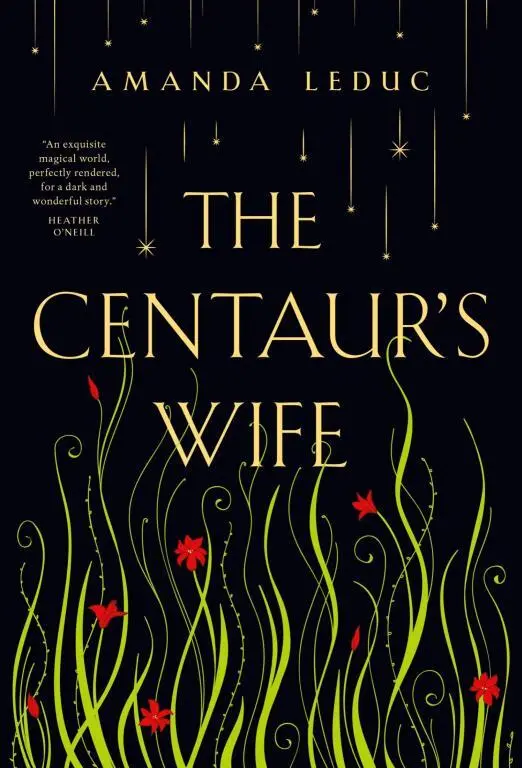
- Название:The Centaur's Wife
- Автор:
- Издательство:Random House of Canada
- Жанр:
- Год:2021
- Город:Toronto
- ISBN:978-0-73527-285-9
- Рейтинг книги:5 / 5. Голосов: 1
-
Избранное:Добавить в избранное
- Отзывы:
-
Ваша оценка:
The Centaur's Wife: краткое содержание, описание и аннотация
Предлагаем к чтению аннотацию, описание, краткое содержание или предисловие (зависит от того, что написал сам автор книги «The Centaur's Wife»). Если вы не нашли необходимую информацию о книге — напишите в комментариях, мы постараемся отыскать её.
Heather is sleeping peacefully after the birth of her twin daughters when the sound of the world ending jolts her awake. Stumbling outside with her babies and her new husband, Brendan, she finds that their city has been destroyed by falling meteors and that her little family are among only a few who survived.
But the mountain that looms over the city is still green—somehow it has been spared the destruction that has brought humanity to the brink of extinction. Heather is one of the few who know the mountain, a place city-dwellers have always been forbidden to go. Her dad took her up the mountain when she was a child on a misguided quest to heal her legs, damaged at birth. The tragedy that resulted has shaped her life, bringing her both great sorrow and an undying connection to the deep magic of the mountain, made real by the beings she and her dad encountered that day: Estajfan, a centaur born of sorrow and of an ancient, impossible love, and his two siblings, marooned between the magical and the human world. Even as those in the city around her—led by Tasha, a charismatic doctor who fled to the city from the coast with her wife and other refugees—struggle to keep everyone alive, Heather constantly looks to the mountain, drawn by love, by fear, by the desire for rescue. She is torn in two by her awareness of what unleashed the meteor shower and what is coming for the few survivors, once the green and living earth makes a final reckoning of the usefulness of human life and finds it wanting.
At times devastating, but ultimately redemptive, Amanda Leduc’s fable for our uncertain times reminds us that the most important things in life aren’t things at all, but rather the people we want by our side at the end of the world.
The Centaur's Wife — читать онлайн бесплатно полную книгу (весь текст) целиком
Ниже представлен текст книги, разбитый по страницам. Система сохранения места последней прочитанной страницы, позволяет с удобством читать онлайн бесплатно книгу «The Centaur's Wife», без необходимости каждый раз заново искать на чём Вы остановились. Поставьте закладку, и сможете в любой момент перейти на страницу, на которой закончили чтение.
Интервал:
Закладка:
They drop what they find at different points throughout the mountain city. A bag of rice at the end of one street, a sack of apples gathered from the mountain trees at the end of another. Nuts and cherries, figs and pears. Estajfan is careful to be random, careful to avoid extra attention falling on Heather. Still, she pulls him into her orbit. He makes sure she has enough.
They travel under cover of the trees, under cover of the darkness, and the vines that grow over the ground muffle their footsteps. Yet, every time they run through the city, he waits for someone to jump out and see them. No one does.
They run through other cities; they take all that they can.

He finds her in the forest, walking with the girls. Every now and then she checks the sky and he knows she is thinking of snow—when it will come, if it will come, what will happen when it does. When he asks her how they are all doing, she only shrugs and looks resigned. “We might survive the winter. We might not.”
“You will, ” he says.
But Heather looks away. “No one has come to help,” she says. She blows gently over the faces of the twins, plays patty cake with their grasping hands. “We have hardly any gas left. There is no way to plow the roads and by the middle of the winter people will be too weak to shovel.”
“We are bringing as much food as we can,” he says. He doesn’t tell her that they run later into the morning now and there are hardly ever humans around to see them.
“We?” she says.
“Petrolio,” he tells her.
Heather takes this in. “And Aura?”
“Aura will not come down,” he says.
She nods. “She’s still afraid. I understand that.”
She doesn’t understand, not entirely. But he doesn’t know what else to tell her.
The babies are not afraid of him. He watches them roll on the ground and giggle. He watches the way their eyes follow the swish of his tail. Later, when Heather is getting ready to leave, Greta reaches up from her sling and touches his flank, her tiny human hand like a fly against his flesh. His tail twitches involuntarily. The baby laughs.
“Come, Greta,” Heather says, and she pulls her hand away. This might once have made her smile, but there is no room left in her face for laughter. No room left for joy.
He thinks back to the day, long ago, when she drew him the picture. She’d had joy then, even in her sorrow. She’d been excited. She had believed.
The girls crane their heads to look at him.
“Once there was a mountain,” he says. He feels Heather go still. “Once there was a mountain that reached high into the clouds.”
They have been running for days— like delivery boys, Petrolio says with a half sneer, but still he comes—when they see the first human bodies. A woman and her child lying facedown by the road. It is still dark, very early morning—they almost miss them, half buried in the ditch. The child clutches a mirror in his small, dirty hand. His mother is bent over him. Already they are half covered in vines and dirt. As Estajfan watches, more vines snake slowly over the bodies, pull them deeper into the soil. He wants to look away but doesn’t.
Petrolio comes to stand beside him.
“What happened to them?” he asks.
Estajfan lifts his hands. “Who knows,” he says. “Maybe someone killed them. Or maybe they just starved.”
There is another option, he knows. He looks at the flowers that line the borders where the road used to be. Orange flowers, green leaves. Dark berries. He looks back at the bodies.
The vines keep on coming. The mouth of the earth, green and hungry. He stands with Petrolio until the two are little more than humps beneath the green, and then turns to go.
They bring down the food, they run farther and farther. They notice other bodies by the side of the road—some sinking into the grass and vines, others still fresh, glassy-eyed, looking up to the sky. It is winter, but still Estajfan sees the berries everywhere. Dark berries, white flowers, bright-orange bells that dip over the ground and smell so sweet.
When he asks the mountain centaurs what they think, they are evasive, unconcerned. “The humans are weak,” they tell him.
“But they aren’t weak,” he says. Heather is strong, despite herself, and the doctor in the city— Tasha, Heather tells him — has not stopped in her quest to keep the city together. “They’re fighting to survive.”
“Humans had their chance,” a black centaur says. He’s tall and graceful, with a voice as deep as their father’s used to be. “It is time for the world to thrive now.”
There had been other mountains, other creatures, other parts of the world where magic was rampant and then died. The winged horses long gone now, the dragons of these mountains dead before the horses arrived. The mermaids and monsters of the deep all dead or disappeared. The humans alive and flourishing. Digging their holes into the earth and laying their roads where trees used to be. They multiplied like a disease. They built machines, smoked the air. They didn’t need magic when they had airplanes and could fly. They forgot about the creatures that swam in the sea. They no longer listened to the voice of the earth, and animals around the world grew fewer, and died.
“I’m tired of everything dying,” Petrolio says then—surprising Estajfan, surprising them all.
“Some things die so that others can live,” a mountain centaur says. She has white-blonde hair and golden feet—the centaur who gave Estajfan his first warning months ago. “This is always what happens.” She fixes her gaze on them both. “Do not go down the mountain anymore. We are not like them—we will live to see a new world.”
Petrolio looks at her, and then at Estajfan. “ We had a human mother,” he says. “We might not be human, but we’re not so different from them.”
Beyond the other centaurs, Estajfan sees Aura listening.
The mountain centaur blinks. “Yes,” she says. “But now your home is here. The mountain feeds you, the mountain shelters you from harm. Would you rather be without it?”
You have a choice to make. He watches the same realization dawn on Petrolio’s face, followed by the same tinge of incredulous fear.
Aura, keeping watch, says nothing.
THE MOUNTAIN
Once there was a mountain that reached high into the clouds. On that mountain there lived a herd of wild horses. The ground magic was strong here, far from humans, and so were the horses. There were cougars on the mountain too, and mountain goats, and large brown deer with antlers that were heavier than gold. There were rabbits and foxes and squirrels that could fly, and all the animals could speak to one another without making a sound.
The horses were kind and curious, beautiful and grave. But they were also reckless—they were off the mountain as much as they were on it, eager to run down into the foothills and see what the rest of the world could tell them. Horses died in avalanches, horses fell into crevasses and were never seen again. But they were the mountain’s children as much as the cougars and the foxes and the deer; the mountain forgave them their curiosity, and loved them without question.
The mountain was also a child of the earth. It had been born hot and red many millions of years ago, before there were oceans, when the sky above stretched out into green. Over the millennia, the mountain grew—earthquakes thrust it higher into the sky. The gradual creep of oceans brought it life. Grey-green lichen fed its insects, and low-lying trees fed the deer. The ground around the mountains softened into rolling hills and flatlands. The mountain, swathed in clouds, reigned proud and jealous over them all.
Читать дальшеИнтервал:
Закладка:
Похожие книги на «The Centaur's Wife»
Представляем Вашему вниманию похожие книги на «The Centaur's Wife» списком для выбора. Мы отобрали схожую по названию и смыслу литературу в надежде предоставить читателям больше вариантов отыскать новые, интересные, ещё непрочитанные произведения.











Обсуждение, отзывы о книге «The Centaur's Wife» и просто собственные мнения читателей. Оставьте ваши комментарии, напишите, что Вы думаете о произведении, его смысле или главных героях. Укажите что конкретно понравилось, а что нет, и почему Вы так считаете.