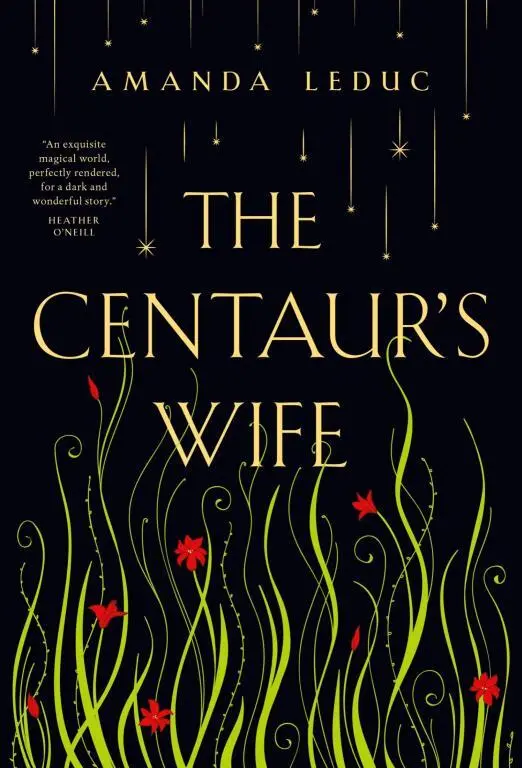
Amanda Leduc - The Centaur's Wife
Здесь есть возможность читать онлайн «Amanda Leduc - The Centaur's Wife» весь текст электронной книги совершенно бесплатно (целиком полную версию без сокращений). В некоторых случаях можно слушать аудио, скачать через торрент в формате fb2 и присутствует краткое содержание. Город: Toronto, Год выпуска: 2021, ISBN: 2021, Издательство: Random House of Canada, Жанр: Современная проза, prose_magic, на английском языке. Описание произведения, (предисловие) а так же отзывы посетителей доступны на портале библиотеки ЛибКат.
- Название:The Centaur's Wife
- Автор:
- Издательство:Random House of Canada
- Жанр:
- Год:2021
- Город:Toronto
- ISBN:978-0-73527-285-9
- Рейтинг книги:5 / 5. Голосов: 1
-
Избранное:Добавить в избранное
- Отзывы:
-
Ваша оценка:
The Centaur's Wife: краткое содержание, описание и аннотация
Предлагаем к чтению аннотацию, описание, краткое содержание или предисловие (зависит от того, что написал сам автор книги «The Centaur's Wife»). Если вы не нашли необходимую информацию о книге — напишите в комментариях, мы постараемся отыскать её.
Heather is sleeping peacefully after the birth of her twin daughters when the sound of the world ending jolts her awake. Stumbling outside with her babies and her new husband, Brendan, she finds that their city has been destroyed by falling meteors and that her little family are among only a few who survived.
But the mountain that looms over the city is still green—somehow it has been spared the destruction that has brought humanity to the brink of extinction. Heather is one of the few who know the mountain, a place city-dwellers have always been forbidden to go. Her dad took her up the mountain when she was a child on a misguided quest to heal her legs, damaged at birth. The tragedy that resulted has shaped her life, bringing her both great sorrow and an undying connection to the deep magic of the mountain, made real by the beings she and her dad encountered that day: Estajfan, a centaur born of sorrow and of an ancient, impossible love, and his two siblings, marooned between the magical and the human world. Even as those in the city around her—led by Tasha, a charismatic doctor who fled to the city from the coast with her wife and other refugees—struggle to keep everyone alive, Heather constantly looks to the mountain, drawn by love, by fear, by the desire for rescue. She is torn in two by her awareness of what unleashed the meteor shower and what is coming for the few survivors, once the green and living earth makes a final reckoning of the usefulness of human life and finds it wanting.
At times devastating, but ultimately redemptive, Amanda Leduc’s fable for our uncertain times reminds us that the most important things in life aren’t things at all, but rather the people we want by our side at the end of the world.
The Centaur's Wife — читать онлайн бесплатно полную книгу (весь текст) целиком
Ниже представлен текст книги, разбитый по страницам. Система сохранения места последней прочитанной страницы, позволяет с удобством читать онлайн бесплатно книгу «The Centaur's Wife», без необходимости каждый раз заново искать на чём Вы остановились. Поставьте закладку, и сможете в любой момент перейти на страницу, на которой закончили чтение.
Интервал:
Закладка:
“He’s three months premature,” Tasha says, as gently as she can. “There is likely significant brain damage. He’s not moving his arms and legs because he can’t. He won’t latch because he can’t. We can try to give him more formula, but you should know that this is going to be difficult.”
“Difficult how?” Seth asks.
“He’s not going to have the life you wanted him to have,” she says, slowly. “You can take a car and try to reach another city, somewhere with a hospital that might be better equipped. If you find one, they might be able to do more for him than we can. Take a car—we can give you some of the gas we have left.”
“But what about the snow?” Candice’s voice rises in panic. “What happens if we take a car and leave and don’t find anything and he doesn’t latch?”
By now, they all know the stories Joseph has brought them. Haphazard militia who prowl what’s left of the highways, thieves who ambush families and steal their cars, leaving them to die on the road.
“We can give you more formula,” Annie says.
“And what if that runs out?” Candice looks at them both, her eyes wild. “What if we run out of gas? What happens if there’s no clean water or snow to mix the formula with when we’re on the road?”
Annie, eventually, says, “You’ll have anywhere from three days to three weeks.”
The mother closes her eyes. When she opens them again, they are bottomless in a way that reminds Tasha of Heather. “It’s so cold outside,” Candice says. “I could take him to the mountain, like other mothers have. It would be just like falling asleep.”
“What other mothers?” Tasha asks, her voice sharp.
Candice opens her eyes and stares at her as if from far away. “Mothers who leave their children in the snow,” she says. “Mothers who leave their children on the mountain. Everyone knows the stories.”
Tasha looks at Seth, at the people now huddled listening near the door to the kitchen. “Is this true?” she asks. How many mothers have taken their children away? She sees the bodies piled in frozen lumps at the base of the mountain, pilgrims on a climb to nowhere.
An older woman steps forward—thin like the rest of them, unbowed and tall. “It’s an old story,” she says. “Just something parents used to say to keep their children in line. Wolves who lured children up the mountain. Foxes who stole mothers away. My parents told me the same stories years ago.”
“Stories,” Tasha echoes. “Like the stories the others talked about in the fall? Only stories? You’re sure?”
The woman laughs. “You’ve been here long enough, Tasha—the whole city is filled with stories like this. Mountain superstition — that’s all it is. We can hardly get down the sidewalks. You think anyone is going to go near the mountain in the snow?”
“We’re not going up the mountain,” Seth snaps. “We have to try.”
Candice blinks, comes back to herself. “Yes,” she says, and nods.
Annie packs the car herself, loading it with as much food as they can spare, and all the formula they have. The other people from the house busy themselves clearing a path out of town as best as they can. Tasha gives the couple one of the flashlights from the clinic and a map—not that maps mean all that much anymore. She’s marked the closest city anyway.
“Be safe,” she tells them through the window of the car. They are terrified, almost babies themselves. The car creeps away down the road and disappears around a corner.
Three days later they come back, and they no longer have the child.

Cans of stewed tomatoes, cans of corned beef and Spam. Bags of beans and lentils. The food that is dropped off at various parts of the town is just enough to keep their stores from dwindling into nothing. And yet as the winter begins to rage in earnest, even these gifts are not enough. It snows constantly. Soon the food drops are only on the outskirts of town. Deliveries go unnoticed, buried under the snow.
Sometimes there are footprints. Someone on a horse.
Brendan suggests putting a guard at the front of the clinic, to try to catch the “Food Angel,” as some of the people have begun to say. Tasha vetoes this idea.
“Don’t you want to know?” Annie asks her, incredulous, one night as they lie together in the clinic. Elyse is back at the townhouse, huddled in blankets, sleeping alone. They told her she could stay, but she refused.
“You’ve done so much for me,” she said. “You deserve some time alone.”
But this is what alone time with Annie means now—it’s like lying on a mattress beside a stranger, the gulf between them growing wider by the day.
“Someone’s been hiding food from us all this time,” Annie presses. “Doesn’t that make you angry?”
“Maybe it’s not someone in the town,” Tasha says.
“Who else could it be?”
Tasha shrugs. “Look—it’s helping us get through the winter. Let’s just stop asking questions for right now, and be thankful someone is helping at all.”
“You’re making no sense,” Annie says. “You’re the one who always wants answers to everything! Why are you letting go of this so easily?”
Tasha thinks about this. What else could it be? Some strange visitor, creeping through their city streets at night. Magic? She feels a whisper of something black and dark against her soul and tries not to shiver. If that’s real, what else is real? What other stories might come to life?
“What are we going to do if we find them out?” she says, slowly. “Raid their stores? If it’s someone from outside the city, are we going to keep them here, make them give us everything they have? Whoever they are, they want to stay hidden. And I don’t think we can spare the energy to find out who it is. Things for the townspeople are already”— broken, she wants to say, but still she refuses—“bad.”
Annie stares at the ceiling, silent for a moment, then says, “We could go, you know.”
“What?”
“You and me. And Elyse. We could take a car and whatever gas is left and go find somewhere else.”
“How far do you think we would get in the snow?”
“We walk out, then. We wear warm clothes. We keep moving.”
“You want to take Elyse out in the snow? For days on end?”
“Randall and Stella’s deaths weren’t accidents!” Annie says, and Tasha goes silent. “They chose to freeze to death. I know that. So do you. I also know that not everyone is going to make it through the winter, no matter what we keep saying.” She sits up, stares down at Tasha. “We need to go,” she whispers. “We should have gone months ago.”
“Things can be different here,” Tasha says. “We just need time. We’ve prepared as much as we can for the winter. We’ll be okay.”
“What if we don’t have that time? What if the propane runs out, what if we haven’t cut enough wood, what if your magical Food Angel stops bringing supplies to top us up? I don’t want to freeze to death, Tasha. We aren’t even from here. Why stay? We got people away from the water. We don’t owe anyone anything else.”
So much in Annie’s face seems different—frightened and small, not the Annie she remembers.
“We don’t owe anyone anything?” Tasha says. “What about Elyse? You know she can’t leave, Annie. Not in the snow. You don’t even sound like yourself.”
A short burst of silence, and then Annie jerks her hand away and laughs. “You can’t be serious. I don’t sound like myself? I haven’t changed! I’ve been right here this whole time. Who was there when your parents died and you couldn’t get out of bed and go to work? Who was there when you couldn’t get up for the funeral? It sure as hell wasn’t anyone from here.”
Читать дальшеИнтервал:
Закладка:
Похожие книги на «The Centaur's Wife»
Представляем Вашему вниманию похожие книги на «The Centaur's Wife» списком для выбора. Мы отобрали схожую по названию и смыслу литературу в надежде предоставить читателям больше вариантов отыскать новые, интересные, ещё непрочитанные произведения.








Обсуждение, отзывы о книге «The Centaur's Wife» и просто собственные мнения читателей. Оставьте ваши комментарии, напишите, что Вы думаете о произведении, его смысле или главных героях. Укажите что конкретно понравилось, а что нет, и почему Вы так считаете.