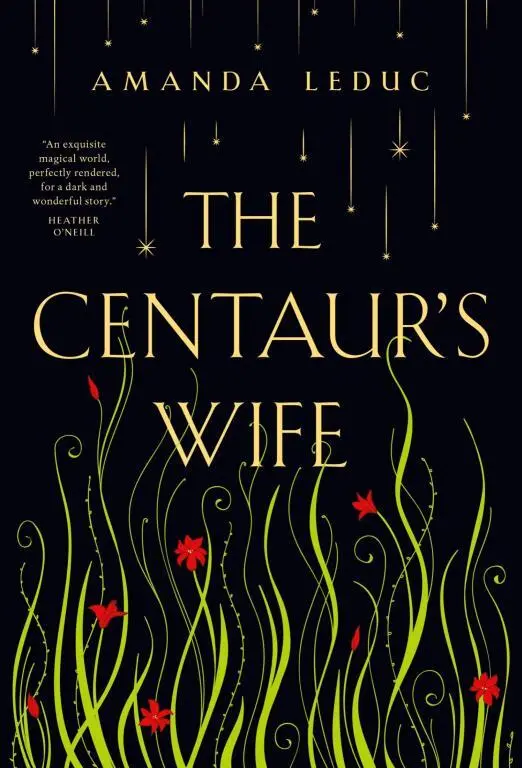
Amanda Leduc - The Centaur's Wife
Здесь есть возможность читать онлайн «Amanda Leduc - The Centaur's Wife» весь текст электронной книги совершенно бесплатно (целиком полную версию без сокращений). В некоторых случаях можно слушать аудио, скачать через торрент в формате fb2 и присутствует краткое содержание. Город: Toronto, Год выпуска: 2021, ISBN: 2021, Издательство: Random House of Canada, Жанр: Современная проза, prose_magic, на английском языке. Описание произведения, (предисловие) а так же отзывы посетителей доступны на портале библиотеки ЛибКат.
- Название:The Centaur's Wife
- Автор:
- Издательство:Random House of Canada
- Жанр:
- Год:2021
- Город:Toronto
- ISBN:978-0-73527-285-9
- Рейтинг книги:5 / 5. Голосов: 1
-
Избранное:Добавить в избранное
- Отзывы:
-
Ваша оценка:
The Centaur's Wife: краткое содержание, описание и аннотация
Предлагаем к чтению аннотацию, описание, краткое содержание или предисловие (зависит от того, что написал сам автор книги «The Centaur's Wife»). Если вы не нашли необходимую информацию о книге — напишите в комментариях, мы постараемся отыскать её.
Heather is sleeping peacefully after the birth of her twin daughters when the sound of the world ending jolts her awake. Stumbling outside with her babies and her new husband, Brendan, she finds that their city has been destroyed by falling meteors and that her little family are among only a few who survived.
But the mountain that looms over the city is still green—somehow it has been spared the destruction that has brought humanity to the brink of extinction. Heather is one of the few who know the mountain, a place city-dwellers have always been forbidden to go. Her dad took her up the mountain when she was a child on a misguided quest to heal her legs, damaged at birth. The tragedy that resulted has shaped her life, bringing her both great sorrow and an undying connection to the deep magic of the mountain, made real by the beings she and her dad encountered that day: Estajfan, a centaur born of sorrow and of an ancient, impossible love, and his two siblings, marooned between the magical and the human world. Even as those in the city around her—led by Tasha, a charismatic doctor who fled to the city from the coast with her wife and other refugees—struggle to keep everyone alive, Heather constantly looks to the mountain, drawn by love, by fear, by the desire for rescue. She is torn in two by her awareness of what unleashed the meteor shower and what is coming for the few survivors, once the green and living earth makes a final reckoning of the usefulness of human life and finds it wanting.
At times devastating, but ultimately redemptive, Amanda Leduc’s fable for our uncertain times reminds us that the most important things in life aren’t things at all, but rather the people we want by our side at the end of the world.
The Centaur's Wife — читать онлайн бесплатно полную книгу (весь текст) целиком
Ниже представлен текст книги, разбитый по страницам. Система сохранения места последней прочитанной страницы, позволяет с удобством читать онлайн бесплатно книгу «The Centaur's Wife», без необходимости каждый раз заново искать на чём Вы остановились. Поставьте закладку, и сможете в любой момент перейти на страницу, на которой закончили чтение.
Интервал:
Закладка:
As is the case with most jealous things, the mountain had a favourite son. A black horse, the largest of the wild herd, a stallion with a star on his forehead. He was gentle and kind and beloved, but with a curiosity so great it dwarfed the mountain.
The stallion was faster than his brothers and sisters. But that didn’t stop them from racing. Each day they ran down the mountains and far into the foothills, the other stallions and mares trying as hard as they could to beat the black. It never happened. He went faster and longer than they could match, running so far into the flatlands he lost sight of the mountain. Eventually the others stopped racing him altogether and the stallion went down the mountain alone.
One day, the stallion stopped by a stream. While he was drinking, a group of human women came down to the water, laughing amongst themselves. The stallion backed into the trees along the river and watched them until they returned to their village. He had never been this close to humans before. They seemed so tiny—quick and shining, there and gone.
The mountain told him that humans lived the way that comets shot across the sky—bright and burning, falling, gone. If you blinked, they disappeared.
The stallion didn’t want to blink. The next time he ran down the mountain, he went back to that stream. Late in the day the women came down to the water again, and once more he hid from them in the trees and watched them laugh. Their joy seemed so impossible and fleeting.
After this, the stallion returned to the stream every day. He stayed hidden, but soon noticed that a young girl with blonde hair and blue-green eyes would always turn her head toward the trees. Could she sense he was there? He wasn’t sure. But soon he stopped looking at the other humans and watched this one only. She never came close to the trees and he never ventured out, but every time he saw her, the ground magic shivered hard beneath his feet.
Then, one day, he found her alone. The stallion stood in the trees for a long time and watched her skip stones across the water. When she was finished, she came to where the stallion was hiding and gave him a gift—a flower chain she’d made. She put the chain around his neck.
“I see you,” she said.
The garland felt so heavy and precious it might as well have been made of gold. As he ran back to the mountain that night, the horse was careful not to break it. When the other horses saw him wearing it, they looked away.
The woman met him every day after this. They would walk along the stream, or she would ride him, out into the flatlands, her hair flying behind her, her arms flung wide to the world.
The mountain felt the horse slip away and was powerless to stop the stallion as he ran to the woman. The ground magic was different in the flatlands—subtle, the magic of green growing things. It understood something about the stallion that the mountains did not. The stallion was already changing. He was already no longer the same.
By the time he climbed the summit on a night bright with stars, the stallion was a stranger to the mountain. He knew what he wanted; he knew what he had to do.
This is your home, the mountain said to its favourite son. You belong here more than you belong anywhere else.
But the stallion didn’t want to belong to the mountain. Instead he dug himself a grave and laid down in it. He wished for the magic of green and growing things; the ability to bend, the resilience of moss and tulips. And the magic of green and growing things came to his call.
In the morning, he walked away transformed, and the mountain raged and raged.
8
Tasha is resting in the bedroom at the townhouse—a rare moment of silence and calm—when she hears Annie’s footsteps clatter up the stairs. She hasn’t bothered to take off her shoes.
“Someone left food on the outskirts of town,” Annie says from the doorway. “And in front of the clinic.”
Tasha sits up. “What do you mean, food? ”
“Food,” Annie says, incredulous. “A bag of apples, and some rice and flour.”
“Who did it come from?”
Annie spreads her hands. “I have no idea.”
“You’re sure someone left it? Someone didn’t break into our stores?”
Annie rolls her eyes. “Gee, I didn’t think of that. Someone broke in and then left whatever they stole right outside.”
Tasha flushes. “Well, what else are we supposed to think—it just came out of nowhere?”
When they get to the clinic, Elyse is standing guard over the food while a boy and girl sit nervously in a couple of the chairs.
“They brought it in,” Elyse says, pointing to them.
Tasha goes to the children and crouches down, tries to remember their names. “Hello, you two. You found the food, and brought it here? Good job.”
The girl nods, then looks at the boy, who must be her brother. “We just found the apples,” she says. Nina. That’s her name. She’s seven, maybe eight. Thin and scrappy.
“The flour and rice were in front of the clinic,” Elyse says. “I found them when I got here.”
The apples are small and hard and green. They look wild. Tasha takes one and bites into it. The fruit is so sour her whole face puckers. It is indescribably delightful.
“You didn’t wash that,” Nina says.
Her brother, who is maybe twelve, thirteen, elbows her in the ribs. Frederic. “There’s hardly any water for washing, dummy. Remember what Dad said.”
Tasha laughs, then reaches into the bag and gives a fruit to each. “Your dad is right,” she says. “But I think these apples are okay. See how they’re not shiny? That means they haven’t been sprayed with pesticides.” Pesticides. She hasn’t used that word in months.
They watch her, then each of them bites gingerly into an apple as though afraid someone will take it away.
“Can I have another?” the girl says with her mouth full.
Her brother elbows her again. “We need to share,” he says.
Tasha nods, then reaches into the bag again and gives the girl one more. “Your brother is right,” she says. “Take that to your dad, and tell him thank you.” The children nod as one, then leave, the girl clutching the apple tightly in her small hand.
Tasha delves into the bag again and hands an apple to Elyse, and one to Annie. “What should we do with the rest of them?” she asks. “Go door to door?”
Annie shakes her head. “There aren’t enough. Let’s just keep them here,” she says. “We’ll add them to the stores we already have.”
“Where did the food come from, though,” Elyse says. “Why would someone just drop food here without saying anything to anybody?”
“Maybe it’s from Joseph,” Annie says.
But Joseph, when they ask him later in the day, has no idea. They’ve gone door to door after all, asking about these gifts. No one seems to know anything.
“Apples?” Joseph says. “Where would I get apples from?” He shakes his head. “Did you check to make sure they aren’t poisonous?”
Tasha forces a laugh and tries to ignore the sudden drop in her stomach. “I don’t think we’re living in a fairy tale,” she says. “I doubt anyone here has the strength or the malice to poison the food.”
Joseph shrugs. “Probably not,” he says. “Still—apples and flour appearing out of nowhere might as well be magic. I don’t think poison is that far a stretch.” There’s a commotion at his feet and then a chicken pokes its head around the edge of his front door.
Tasha blinks, sure for a moment that she’s hallucinating. “Hello,” she says.
The chicken looks up at her, then retreats.
“You keep chickens in the house?” Annie says. “Do you know how dangerous that is?”
Читать дальшеИнтервал:
Закладка:
Похожие книги на «The Centaur's Wife»
Представляем Вашему вниманию похожие книги на «The Centaur's Wife» списком для выбора. Мы отобрали схожую по названию и смыслу литературу в надежде предоставить читателям больше вариантов отыскать новые, интересные, ещё непрочитанные произведения.







Обсуждение, отзывы о книге «The Centaur's Wife» и просто собственные мнения читателей. Оставьте ваши комментарии, напишите, что Вы думаете о произведении, его смысле или главных героях. Укажите что конкретно понравилось, а что нет, и почему Вы так считаете.