Amanda Leduc - The Centaur's Wife
Здесь есть возможность читать онлайн «Amanda Leduc - The Centaur's Wife» весь текст электронной книги совершенно бесплатно (целиком полную версию без сокращений). В некоторых случаях можно слушать аудио, скачать через торрент в формате fb2 и присутствует краткое содержание. Город: Toronto, Год выпуска: 2021, ISBN: 2021, Издательство: Random House of Canada, Жанр: Современная проза, prose_magic, на английском языке. Описание произведения, (предисловие) а так же отзывы посетителей доступны на портале библиотеки ЛибКат.
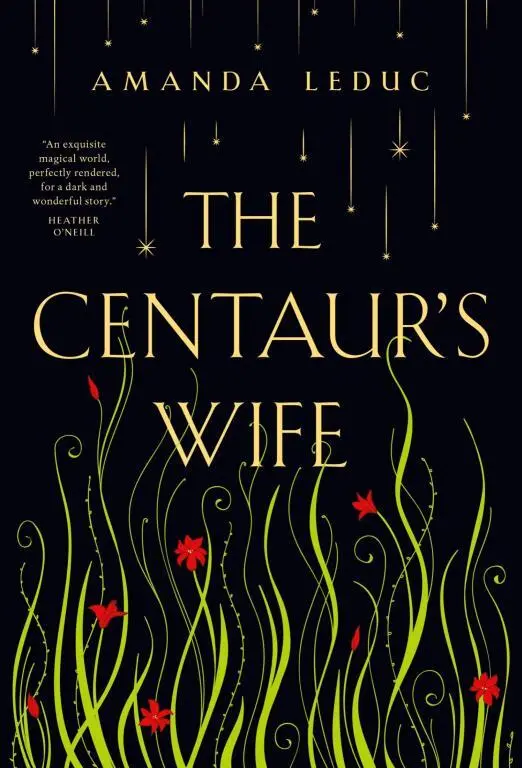
- Название:The Centaur's Wife
- Автор:
- Издательство:Random House of Canada
- Жанр:
- Год:2021
- Город:Toronto
- ISBN:978-0-73527-285-9
- Рейтинг книги:5 / 5. Голосов: 1
-
Избранное:Добавить в избранное
- Отзывы:
-
Ваша оценка:
The Centaur's Wife: краткое содержание, описание и аннотация
Предлагаем к чтению аннотацию, описание, краткое содержание или предисловие (зависит от того, что написал сам автор книги «The Centaur's Wife»). Если вы не нашли необходимую информацию о книге — напишите в комментариях, мы постараемся отыскать её.
Heather is sleeping peacefully after the birth of her twin daughters when the sound of the world ending jolts her awake. Stumbling outside with her babies and her new husband, Brendan, she finds that their city has been destroyed by falling meteors and that her little family are among only a few who survived.
But the mountain that looms over the city is still green—somehow it has been spared the destruction that has brought humanity to the brink of extinction. Heather is one of the few who know the mountain, a place city-dwellers have always been forbidden to go. Her dad took her up the mountain when she was a child on a misguided quest to heal her legs, damaged at birth. The tragedy that resulted has shaped her life, bringing her both great sorrow and an undying connection to the deep magic of the mountain, made real by the beings she and her dad encountered that day: Estajfan, a centaur born of sorrow and of an ancient, impossible love, and his two siblings, marooned between the magical and the human world. Even as those in the city around her—led by Tasha, a charismatic doctor who fled to the city from the coast with her wife and other refugees—struggle to keep everyone alive, Heather constantly looks to the mountain, drawn by love, by fear, by the desire for rescue. She is torn in two by her awareness of what unleashed the meteor shower and what is coming for the few survivors, once the green and living earth makes a final reckoning of the usefulness of human life and finds it wanting.
At times devastating, but ultimately redemptive, Amanda Leduc’s fable for our uncertain times reminds us that the most important things in life aren’t things at all, but rather the people we want by our side at the end of the world.
The Centaur's Wife — читать онлайн бесплатно полную книгу (весь текст) целиком
Ниже представлен текст книги, разбитый по страницам. Система сохранения места последней прочитанной страницы, позволяет с удобством читать онлайн бесплатно книгу «The Centaur's Wife», без необходимости каждый раз заново искать на чём Вы остановились. Поставьте закладку, и сможете в любой момент перейти на страницу, на которой закончили чтение.
Интервал:
Закладка:
B does not ask her any more questions.
THE RIVER SPRITE
Once upon a time there were twin babies born to a woodcutter and his wife. Their mother planted herbs and kept a garden, and sometimes the neighbours from their village would come to her for medicines—tinctures to help them sleep, a salve to soothe the itchy red spots that came from mistakenly touching one of a hundred different plants in the forest.
The birth of the children also brought the mother a great sadness, and she had no balms to treat it. She had heard about this sadness and had hoped to avoid it by being prepared; she and her husband covered their lintel in birch sap, buried stones from the river at every corner of their house. Before the twins came—two girls, their hair bright like fire and their smiles just as holy—the mother made sure to go for daily walks along the river.
“The water will carry you,” the river said. “Come back to the water every day and let your sadness float away on the waves.”
After the girls were born, the mother went to the river, ready to give her sadness away, and instead fought the urge to throw her daughters into the water. She knew the girls belonged to her but somehow did not feel it. They were demanding and greedy, all primal emotions. Try as she might, she couldn’t see herself in their tiny faces. Everything about them seemed alien, strange.
The river, to her surprise, told her that this was normal. She had given birth to changelings. When the mother consulted the old river sprite who lived beneath the waterfall, the sprite said much the same.
“You have been given children by the fairies,” the sprite said. “See how pale they are? See how they scream when you yourself have always been so gentle? These children might look like you, but they are not of you. This is why you don’t feel like yourself. These children belong with the fairies, and the fairies will come to take them soon enough.”
“But if I have changeling children, where are the baby girls who belong to me?”
“The mountain fairies stole them,” the river sprite told her. “You must ask the mountain fairies to bring your children back. Take these changelings into the forest and leave them on the forest floor. Turn in three circles and say Give me my children. If the fairies do not appear, take the children home and try it again the next morning.”
The woman did this, but her babies did not appear, and so she took her changeling children home and put them to bed as if they were her own. The next day, she did it all again, to no avail. When she did it for the third time, she cried aloud into the forest air and begged the fairies to listen.
“I miss my babies!” she said. “I will not be whole unless you give them back to me.”
The forest was silent; the forest said nothing.
In frustration and despair, the woman turned from the two babies on the ground and left the forest. When she had gone beyond the trees, three mountain fairies—one red-haired, one brown-haired, one with hair black as night—crept out from the trees and reached out for the babies.
“Come with us,” they said. “We’ve been waiting for you. We’ll give you halls full of golden toys and warm fires to lay by, and so many good things to eat.”
The babies were cold and defeated by the rumbling of their stomachs. They held out their hands and the fairies scooped them away.
When the mother suffered deep regret and came back to find them, it was as if the twins had never been.
7
Estajfan is tired of watching the humans starve, tired of the city’s dark stink, tired of the despair that hangs around the buildings. The despair that sits in Heather’s bones—the slope of her shoulders, the lines on her face. He is tired of it all.
But he is also tired of the mountain and its unrelenting calm—the carelessness of the mountain centaurs, the cagey silence of his sister. Petrolio’s indifference.
People are starving! Estajfan wants to scream, over and over. These people are going to die!
But he doesn’t say this because he knows that no one cares. Not the mountain centaurs, not the mountain, not even his siblings. Deer are being hunted in the daylight; squirrels are being roasted over human fires. The animals that live amongst the mountain trees are longing for humans to perish.
The humans dwindle, weaken, disappear.
At last his brother offers to come down off the mountain with him—to walk through abandoned human streets, to peer hidden in the trees and see them starving. Petrolio comes to him after he has begun to drop food at different points around the city. It isn’t worry for the humans that brings Petrolio down from the mountain. It is worry for him.
Petrolio meets him on the mountain trail one morning, his blue-green eyes unsettled and searching. “Are you eating?”
Estajfan laughs. “ I’m eating,” he says. “ They are starving to death. Like I’ve said a hundred times already.”
Petrolio grasps his arm. “Estajfan—they’re only humans.”
He pulls away. “Does that mean they deserve to starve?”
“Humans had their chance,” Petrolio says. This is what the mountain centaurs say. Humans had their chance. Humans are a disease on the land. Humans no longer deserve to be here.
“Heather is different,” Estajfan says fiercely. “Heather is not like the rest.”
“Estajfan,” Petrolio says softly, “all of them are the same.”
“How would you know?” He points a finger in his brother’s face. “I don’t see you off the mountain, do I. And yet you’re perfectly happy to ogle that mirror when you think no one’s looking.”
Petrolio flushes. “Da told us all we needed to know,” he says. “You know what they did to him. You know what they would have done to us. ”
Estajfan refuses to believe it. “Da also told us other stories. He went back down the mountain. He went into human cities. He went back to our village. Why would he do that if he hated them so much?”
“Why do you want to help them so badly?”
“Why do I need a reason? They need help. We can give it.”
“If the ground magic is killing their gardens,” Petrolio says, “how much do you think we can do?”
“I don’t know,” Estajfan admits. “But I can try. We can try.”
“And if trying makes no difference?” Petrolio’s voice is soft. “We go down and bring them food and try to help and still they starve? What happens then?”
You have a choice to make, Fox had said. The world is no longer a place for in-between things.
“At least we’ll know we tried.”
Petrolio watches him for a long moment, then sighs. “I’ll help,” he says. “Tell me what to do, and I’ll go down with you. But honestly, Estajfan—I don’t know what good it will do.”
“It will keep them alive a while longer,” Estajfan says. “Right now that should be good enough for all of us.”
He hears the words as clearly as if Heather speaks them straight into his ear. Right now, Estajfan, isn’t going to last forever.

In the dark early hours of the morning they run down the mountain like they did when they were young and then they run past the city, farther than Petrolio has ever gone. Day after day after day, they run through the foothills and into the flatlands. They run past buildings grown over with vines, abandoned cars like small green hills that rise up where the roads used to be. They go into abandoned cities and search the buildings for cans of food, sacks of rice and flour.
Читать дальшеИнтервал:
Закладка:
Похожие книги на «The Centaur's Wife»
Представляем Вашему вниманию похожие книги на «The Centaur's Wife» списком для выбора. Мы отобрали схожую по названию и смыслу литературу в надежде предоставить читателям больше вариантов отыскать новые, интересные, ещё непрочитанные произведения.











Обсуждение, отзывы о книге «The Centaur's Wife» и просто собственные мнения читателей. Оставьте ваши комментарии, напишите, что Вы думаете о произведении, его смысле или главных героях. Укажите что конкретно понравилось, а что нет, и почему Вы так считаете.