Amanda Leduc - The Centaur's Wife
Здесь есть возможность читать онлайн «Amanda Leduc - The Centaur's Wife» весь текст электронной книги совершенно бесплатно (целиком полную версию без сокращений). В некоторых случаях можно слушать аудио, скачать через торрент в формате fb2 и присутствует краткое содержание. Город: Toronto, Год выпуска: 2021, ISBN: 2021, Издательство: Random House of Canada, Жанр: Современная проза, prose_magic, на английском языке. Описание произведения, (предисловие) а так же отзывы посетителей доступны на портале библиотеки ЛибКат.
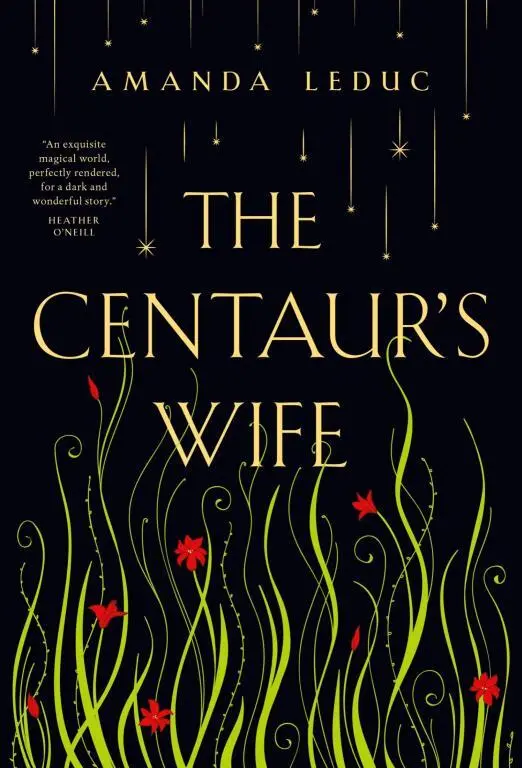
- Название:The Centaur's Wife
- Автор:
- Издательство:Random House of Canada
- Жанр:
- Год:2021
- Город:Toronto
- ISBN:978-0-73527-285-9
- Рейтинг книги:5 / 5. Голосов: 1
-
Избранное:Добавить в избранное
- Отзывы:
-
Ваша оценка:
The Centaur's Wife: краткое содержание, описание и аннотация
Предлагаем к чтению аннотацию, описание, краткое содержание или предисловие (зависит от того, что написал сам автор книги «The Centaur's Wife»). Если вы не нашли необходимую информацию о книге — напишите в комментариях, мы постараемся отыскать её.
Heather is sleeping peacefully after the birth of her twin daughters when the sound of the world ending jolts her awake. Stumbling outside with her babies and her new husband, Brendan, she finds that their city has been destroyed by falling meteors and that her little family are among only a few who survived.
But the mountain that looms over the city is still green—somehow it has been spared the destruction that has brought humanity to the brink of extinction. Heather is one of the few who know the mountain, a place city-dwellers have always been forbidden to go. Her dad took her up the mountain when she was a child on a misguided quest to heal her legs, damaged at birth. The tragedy that resulted has shaped her life, bringing her both great sorrow and an undying connection to the deep magic of the mountain, made real by the beings she and her dad encountered that day: Estajfan, a centaur born of sorrow and of an ancient, impossible love, and his two siblings, marooned between the magical and the human world. Even as those in the city around her—led by Tasha, a charismatic doctor who fled to the city from the coast with her wife and other refugees—struggle to keep everyone alive, Heather constantly looks to the mountain, drawn by love, by fear, by the desire for rescue. She is torn in two by her awareness of what unleashed the meteor shower and what is coming for the few survivors, once the green and living earth makes a final reckoning of the usefulness of human life and finds it wanting.
At times devastating, but ultimately redemptive, Amanda Leduc’s fable for our uncertain times reminds us that the most important things in life aren’t things at all, but rather the people we want by our side at the end of the world.
The Centaur's Wife — читать онлайн бесплатно полную книгу (весь текст) целиком
Ниже представлен текст книги, разбитый по страницам. Система сохранения места последней прочитанной страницы, позволяет с удобством читать онлайн бесплатно книгу «The Centaur's Wife», без необходимости каждый раз заново искать на чём Вы остановились. Поставьте закладку, и сможете в любой момент перейти на страницу, на которой закончили чтение.
Интервал:
Закладка:
She’s known for a while what’s been happening to her—the subtle but unmistakable changes in her body, the unrelenting fatigue. You’re starving , she told herself. That’s all it is. You’re starving, you’re unwell. You should go see Tasha, and see if she can give you something for despair.
But what kind of medication is there for this level of sadness? So one day passed and then another, and she did not go to Tasha, she did not go to Annie, and now she is here, in front of the greenhouse, the girls laid out on the ground in front of her as another life blooms inside her.
She sobs aloud, then catches her breath. Colours swim—bright-red flowers that cover the greenhouse, dark, husky berries that sway up from the ground. She leans her forehead against the cool glass of the greenhouse and closes her eyes, reminded of her father. Soon the snow will come in earnest and bury them all.
She doesn’t want to bring another child into this mess. She doesn’t want to die, frozen and starving.
She picks some berries and brings them to her mouth. Belladonna. Belladonna, oleander, poison oak in the shade beyond the greenhouse. Her father had loved poisonous plants the best.
The babies coo; she barely hears them. The berries won’t kill her, just make her sick, and maybe that will do the rest. Her father was right, all those years ago. She isn’t strong enough. She never was. The world smells of amaryllis and lilies and orchids and the jacaranda tree and the sweetness of the berries in her hand and then something else. A sudden dark shadow comes toward her, rippling the leaves. A shape that smells of mountain and snow and crystalline air but also of sunlight and flowers, of animal and darkness.
“You,” she says, as he comes out from the trees. “It’s you.”

After he brought the knapsack, the centaur returned to her night after night. She snuck out after her mother was asleep. Out the back door and into the trees. If her mother suspected anything, she didn’t ask. Or she didn’t want to know.
Instead of flowers, Estajfan brought her stories. They walked through the silent fields and the cicadas stopped to listen. The crickets went still, like they knew him.
He told her about the time that he and his brother—Petrolio, the name like a flower on the tongue—ran down the mountain so fast they almost fell. The rage that their father had been in when they’d returned—how he’d yelled at them, how he’d wept. How he’d been so sure they’d been killed.
Don’t go down the mountain, his father had said, and they raced each other anyway.
Estajfan told her about the other centaurs—how they’d grown from his father’s bones, how they’d pulled themselves out of the earth. They had no names, he said, because they didn’t need any. He told her fairy tales she hadn’t heard before—stories about octopuses who guard treasure in the deeps, mountain deer who kidnap and raise a human child. Fairies who lived in the salt mines beneath the mountains, long ago, who coated themselves in salt crystals before mating. That one sounded familiar—an old wives’ tale her father once told her, about elders who threw salt across a doorway to ask good things into a woman’s life.
“Stories are never just stories,” her father had said. “There’s always a kernel of truth hidden deep within the words.”
In turn, she told Estajfan about walking late at night. About the twelve dancing princesses, the goose girl, the queen. She talked through the silence that surrounded her, her words like a knife, cutting a web that had grown thick and hard.
She entered ninth grade with no friends except the one she met late at night. She read fairy tales at lunch and drew dragons in her notebook. Dragons, Estajfan told her, had lived on the mountain long ago. They’d disappeared before the horses were there.
“Were they dinosaurs?” she asked him.
“I’m not sure,” he said. He knew many things and yet often seemed like a child—fascinated with mundane human objects like combination locks, a cafeteria tray heaped with food, the money humans passed to one another.
She brought him things for his collection—picture frames, a baseball glove. Her first job was at a bookstore and instead of saving her wages for college she bought paint and pencil crayons and thick sheets of creamy paper and passed them to him in the dark. “So you can draw, if you want to.”
“Draw?” he said.
She showed him what she meant—spreading the paper on the ground, the moon just strong enough to show the pencil lines. Four legs, two arms, a tangle of hair in dreads. He smiled when she finished.
“Is that me?” he said.
She was suddenly too shy to say yes, so she just shrugged. “I’m guessing you all look the same,” she said, and he laughed.
“Mostly we do.” He took the pencils, the paper, and the drawing with him up the mountain.
The years went by. She graduated high school and decided not to go to college after all, telling herself that she didn’t want to leave her mother alone. It was mostly true. She got a full-time job at the bookstore, and started to send out her illustrations. Bears with long teeth. Unicorns and strange birds. Dark forests with shadowed beasts among the trees. Her illustrations began to be published. She illustrated a picture book, and then a volume of fables. She stopped working at the bookstore, and moved into her own apartment. She walked the trails up to the mountain in the dusk to meet Estajfan. Every birthday he brought her flowers, which bloomed in her windows for months. Fifteen years went by like that.
She drew centaurs, over and over. She drew her father falling, his face rigid with terror. Estajfan’s fingers just missing his. Her father’s broken, mangled body somewhere down far below. No one saw those.
She drew herself, a wide-eyed twelve-year-old, one leg shorter than the other, her feet twisted and bent. Her mouth open in a silent scream.
She drew herself now. Her father’s eyes, her father’s smile. The uneven legs and lopsided shoulders that were entirely her own.
Once upon a time there was a father and daughter who went up a mountain together, and only one person came down.
One night she showed Estjafan these pictures. He was gentle with them. When he looked at her afterwards, there was something in his face that made her ribcage tighten.
“Could I keep these, too?” he asked. She wanted to say no, but she nodded.
“Did you ever find him?” she asked.
“I didn’t look,” he said. “Heather, I’m sorry.”
Everything went hot and blurry. “You didn’t try to find him? You just left him to rot?”
“I didn’t want to see it,” he admitted. “I didn’t want to remember what I’d done to you.”
“It was an accident.”
In the dark, she saw him swallow. “When I reached for him, I—I hesitated.”
The world skittered in and out of focus. “For how long?” she said, finally.
“I don’t know,” he whispered. “He was already falling.”
She closed her eyes. “Why did you hesitate?”
“You weren’t supposed to be there,” he said. “Neither of you. He touched Aura like he had a right to do it. Like we were… property.” A long pause. “And what he said—I saw your face. I saw what that did to you.”
She swallowed. “He deserved to die for that?”
His eyes were dark, bottomless pools. “I’ll spend the rest of my life being sorry.”
She tried not to imagine it, but the thoughts came anyway. The animals that had nibbled on his flesh. The maggots that ate his eyes. Had he died right away? Or had death come later, in the dark?
Читать дальшеИнтервал:
Закладка:
Похожие книги на «The Centaur's Wife»
Представляем Вашему вниманию похожие книги на «The Centaur's Wife» списком для выбора. Мы отобрали схожую по названию и смыслу литературу в надежде предоставить читателям больше вариантов отыскать новые, интересные, ещё непрочитанные произведения.






Обсуждение, отзывы о книге «The Centaur's Wife» и просто собственные мнения читателей. Оставьте ваши комментарии, напишите, что Вы думаете о произведении, его смысле или главных героях. Укажите что конкретно понравилось, а что нет, и почему Вы так считаете.