Amy Tan - The Joy Luck Club
Здесь есть возможность читать онлайн «Amy Tan - The Joy Luck Club» весь текст электронной книги совершенно бесплатно (целиком полную версию без сокращений). В некоторых случаях можно слушать аудио, скачать через торрент в формате fb2 и присутствует краткое содержание. Жанр: Современная проза, на английском языке. Описание произведения, (предисловие) а так же отзывы посетителей доступны на портале библиотеки ЛибКат.

- Название:The Joy Luck Club
- Автор:
- Жанр:
- Год:неизвестен
- ISBN:нет данных
- Рейтинг книги:5 / 5. Голосов: 1
-
Избранное:Добавить в избранное
- Отзывы:
-
Ваша оценка:
The Joy Luck Club: краткое содержание, описание и аннотация
Предлагаем к чтению аннотацию, описание, краткое содержание или предисловие (зависит от того, что написал сам автор книги «The Joy Luck Club»). Если вы не нашли необходимую информацию о книге — напишите в комментариях, мы постараемся отыскать её.
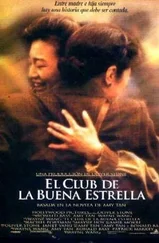
Amy Tan wrote The Joy Luck Club to try to understand her own relationship with her mother. Tan's Chinese parents wanted Americanized children but expected them to think like Chinese. Tan found this particularly difficult as an adolescent. While the generational differences were like those experienced by other mothers and daughters, the cultural distinctions added another dimension. Thus, Tan wrote not only to sort out her cultural heritage but to learn how she and her mother could get along better.
Critics appreciate Tan's straightforward manner as well as the skill with which she talks about Chinese culture and mother/daughter relationships. Readers also love The Joy Luck Club: women of all ages identify with Tan's characters and their conflicts with their families, while men have an opportunity through this novel to better understand their own behaviors towards women. Any reader can appreciate Tan's humor, fairness, and objectivity.
The Joy Luck Club — читать онлайн бесплатно полную книгу (весь текст) целиком
Ниже представлен текст книги, разбитый по страницам. Система сохранения места последней прочитанной страницы, позволяет с удобством читать онлайн бесплатно книгу «The Joy Luck Club», без необходимости каждый раз заново искать на чём Вы остановились. Поставьте закладку, и сможете в любой момент перейти на страницу, на которой закончили чтение.
Интервал:
Закладка:
I opened up the Schumann book to the dark little piece I had played at the recital. It was on the left-hand side of the page, "Pleading Child." It looked more difficult than I remembered. I played a few bars, surprised at how easily the notes came back to me.
And for the first time, or so it seemed, I noticed the piece on the right-hand side. It was called "Perfectly Contented." I tried to play this one as well. It had a lighter melody but the same flowing rhythm and turned out to be quite easy. "Pleading Child" was shorter but slower; "Perfectly Contented" was longer, but faster. And after I played them both a few times, I realized they were two halves of the same song.
American Translation
"Wah!" cried the mother upon seeing the mirrored armoire in the master suite of her daughter's new condominium. "You cannot put mirrors at the foot of the bed. All your marriage happiness will bounce back and turn the opposite way."
"Well, that's the only place it fits, so that's where it stays," said the daughter, irritated that her mother saw bad omens in everything. She had heard these warnings all her life.
The mother frowned, reaching into her twice-used Macy's bag. "Hunh, lucky I can fix it for you, then." And she pulled out the gilt-edged mirror she had bought at the Price Club last week. It was her housewarming present. She leaned it against the headboard, on top of the two pillows.
"You hang it here," said the mother, pointing to the wall above. "This mirror sees that mirror -haule!- multiply your peach-blossom luck."
"What is peach-blossom luck?"
The mother smiled, mischief in her eyes. "It is in here," she said, pointing to the mirror. "Look inside. Tell me, am I not right? In this mirror is my future grandchild, already sitting on my lap next spring."
And the daughter looked-and haule! There it was: her own reflection looking back at her.
Rice Husband
To this day, I believe my mother has the mysterious ability to see things before they happen. She has a Chinese saying for what she knows. Chunwang chihan: If the lips are gone, the teeth will be cold. Which means, I suppose, one thing is always the result of another.
But she does not predict when earthquakes will come, or how the stock market will do. She sees only bad things that affect our family. And she knows what causes them. But now she laments that she never did anything to stop them.
One time when I was growing up in San Francisco, she looked at the way our new apartment sat too steeply on the hill. She said the new baby in her womb would fall out dead, and it did.
When a plumbing and bathroom fixtures store opened up across the street from our bank, my mother said the bank would soon have all its money drained away. And one month later, an officer of the bank was arrested for embezzlement.
And just after my father died last year, she said she knew this would happen. Because a philodendron plant my father had given her had withered and died, despite the fact that she watered it faithfully. She said the plant had damaged its roots and no water could get to it. The autopsy report she later received showed my father had had ninety-percent blockage of the arteries before he died of a heart attack at the age of seventy-four. My father was not Chinese like my mother, but English-Irish American, who enjoyed his five slices of bacon and three eggs sunnyside up every morning.
I remember this ability of my mother's, because now she is visiting my husband and me in the house we just bought in Woodside. And I wonder what she will see.
Harold and I were lucky to find this place, which is near the summit of Highway 9, then a left-right-left down three forks of unmarked dirt roads, unmarked because the residents always tear down the signs to keep out salesmen, developers, and city inspectors. We are only a forty-minute drive to my mother's apartment in San Francisco. This became a sixty-minute ordeal coming back from San Francisco, when my mother was with us in the car. After we got to the two-lane winding road to the summit, she touched her hand gently to Harold's shoulder and softly said, "Ai, tire squealing." And then a little later, "Too much tear and wear on car."
Harold had smiled and slowed down, but I could see his hands were clenched on the steering wheel of the Jaguar, as he glanced nervously in his rearview mirror at the line of impatient cars that was growing by the minute. And I was secretly glad to watch his discomfort. He was always the one who tailgated old ladies in their Buicks, honking his horn and revving the engine as if he would run them over unless they pulled over.
And at the same time, I hated myself for being mean-spirited, for thinking Harold deserved this torment. Yet I couldn't help myself. I was mad at Harold and he was exasperated with me. That morning, before we picked my mother up, he had said, "You should pay for the exterminators, because Mirugai is your cat and so they're your fleas. It's only fair."
None of our friends could ever believe we fight over something as stupid as fleas, but they would also never believe that our problems are much, much deeper than that, so deep I don't even know where bottom is.
And now that my mother is here-she is staying for a week, or until the electricians are done rewiring her building in San Francisco -we have to pretend nothing is the matter.
Meanwhile she asks over and over again why we had to pay so much for a renovated barn and a mildew-lined pool on four acres of land, two of which are covered with redwood trees and poison oak. Actually she doesn't really ask, she just says, "Aii, so much money, so much," as we show her different parts of the house and land. And her laments always compel Harold to explain to my mother in simple terms: "Well, you see, it's the details that cost so much. Like this wood floor. It's hand-bleached. And the walls here, this marbleized effect, it's hand-sponged. It's really worth it."
And my mother nods and agrees: "Bleach and sponge cost so much."
During our brief tour of the house, she's already found the flaws. She says the slant of the floor makes her feel as if she is "running down." She thinks the guest room where she will be staying-which is really a former hayloft shaped by a sloped roof-has "two lopsides." She sees spiders in high corners and even fleas jumping up in the air-pah! pah! pah!-like little spatters of hot oil. My mothers knows, underneath all the fancy details that cost so much, this house is still a barn.
She can see all this. And it annoys me that all she sees are the bad parts. But then I look around and everything she's said is true. And this convinces me she can see what else is going on, between Harold and me. She knows what's going to happen to us. Because I remember something else she saw when I was eight years old.
My mother had looked in my rice bowl and told me I would marry a bad man.
"Aii, Lena," she had said after that dinner so many years ago, "your future husband have one pock mark for every rice you not finish."
She put my bowl down. "I once know a pock-mark man. Mean man, bad man."
And I thought of a mean neighbor boy who had tiny pits in his cheeks, and it was true, those marks were the size of rice grains. This boy was about twelve and his name was Arnold.
Arnold would shoot rubber bands at my legs whenever I walked past his building on my way home from school, and one time he ran over my doll with his bicycle, crushing her legs below the knees. I didn't want this cruel boy to be my future husband. So I picked up that cold bowl of rice and scraped the last few grains into my mouth, then smiled at my mother, confident my future husband would be not Arnold but someone whose face was as smooth as the porcelain in my now clean bowl.
Читать дальшеИнтервал:
Закладка:
Похожие книги на «The Joy Luck Club»
Представляем Вашему вниманию похожие книги на «The Joy Luck Club» списком для выбора. Мы отобрали схожую по названию и смыслу литературу в надежде предоставить читателям больше вариантов отыскать новые, интересные, ещё непрочитанные произведения.










Обсуждение, отзывы о книге «The Joy Luck Club» и просто собственные мнения читателей. Оставьте ваши комментарии, напишите, что Вы думаете о произведении, его смысле или главных героях. Укажите что конкретно понравилось, а что нет, и почему Вы так считаете.