Li Cunxin - Mao's Last Dancer
Здесь есть возможность читать онлайн «Li Cunxin - Mao's Last Dancer» весь текст электронной книги совершенно бесплатно (целиком полную версию без сокращений). В некоторых случаях можно слушать аудио, скачать через торрент в формате fb2 и присутствует краткое содержание. Жанр: Современная проза, на английском языке. Описание произведения, (предисловие) а так же отзывы посетителей доступны на портале библиотеки ЛибКат.
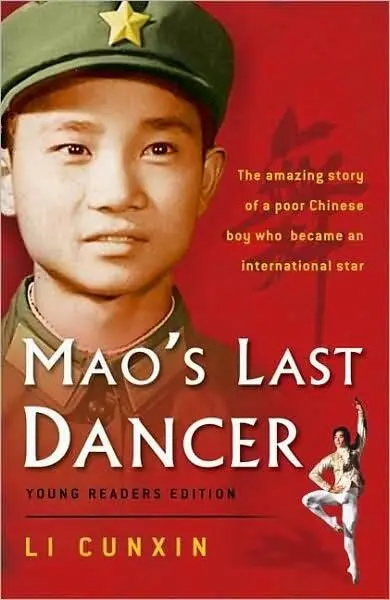
- Название:Mao's Last Dancer
- Автор:
- Жанр:
- Год:неизвестен
- ISBN:нет данных
- Рейтинг книги:3 / 5. Голосов: 1
-
Избранное:Добавить в избранное
- Отзывы:
-
Ваша оценка:
Mao's Last Dancer: краткое содержание, описание и аннотация
Предлагаем к чтению аннотацию, описание, краткое содержание или предисловие (зависит от того, что написал сам автор книги «Mao's Last Dancer»). Если вы не нашли необходимую информацию о книге — напишите в комментариях, мы постараемся отыскать её.
Mao's Last Dancer — читать онлайн бесплатно полную книгу (весь текст) целиком
Ниже представлен текст книги, разбитый по страницам. Система сохранения места последней прочитанной страницы, позволяет с удобством читать онлайн бесплатно книгу «Mao's Last Dancer», без необходимости каждый раз заново искать на чём Вы остановились. Поставьте закладку, и сможете в любой момент перейти на страницу, на которой закончили чтение.
Интервал:
Закладка:
Margot was an elegant lady. Her every mannerism represented grace. At Ben's place for dinner one night, she asked me about my family back in China. She was fond of the Chinese people and told me she had lived in Shanghai for quite a few years while she was a young girl.
"Did you like Shanghai?" I asked.
"Very much. I have a lot of fond memories. It was called the Paris of Asia then, and it was a place full of energy. But it's so different now," she said sadly.
That night, after my brief conversation with Margot about China, I lay in bed and tossed and turned. What Margot had said about China had stirred huge waves of emotion within me. I couldn't stop myself from thinking about my family and friends back in China. Special memories pushed their way back into my mind, and overwhelmed me once more with an ocean of sadness. I had made my career a success. I should be happy, but I wasn't. I wanted my niang, I wanted to hear her voice, I wanted to feel her love. This dream had slipped further and further away over the years. Now I felt despair beyond description. The hope of ever seeing my beloved ones again seemed gone. But how could I give up hope! I could never forget my niang's love, her strength of character. And my dia-the hardworking man with few words. My six brothers, my aunts and uncles. I could never forget my home.
The following year we took Swan Lake to the Kennedy Center in Washington DC. Two days before our opening night performance, Barbara Bush invited Ben and me to the White House before our busy schedule began at the theatre that morning. We met Barbara in one of the smaller White House reception rooms. Pastries, tea and coffee were already waiting.
"Hello Ben, so nice to see you! Li, how nice it is to see you again." She opened her arms and gave us both a hug. She was still the happy, warm person that I remembered from my first meeting with her five years before. Nothing had changed, except that she now treated me like an old friend.
"Li, I keep hearing all about your wonderful achievements with your dancing and I'm so happy that things have worked out for you," she said.
"Thank you, thank you and George for all you have done for me," I said.
"Oh, Li, we did nothing, really." She turned to Ben. "Tell me, Ben, how are all your China adventures going?"
"It's great, I love China. The Chinese people are so sincere. They pay me tremendous respect. I always feel re-energised when I go there," Ben replied. "It has changed a lot. Since Deng Xiaoping came along people seem to be happier. They have more freedom now. He has done an amazing job."
Then Barbara asked me what I thought of China 's new direction. She caught me by surprise. I hesitated, and looked at Ben.
"Li hasn't been allowed back," Ben said, coming to my rescue. "I know he misses his family. I hope that one day he will be allowed to see them."
Barbara frowned and looked thoughtful. "Which city in China do you come from, Li?"
" Qingdao, where the beer is from."
"Nice beer and nice city," she smiled, and then turned the conversation to other things.
Before we left, Barbara showed us around the White House and I felt honoured and privileged to be given such a tour. I was surprised, though, to see how simple the interior decorations were. This was the centre of American power, the centre of world power. Where was the grandeur? The lavish palace of political might? Compared to Chairman Mao's monument in Tiananmen Square, the White House seemed very simple indeed.
Forty-five minutes later, Ben and I hugged Barbara goodbye and raced back to the theatre for our rehearsals. But I was deeply touched by my visit to the White House and by this elegant, kind-hearted, approachable lady. I thought of the Minister for Culture in China -the comparison was ridiculous.
Two days later, at our Swan Lake performance, Vice-President George Bush and Barbara Bush invited the Chinese ambassador and the cultural attaché, Wang Zicheng, to be their guests. I was performing the prince, the same role that had so eluded me back in China. I felt like a prince and danced like a prince now. I approached the role from within. Gone were my peasant inhibitions and inadequacies. I didn't need to perm my hair to make me feel more princely, and I felt a wonderful rapport from the audience.
After the performance, the Bushes came on stage to congratulate us. Mr Bush stopped in front of me. "Ni hao, Li. Congratulations. You were wonderful tonight," and he introduced the Chinese ambassador and Wang Zicheng, who had briefed Zhang Weiqiang and me at the Ministry of Culture in Beijing before our first trip to the US, and again at the Jackson Ballet Competition.
"We're old friends. Hello, Cunxin!" he shook my hands excitedly. "Congratulations, you have made us proud tonight! Would you have time to come to the embassy tomorrow, for tea in the morning?" he asked.
I was so surprised by his praise. I was even more surprised at the invitation. "Yes, I would love to come," I said.
Ben accompanied me to the Chinese embassy the next morning because I was too scared to go there by myself, given my last experience at the consulate in Houston. We were welcomed and congratulated by Wang Zicheng and he proudly showed us the reviews of our performance in the Washington Post. He congratulated me for my contribution to the ballet profession and for adding glory to the Chinese people. Then he told me something else. He told me that he had favourably reviewed my situation, and that Vice-President Bush had intervened on my behalf with regard to my parents. He said that the possibility of my going back to China was still remote, but that he would instead try to obtain the Chinese government's approval for my parents to come to America for a brief visit. He made no promises.
I knew Barbara Bush would have been the one who had told her husband of my homesickness and longing to see my family. I was deeply touched. I could never repay her for such generosity and kindness.
Knowing China though, the process of trying to get my parents here could take many years. I held little hope. Wang Zicheng was simply trying to pay Mr Bush some lip service and trying to shut me up. I thanked him, but didn't think he could ever deliver. So as time went on, the hope of seeing my parents after five long years gradually faded from my heart.
But I was wrong. A few months later I received a letter from Wang Zicheng. He had indeed obtained the Chinese government's permission for my parents to leave China for a visit to the United States.
I held the letter in my hand and tears streamed down my face. I was shaking with joy.
25 No More Nightmares
I stayed home and cried. I didn't know how long I cried for and I didn't care. I just wanted to be alone to enjoy this overwhelming happiness.
Those tears washed out six long, unbearable years of sadness and grief. I wanted to stand on top of New York 's twin towers and yell out, let the entire world know how happy and how lucky I was.
I had no idea what my parents would look like after six years of hard, hard living. That night, trembling with excitement, I dialled my old village phone number. "Hello, can I speak to Li Tingfang, please?"
"Who is calling?"
"Li Cunxin, his sixth son," I replied.
I could tell the man on the other end was hesitating. I was afraid he would hang up, so I quickly added, "I have the central government's permission for my parents to come and visit me in America."
"Wait a minute," he said. I could hear him talking to another man in the background and then I heard a voice shout over the village's loudspeaker, "Li Tingfang! Li Tingfang! Phone call from America!"
I could hardly control my joy. My heart sang. Five minutes felt like five hours. I was anxious beyond description. I had a Tsingtao beer in my other hand and took a big gulp, but my hands were shaking uncontrollably.
Читать дальшеИнтервал:
Закладка:
Похожие книги на «Mao's Last Dancer»
Представляем Вашему вниманию похожие книги на «Mao's Last Dancer» списком для выбора. Мы отобрали схожую по названию и смыслу литературу в надежде предоставить читателям больше вариантов отыскать новые, интересные, ещё непрочитанные произведения.





Обсуждение, отзывы о книге «Mao's Last Dancer» и просто собственные мнения читателей. Оставьте ваши комментарии, напишите, что Вы думаете о произведении, его смысле или главных героях. Укажите что конкретно понравилось, а что нет, и почему Вы так считаете.