Li Cunxin - Mao's Last Dancer
Здесь есть возможность читать онлайн «Li Cunxin - Mao's Last Dancer» весь текст электронной книги совершенно бесплатно (целиком полную версию без сокращений). В некоторых случаях можно слушать аудио, скачать через торрент в формате fb2 и присутствует краткое содержание. Жанр: Современная проза, на английском языке. Описание произведения, (предисловие) а так же отзывы посетителей доступны на портале библиотеки ЛибКат.
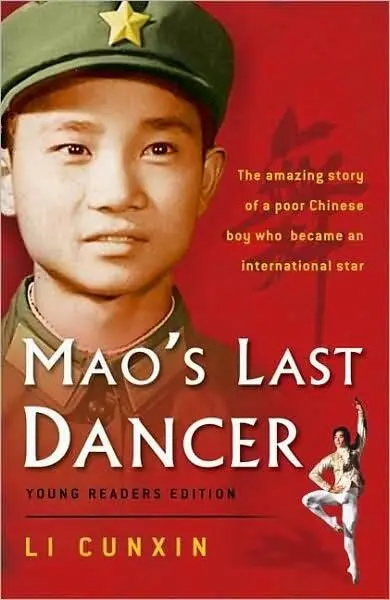
- Название:Mao's Last Dancer
- Автор:
- Жанр:
- Год:неизвестен
- ISBN:нет данных
- Рейтинг книги:3 / 5. Голосов: 1
-
Избранное:Добавить в избранное
- Отзывы:
-
Ваша оценка:
Mao's Last Dancer: краткое содержание, описание и аннотация
Предлагаем к чтению аннотацию, описание, краткое содержание или предисловие (зависит от того, что написал сам автор книги «Mao's Last Dancer»). Если вы не нашли необходимую информацию о книге — напишите в комментариях, мы постараемся отыскать её.
Mao's Last Dancer — читать онлайн бесплатно полную книгу (весь текст) целиком
Ниже представлен текст книги, разбитый по страницам. Система сохранения места последней прочитанной страницы, позволяет с удобством читать онлайн бесплатно книгу «Mao's Last Dancer», без необходимости каждый раз заново искать на чём Вы остановились. Поставьте закладку, и сможете в любой момент перейти на страницу, на которой закончили чтение.
Интервал:
Закладка:
The second round went much better and I started to get my confidence back. But then, just before the third and final round, one of the Chinese competitors, Lin Jianwei from Shanghai, suddenly disappeared from the competition. Nobody could find him. Rumours began-perhaps I had helped him defect. My situation with the Chinese turned from bad to worse. Then some FBI agents approached me. They said the situation had become extremely serious. Five Chinese officials from the embassy in Washington were on their way to the competition. They recommended I leave as soon as possible.
"No, I won't leave," I said to Ben. "If I leave they will have more reason to think that I have helped in the defection."
"Li, this is serious!" Ben said.
"No, I will not leave. I will finish the competition!"
So, for the rest of the competition, either Ben or one of my Houston Ballet colleagues stayed with me the whole time. We moved out of the university complex and into a hotel. We used secret codes when opening our hotel room doors and it was very intense.
In the middle of the third round of the competition one of the five officials from the Chinese embassy in Washington requested a meeting with me. It was Wang Zicheng, the former head of the Educational Bureau from the Ministry of Culture in China. He asked me if I'd helped Lin to defect. I said I had nothing to do with Lin's defection, and I felt he believed me.
To my great surprise, and despite the defection drama, I finished the competition with a silver medal. No gold was awarded to the male dancers because the judges could not agree on who should receive it. The best prize China received was Zhang Weiqiang's bronze, Ben received the gold for best choreography and Janie also received a gold medal.
I was happy, not just for myself but for Chinese ballet too, because deep down in my heart, I knew that without people like Teacher Xiao and Zhang Shu I would never have achieved this award. I dedicated my medal to Teacher Xiao. He was the one who had borne the brunt of the blame for my defection, who I learnt much later had seen intense political attacks on the Beijing Dance Academy after I'd left. Yet Teacher Xiao had never lost faith in me. He had told me: the strength of your parents' character is in you. You can help your parents by becoming the best dancer you can.
I knew Teacher Xiao would have been happy and excited about my medal, but he'd also have to hide his pride. I was a defector and an enemy.
A few days after the end of the competition, the suspense surrounding Lin Jianwei's disappearance ended. Lin had sought political asylum with the help of a ballet teacher in Fort Worth. I was clean. And, secretly, I was pleased that this star from the Shanghai Ballet had followed in my footsteps. Part of me did feel sad for China, losing two of their dancers in just over a year, but the pursuit of our artistic dreams was paramount. When would the time come when we wouldn't need to defect to be able to work in the West? How long would this political and artistic suppression last? I had no answers. I wouldn't live long enough to see such freedom for China, I thought.
With the prize money from that ballet competition I put a downpayment on my very first house. It was in a cheap and historic Houston suburb called The Heights, five minutes away from the theatre district and ten minutes from the Houston Ballet studios.
I didn't know anything about termites then.
The house hadn't been renovated since the 1940//s and it still had cheap wood-veneer panelling and old smelly, worn-out lime- green carpet. There was one small air-conditioner in the living room, which had leaked and caused severe water damage to the supporting wooden beams. The roof shingles needed replacing, the foundation blocks were damaged by termites and the house leaned noticeably to one side. The wiring was exposed, the water pipes were rusted, there were leaking sewer pipes, cockroaches, mice… it was a disaster.
But I didn't care. I had purchased my first house. I had realised the capitalist dream. Suddenly a Chinese peasant boy and a former communist Red Guard had become a landowner in the Western world! I was amazed at how easily I had done it.
My fellow dancers at the Houston Ballet helped me with my renovations and my house soon became a sort of dancers' meeting place during their free times. The whole house was turned upside down with renovations.
In hindsight it would have been easier and cheaper for me to have torn down the whole building and start all over again. I hadn't the slightest idea about wooden houses-my parents' house in China was built of stone and brick. But still I was very proud of my own house and I loved entertaining my friends in it. Ben jokingly remarked to other people, "Communists make the best capitalists." I even got my driver's licence and bought my first car that year, a second-hand Toyota. I felt a great sense of achievement about it all, but still I kept thinking about my family, the commune, the primitive house they were living in. What would my parents think about my own house? My own car? My Western wealth? I felt guilty for having so much.
After one year of being a soloist, Ben promoted me into the principal ranks. Gradually my reputation as a dancer spread both in America and internationally. My dancing career had gone beyond my wildest dreams, but still I was not satisfied. I knew I could improve even more-with the freedom I now had, anything was possible. I was the luckiest person in the world. Except of course for my only sadness, the one dark shadow which remained in my heart: that I could never see my parents again.
But then, in the middle of 1983, I met Mary McKendry.
I was performing with the Houston Ballet on a six-week tour through Europe. In London we performed at the Sadler's Wells Theatre, and this time we were there for nearly two weeks. On one of our few free nights before the performance, Ben urged us all to see this Australian-born ballerina he'd seen perform with the London Festival Ballet. Ben rarely praised dancers from other companies: he always put his own dancers on a higher pedestal, but he had worked with Mary on several of his ballets and knew she was quite extraordinary. Out of curiosity I went to see her dance the lead in Ben's Four Last Songs. I was so impressed. I went back again the next night to see her in Cinderella. She was different from other dancers. There was a distinctive quality there, rare, lyrical and beautiful, with an intensity and commitment that transfixed me. I fell in love with her artistry immediately.
"Is there any chance of inviting Mary to join the Houston Ballet?" I asked Ben the next day. "She is such a wonderful dancer."
"I don't think she would leave London for Houston," Ben replied.
The following day, when we were rehearsing Etude on stage, I saw Mary rush into the theatre, her dark hair flying wildly around her face. She found a seat and sat quietly in the audience to watch our rehearsals.
I sneaked over to her during the first available break. "Hello, I'm Li," I said. "You must be Mary McKendry."
She nodded.
"I really enjoyed your performances!" I said enthusiastically.
"Thanks," she said briefly, then quickly turned her attention to the dancing.
I felt disappointed. I had wanted a longer conversation than that, but she didn't seem interested in talking to me.
I crept back onto the stage with my pride hurt. I had always been shy with girls and had problems communicating with them. But I didn't get another opportunity to talk to Mary again before we left to go back to Houston. I often thought of Mary and her dancing after that but I wouldn't meet her again for another eighteen months.
After we got back to Houston, we began working on our major ballet for the year, Sleeping Beauty. Through Ben's Royal Ballet connections he had established a very special friendship with Margot Fonteyn. She had danced in some of Ben's earlier ballets and had tremendous respect for him, and Ben had periodically invited her to Houston for special coaching sessions or for special opening night performances. Now she was coming to Houston again. I had loved and respected Margot so much ever since I had seen her in those videos in my Beijing Dance Academy days. I couldn't believe I would actually meet her.
Читать дальшеИнтервал:
Закладка:
Похожие книги на «Mao's Last Dancer»
Представляем Вашему вниманию похожие книги на «Mao's Last Dancer» списком для выбора. Мы отобрали схожую по названию и смыслу литературу в надежде предоставить читателям больше вариантов отыскать новые, интересные, ещё непрочитанные произведения.



Обсуждение, отзывы о книге «Mao's Last Dancer» и просто собственные мнения читателей. Оставьте ваши комментарии, напишите, что Вы думаете о произведении, его смысле или главных героях. Укажите что конкретно понравилось, а что нет, и почему Вы так считаете.