Li Cunxin - Mao's Last Dancer
Здесь есть возможность читать онлайн «Li Cunxin - Mao's Last Dancer» весь текст электронной книги совершенно бесплатно (целиком полную версию без сокращений). В некоторых случаях можно слушать аудио, скачать через торрент в формате fb2 и присутствует краткое содержание. Жанр: Современная проза, на английском языке. Описание произведения, (предисловие) а так же отзывы посетителей доступны на портале библиотеки ЛибКат.
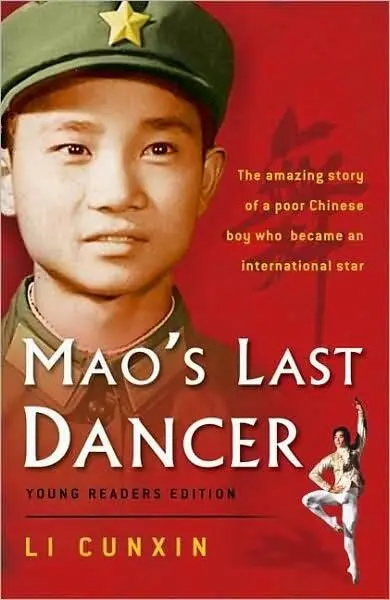
- Название:Mao's Last Dancer
- Автор:
- Жанр:
- Год:неизвестен
- ISBN:нет данных
- Рейтинг книги:3 / 5. Голосов: 1
-
Избранное:Добавить в избранное
- Отзывы:
-
Ваша оценка:
Mao's Last Dancer: краткое содержание, описание и аннотация
Предлагаем к чтению аннотацию, описание, краткое содержание или предисловие (зависит от того, что написал сам автор книги «Mao's Last Dancer»). Если вы не нашли необходимую информацию о книге — напишите в комментариях, мы постараемся отыскать её.
Mao's Last Dancer — читать онлайн бесплатно полную книгу (весь текст) целиком
Ниже представлен текст книги, разбитый по страницам. Система сохранения места последней прочитанной страницы, позволяет с удобством читать онлайн бесплатно книгу «Mao's Last Dancer», без необходимости каждый раз заново искать на чём Вы остановились. Поставьте закладку, и сможете в любой момент перейти на страницу, на которой закончили чтение.
Интервал:
Закладка:
I would have loved just to have heard their voices once again. In some ways, although I had escaped the communist cell, I had, in so many other ways, stepped right into a cell of another kind-a world of homesickness and heartache, of pain that was palpable, of sickness that was real. When I was alone, tears would fog my vision and drop like rain whenever I thought of my beloved niang.
Gradually, over the months and years, I learned to store my grief inside and it flooded my heart with sorrow. I would remember my family's voices, their word-finding games, how we would pass food from one family member to another because there was never enough for all of us. I wondered, was my dia still telling his stories? How is my second brother? Did he marry the girl Big Aunt had introduced to him? Is he at peace with his life? How was the Bandit? The Chongs? Teacher Xiao and Zhang Shu? I missed my dia's stories. I missed making kites with him. I longed for my niang's warmth, her heartbeat, her love. At these moments, the distant memories of dried yams never seemed quite so bad.
And another thing concerned me-I didn't want to be like most of the Chinese people living in Houston, mixing only with other Chinese. I didn't want to be always on the fringe. So I tried to read books in English. My first was a book called Black Beauty. It was a Christmas present. An animal story, I thought. For children. Easy enough. But then, it was so hard! So many new words I didn't know. I turned to my dictionary and wrote down the meaning of each word in the book as I went. That killed the continuity of the story for me, but still I cried when Beauty lost his mother, just like I had. By the time I'd finished reading it, my tiny detailed notes covered each and every page of the novel.
I tried to fit in by dating American girls too. Once, I dated a young girl and we went to a wedding together. She asked me if I wanted some coke.
"No," I answered, "I don't like Coke, I am a beer drinker."
"I didn't mean Coca-Cola, I meant cocaine."
I had heard about cocaine. I'd heard it was bad. "No, thank you," I replied.
Then a friend of hers asked me if I wanted a smoke.
"I hate the taste of cigarettes," I said.
He laughed. "I wasn't offering you a cigarette, I was offering you some grass."
I was totally lost by then. Sounded like those horrible dried squash leaves I'd tried with my childhood friends back in China. But everyone assured me it would make me feel good, so I gave one of their grass cigarettes a try. Ten minutes later I didn't feel any different. So I tried another.
A few minutes later I felt like a hammer was pounding inside my head. Unhappiness overwhelmed me. My parents, my brothers, the Bandit, my friends, my failed marriage, the defection-all flooded into my mind. I was trapped. I had to go home. I don't remember which road I took or how I got there but I do remember lying on my bed at one in the morning, alone with those painful thoughts. My head felt like someone had driven a long nail into it. Every joint of my body ached. I don't know what time I finally fell asleep but when I opened the door the next morning, there was the girl I'd dated. Her face was red. She could hardly stand. The thought of what I'd just experienced made my head ache more, and I ended our relationship there and then.
All the way through rehearsal the following day, I thought I would lose my balance and fall at any moment. I was in a dreamland. Words just came out of my mouth without me thinking.
I performed the role of the jester in Cinderella at that night's dress rehearsal. All I could remember was the applause afterwards. Ben said it was the best solo I had ever done. Could I do it exactly like that on opening night? he asked. Repeat that? Of course I couldn't repeat what I'd done! I hadn't the slightest idea how I'd done it in the first place! That was the last time I would try anything that looked like dried squash leaves.
Aside from the drugs though, I did want to experiment with nearly everything the Western world had to offer. I discovered country and western movies, especially the John Wayne ones. I liked the courage he portrayed. I also liked movies such as Star Trek and the 007 films. I went to operas, symphonies, pop concerts and plays. Through Ben I met some extraordinary people -people including Liza Minnelli, Cleo Laine, Gregory Peck, Frank Sinatra and John Denver. I even went to discos, but I wasn't too fond of them. Still, I was like a bird let out of its cage and I could fly in any direction I chose.
But I never lost my love for ballet. The Houston Ballet was my home now. The dancers were my family. I treasured each day and each performance as though it were my last. I looked to Ben for constant guidance and inspiration, and found it.
That year, I heard China was sending its first ever delegation to compete in the International Ballet Competition in Japan. I asked Ben if I could go to the competition and represent China. Ben refused. Our performance schedule was too busy.
Later I asked Ben if I could enter the American International Ballet Competition in Jackson, Mississippi, the equivalent of the Olympics for ballet dancers. I wanted to get a sense of how my dancing stood up to international standards. And I told Ben I wanted to represent China. I owed China my loyalty as a Chinese dancer, or at least I owed my ballet teachers in China that loyalty.
Ben felt it would be good exposure for the Houston Ballet, so he entered four of his dancers, including me, into the competition. I proudly registered as a Chinese citizen: it would be my way of returning something to all my teachers, especially Teacher Xiao and Zhang Shu for all they had given me in dance. This time, I wanted to make both Ben and China proud.
Over seventy competitors from all over the world would compete. As a soloist I would have to perform six solos and we only had three weeks to prepare. I was inspired. To work with Ben so closely was a pleasure and I didn't really care whether I won anything or not.
But at the registration desk on the first day of the competition, the Chinese delegation rejected me. I was a Chinese defector. They no longer recognised me as a Chinese citizen, whether I held a Chinese passport or not. Even worse, my former teachers and classmates from China were told by the Chinese government not to communicate with me. I had been so excited to see them, but now I was considered their enemy.
I was devastated. I wanted to go back to Houston at once, but the president of the organising committee told Ben that he would be happy for me to represent America even though I wasn't an American citizen. I gratefully accepted, but I had to hold back my tears as my former teachers, classmates and friends, including Zhang Weiqiang, all avoided me during the course of the competition. I knew that they would have no choice but to follow orders from their government. Still, it didn't help my agony of sadness. Sometimes I would hear people call me "that bastard defector" or "that heartless turtle". I pretended not to hear, but privately I sobbed. I wished I hadn't come to the competition. How naïve had I been, wanting to represent China? I would wake up at night with tears in my eyes.
During the first round of the competition I simply couldn't concentrate. I fell on my hands in my final solo, the Bluebird from Sleeping Beauty, and I only barely qualified through to the second round. I knew I had danced terribly. "Did you see him fall on his arse?" I heard some of the Chinese teachers say, and they laughed.
The second round of the competition required two contemporary solos. But by now I had a swollen right knee, a cricked neck, an injured left hamstring and the derision of my Chinese colleagues to cope with. I only had two days to recoup my mental and physical strength. I shrank into sorrow and suffered the pain alone. The rehearsals didn't go well at all and Ben and my Houston Ballet colleagues noticed. I desperately searched for some strength from within. I kept asking myself, do you want to swap places with your classmates from China? I thought of the fable of the frog, deep in the well, longing to get out. I began to realise that only one person could determine the result of the competition and that was me.
Читать дальшеИнтервал:
Закладка:
Похожие книги на «Mao's Last Dancer»
Представляем Вашему вниманию похожие книги на «Mao's Last Dancer» списком для выбора. Мы отобрали схожую по названию и смыслу литературу в надежде предоставить читателям больше вариантов отыскать новые, интересные, ещё непрочитанные произведения.




Обсуждение, отзывы о книге «Mao's Last Dancer» и просто собственные мнения читателей. Оставьте ваши комментарии, напишите, что Вы думаете о произведении, его смысле или главных героях. Укажите что конкретно понравилось, а что нет, и почему Вы так считаете.