Li Cunxin - Mao's Last Dancer
Здесь есть возможность читать онлайн «Li Cunxin - Mao's Last Dancer» весь текст электронной книги совершенно бесплатно (целиком полную версию без сокращений). В некоторых случаях можно слушать аудио, скачать через торрент в формате fb2 и присутствует краткое содержание. Жанр: Современная проза, на английском языке. Описание произведения, (предисловие) а так же отзывы посетителей доступны на портале библиотеки ЛибКат.
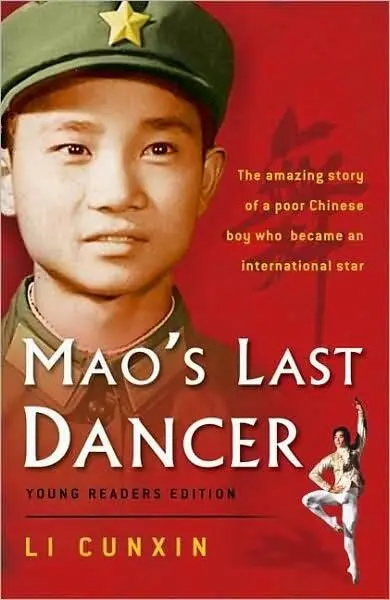
- Название:Mao's Last Dancer
- Автор:
- Жанр:
- Год:неизвестен
- ISBN:нет данных
- Рейтинг книги:3 / 5. Голосов: 1
-
Избранное:Добавить в избранное
- Отзывы:
-
Ваша оценка:
Mao's Last Dancer: краткое содержание, описание и аннотация
Предлагаем к чтению аннотацию, описание, краткое содержание или предисловие (зависит от того, что написал сам автор книги «Mao's Last Dancer»). Если вы не нашли необходимую информацию о книге — напишите в комментариях, мы постараемся отыскать её.
Mao's Last Dancer — читать онлайн бесплатно полную книгу (весь текст) целиком
Ниже представлен текст книги, разбитый по страницам. Система сохранения места последней прочитанной страницы, позволяет с удобством читать онлайн бесплатно книгу «Mao's Last Dancer», без необходимости каждый раз заново искать на чём Вы остановились. Поставьте закладку, и сможете в любой момент перейти на страницу, на которой закончили чтение.
Интервал:
Закладка:
But Ben and my friends would not leave the consulate without me. They refused to leave. So the consulate officials turned the lights out. The free tea, soft drinks and crackers were withdrawn. Only the use of the bathrooms was allowed.
About twenty minutes later the officials came back into the room. Kind and polite persuasion changed to cold, threatening words.
Ben and my friends continued to resist.
By now, rumours about my detention at the consulate had started to spread to Louisa's party. By 10.30 p.m. they suspected something terrible had happened. Two people in particular wanted to find out the truth: Anne Holmes and Carl Cunningham were dance critics for the Houston Chronicle and the Houston Post. They'd planned to interview me that night, but as time dragged on and I was still missing they eventually enlisted the help of some Houston Ballet board members and discovered that I was being held at the consulate against my will.
Hours had passed. People were beginning to gather at the side entrance to the consulate. Charles was asked by Consul Zhang to go and deal with them. That was ironic, he thought: the small crowd included a few newspaper reporters and the Chinese officials seemed to be putting an unusual amount of faith in him, asking him to talk with the press.
Anne and Carl, the two dance critics, were amongst the small crowd gathering outside. Charles could only say to them that there was a discussion going on inside and they were about to resolve the situation. He believed that if he told them the truth it would make the situation even more inflammatory.
He went back inside. "Look, there are members of the press out there and they are not going to go away," he told the Chinese officials. "They are going to make this into a big story." But to Charles's surprise the Chinese officials kept on insisting that, as a lawyer, he should know how to control the press. Charles laughed. This was America, he explained several times. In America even lawyers could not control the press.
At one o'clock in the morning, after many hours of interrogation, I was collapsing with hunger and exhaustion. My head was throbbing. I couldn't think any more. I hadn't had anything to eat since breakfast the previous morning. I asked one of the consulars for something to eat. I didn't care if they put something terrible in my food like sleeping pills or poison. I just needed food.
They found me some leftover fried rice and a Tsingtao beer, a bittersweet offering-it reminded me of my parents back home. At least I would taste something from my home town before I left this world, I thought.
After my fried rice and beer they wanted to resume the interrogation. I told them that my brain couldn't take any more. Please, just leave me alone, and if they wanted to kill me they should do it now. I had made up my mind. I wasn't going back to China.
To my surprise they agreed to stop their interrogation and they assigned one of the guards to sleep in the room and keep an eye on me. I thought I'd just feign sleep, so I pretended to snore. But the guard simply told me to stop it and we both twisted and turned all night.
About the same time, Charles had his final discussion with Anne and Carl outside the consulate. They wanted to know all the details. They knew this was a front-page story. Charles asked them to withhold writing anything until the matter was resolved. They said they appreciated that, but they had a greater duty to the public and they had deadlines to meet. Charles went back inside and asked to use the telephone. First he rang Federal Judge Woodrow Seals, a feisty old guy who had been appointed by President John F. Kennedy.
"Charles, this better be good," he said. It was about two in the morning by now.
Charles briefly explained the emergency and Judge Seals told him that he would meet him at the federal courthouse at 6 a.m. along with the Chief Justice of the Southern District of Texas, John Singleton. Charles then called his legal assistant to help draw up the documents.
Then, unknown to the consulate officials, Charles made another crucial call. He rang the US State Department. He asked to speak to the duty officer for China. He said this was a critical matter. The US government should act. Charles related the story of Simas Kudirka, a Lithuanian seaman who had been on board a Soviet trawler which was suspected of spying in US waters in the early 1970//s. Kudirka had jumped from the deck of the Soviet vessel onto the deck of the US Coast Guard vessel. Soviet sailors forcibly removed him and a long investigation followed. Everyone in the Coast Guard chain of command who had allowed Kudirka's removal was court-martialled.
Kudirka eventually ended up in America. Charles had hosted him in Houston. He knew the US State Department had internal regulations about the forcible repatriation of foreign nationals, particularly when it came to communist countries. He knew he'd said enough.
The Chinese officials at this point became suspicious and told Charles that he could no longer use their phones. In any event, he knew he had to leave the consulate to help draft the legal documents. There were only a few hours left until morning and he wanted to speed things along.
After Charles left the consulate the Chinese officials had had enough. They demanded all the Westerners follow Charles and leave the consulate at once. But everyone was determined. They refused to leave until they saw me safe and sound. This irritated the Chinese hosts even more. They cut the phone off and turned off the lights once more.
When Charles left the consulate the morning papers were already out on the streets. Charles was shocked to see the headlines. "Chinese Consulate Holding Eight Americans Hostage." He returned to his office, then went to the federal courthouse with the finished legal documents, ready for signature.
Federal Judge Woodrow Seals and Chief Justice John Singleton were there as arranged. "Charles," said Singleton bluntly, "I hope you know what you are doing because I don't. I have no idea whether I have the authority to enjoin a consulate officer of a sovereign country."
"Well," Charles replied, "there's not much time, so we just have to try our best."
Once the documents were signed, Charles rang Chase Untermeyer, executive assistant to the then Vice-President George Bush. Charles cited the Kudirka story again and said this was a critical matter. "Chase," he said, "Vice-President Bush's wife Barbara is a trustee of the Houston Ballet. The vice-president should know the Chinese consulate is holding a Houston Ballet dancer, Li Cunxin, against his will." Charles knew the vice- president would take appropriate action.
Chase in turn immediately contacted Vice-President Bush who had Chase call James Lilly who was then the Asia specialist on the National Security Council and was later to become the US ambassador to China.
Charles then returned to the consulate with a federal marshall to serve both orders, one ordering the consul general to produce me and the other enjoining the consul general from removing me from the country. The handful of people waiting outside had grown and they were mostly press. One man, looking very much like Clark Kent with pad and pencil in hand, walked up to Charles and whispered in his ear. He was FBI. "The consulate is surrounded," he said. "We have the floor plans. There is no way they can take Li out."
Charles knocked on the door of the consulate, with the US marshall, trying to serve the court orders. "Go away," said an official, "there is no one here."
For the rest of the day Charles went to and from the consulate but he was not allowed back in. He received many phone calls both from the federal court and from Washington. FBI numbers outside the consulate began to grow.
Charles then received another call. It was from James Lilly in the White House. President Reagan was inquiring about the status of the case. Then the State Department called and asked Charles to go back to the consulate and tell them to reconnect their phones. The Chinese embassy was trying to contact them to give them instructions.
Читать дальшеИнтервал:
Закладка:
Похожие книги на «Mao's Last Dancer»
Представляем Вашему вниманию похожие книги на «Mao's Last Dancer» списком для выбора. Мы отобрали схожую по названию и смыслу литературу в надежде предоставить читателям больше вариантов отыскать новые, интересные, ещё непрочитанные произведения.








Обсуждение, отзывы о книге «Mao's Last Dancer» и просто собственные мнения читателей. Оставьте ваши комментарии, напишите, что Вы думаете о произведении, его смысле или главных героях. Укажите что конкретно понравилось, а что нет, и почему Вы так считаете.